Automated Coffee Service: How COFE+ Is Redefining Robotic Coffee Retail
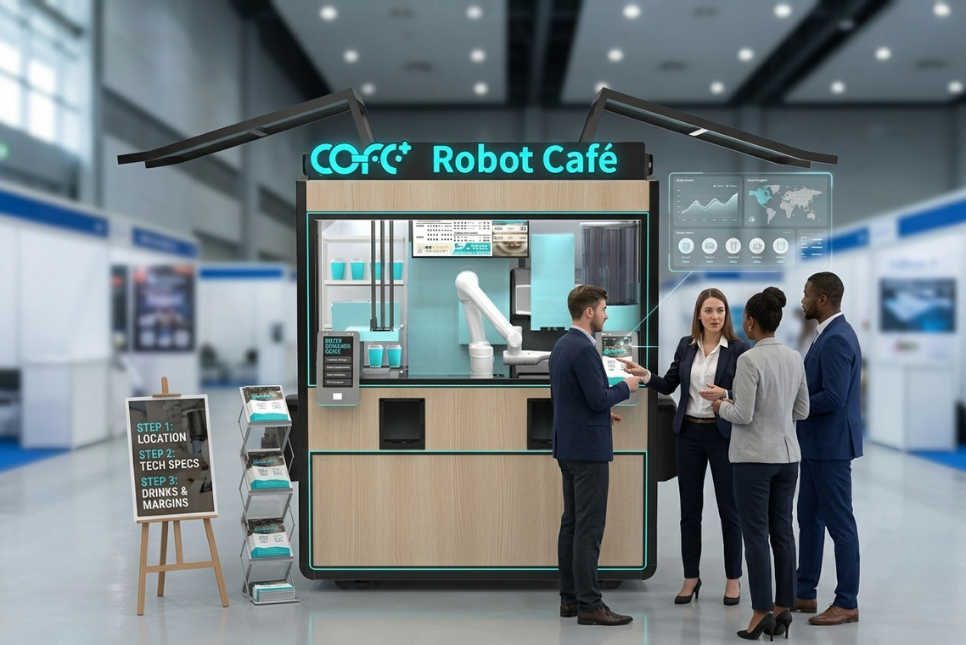
From the COFE+ Robot Coffee Kiosk to the Robot Coffee Counter, Robot Coffee Bar, and Corner Robot Coffee Shop, the company’s approach focuses on making automated beverage service.
The demand for automated coffee service is growing as businesses look for new ways to manage labor costs, address staffing shortages, improve beverage consistency, and extend service hours. Hospitals, airports, universities, corporate campuses, and other high-traffic environments increasingly need convenient access to freshly prepared beverages without the operating requirements of a conventional café.
Shanghai Hi-Dolphin Robot Technology Co., Ltd., operating under the brand COFE+, develops AI-powered robotic cafés designed to address these challenges. Founded in Shanghai in January 2018, the company has developed a portfolio of automated beverage systems that combine robotic preparation, intelligent equipment management, and compact retail design.
From the COFE+ Robot Coffee Kiosk to the Robot Coffee Counter, Robot Coffee Bar, and Corner Robot Coffee Shop, the company’s approach focuses on making automated beverage service adaptable to different locations and business models.
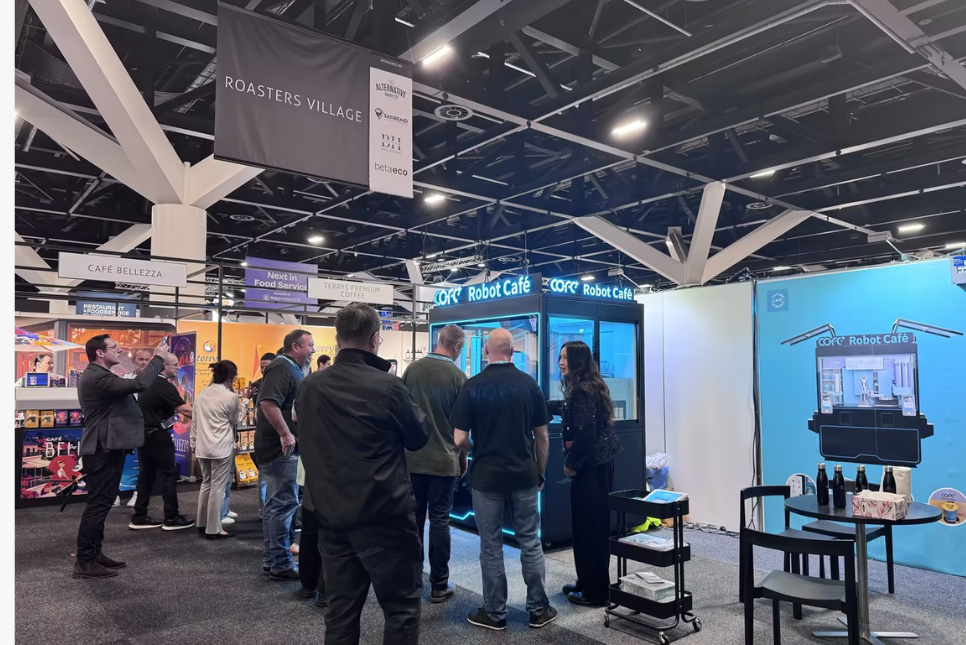
This guide explains how COFE+ technology works, where automated coffee service can create value, and what businesses should consider before investing in a robotic café.
1. What Is Automated Coffee Service?
Automated coffee service uses robotics, software, and connected equipment to prepare and dispense beverages with limited or no continuous human involvement in the preparation process.
In a traditional café, baristas manually handle tasks such as grinding beans, preparing espresso, steaming milk, assembling drinks, and serving customers. An automated coffee system coordinates supported tasks through programmed recipes, mechanical components, ingredient modules, and digital controls.
The goal is not simply to replace a human-operated coffee machine. A commercial robotic café integrates multiple stages of beverage preparation into a coordinated workflow, helping standardize recipes and support extended operating hours.
COFE+ offers four principal formats:
-
COFE+ Robot Coffee Kiosk: A compact, self-contained solution for high-traffic and space-constrained locations.
-
COFE+ Robot Coffee Counter: An automated beverage counter designed for indoor commercial environments.
-
COFE+ Robot Coffee Bar: A robotic beverage station suited to hospitality, corporate, and retail settings.
-
COFE+ Corner Robot Coffee Shop: A format designed to make use of underutilized corners and smaller spaces.
The COFE+ Robot Coffee Kiosk has a specified footprint of approximately 2.35 square meters, while Robot Coffee Bar and Counter configurations can occupy around 2 square meters, depending on the model.
This compact design can help businesses introduce beverage service in locations where a conventional café, often occupying 30 to 100 square meters, may be impractical.
2. How COFE+ Automated Coffee Technology Works
Robotic preparation from order to cup
COFE+ systems combine robotic arms, automated brewing equipment, ingredient modules, and software-controlled preparation sequences. Depending on the model, the system uses four-axis or six-axis robotic technology to carry out beverage preparation tasks.
The automated workflow can include order processing, fresh-bean grinding, espresso preparation, ingredient dispensing, milk handling, beverage finishing, and cup sealing. Supported configurations can also produce robotic latte art and print images or text on coffee foam.
According to company specifications, selected COFE+ systems can prepare up to five cups simultaneously, with typical production times of approximately 50 to 55 seconds per cup. Actual output varies with beverage recipes, configuration, order patterns, and operating conditions.
Automated preparation helps standardize the sequence and proportions used for each supported recipe. This can reduce variations associated with manual preparation, although consistent results still depend on ingredient quality, equipment calibration, cleaning, and preventive maintenance.
A customizable beverage menu
Automated service does not have to mean a limited menu. COFE+ equipment supports multiple beverage categories, including coffee, tea, and chocolate drinks, with configurations designed for hot and cold beverage options.
Depending on the model, ingredient modules can accommodate two to four milk types, six to eight syrup varieties, and up to 47 topping options. Dual coffee bean hoppers can support different bean selections, while recipe settings allow customers to choose from supported customization options.
This flexibility enables operators to offer a varied menu without assigning additional staff to each preparation step. It also allows businesses to adapt their beverage selection to the needs of different customer groups, from airport passengers to university students and hospital employees.
Smart Store Brain and remote management
Robotic preparation is only one part of a modern automated coffee service system. Operators also need to understand how machines perform, when ingredients require replenishment, and whether maintenance is necessary.
COFE+ addresses these requirements through Smart Store Brain, its AIoT-based equipment management platform. Depending on the configuration and services enabled, the platform supports remote monitoring of sales, inventory, machine status, and maintenance alerts.
Smartphone-accessible monitoring can help operators oversee distributed locations without being physically present at every machine. Remote diagnostics may also resolve certain technical issues without an immediate site visit.
The company reports that daily maintenance can take less than 30 minutes under standard operating conditions. Actual requirements depend on drink volume, cleaning procedures, replenishment needs, and the specific installation.
3. Where Automated Coffee Service Creates Business Value
Automated coffee service is particularly relevant in environments where demand extends beyond conventional retail hours or where space is too limited for a full café.
Hospitals and healthcare facilities. Medical staff, patients, and visitors may need refreshments overnight or during busy periods when nearby food outlets are closed. Automated coffee stations can supplement existing hospital services, provided they meet the facility’s hygiene, safety, and maintenance requirements.
Airports and transportation hubs. Passenger flows can begin early in the morning and continue late into the night. Compact robotic kiosks can provide another beverage option in waiting areas, terminals, and other locations where space and staffing are constrained.
Universities and campuses. Libraries, research buildings, and student facilities may experience demand during evenings, examination periods, and early mornings. Automated stations can extend beverage access without requiring every location to operate as a fully staffed café.
Corporate offices and commercial properties. Businesses can consider robotic cafés for office lobbies, employee areas, and shared facilities, especially when they want to supplement existing food services or serve locations with limited retail infrastructure.
Hotels, shopping centers, and tourism venues. Automated beverage systems can provide additional service points in areas with changing customer flows, subject to site requirements and appropriate replenishment arrangements.
Across these environments, the main opportunity is flexibility: operators can add beverage service to more locations and operating periods without necessarily adopting the staffing and space requirements of a conventional café.
4. Real-World COFE+ Deployments
COFE+ identifies deployments across healthcare, transportation, education, and corporate environments as examples of its automated coffee service model.
Healthcare: Massachusetts General Hospital and Texas Children’s Hospital
The company reports that a sixth-generation COFE+ robotic café was deployed at Massachusetts General Hospital in the United States. Its described menu includes low-caffeine options, plant-based milk alternatives, chocolate and matcha beverages, and hot, cold, and iced drinks.
COFE+ also identifies Texas Children’s Hospital among its healthcare deployments. One emergency physician has reportedly highlighted the convenience of obtaining freshly ground coffee at 2 a.m., illustrating the potential value of beverage access outside conventional retail hours.
These examples demonstrate the relevance of automated coffee service in healthcare environments, where operating schedules differ from those of ordinary cafés. Buyers should confirm the current deployment status, service arrangements, and applicable hygiene procedures when evaluating a comparable installation.
Transportation: Denver and Chisinau airports
COFE+ reports a deployment at Denver International Airport, where automated beverage service can help address demand during periods when staffed shops are closed.
At Chisinau International Airport in Moldova, the company reports that a local operator achieved average daily sales exceeding 200 cups and recovered the investment within four months. This is a specific reported result rather than a general ROI guarantee. Performance at other locations will depend on passenger traffic, placement, pricing, operating costs, and commercial agreements.
Shanghai Hongqiao International Airport is also cited by the company as a COFE+ deployment, with installation reported in March 2025.
Education: Tongji University and Shanghai Theatre Academy
COFE+ reports that Tongji University operates 10 units across five campuses, with a 90% cost reduction cited against the company’s comparison baseline.
Shanghai Theatre Academy has also been identified as a deployment location. According to company materials, the sixth-generation installation recorded a 73% increase in nighttime customer satisfaction.
For education providers, these examples point to potential applications in campus buildings and student facilities where demand can continue after conventional food outlets close. Financial and satisfaction figures should be reviewed alongside their original measurement methods before being used in investment forecasts.
5. Cost Efficiency and the Automated Coffee Business Model
The economics of automated coffee service depend on how equipment, space, labor, ingredients, and maintenance compare with the alternative operating model.
COFE+ reports that its equipment and operating costs can be approximately one-fifth of those associated with a traditional specialty coffee shop. The company also cites potential operating expense reductions of up to 90% and electricity savings of up to 80% in applicable scenarios.
These figures are company-reported and should not be treated as universal outcomes. Actual savings depend on rent, local wage rates, equipment utilization, ingredient prices, utility costs, cleaning requirements, and the comparison baseline.
A complete financial assessment should include:
-
Equipment purchase, financing, shipping, and installation.
-
Rent, concession fees, or revenue-sharing arrangements.
-
Coffee beans, milk, syrups, toppings, cups, and packaging.
-
Electricity, software subscriptions, and payment processing.
-
Cleaning, maintenance, spare parts, and service visits.
-
Expected daily sales, average transaction value, and seasonal demand.
COFE+ describes its installation approach as a zero-decoration model, intended to reduce the need for conventional café fit-out. Sites may still require suitable power, network connectivity, clearance, safety provisions, and any approvals required by the property owner or local authorities.
For investors, distributors, and facility managers, a pilot installation is a practical way to validate customer demand, machine uptime, ingredient costs, and payback assumptions before expanding to multiple sites.
6. Global Scale, Reliability, and Certifications
COFE+ reports deployments in more than 70 countries, over 1,000 units installed worldwide, and cumulative sales exceeding 200 million cups. The company also cites more than 60,000 cumulative operating hours and a longest continuous operating period exceeding 2,000 days for a single machine.
These company-reported figures provide context for the brand’s operating history. For procurement decisions, buyers should request current data and evidence relevant to the exact model, installation environment, and service arrangement under consideration.
The company also references more than 120 international patents and compliance documentation associated with markets including the United States, European Union, and United Kingdom. Its materials mention FDA-related requirements, FCC, CE, UKCA, and other standards.
These designations cover different regulatory areas and are not interchangeable approvals for an entire machine. Businesses should verify model-specific certificates, declarations, test reports, and destination-market requirements before deployment.
For automated beverage service, long-term reliability also depends on more than certifications. A practical plan must cover sanitation, ingredient replenishment, preventive maintenance, spare parts, technical support, and clear responsibility for responding to equipment alerts.
Conclusion: Is Automated Coffee Service Right for Your Business?
Automated coffee service offers businesses a way to expand beverage availability while rethinking the traditional relationship between retail space, staffing, and service hours.
COFE+ combines robotic beverage preparation, configurable menus, compact equipment, and AIoT-based remote management across its Robot Coffee Kiosk, Robot Coffee Counter, Robot Coffee Bar, and Corner Robot Coffee Shop formats. Its reported deployments in healthcare, airports, and education illustrate the range of environments where robotic coffee systems can be evaluated.
For organizations considering an automated coffee solution, the next step is to assess site suitability, confirm regulatory requirements, review maintenance and support arrangements, and build a realistic financial model using local operating assumptions.
When these factors align, a robotic café can provide a practical option for extending beverage service, using space efficiently, and managing multiple locations through connected technology.
Frequently Asked Questions
1. What is automated coffee service?
Automated coffee service uses robotic equipment and software-controlled workflows to prepare and dispense beverages with limited or no continuous human involvement in preparation. Connected management tools can also support inventory monitoring and maintenance.
2. What makes COFE+ different from a traditional coffee shop?
COFE+ combines robotic beverage preparation, compact retail formats, and AIoT-based remote monitoring. Its systems are designed to standardize supported recipes and provide service in locations where a conventional café may be difficult to operate.
3. How much space does a COFE+ robotic coffee kiosk require?
The COFE+ Robot Coffee Kiosk has a specified footprint of approximately 2.35 square meters. Robot Coffee Bar and Counter configurations can occupy around 2 square meters, depending on the model and installation layout.
4. Can automated coffee machines operate 24/7?
They can be configured for continuous or extended service, but reliable operation still requires ingredient replenishment, cleaning, maintenance, connectivity, and compliance with the host site’s rules.
5. How can a business evaluate the ROI of automated coffee service?
Estimate equipment and installation costs, site fees, ingredients, packaging, utilities, software, maintenance, and service costs. Compare these with realistic sales forecasts and the cost of the alternative operation. A pilot installation can help validate assumptions before a larger rollout.


Reviews
There are no reviews yet.