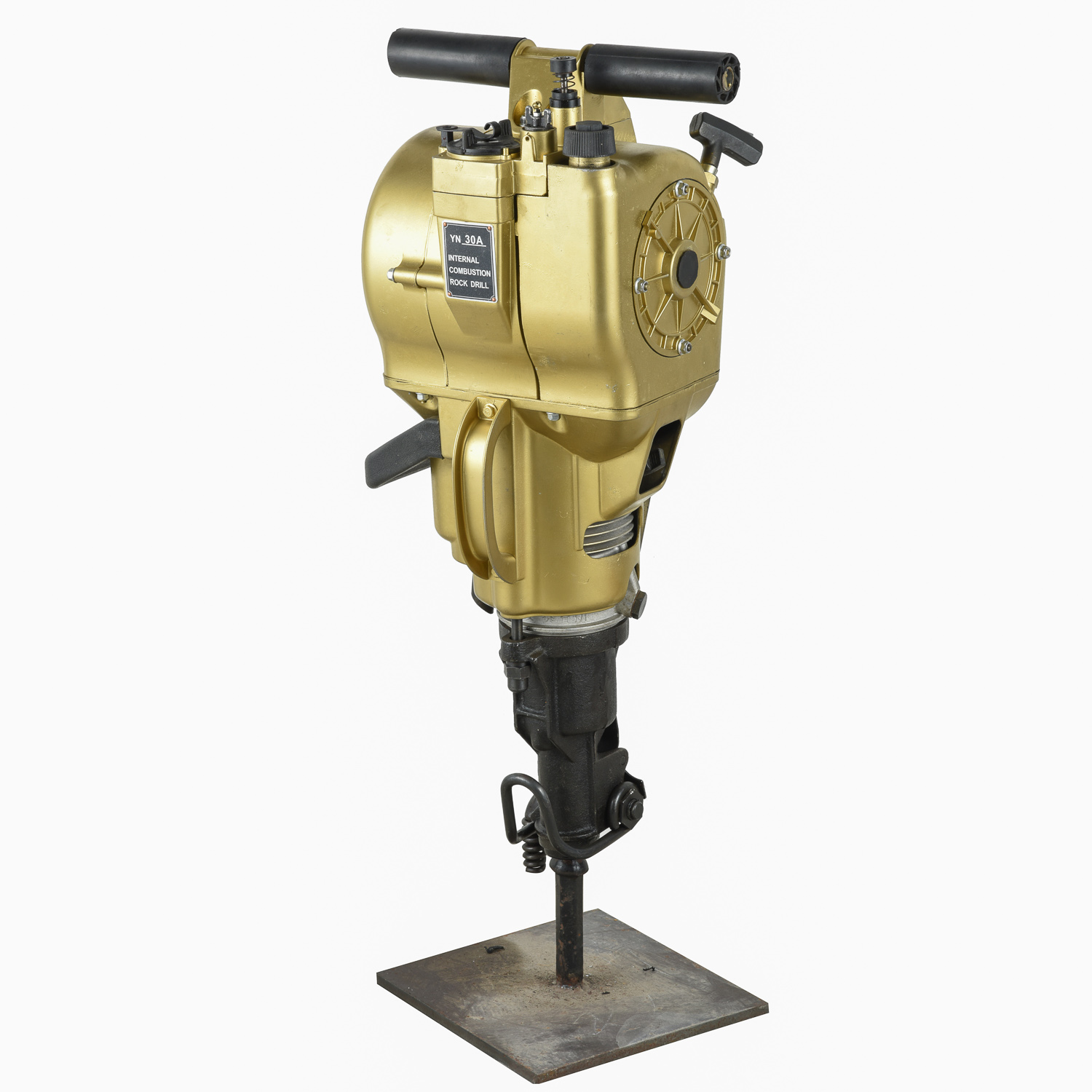

YN30A vs YN27C: Which Gasoline Rock Drill Suits Mining?
YN27C gasoline rock drill, powerful impact & fast drilling. Drill & break dual-use, no power supply needed, ideal for off-grid mining & quarry work.
YN30A vs YN27C: Which Gasoline Rock Drill Suits Mining?
Mining crews working away from power lines face a decision that rarely comes up on grid-connected sites: which self-powered tool to carry. Ningbo Sailuoxin Pneumatic Tool Co., Ltd., a manufacturer and exporter based in Ningbo, Zhejiang, China, builds two gasoline internal combustion tools that are frequently compared for this job — the YN30A and the YN27C. Both sit on the same gasoline internal combustion platform, yet they are engineered for different tasks. This review examines how each tool is positioned, what the shared series specifications mean in practice, and which one fits a given mining scenario.
Understanding the Shared Gasoline Platform
Before comparing the two models, it helps to establish what both tools inherit from the series. The gasoline internal combustion series from Sailuoxin is specified with an engine displacement of 185cm³, a tool weight of 25–27kg, a drilling speed of ≥250mm/min, a maximum drilling depth of 6m, and a fuel mixture ratio of 12:1.
Those figures matter for mining because they define the operating envelope. The 12:1 fuel mixture is a fixed ratio crews must prepare on site, which means fuel handling discipline is part of daily routine. The 25–27kg weight band places both tools within a range one worker can transport, a point the company’s own quarry case material confirms: portable 20–30kg drills can be moved between stone blocks by a single worker without heavy lifting equipment. And the 6m maximum drilling depth sets expectations for hole length before a crew needs a different approach.
YN30A: Engineered for High-Power Drilling
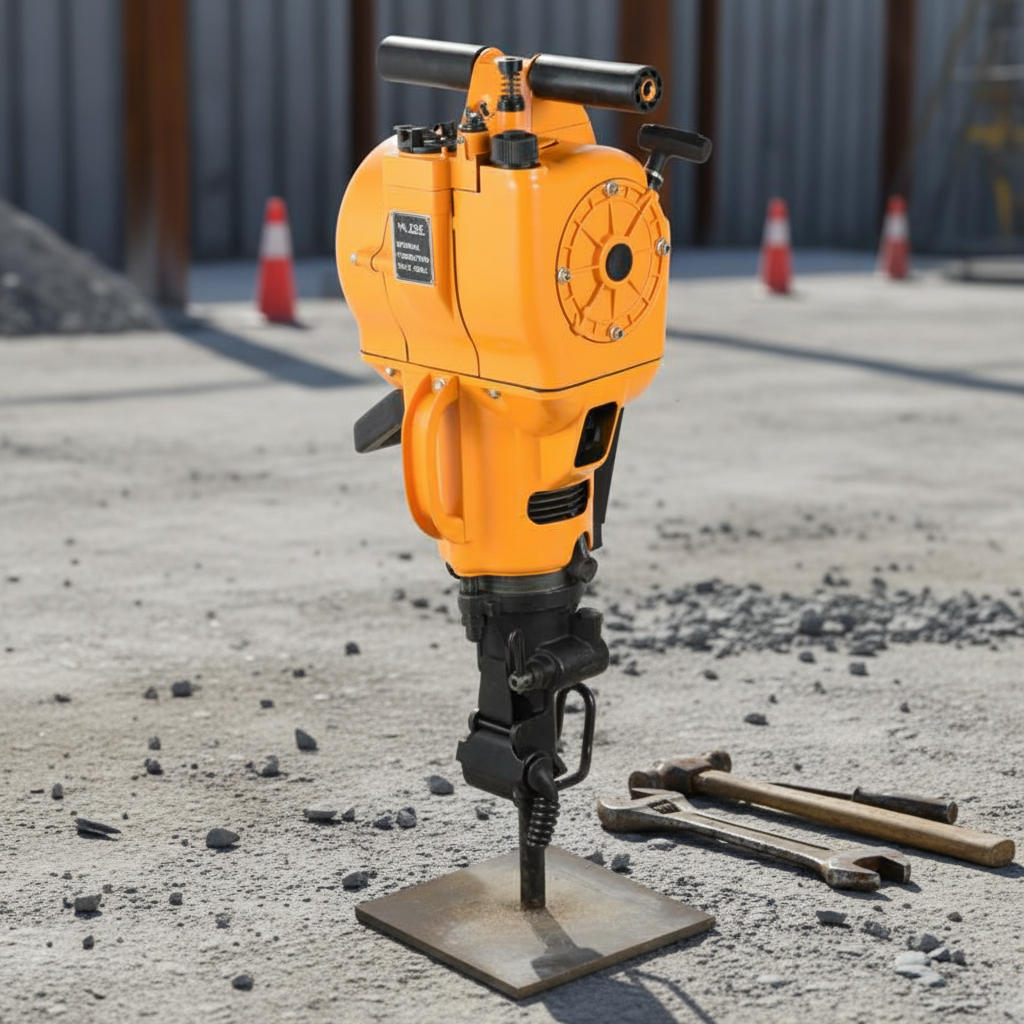
The YN30A is positioned as a high-power gasoline internal combustion drilling tool. Its design intent is narrow and clear: high-power drilling in remote exploration and mining areas away from power lines.
The pain point it addresses is logistical as much as technical. In remote exploration and mining zones, bringing in electricity or hauling separate air compressors is difficult, and the company’s positioning material identifies exactly these conditions — sites lacking electricity and water, and the logistics of transporting separate compressors to mountainous locations. The YN30A’s answer is high-power gasoline drilling on a self-contained power source, so drilling capability does not depend on a grid connection or compressor delivery.
In the field, the YN30A’s value concentrates in percussive drilling through demanding rock conditions. As a dedicated drilling platform, it commits its power budget to one task rather than splitting it between functions.
YN27C: Dual-Function Flexibility
The YN27C takes the opposite approach. It is a dual-function gasoline internal combustion tool for breaking and percussive drilling, and its distinguishing component is a conversion device (lock pin) that switches the tool between drilling and breaking modes.
The practical consequence is equipment inventory. A crew running the YN27C carries one unit that performs two construction tasks, which reduces equipment inventory and tool switching time and removes the need to carry separate drill and breaker units. For contracting crews, that consolidation is also a cost-performance argument: fewer machines to purchase, ship, fuel, and maintain.
Where the YN27C gives ground is in specialization. Because it serves both breaking and drilling, its role in a mining workflow is broader but less concentrated than a dedicated high-power drilling tool.
Matching the Tool to the Mining Job
The choice becomes clearer when mapped onto documented use cases.
Remote mining and tunneling. Exploration and tunneling sites located miles from power lines require rock drilling with no electricity available. Here the gasoline internal combustion rock drills carry their own power source. If the work is sustained percussive drilling in demanding rock, the YN30A aligns with that brief. If the same site also generates breaking work, the YN27C consolidates both.
Small-scale quarrying. Operations with limited budgets face high costs for heavy lifting equipment and need to move drills between stone blocks. The 25–27kg class supports one-worker transport between blocks. Either model fits; the YN27C’s dual function reduces how many units a small operation must buy.
Disaster recovery and emergency clearing. Areas with damaged power grids need tools that operate without grid power. Emergency clearing is breaking-heavy work, which points toward the YN27C and its dedicated breaking mode.
Mountain road construction. Road repair in isolated regions where electricity and external compressors are difficult to bring in suits self-contained gasoline drills generally.
A Practical Decision Framework
Choose the YN30A when the mining operation is drilling-dominant: remote exploration and mining areas away from power lines, where high-power drilling is the core daily task and a dedicated platform justifies itself.
Choose the YN27C when the site is mixed: where drilling and breaking both occur, where inventory and tool-switching time carry real cost, and where emergency clearing may be added to the schedule. The conversion device (lock pin) is the mechanism that makes this consolidation possible.
Note also that Sailuoxin’s pneumatic line — including the YT28 air-leg drill with ≥37Hz percussion frequency, low noise operation, and lightweight design — serves large-scale mining where compressed air infrastructure exists. The gasoline models exist precisely for sites where it does not.
Why Buyers Evaluate Sailuoxin
Founded in 2018, Sailuoxin operates a 6,000㎡ facility with 35–50 employees and formed a dedicated export team in 2022 to handle international markets. Marketing content is available in more than 10 languages, and the Ningbo, Zhejiang location provides port logistics for international shipping. The company supports small trial orders, which lets distributors and project buyers evaluate a unit before committing to volume, and it performs 100% unit inspection and testing before shipment.
The Verdict
Neither tool is universally better. The YN30A is the focused answer for high-power drilling in remote mining areas without power access. The YN27C is the flexible answer for crews that drill and break on the same site. Match the tool to the dominant task, confirm the shared 185cm³ / 25–27kg / ≥250mm/min / 6m / 12:1 envelope suits the rock and hole depth at hand, and the decision becomes straightforward.
Related products
-
Oxygen Rich Side Blown Melt Melting Furnace
Contact UsThe oxygen rich side blown molten pool melting furnace is an efficient and energy-saving steel melting equipment. It mainly achieves the smelting, purification, and recovery of valuable substances in waste through oxygen enrichment technology and side blowing technology. Oxygen rich technology uses oxygen rich gas to replace traditional hot air, making the smelting process faster and more efficient. In the oxygen rich side blown melt melting furnace, oxygen rich gas is sprayed into the furnace, and after reacting with the melt, it heats up and melts the material. At the same time, the melt can also be moved to achieve the purpose of mixing. Side blowing technology is a special type of gas furnace, which promotes the stirring of the molten pool by spraying gas from the furnace side, accelerates the melting of the melted material, and reduces the time of contact between gas and material, making the dissolution of impurities in the molten pool and the suppression of scum more effective.
-
PP PE LDPE HDPE Film Recycled Plastic Washing Machine Recycling Production Line For Sale
Contact UsThe recycling washing line is mainly used to recycle all kinds of plastics, such as film, agricultural film, greenhouse film, woven bags and etc. it can also recycle waste plastic bottles such as HDPE, LDPE, PP, etc. Our output ranges from 300 kg to 2000 kg per hour. Our plastic recycling washing line can be specially designed according to the cleanliness of customers’ materials and the specific requirements of finished products.
-
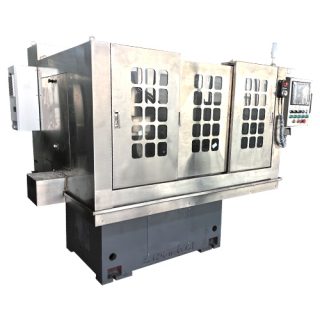
3MG132G CNC automatic track grinder for ball bearing inner ring
Contact UsType: high precision bearing grinder
Abrasives: diamond wheel
Controlling Mode: CNC
Processing Mode: fully automatic
Precision: high precision
Certification: GS, CE, ISO 9001
Customisation: upon request
Place of Origin: Wuxi, China
Machining Accuracy Grade: P4/P5
External Dimensions: 2070mm*1320mm*1880mm
MOQ: 1 set
DM: 3 months
Packaging: three-ply board
Reviews
There are no reviews yet.