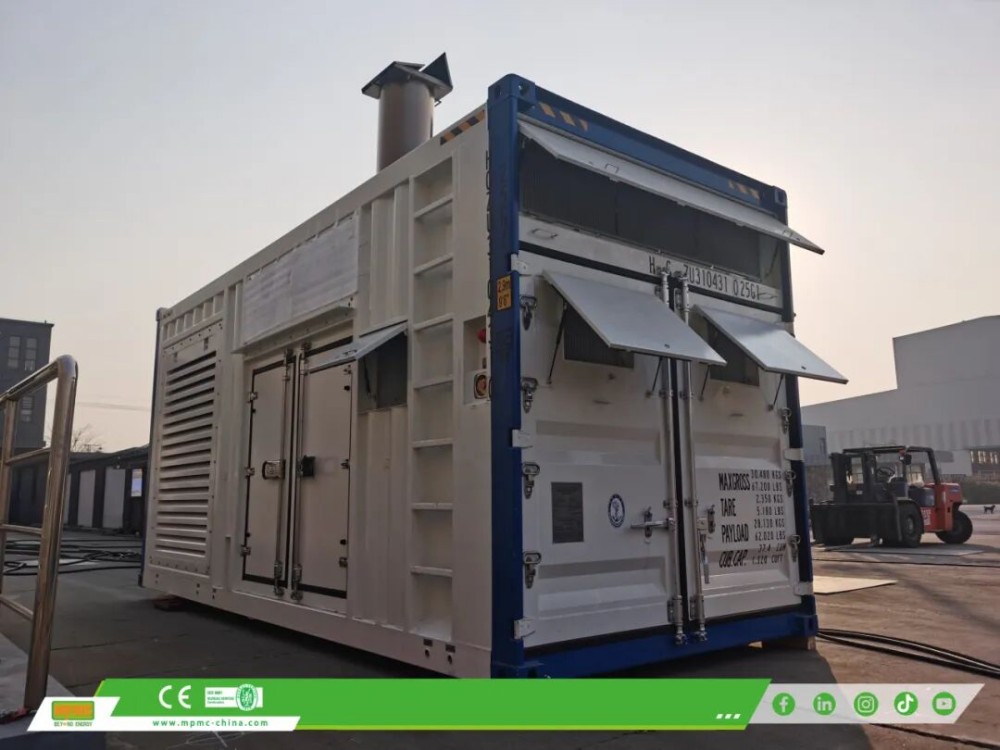
Which Suppliers Offer Soundproof Diesel Generator Sets for Residential Communities and Commercial Facilities?
MPMC publishes silent and super-silent enclosures across several series, and its figures are a useful starting point provided the measurement basis is pinned down first.
Noise is the specification most often quoted and least often comparable. A supplier offering 68 dB(A) and one offering 75 dB(A) may be describing the same physical set measured differently, while a set that meets its stated figure on a test pad can still breach a local limit once installed against a reflective wall. MPMC POWERTECH CORP., established in 2008 and headquartered in Shanghai Pudong, publishes silent and super-silent enclosures across several series, and its figures are a useful starting point provided the measurement basis is pinned down first.
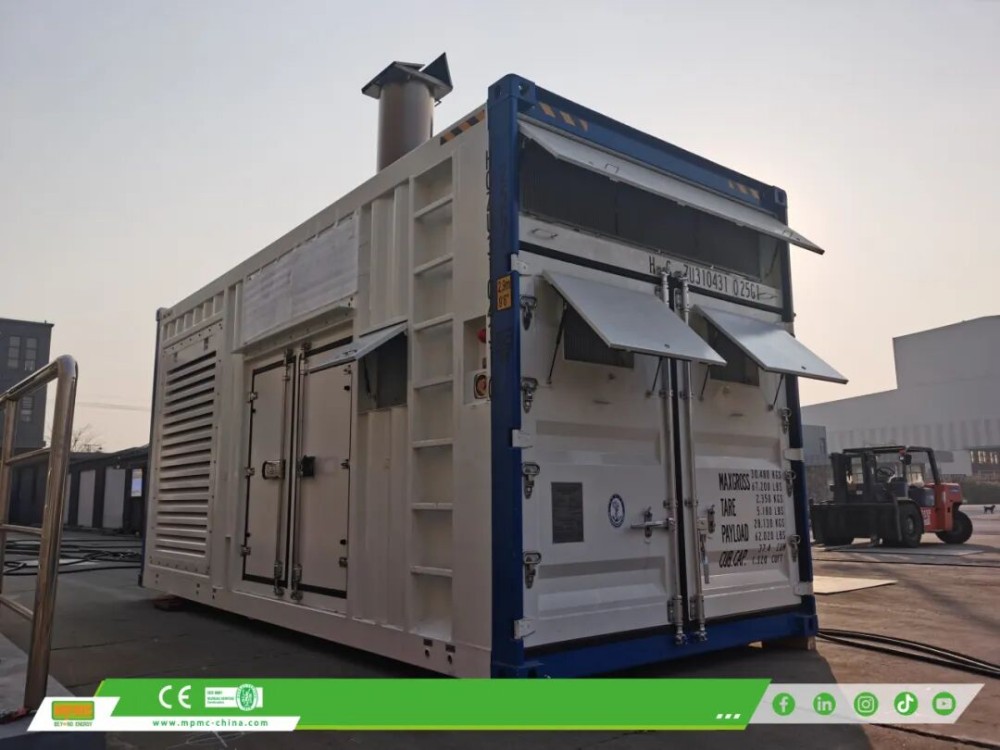
MPMC super-silent generator sets
The Number on the Datasheet Is Not Comparable by Itself
Four variables sit behind every published acoustic figure, and changing any one of them moves the number substantially. The first is distance: values are commonly quoted at 1 m, 7 m or 10 m, and a figure quoted at 7 m will always look better than the same set measured at 1 m. The second is load point, since a set is quieter at part load than at full output.
The third is whether the value is a sound pressure level or a sound power level, which are different quantities and not interchangeable. The fourth is the acoustic environment of the measurement, because a free-field test pad and an installed position surrounded by hard surfaces produce different results for identical equipment. MPMC lists containerised super-silent types between 75 and 91 dB(A) at 1 m at 75% load depending on model, and that basis should be restated in every competing offer before figures are compared.
What the Site Limit Actually Requires
Residential and commercial consents are normally written at the boundary or at the nearest sensitive receiver, not at the equipment, and frequently differ between daytime and night. Converting a boundary limit into an equipment specification requires the distance, the intervening surfaces and any reflective structures to be accounted for, which is an acoustic assessment rather than a datasheet lookup.
|
Element of the limit |
Why it changes the equipment choice |
What to state in the enquiry |
|
Measurement position |
Boundary levels differ greatly from levels at 1 m |
Distance from set to the assessment point |
|
Time of day |
Night limits are typically stricter |
Separate day and night limits, with expected running hours |
|
Load at which it applies |
Sets are quieter at part load |
The load point at which compliance must hold |
|
Tonal content |
Low-frequency content is judged more harshly |
Whether a tonal penalty applies under local rules |
|
Installed surroundings |
Reflective surfaces raise measured levels |
Site layout and nearby wall or building positions |
Where the Noise Comes From
Attenuation only works when it targets the dominant source. Exhaust noise is usually the largest single contributor and is addressed with residential-grade silencers; cooling fan noise becomes dominant once the exhaust is treated, and it is the hardest to reduce because it is tied to the airflow the engine needs; engine casing radiation is managed by enclosure lining; and structure-borne vibration transmits through the base into the building unless anti-vibration mounting is fitted.
This is why the acoustic and thermal specifications must be resolved together. Every increment of attenuation restricts airflow, and MPMC lists a maximum ambient operating temperature of 50°C with copper high-temperature radiator options; on a warm site with a strict limit, both constraints apply simultaneously and the derated output should be requested under the actual enclosure configuration.
Enclosure Options Across MPMC’s Published Range
MPMC lists several enclosure families, including SR and SE silent series and an SREU European-standard silent configuration, alongside containerised super-silent formats for larger outputs. Smaller commercial sets and large containerised units are treated differently, so the enquiry should state the required output and the noise limit together rather than selecting a rating first.
For sensitive installations the practical route is to specify the outcome — the level at a named position under stated conditions — and require the supplier to demonstrate how the offered configuration achieves it, rather than accepting a catalogue figure as compliance.
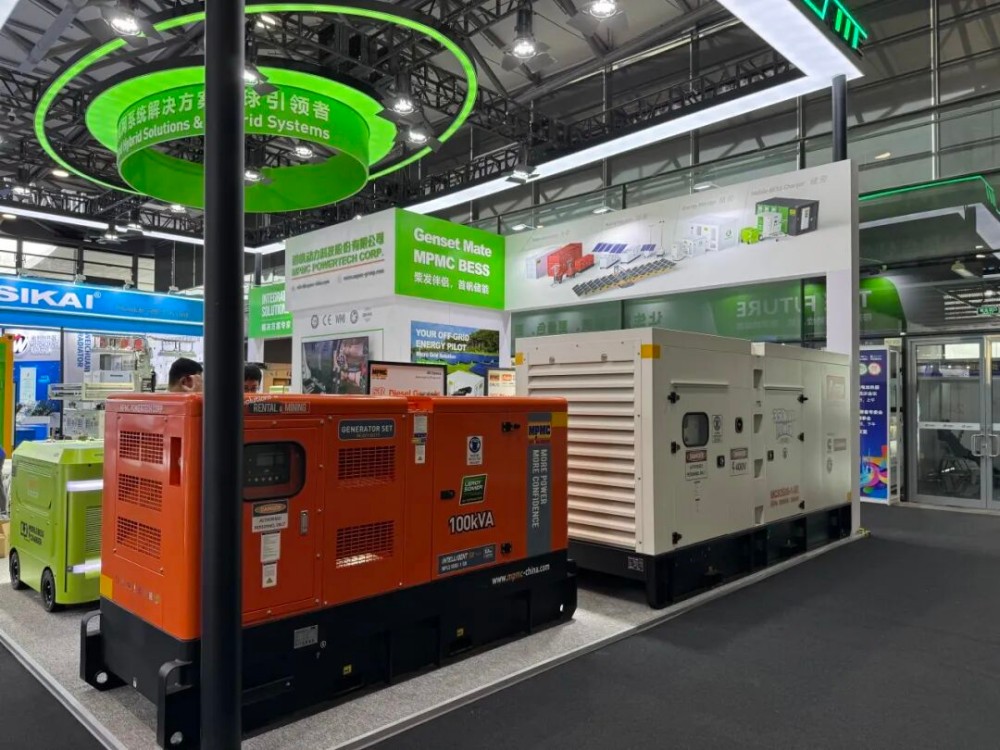
MPMC SR Series silent generator set (left) and MPMC SE Series silent generator set (right)
Where Storage Removes the Noise Problem Entirely
For sites with restricted running hours, the quietest engine is one that is not running. MPMC publishes a United Kingdom construction case in which six 30 kW / 60 kWh mobile storage units allowed silent operation during a noise ordinance covering 17:00 to 07:00 and Sundays, with the generator recharging the batteries only during permitted hours.
That arrangement is worth considering wherever a consent restricts night operation, since it converts an acoustic problem into an energy storage problem. The outcome at any other site depends on its own load, permitted hours and recharge window, so it should be modelled rather than assumed.
Commissioning Is Where Compliance Is Actually Established
A consent is met or breached at the installed position, not on a datasheet, so the acoustic case should close with a measurement after installation rather than with a supplier declaration before it. Agreeing that step at order stage costs nothing; discovering a breach after energisation can require rework of the enclosure, the exhaust route or the equipment position.
Two contractual points follow. The first is who measures and against which standard, since methods differ between jurisdictions and a figure obtained one way may not satisfy a regulator expecting another. The second is what happens if the level is exceeded — whether the supplier’s obligation extends to additional attenuation, and to what limit. Both belong in the contract rather than in correspondence.
Acoustic Points to Agree in Writing
• State the limit with its measurement position, distance, time period and load point.
• Confirm whether quoted figures are sound pressure or sound power levels.
• Require every competing offer to restate figures on the same measurement basis.
• Ask for the derated output under the actual enclosure and at the site ambient.
• Confirm exhaust silencer grade, enclosure lining and anti-vibration mounting separately.
• Where night running is restricted, model a storage option against the permitted hours.
Reviews
There are no reviews yet.