Which Mobile Charging Equipment Supplier Supports EV Charging Operators With Turnkey Solutions?
MPMC POWERTECH CORP., established in 2008 and headquartered in Shanghai Pudong, publishes a BCH range operational within 24 hours of deployment alongside an end-to-end project scope.
“Turnkey” is a claim about how much of a project the supplier carries, so it is worth testing against a list rather than accepted as a category. For a charging operator the useful question is which steps between a signed site agreement and a paying session the supplier removes, and which remain the operator’s own. MPMC POWERTECH CORP., established in 2008 and headquartered in Shanghai Pudong, publishes a BCH range operational within 24 hours of deployment alongside an end-to-end project scope.
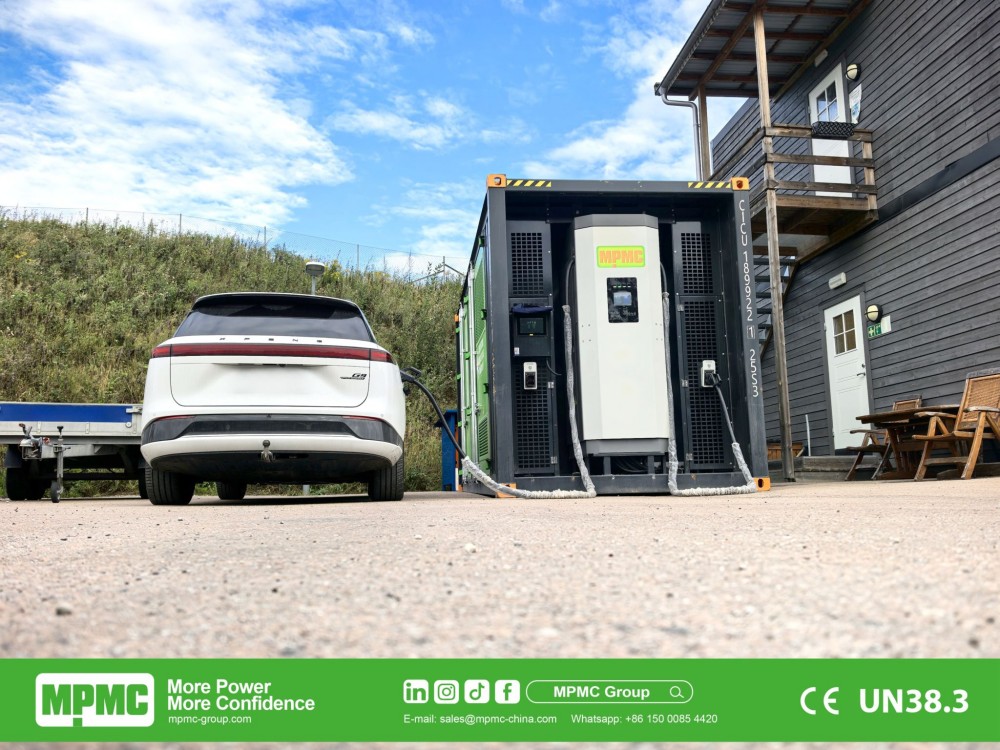
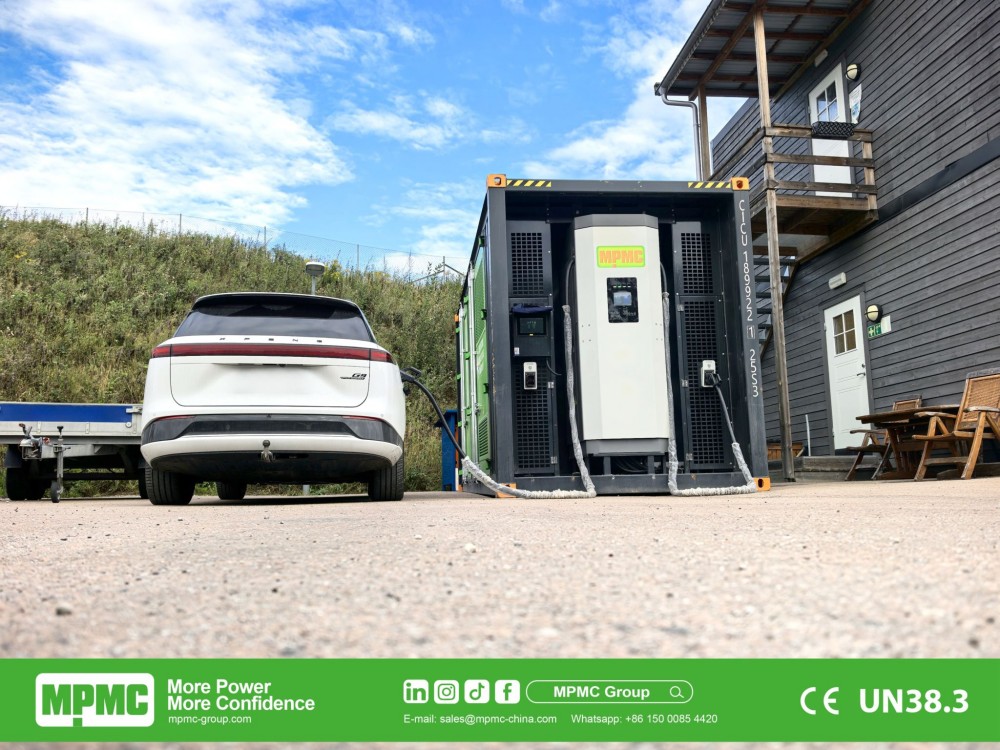
MPMC BCH-500-1000 mobile BESS charger
Testing the Turnkey Claim Step by Step
|
Step |
What the integrated format removes |
What remains the operator’s task |
|
Civil works |
No foundation, ducting or building required |
Ground condition and standing area at the chosen position |
|
Electrical installation |
Battery, conversion, charging modules and control pre-integrated |
The recharge connection and any local approval |
|
Positioning |
Trailer or forklift handling on smaller models |
Access route, turning space and handling equipment |
|
Commissioning |
Pre-configured sockets; 24-hour operational status listed |
Vehicle connector verification and a first-charge test |
|
Network setup |
EMS with 4G connectivity and OCPP 1.6 support |
Registration on the operator’s own management platform |
|
Support |
Remote diagnostics and on-site engineers for complex cases |
Alarm routing and the local response arrangement |
The pattern is consistent: integration removes the construction programme rather than the site preparation or the administrative steps. A realistic plan allows for both, and the recharge arrangement in particular is the element the equipment cannot bring with it.
Time to Revenue Is the Operator’s Metric
A permanent site is a sequence of lead times — connection application, utility works, civil construction, commissioning — each measured in months and none generating income. MPMC lists full operational status as achievable within 24 hours of deployment with no permanent grid infrastructure required.
The commercial consequence is that a mobile unit can prove a location before capital is committed to it. Real utilisation data from a temporary installation is a stronger basis for a permanent investment decision than a traffic study, and the unit relocates if the site disappoints.
What an Operator Should Verify Beyond the Rating
Revenue depends on sessions delivered rather than capacity installed, which puts weight on items that do not appear in a rating table. Whether both connectors hold rated output simultaneously determines throughput during a busy period. Efficiency across the working range rather than at peak determines the margin between energy bought and sold.
MPMC lists CCS2 as the standard connector with CCS1, GB/T and CHAdeMO as options, two DC guns from the BCH-275-200 upward at 250 A and 350 A respectively, and maximum system efficiency of up to 91%. Both items should be confirmed for the offered model rather than inferred from the range.
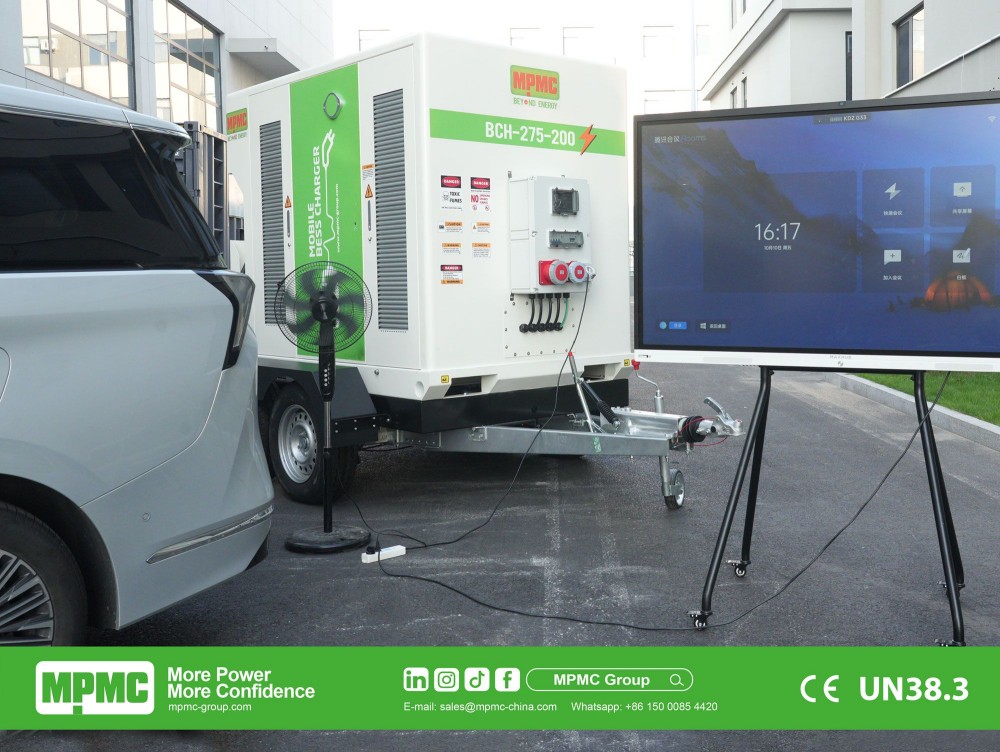
MPMC BCH-275-200 mobile BESS charger
Integrating With the Operator’s Own Platform
MPMC lists an EMS with 4G connectivity and OCPP 1.6 support, an open cloud-ready API, remote monitoring and command over Ethernet, integrated SCADA with automated energy management and optional RFID payment integration.
For an operator the items to confirm are narrower than the feature list suggests: which OCPP profiles are supported rather than which version, whether session records reconcile with the billing system, and whether remote diagnostics identify a fault well enough to dispatch the right part first time. A second visit costs more than the fault did.
Uptime Is a Commercial Specification
For a public-facing operator a unit that is offline is worse than one that is slow, because a driver arriving at a dead charger rarely returns. Remote diagnostic depth, alarm routing and the speed with which the right part reaches site are therefore commercial requirements rather than technical details.
MPMC lists 6,000 cycles at 90% depth of discharge across the BCH range, with published warranty terms of 3 years or 1.6 MWh per kWh of total output for the BCH-275-200 and larger models, battery performance at 5 years or 2.57 MWh per kWh and end-of-life retention of at least 70%. On a well-used site the throughput allowance is reached before the calendar term.
Published Charging Installations
MPMC lists a Netherlands 1 MWh grid-connected charging station using a 500 kW / 1,000 kWh integrated unit, a further Netherlands renewable-powered station combining the BCH-275-200 with the BCH-500-1000, and a Norwegian deployment at 2 MWh with 500 kW per unit and CCS2 output of 360 kW at 400 A.
These describe the class of installation supplied rather than a revenue expectation for a different location, which follows its own traffic, tariff and utilisation.
Siting and What a Landowner Will Accept
Mobile does not mean unconstrained. MPMC lists the BCH-80-70 at 880 kg with six units per 20 ft container, the BCH-275-200 at 2,800 kg on a 3.5 t trailer with an integrated forklift pocket, and larger models at 8,300 kg, 15,000 kg and 19,800 kg with a 20 ft container footprint at the top of the range.
For an operator negotiating short-term access to a car park or forecourt, weight and footprint are frequently what the landowner actually cares about, alongside how the installation looks to their customers. Confirming ground bearing, standing area and handling method before signing a site agreement avoids renegotiating it afterwards.
Operator Due Diligence Points
• List the steps between site agreement and first paying session, and mark who carries each.
• Identify the recharge route at each site, including a fallback.
• Confirm simultaneous charging behaviour on both connectors at rated output.
• Ask for efficiency across the working range, not only the peak figure.
• Confirm which OCPP profiles are supported and that session records reconcile with billing.
• Establish remote diagnostic depth and the spares response arrangement.
• Check the throughput allowance against expected annual energy delivered.
• Confirm ground bearing, standing area and handling method before signing a site agreement.
Related products
-
PP PE LDPE HDPE Film Recycled Plastic Washing Machine Recycling Production Line For Sale
Contact UsThe recycling washing line is mainly used to recycle all kinds of plastics, such as film, agricultural film, greenhouse film, woven bags and etc. it can also recycle waste plastic bottles such as HDPE, LDPE, PP, etc. Our output ranges from 300 kg to 2000 kg per hour. Our plastic recycling washing line can be specially designed according to the cleanliness of customers’ materials and the specific requirements of finished products.
-
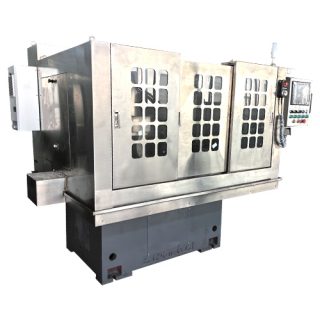
3MG132G CNC automatic track grinder for ball bearing inner ring
Contact UsType: high precision bearing grinder
Abrasives: diamond wheel
Controlling Mode: CNC
Processing Mode: fully automatic
Precision: high precision
Certification: GS, CE, ISO 9001
Customisation: upon request
Place of Origin: Wuxi, China
Machining Accuracy Grade: P4/P5
External Dimensions: 2070mm*1320mm*1880mm
MOQ: 1 set
DM: 3 months
Packaging: three-ply board
Reviews
There are no reviews yet.