VertiRehab™: Making Vestibular Rehabilitation More Flexible, Engaging, and Connected
Vestibular rehabilitation is not simply about completing a series of repetitive exercises.
Vestibular rehabilitation is not simply about completing a series of repetitive exercises. For patients recovering from vestibular dysfunction, effective rehabilitation requires consistent training, appropriate progression, and the ability to adapt exercises to individual needs.
At the same time, rehabilitation does not always take place inside a clinic. Patients may need to continue exercises between appointments, while clinicians need practical ways to monitor performance and maintain continuity of training.
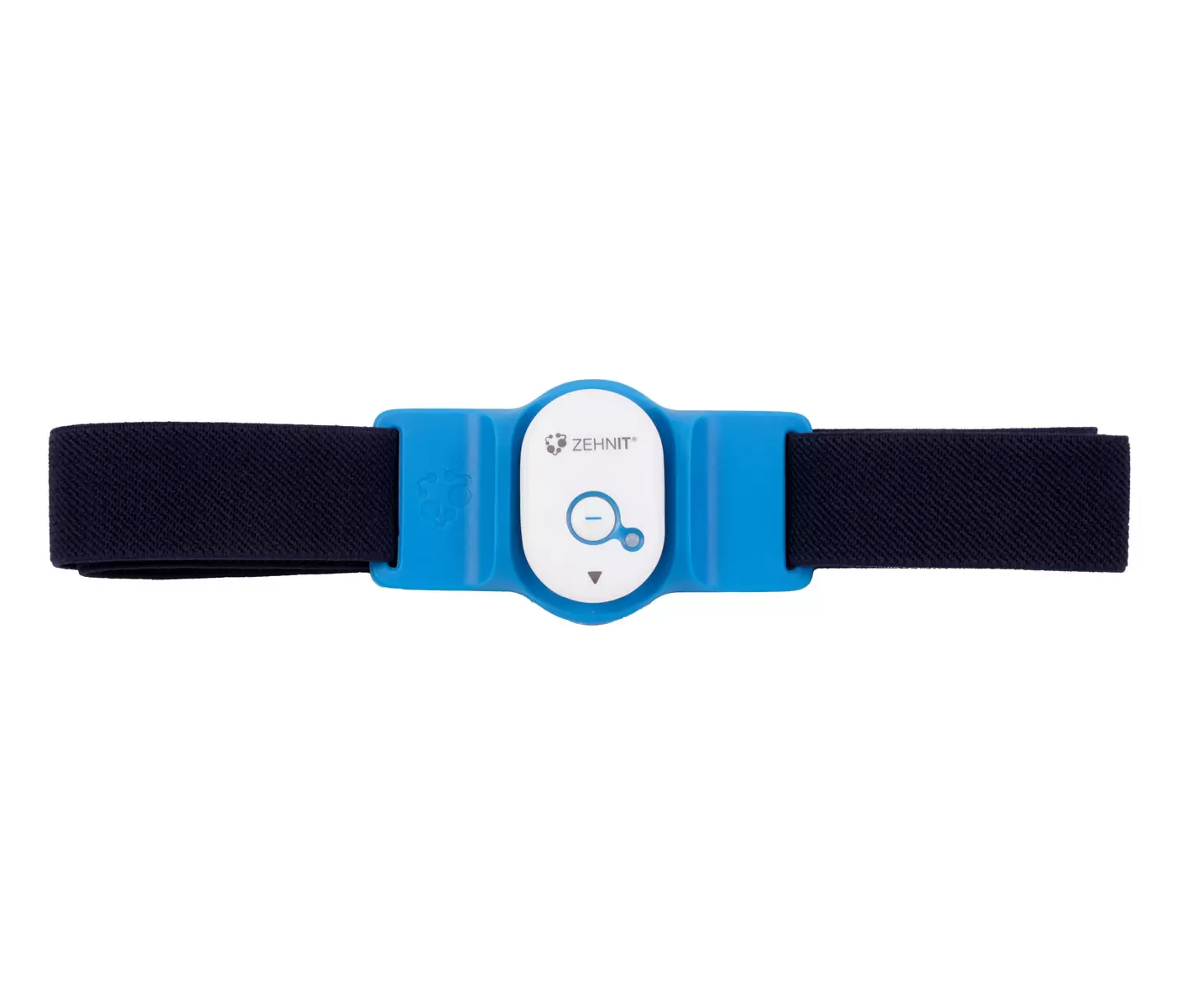
This is where ZEHNIT VertiRehab™ introduces a more flexible approach. Designed as a lightweight, portable, wearable vestibular rehabilitation system, VertiRehab™ combines Vestibulo-Ocular Reflex (VOR) and Vestibulo-Spinal Reflex (VSR) training in one compact solution. With a wearable motion-sensing unit and companion application, it supports guided gaze-stability and balance exercises in both clinical and home environments.
Bringing VOR and VSR Training into One System
Vestibular rehabilitation can involve different aspects of balance and sensory-motor coordination. Some exercises focus on maintaining visual stability during head movement, while others emphasize posture and balance control.
VertiRehab™ brings these two training directions together through a single wearable platform.
The system supports VOR exercises for gaze stability as well as VSR exercises for balance training. This dual-mode approach allows rehabilitation programs to address different functional requirements without relying on separate systems for each type of exercise.
By combining both training modes in one compact device, VertiRehab™ provides clinicians with a more flexible platform for designing rehabilitation programs around individual patient needs.
A Wearable Design for Greater Freedom of Movement
One of the most practical aspects of vestibular rehabilitation is the ability to perform exercises naturally.
Large or fixed rehabilitation equipment may limit where and how patients can train. VertiRehab™ takes a different approach by using a compact wearable unit.
The main device includes adjustable head and waist straps with quick-release buckles, allowing users to switch between different configurations while maintaining a secure and comfortable fit.
This wearable structure helps make rehabilitation less dependent on a fixed clinical environment. Patients can perform selected exercises with greater freedom, while clinicians can incorporate the system into different rehabilitation scenarios.
The portable design also supports the possibility of extending structured vestibular training beyond the treatment room.
Turning Movement into Usable Rehabilitation Data
Simply completing an exercise does not necessarily show how effectively a patient is performing it.
VertiRehab™ incorporates a motion-sensing unit that captures user movement data in real time. The recorded information is synchronized with the VertiRehab™ App, allowing the rehabilitation experience to respond to the user's movements.
This creates a more interactive relationship between the patient and the training system.
Instead of following exercises without feedback, users can interact with exercises that respond to their actions. For clinicians, this approach creates opportunities to observe performance and track rehabilitation progress more systematically.
From Repetitive Exercises to Interactive Training
Patient motivation is an important consideration in long-term rehabilitation. Repetitive exercises can become difficult to maintain, especially when patients are expected to continue training outside the clinic.
VertiRehab™ addresses this challenge through an App-based training experience that combines structured exercises with interactive elements.
The platform includes gaze stability exercises and balance training games, with progressive difficulty, scoring, and tracking. This gamified structure is intended to make training more engaging while allowing users to see their performance over time.
Instead of viewing rehabilitation simply as a series of tasks to complete, patients can interact with exercises that provide immediate responses to their movements.
This can make the rehabilitation experience more accessible and engaging for users across different age groups.
Progressive Training for Different Rehabilitation Needs
Vestibular rehabilitation is rarely a one-size-fits-all process.
A patient may begin with relatively simple exercises and gradually progress toward more challenging tasks as their balance and gaze stability improve. VertiRehab™ supports this principle through multi-level training modes and progressive difficulty.
Its supported gaze stability exercises include:
-
VOR x 1
-
VOR x 2
-
VORS
-
Smooth pursuit
Balance-oriented activities include:
-
Stance Exercise
-
Bricks Breaker
-
Maze
-
Driving
The combination of structured exercises and progressive levels provides greater flexibility when developing rehabilitation programs for different patient needs and stages of recovery.
Supporting Rehabilitation Beyond the Clinic
One of the biggest challenges in rehabilitation is maintaining continuity between clinical sessions.
A patient may receive professional guidance during an appointment but spend most of the rehabilitation period outside the clinic. A portable system can help bridge this gap by making structured training more accessible in everyday environments.
VertiRehab™ is specifically positioned for both clinical and home use. Its portable wearable format means that selected training activities can extend beyond traditional rehabilitation rooms, supporting a more continuous approach to vestibular recovery.
For clinicians, this can provide another way to incorporate ongoing training into patient management. For patients, it can make rehabilitation more convenient and easier to integrate into their routines.
A More Engaging Experience for Patients
Technology is most valuable in rehabilitation when patients are willing and able to use it consistently.
VertiRehab™ combines a user-friendly interface with interactive training, scoring, and progress tracking to make exercises easier to understand and more engaging.
The use of game-based balance activities can also provide a different training experience from conventional repetitive exercises. Activities such as Bricks Breaker, Maze, and Driving introduce task-oriented interaction while still focusing on balance-related training.
This approach can help transform rehabilitation from a passive process into an active and measurable experience.
Connecting Hardware, Software, and Rehabilitation Data
A modern rehabilitation platform needs more than a wearable device. It also needs software capable of translating movement into meaningful interactions.
VertiRehab™ achieves this through the combination of its motion-sensing hardware and companion App.
The hardware captures movement in real time, while the App provides training guidance, responsive interaction, progressive difficulty, scoring, and performance tracking. This hardware-software combination creates a connected rehabilitation workflow rather than a standalone exercise device.
Such integration can make training more structured while giving users a clearer understanding of their performance.
A Flexible Tool for Modern Vestibular Rehabilitation
The growing demand for flexible rehabilitation solutions is changing how patients receive ongoing care.
Clinics need equipment that can support professional treatment, while patients increasingly need convenient solutions that allow them to continue exercises outside scheduled appointments.
VertiRehab™ is designed around this balance.
Its wearable structure supports mobility. Its VOR and VSR dual-training capability provides versatility. Its motion sensing enables responsive interaction. And its App-based training environment adds progressive exercises, scoring, and tracking.
Together, these elements create a rehabilitation solution that can adapt to different settings and different stages of patient training.
Looking Toward a More Connected Rehabilitation Model
Vestibular rehabilitation is gradually moving toward a model that places greater emphasis on personalized training, measurable performance, and continuity of care.
In this environment, portable and connected technologies can play an important role. Rather than limiting rehabilitation to scheduled clinical sessions, wearable systems can help extend structured exercises into patients' daily lives.
VertiRehab™ reflects this direction by bringing together wearable hardware, real-time motion detection, interactive software, and dual-mode vestibular training in one portable platform.
The result is a more flexible way to approach rehabilitation—one that connects professional guidance with ongoing patient participation.
Conclusion
VertiRehab™ represents a more flexible approach to vestibular rehabilitation, combining VOR and VSR training, wearable motion sensing, interactive App-based exercises, progressive difficulty, scoring, and performance tracking in a compact system designed for both clinical and home use.
By bringing rehabilitation into a more portable and engaging format, ZEHNIT provides clinicians and patients with a practical way to make vestibular training more continuous, interactive, and adaptable.
As vestibular rehabilitation continues to embrace digital and wearable technologies, solutions like VertiRehab™ are helping move training beyond the traditional therapy room and toward a more connected rehabilitation experience.
Reviews
There are no reviews yet.