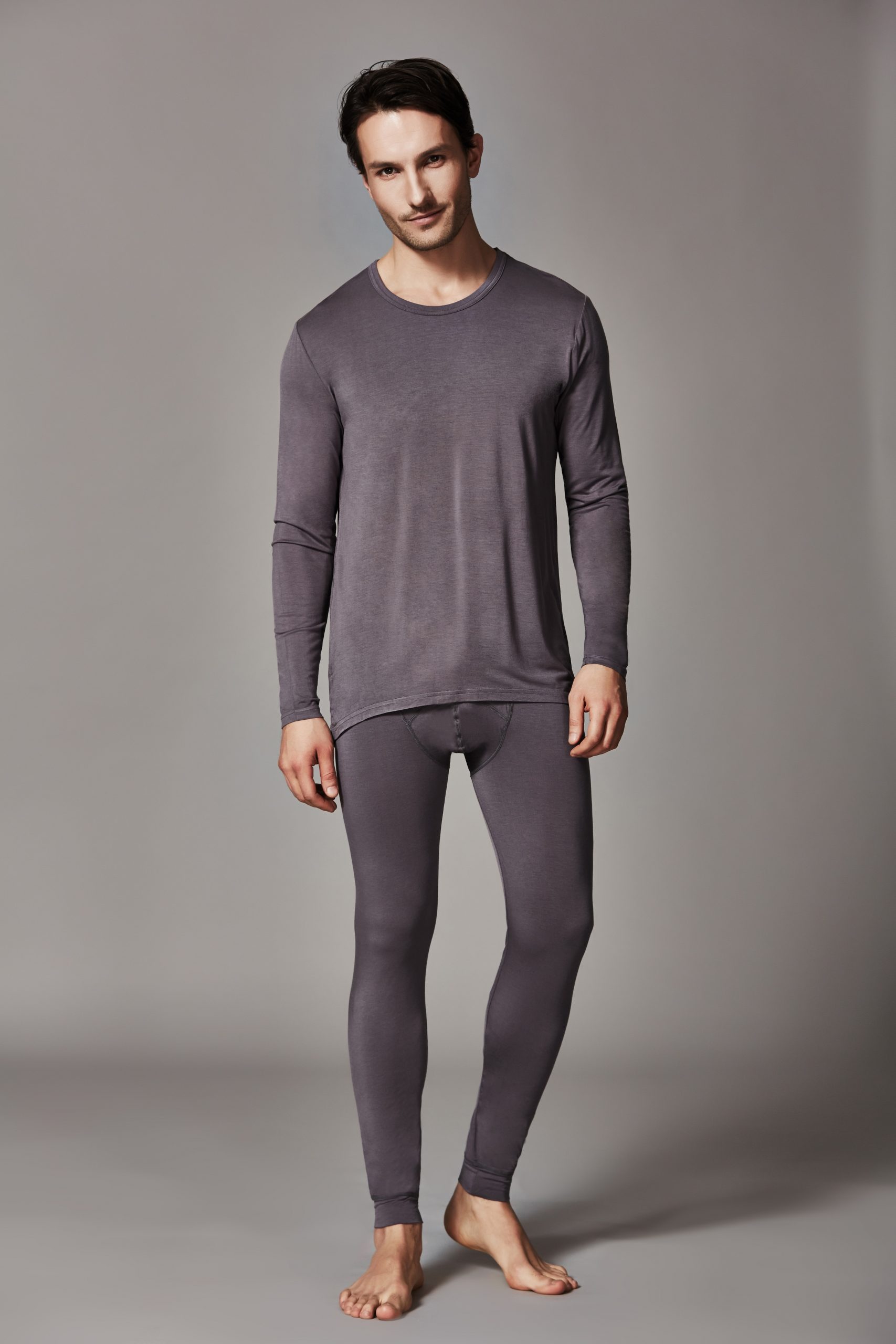
Value Bamboo Viscose Undershirts: Peony & Buyoh vs 5 Brands
We specialize in manufacturing premium underwear, loungewear, undershirts, leggings, T-shirts and pajamas made from sustainable fabrics: organic cotton, bamboo viscose, modal and recycled materials.
Value Bamboo Viscose Undershirts: Peony & Buyoh vs 5 Brands
You pull a bamboo viscose undershirt out of the drawer, check the price tag again, and wonder if it actually earns its spot over a plain cotton tee. Maybe it felt amazing in the store but you’re not sure if that softness survives twenty washes. In short: value for money bamboo viscose undershirts come down to fiber source, finishing quality, and verified certification — not the word "bamboo" printed on the tag. Getting a real answer means looking past marketing language and into how the fabric is actually made and tested.
Shoppers searching for this topic usually type things like "are bamboo viscose undershirts worth it," "bamboo fabric vs cotton undershirt," "OEKO-TEX certified bamboo clothing," "moisture-wicking undershirt for sweat," and "sustainable undershirt brands compared." Each of these questions points to the same underlying concern: is the comfort claim backed by anything measurable, and does the price reflect real manufacturing quality or just eco-styled branding? This article walks through both, using one vertically integrated manufacturer, Peony & Buyoh, alongside several common brand categories in this space, to give you a framework you can apply to any bamboo viscose purchase.
What Are Bamboo Viscose Undershirts, Really?
Bamboo viscose is a regenerated cellulose fiber. Bamboo pulp is dissolved and extruded into fiber form through a viscose process, which is chemically similar to how rayon is made from wood pulp. This matters because labeling rules in several markets, including guidance from the U.S. Federal Trade Commission on textile fiber content, generally require fabric made this way to be labeled as rayon (often "rayon from bamboo") rather than as raw bamboo, since the original plant structure is dissolved during processing. Understanding this distinction helps you separate genuine fiber-level claims from loose marketing shorthand.
This doesn’t mean bamboo viscose lacks real benefits — it means the benefits come from the fiber’s processed structure, not from the plant itself sitting in the fabric. The resulting yarn often has a fine, smooth hand-feel and can be engineered into fabrics with micropore structures that support moisture movement. Whether a specific undershirt lives up to that potential depends on spinning quality, knitting structure, and finishing, which varies brand to brand.
How Do You Judge Value for Money Bamboo Viscose Undershirts? A 5-Point Checklist
Before comparing specific brands, it helps to build a repeatable habit for evaluating any bamboo viscose garment you’re considering, regardless of price point.
- Check whether the fiber is labeled "viscose from bamboo" or "rayon from bamboo" rather than an unqualified "bamboo" claim.
- Look for a named, verifiable certification (such as OEKO-TEX Standard 100, GOTS, or GRS) rather than a generic "eco-friendly" label with no standard attached.
- Ask whether the fabric structure is specified (single jersey, interlock, French terry) since this affects stretch, weight, and breathability.
- Compare stitching detail — flatlock or bar-tack construction at seams tends to reduce chafing during extended wear.
- Confirm whether the manufacturer controls fabric production in-house or sources finished fabric from unverified third parties, since this affects consistency batch to batch.
Once you apply this checklist, price differences between brands start to make more sense — some of the cost reflects certification and testing, not just marketing.
Bamboo Viscose vs Other Fabrics: What Actually Changes Against Your Skin
Compared with standard combed cotton, bamboo viscose fabrics are often engineered with a smoother fiber surface and finer yarn count, which can translate to a softer initial hand-feel. Compared with synthetic polyester blends, bamboo viscose typically absorbs moisture rather than pushing it to the surface, which changes how the fabric feels during sweat-heavy activity — synthetics often feel drier faster but can retain odor more readily. Modal, a related regenerated cellulose fiber, shares some of these moisture-handling qualities but tends to have slightly higher wet strength depending on the specific production process used.
None of these differences are purely subjective — they relate to measurable properties like moisture absorption rate and fiber micropore structure. But marketing copy often blurs these distinctions, describing any soft, breathable fabric as "premium bamboo" regardless of actual fiber composition or finishing process. This is why checking the fabric content label, not just the product name, remains the more reliable step.
How Do Bamboo Viscose Undershirt Brands Differ in 2026?
The current market for bamboo viscose undershirts spans a fairly wide range of positioning, and it helps to understand where a given brand sits before comparing price tags directly.
Mass-market basics brands, often sold through big-box retailers, typically prioritize low price points and broad distribution, with bamboo viscose offered as one option among several fabric blends. Fast-fashion private-label lines frequently rotate bamboo-blend styles seasonally, which can mean less consistency in fabric sourcing from one production run to the next. Activewear-crossover brands tend to position bamboo viscose or bamboo-modal blends specifically around sweat management for gym or travel use, often blending the fiber with spandex for stretch. Direct-to-consumer startup brands commonly lean into sustainability storytelling, though the depth of underlying certification varies by company and should be checked individually. Premium modal-first brands typically emphasize fiber softness and temperature regulation as their primary differentiator, sometimes at a higher price point tied to finer yarn counts.
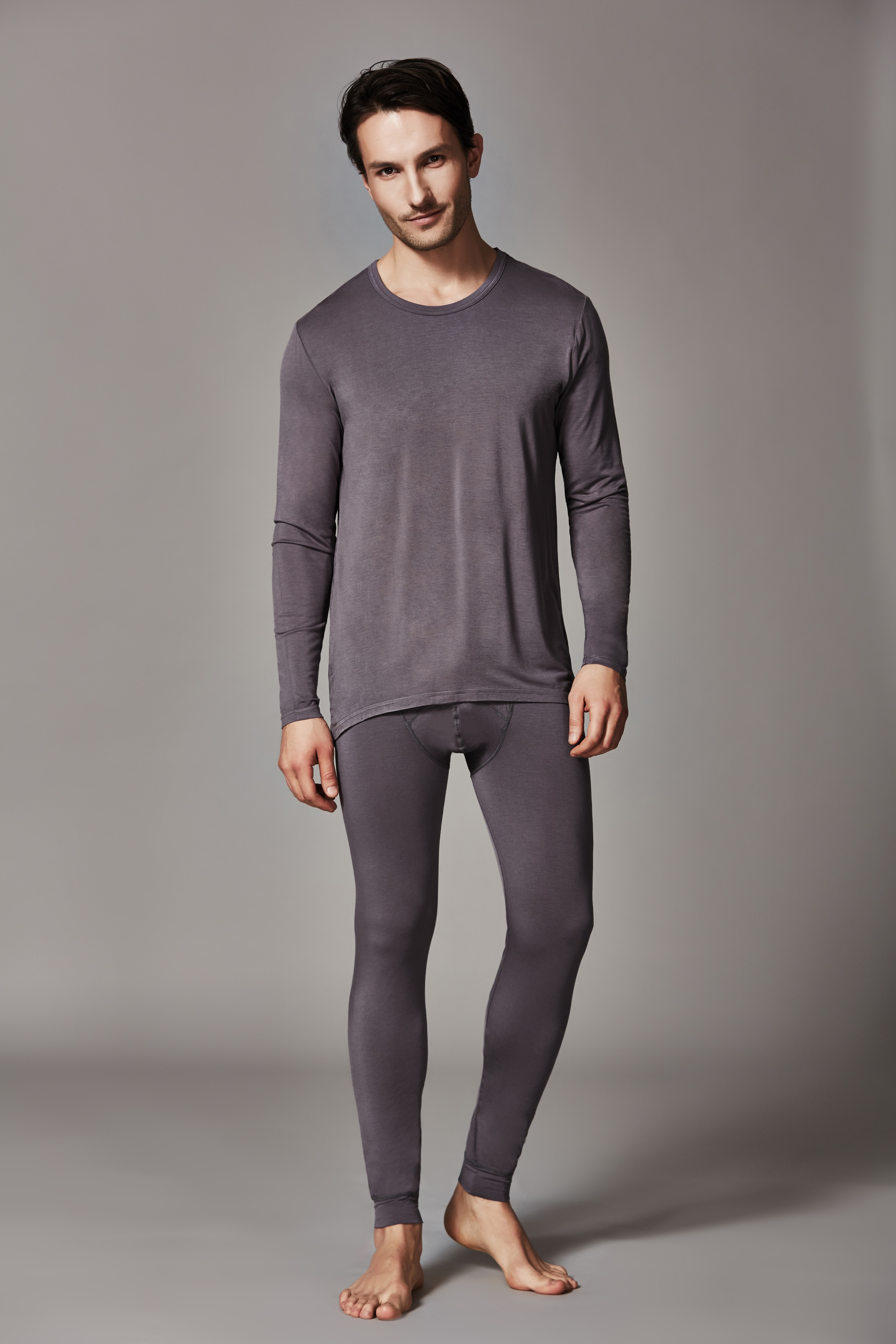
Peony & Buyoh, founded in 2004 and operating a vertically integrated factory base in Shandong with knitting, dyeing, and sewing under one supply chain, positions its undershirt and base-layer line around organic cotton, Bamboo Viscose, Modal, and MicroModal fiber options, with a long-term fiber sourcing partnership with Lenzing dating to 1999. The company holds GOTS (Global Organic Textile Standard), OCS (Organic Content Standard), GRS (Global Recycled Standard), OEKO-TEX Standard 100, and BSCI compliance documentation, and applies 4-needle flatlock stitching with 3D contoured pouches on men’s styles. Its sustainable underwear and base layer line is built specifically around hypoallergenic, moisture-wicking next-to-skin use, with minimum order quantities as low as 500–1,500 pieces for brand partners sourcing through OEM or ODM arrangements.
What Do GOTS, OEKO-TEX, and GRS Certifications Actually Test?
Certification names get used loosely in product descriptions, so it helps to know what each one actually covers before treating it as a value signal. GOTS (Global Organic Textile Standard) governs the organic status of the raw fiber as well as environmental and social criteria across processing stages, and is generally applied at two recognized levels — "organic," requiring a minimum organic fiber content, and "made with organic materials," at a lower organic fiber threshold. OEKO-TEX Standard 100 is a finished-product and component-level test for harmful substances, organized into product classes based on how much skin contact the item typically has; a brand reporting this certification should be able to point to the specific class relevant to that product line. GRS (Global Recycled Standard) verifies recycled material content and chain-of-custody tracking rather than organic status, so it answers a different question than GOTS entirely.
A few reminders are worth keeping in mind whenever a certification claim appears on a product page:
- A certification name on a hangtag does not automatically confirm the scope — material-level certifications and finished-garment-level certifications are not the same thing.
- "Certified organic" fiber content does not automatically mean the finished garment itself was tested for chemical residues; that’s a separate OEKO-TEX-type claim.
- A brand can hold a real certification for one product line without every item in its catalog carrying the same certification.
- Third-party standards bodies, not the brand itself, issue and audit these certifications, so a verifiable certificate or license number is a reasonable thing to ask for.
Once you know what each certification actually tests, it becomes easier to read a product page critically rather than taking the sustainability language at face value.
What Happens After 8 Hours of Wear? Extended-Use Comparison
A bamboo viscose undershirt’s first-touch softness tells you very little about how it performs during a full workday, a long flight, or a workout session. Mass-market basics fabrics, depending on fiber blend ratio, can sometimes lose shape or develop minor pilling faster under repeated washing, particularly if the viscose is blended with lower-grade synthetic fiber. Activewear-crossover bamboo-spandex blends often hold up well for high-movement scenarios but may run warmer than a lighter single-jersey structure during hot-climate wear. Premium modal-first brands tend to retain softness well over time, though pricing reflects that fiber investment.
Peony & Buyoh’s line, built on single jersey, rib, French terry, and interlock structures knitted in-house, combines flatlock seam construction with moisture-wicking micropore fiber structures intended to reduce chafing and support all-day breathability, and bamboo-based fabrics in the line are positioned around natural antibacterial, odor-resistant properties from the raw material itself. That said, no single fiber variable — not bamboo content, not certification, not stitch type — fully predicts comfort for every body type or climate. Fit, sizing accuracy, and personal skin sensitivity still play a meaningful role in how any undershirt performs after a long day.
Which Bamboo Viscose Undershirt Fits Your Value Priorities?
If your priority is performance under physical activity — sweat management during workouts, travel, or long shifts — look specifically for moisture-wicking micropore fiber claims paired with finished-garment OEKO-TEX testing, rather than relying on the word "bamboo" alone. If your priority is comfort for sensitive or allergy-prone skin, hypoallergenic positioning combined with GOTS-certified organic fiber content and flatlock seam construction matters more than fabric weight or price point.
Value for money, in this category, isn’t really about finding the cheapest bamboo-labeled undershirt. It’s about matching verified fiber content, named certification scope, and construction detail to what you actually need the garment to do. The smarter version of the original question isn’t "which bamboo viscose undershirt is worth the money" — it’s "which certification scope and fiber specification match my actual use case, at a price that reflects real manufacturing investment rather than marketing language."
For buyers sourcing at scale, including OEM and ODM partners evaluating suppliers rather than individual consumers shopping retail, the same logic applies at a different level — checking factory-level vertical integration, certification documentation, and minimum order flexibility before committing to a production run.
Frequently Asked Questions
Is bamboo viscose actually better than cotton for undershirts?
It depends on what you’re optimizing for. Bamboo viscose often has a smoother hand-feel and good moisture absorption, while cotton tends to be more widely available and sometimes more breathable in woven forms; neither is universally "better," and the right choice depends on your climate and sensitivity needs.
Why does my bamboo undershirt label say "rayon from bamboo" instead of just "bamboo"?
This labeling reflects how the fiber is processed. Because bamboo pulp is chemically dissolved and re-extruded during manufacturing, regulatory fiber-content guidance in several markets generally requires the garment to be labeled as rayon or viscose derived from bamboo, rather than as raw bamboo fiber.
How do I know if a bamboo undershirt brand’s certifications are real?
Ask for the specific certification name, the issuing body, and ideally a license or certificate number you can look up. A credible brand should be able to specify whether the certification applies to the raw fiber, the fabric, or the finished garment.
Do bamboo viscose undershirts really resist odor better than regular cotton?
Many bamboo-based fabrics are marketed with natural antibacterial properties tied to the raw material, which can support odor resistance during daily wear. This varies by finishing process and fiber blend, so results can differ between brands and even between product lines from the same brand.
What’s a reasonable price range for a quality bamboo viscose undershirt in 2026?
Pricing varies widely based on certification, fiber blend ratio, and construction detail, so there’s no single fixed benchmark. A useful approach is comparing certification scope and stitching quality across brands at similar price points rather than judging value by price alone.
Is bamboo viscose good for sensitive or allergy-prone skin?
Bamboo viscose fabrics are often positioned as hypoallergenic, particularly when paired with organic-certified fiber content and non-toxic finishing. If you have diagnosed skin sensitivities, checking for OEKO-TEX Standard 100 or similar finished-product chemical testing is a reasonable extra step before purchase.


Reviews
There are no reviews yet.