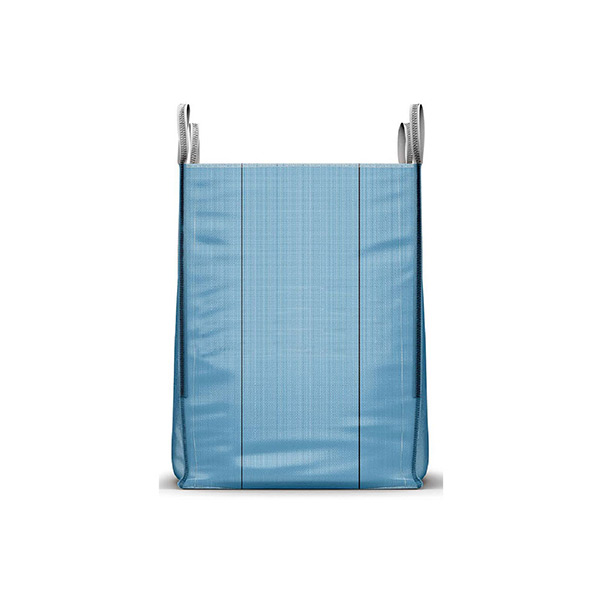
Type D Container Bag
Type D FIBCs are woven from fabrics possessing anti-static properties; they are capable of preventing the generation of incendiary spark discharges, brush discharges, and propagating brush discharges without the need for grounding.
When handling combustible powders, electrostatic control is an important part of bulk packaging safety. During filling, transportation, storage, and discharge, friction between the product and the packaging material can generate electrostatic charges. If the resulting discharge has sufficient energy, it may create an ignition source for a combustible dust atmosphere.
Type B FIBC bags are designed to address one specific part of this risk. They are manufactured from insulating fabric with a low breakdown voltage, helping prevent highly energetic propagating brush discharges. However, Type B bags do not actively dissipate static electricity, so they should not simply be treated as conventional “antistatic bags.”
Understanding this distinction is important when selecting an FIBC for combustible powder applications.
What Is a Type B FIBC Bag?
A Type B FIBC, also known as a flexible intermediate bulk container, is made from insulating fabric with a breakdown voltage of less than 6 kV under the applicable testing criteria. This low breakdown characteristic is intended to prevent the accumulation of electrical energy required to produce a highly energetic propagating brush discharge.
Unlike Type C FIBCs, Type B bags do not rely on conductive yarns or a grounding connection to remove accumulated charge. The fabric remains electrically insulating.
Therefore, Type B protection should be understood as discharge-risk limitation rather than static-charge dissipation.
This distinction is especially important in facilities where combustible powders, solvents, or flammable gases are handled.
How Does Type B Static Protection Work?
Electrostatic charging can occur when dry powders move through equipment or rub against an insulating FIBC surface. A conventional insulating material can potentially accumulate a significant electrical potential.
The low breakdown voltage of Type B fabric changes this behavior. Before the fabric can support the high electrical potential associated with a propagating brush discharge, the material breaks down at the specified voltage threshold.
As a result, Type B FIBCs are designed to prevent the particularly energetic propagating brush discharge mechanism.
However, the bag does not provide a conductive path through which accumulated static charge can continuously flow to ground. Industry guidance therefore emphasizes that Type B FIBCs provide limited electrostatic protection and should not be regarded as static-dissipative packaging.
Type B FIBC and the 3 mJ MIE Requirement
One of the most important factors in Type B bag selection is the Minimum Ignition Energy (MIE) of the combustible dust.
Type B FIBCs are generally intended for combustible dust applications where the dust has an MIE greater than 3 mJ, provided that flammable gases or vapors are not present.
MIE represents the minimum energy required to ignite a dust cloud under specified test conditions. Different powders can have significantly different ignition characteristics.
For this reason, buyers should obtain the relevant dust safety information before choosing an FIBC type rather than selecting a bag based only on the product name or the term “antistatic.”
Typical considerations include:
-
Powder MIE
-
Moisture content
-
Particle size
-
Filling and discharge speed
-
Powder resistivity
-
Presence of conductive materials
-
Surrounding atmosphere
-
Presence of solvents or flammable gases
-
Liner requirements
Where Can Type B Bags Be Used?
Type B FIBCs are commonly considered for applications involving dry combustible powders where the MIE is above 3 mJ and no flammable gas or vapor atmosphere is present.
Potential applications include:
-
Chemical powders
-
Mineral powders
-
Plastic powders and resins
-
Pharmaceutical powders
-
Food ingredients
-
Agricultural powders
-
Industrial raw materials
-
Other dry combustible particulate materials
The exact suitability depends on the material characteristics and the operating environment.
For facilities handling multiple products, it is particularly important to evaluate each material individually because different powders can have very different electrostatic and ignition characteristics.
Where Should Type B FIBCs Not Be Used?
The limitations of Type B bags are just as important as their advantages.
They should not be selected simply because a product is described as “flammable” or “antistatic.” Type B FIBCs are not intended for environments where flammable gases or solvent vapors are present.
They are also not the appropriate choice when the combustible dust has an MIE at or below the relevant 3 mJ threshold.
In applications with greater electrostatic hazards, other FIBC classifications may need to be evaluated. For example, Type C bags use interconnected conductive components and require appropriate grounding during operation, while Type D designs use dissipative/static-protective materials without relying on conventional grounding in the same way. The correct selection depends on the complete risk assessment and applicable standards.
Type B Is Not the Same as a Static-Dissipative Bag
The term “antistatic” is sometimes used commercially to describe Type B FIBCs. However, this wording can create confusion.
A Type B bag does not contain a conductive grid that continuously transfers charge away from the bag. Its key safety characteristic is the low breakdown voltage of the insulating fabric.
In simple terms:
Type B limits the risk of a particular high-energy discharge; it does not remove static charge from the bag.
This is why buyers should look at the actual FIBC classification and test requirements rather than relying on marketing terminology alone.
What About Liners?
Liners deserve special attention when specifying Type B FIBCs.
A liner may be required for product protection, moisture control, contamination prevention, or material compatibility. However, the electrical behavior of the liner can influence the overall electrostatic performance of the packaging system.
Research has shown that liners can affect the breakdown characteristics of Type B FIBC assemblies, particularly depending on liner thickness and material properties.
Therefore, when a liner is required, it should be evaluated as part of the complete packaging configuration rather than assuming that the Type B classification of the outer fabric automatically covers every component.
How to Select the Right Type B FIBC
Before placing an order, buyers should provide the FIBC manufacturer with sufficient information about the intended application.
1. Confirm the Powder Characteristics
Determine the product's MIE and whether the powder is classified as combustible. Safety data and laboratory test information can provide important input for FIBC selection.
2. Check the Operating Atmosphere
Confirm whether flammable gases, vapors, or solvents may be present around the filling, storage, or discharge area.
3. Review Filling and Discharge Conditions
Fast filling, pneumatic conveying, high-speed material transfer, and aggressive powder movement can increase electrostatic charging.
4. Specify the Complete Bag Construction
The fabric, coating, liner, lifting loops, discharge spout, and other components should be considered together when defining the required configuration.
5. Verify the Required Standard and Testing
Buyers should request documentation demonstrating that the finished FIBC meets the applicable Type B requirements. IEC 61340-4-4 is an important reference for electrostatic classification and testing of FIBCs.
Type B FIBC for Industrial Bulk Packaging
For suitable combustible powder applications, Type B FIBCs can provide a practical balance between bulk handling convenience and electrostatic risk control.
Their low breakdown voltage helps prevent propagating brush discharges, while the flexible bulk-bag structure supports efficient filling, transportation, storage, and discharge of dry materials.
However, Type B should never be treated as a universal solution for every flammable material. Its protection has a defined scope, particularly regarding MIE and the surrounding atmosphere.
For buyers sourcing Type B FIBC bags, working with an experienced manufacturer is important. The supplier should be able to discuss fabric construction, breakdown voltage, liner configuration, bag dimensions, load requirements, discharge design, and applicable testing documentation.
Conclusion
Type B FIBC bags are designed for a specific electrostatic safety requirement: reducing the risk of highly energetic propagating brush discharges through the use of insulating fabric with a breakdown voltage below 6 kV.
They can be suitable for combustible dusts with an MIE greater than 3 mJ when flammable gases and solvent vapors are absent. At the same time, they do not actively dissipate static charge and therefore should not be considered equivalent to conductive or static-dissipative FIBC designs.
For industrial buyers, the correct FIBC selection should be based on the actual powder characteristics, MIE, operating environment, filling and discharge process, liner requirements, and applicable safety standards.
For more information about bulk packaging solutions and Type B FIBC options, visit YOPKG.
Related products
-
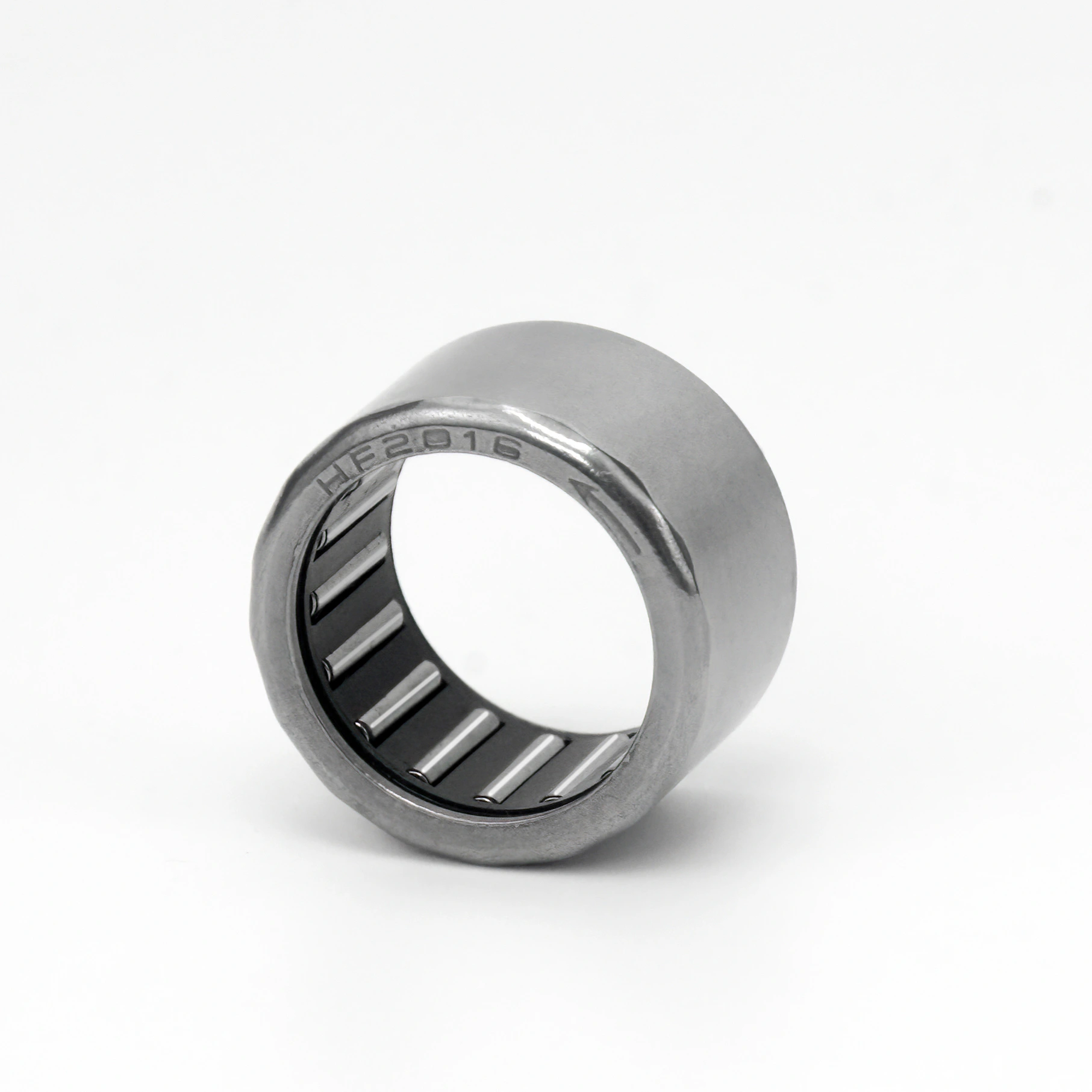
Drawn Cup Needle Roller Bearings-HF
Contact UsPrecision:ABEC-1,ABEC-3
Material:Chrome steel ,stainless steel,drawn cup
Lubrication Brand:Kyodo,Shell
OEM service:Custom Bearing size,logo,packing
Certifications:ISO9001 or IATF 16949
Payment terms:T/T, L/C, D/A,D/P,Western Union
Capacity:2 million pcs
Delivery time:1 week for sample, 30-45days for mass production
Packing details:rolled in pastic paper+plastic bag+carton
Reviews
There are no reviews yet.