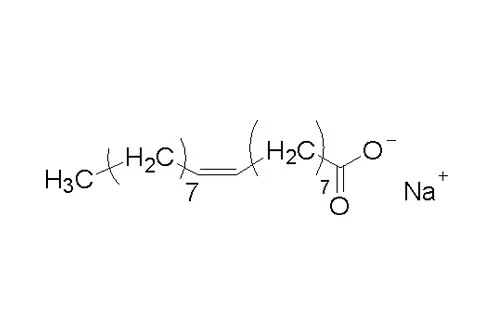
Sodium Oleate
The original formula of fat emulsion injection uses soybean oil as the oil phase and egg yolk lecithin as the emulsifier to achieve good stability and safety.
|
Product Name |
|
|
Chemical Name |
/ |
|
CAS No. |
143-19-1 |
|
NMPA CDE registration no. |
F20190001608(A) |
|
USFDA DMF No. |
/ |
|
Quality grade |
Injection |
|
Quality standards |
Manufacturer's standard |
|
Molecular Formula |
C18H33NaO2 |
|
Applications and examples |
Fat emulsion co-emulsifier |
|
Product code |
O04005 |
|
Package sizes |
100g |
|
Storage condition |
Store at room temperature, keep dry and cool |
FEATURES OF SODIUM OLEATE
As an anionic surfactant, sodium oleate is more toxic and corrosive than oleic acid;
Topical use may cause slight irritation and burning sensation to the skin and mucous membrane;
Animal experiments show that sodium oleate has strong gastrointestinal corrosive effects and obvious reproductive toxicity. Eye irritation can cause relatively severe corneal damage.
SODIUM OLEATE PRODUCT PROPERTIES
The solubility of sodium oleate in water increases and can be dissolved in 10 times the amount of water, foaming to a viscous liquid. Due to it's partial hydrolysis into insoluble acidic soap and sodium hydroxide, the solution becomes strongly alkaline and milky.
Sodium oleate is soluble in about 20 times the amount of ethanol, almost insoluble in diethyl ether, petroleum ether and other organic solvents.
Reviews
There are no reviews yet.