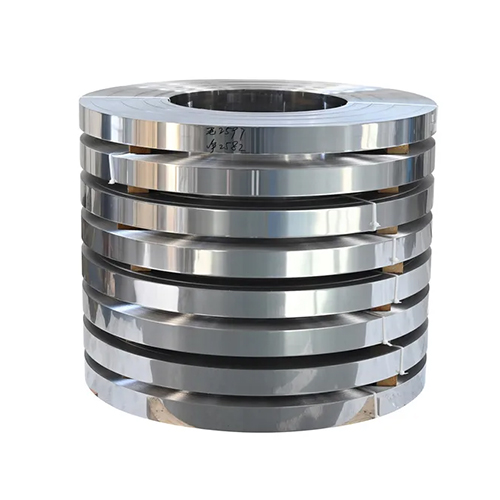
S17400
Precipitation Hardening Stainless Steels (e.g.,17-4PH,17-7PH ) are a class of high-strength stainless steels that achieve their exceptional mechanical properties through a specific heat treatment process known as age hardening or precipitation hardening.
S17400 is a high-strength precipitation-hardening stainless steel grade widely used where mechanical strength, hardness, corrosion resistance, and dimensional reliability are required. Commonly associated with 17-4PH stainless steel, S17400 achieves its high mechanical performance through a controlled precipitation-hardening heat treatment process.
Precipitation-hardening stainless steels are different from conventional stainless steel grades because their strength can be significantly increased through carefully controlled aging treatment. This makes S17400 particularly useful for demanding applications in aerospace, chemical processing, energy equipment, medical devices, and high-performance automotive components.
The broader precipitation-hardening stainless steel family also includes 17-7PH, which offers a different balance of strength, corrosion resistance, and mechanical performance. Understanding the composition, heat-treatment condition, available forms, and application requirements is therefore important when selecting the appropriate grade.
What Is S17400 Stainless Steel?
S17400 belongs to the precipitation-hardening stainless steel family and is commonly identified with 17-4PH stainless steel.
The material contains approximately 15–17.5% chromium, 3–5% nickel, and 3–5% copper, together with controlled additions of niobium. These alloying elements contribute to the material's corrosion resistance and strengthening characteristics.
Unlike stainless steels that rely primarily on solid-solution or work hardening, precipitation-hardening grades obtain much of their high strength through an aging process.
During heat treatment, strengthening precipitates form within the stainless steel matrix. The resulting microstructure provides a combination of strength and hardness that makes S17400 suitable for components exposed to demanding mechanical conditions.
S17400 and 17-7PH: Precipitation-Hardening Stainless Steel Family
17-4PH and 17-7PH are both precipitation-hardening stainless steels, but their alloy compositions and performance characteristics differ.
17-4PH contains copper and niobium and is widely selected when high strength and corrosion resistance need to be combined in a versatile stainless steel material.
17-7PH contains a higher nickel content and includes aluminum as a key alloying element. Its properties can also be modified through appropriate heat treatment.
The choice between these grades should be based on the required strength, hardness, corrosion environment, operating temperature, fabrication process, and final component requirements.
Chemical Composition of 17-4PH
The typical chemical composition specified for 17-4PH includes:
| Element | 17-4PH Composition |
|---|---|
| Carbon (C) | ≤0.07% |
| Niobium (Nb) | 0.15–0.45% |
| Manganese (Mn) | ≤1.0% |
| Sulfur (S) | ≤0.04% |
| Nickel (Ni) | 3.0–5.0% |
| Chromium (Cr) | 15–17.5% |
| Phosphorus (P) | ≤0.04% |
| Silicon (Si) | ≤1.0% |
| Copper (Cu) | 3.0–5.0% |
| Aluminum (Al) | — |
| Iron (Fe) | Balance |
Chromium provides the fundamental stainless steel corrosion resistance, while nickel contributes to the overall metallurgical balance. Copper and niobium play important roles in the precipitation-hardening system that allows the material to reach high strength after aging treatment.
Chemical Composition of 17-7PH
17-7PH has a different alloy formulation:
| Element | 17-7PH Composition |
|---|---|
| Carbon (C) | ≤0.09% |
| Manganese (Mn) | ≤1.0% |
| Sulfur (S) | ≤0.04% |
| Nickel (Ni) | 6.5–7.75% |
| Chromium (Cr) | 16–18% |
| Phosphorus (P) | ≤0.04% |
| Silicon (Si) | ≤1.0% |
| Aluminum (Al) | 0.75–1.5% |
| Copper (Cu) | — |
| Iron (Fe) | Balance |
The different alloy design gives 17-7PH its own combination of mechanical and processing characteristics. For engineering applications, the final grade should therefore be selected according to the actual service conditions rather than simply treating all precipitation-hardening stainless steels as interchangeable.
Mechanical Properties of 17-4PH
One of the main advantages of S17400/17-4PH is the range of mechanical properties available through different heat-treatment conditions.
Typical values include:
| Condition | Tensile Strength RM (N/mm²) | Hardness HBW | Yield Strength Rp0.2 (N/mm²) | Elongation E4D |
|---|---|---|---|---|
| S-A | ≤1200 | ≤360 | — | — |
| H900 | ≥1310 | ≥380 | ≥1170 | ≥10% |
| H925 | ≥1170 | ≥375 | ≥1070 | ≥10% |
| H1025 | ≥1070 | ≥331 | ≥1000 | ≥12% |
| H1075 | ≥1000 | ≥311 | ≥860 | ≥13% |
| H1100 | ≥965 | ≥302 | ≥795 | ≥14% |
| H1150 | ≥930 | ≥277 | ≥725 | ≥16% |
| H1150M | ≥795 | ≥255 | ≥520 | ≥18% |
| H1150D | ≥860 | 255–311 | ≥725 | ≥16% |
These conditions demonstrate an important characteristic of precipitation-hardening stainless steel: mechanical performance can be adjusted through heat treatment.
For applications where maximum strength is the priority, a higher-strength condition may be appropriate. Where toughness and ductility are more important, another aging condition may provide a better balance.
Therefore, the material condition should always be considered alongside the nominal grade.
Mechanical Characteristics of 17-7PH
17-7PH also provides high mechanical strength.
The supplied data indicates a tensile strength of approximately 1275 MPa, equivalent to about 184,900 psi, with a yield strength of approximately 1030 MPa, or 149,000 psi.
Other listed properties include:
-
Fracture toughness: approximately 76 MPa·m½
-
Elastic modulus: approximately 204 GPa
-
Poisson's ratio: 0.27–0.30
-
Elongation at break: approximately 6%
-
Hardness: approximately 41 HRC
These properties make 17-7PH useful for applications requiring a high-strength stainless material with controlled mechanical performance.
Available S17400 Product Forms
S17400 and related precipitation-hardening stainless steels can be supplied in a wide range of forms to accommodate different manufacturing processes.
Available product forms include:
Stainless Steel Coil and Sheet
Cold-rolled coil and sheet can be supplied in thicknesses from approximately 0.3 mm to 3.0 mm, with coil widths from 1000 mm to 2000 mm.
Sheet width and length can be produced according to customer requirements.
Hot-Rolled Coil and Plate
Hot-rolled products are available in thicknesses from approximately 3 mm to 16 mm, with widths of 1000–2000 mm.
Plate dimensions can also be customized according to the required application.
Stainless Steel Strip
Strip products can be supplied in thicknesses ranging from 0.3 mm to 16.0 mm, with width and length determined by customer requirements.
Stainless Steel Plate
A broader plate range is available, with thicknesses from approximately 0.3 mm to 200 mm and widths from 1000 mm to 2000 mm.
Stainless Steel Round Bar
Round bar can be supplied with diameters ranging from approximately 2 mm to 600 mm, covering both relatively small precision components and larger structural or mechanical parts.
Stainless Steel Pipe and Tube
Seamless pipe and tube are available with outside diameters from approximately 4.0 mm to 1219 mm and wall thicknesses from 0.5 mm to 100 mm.
Seamless pipe lengths can reach approximately 24,000 mm, or alternative dimensions can be discussed according to requirements.
Welded stainless steel pipe and tube are also available, with outside diameters ranging from approximately 6.0 mm to 2800 mm and thicknesses from 0.3 mm to 45 mm.
Bars and Profiles
Other available forms include:
-
Square bar: 3.0–180 mm
-
Flat bar: 0.5–200 mm thickness and 1.5–250 mm width
-
Angle bar: according to customer requirements
This variety of forms allows precipitation-hardening stainless steel to be integrated into machining, fabrication, structural, and component manufacturing processes.
Applicable Standards
The supplied material can be provided according to a range of international standards and specifications, including:
-
ASTM A240/A480
-
ASTM B688
-
ASTM B463/SB463
-
ASTM B168/SB168
-
ASTM B443/SB443
-
ASTM B424/SB424
-
ASTM B625/SB625
-
ASTM B575/SB575
-
JIS G4303
-
BS 1449
-
DIN 17441
-
JIS G4305
The applicable standard should be confirmed according to the required product form, grade, dimensions, and purchasing specification.
Why Precipitation-Hardening Stainless Steel Is Used
The main advantage of precipitation-hardening stainless steel is its ability to combine several desirable properties in one material system.
Depending on the grade and heat-treatment condition, it can offer:
High mechanical strength: Suitable for components exposed to significant mechanical loads.
High hardness: Useful where resistance to deformation and wear is important.
Corrosion resistance: Chromium provides stainless characteristics suitable for many industrial environments.
Heat-treatment flexibility: Different aging conditions allow engineers to select a more suitable balance of strength and ductility.
Wide product availability: Coil, sheet, plate, strip, bar, pipe, tube, and profiles can support different manufacturing processes.
This combination makes S17400 particularly useful where conventional stainless steel grades may not provide enough mechanical strength.
Major Application Areas
Aerospace Industry
Aerospace components require materials that can withstand demanding mechanical conditions while maintaining predictable performance.
17-4PH and other precipitation-hardening stainless steels can be used for selected aerospace components where high strength and corrosion resistance are required.
Chemical and Energy Sector
Equipment used in chemical processing and energy applications may encounter mechanical loads and corrosive environments.
The strength and stainless characteristics of precipitation-hardening grades make them suitable for selected components, fittings, shafts, structural parts, and other engineered applications.
Material selection should always account for the specific chemical environment and operating conditions.
Medical Devices
Medical equipment and components often require controlled material properties, corrosion resistance, dimensional stability, and reliable mechanical performance.
S17400 can be considered for suitable medical-device applications where its combination of strength and stainless characteristics meets the component requirements.
High-Performance Automotive
High-performance automotive systems can place demanding mechanical requirements on individual components.
Precipitation-hardening stainless steels provide a useful combination of high strength and corrosion resistance for selected automotive components where conventional materials may not provide the required performance.
Selecting the Right Grade and Condition
When purchasing S17400 or another precipitation-hardening stainless steel, the grade itself is only one part of the specification.
Buyers should also confirm:
-
Material grade – such as 17-4PH or 17-7PH.
-
Heat-treatment condition – for example H900, H925, H1025, H1075, or H1150.
-
Product form – plate, sheet, coil, bar, tube, strip, or profile.
-
Dimensions – thickness, diameter, width, and length.
-
Applicable standard – ASTM, JIS, BS, DIN, or another required specification.
-
Required mechanical properties – particularly tensile strength, yield strength, hardness, and elongation.
-
Surface requirements – depending on the final manufacturing process and application.
A detailed specification helps ensure that the supplied material matches the requirements of the final component.
Conclusion
S17400, commonly associated with 17-4PH precipitation-hardening stainless steel, is designed for applications where high strength, hardness, corrosion resistance, and controlled mechanical properties are required. Its performance can be modified through precipitation-hardening heat treatment, providing several conditions with different balances of strength and ductility.
The precipitation-hardening stainless steel family also includes 17-7PH, which uses a different alloy composition and provides its own combination of mechanical characteristics.
With availability in coil, sheet, strip, plate, round bar, square bar, flat bar, angle bar, seamless pipe, and welded tube, these materials can support a broad range of manufacturing requirements.
From aerospace and chemical equipment to energy systems, medical devices, and high-performance automotive components, S17400 and related precipitation-hardening stainless steels provide a versatile material option for demanding engineering applications.
Reviews
There are no reviews yet.