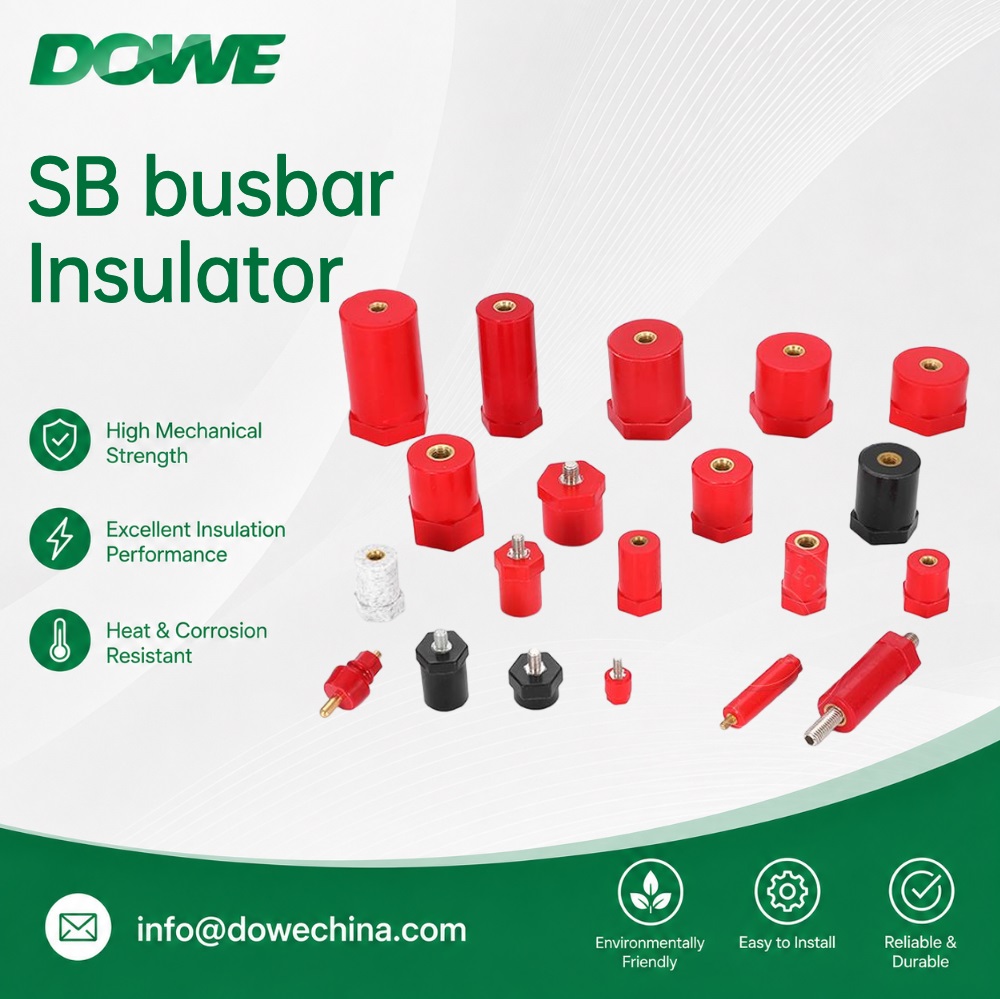
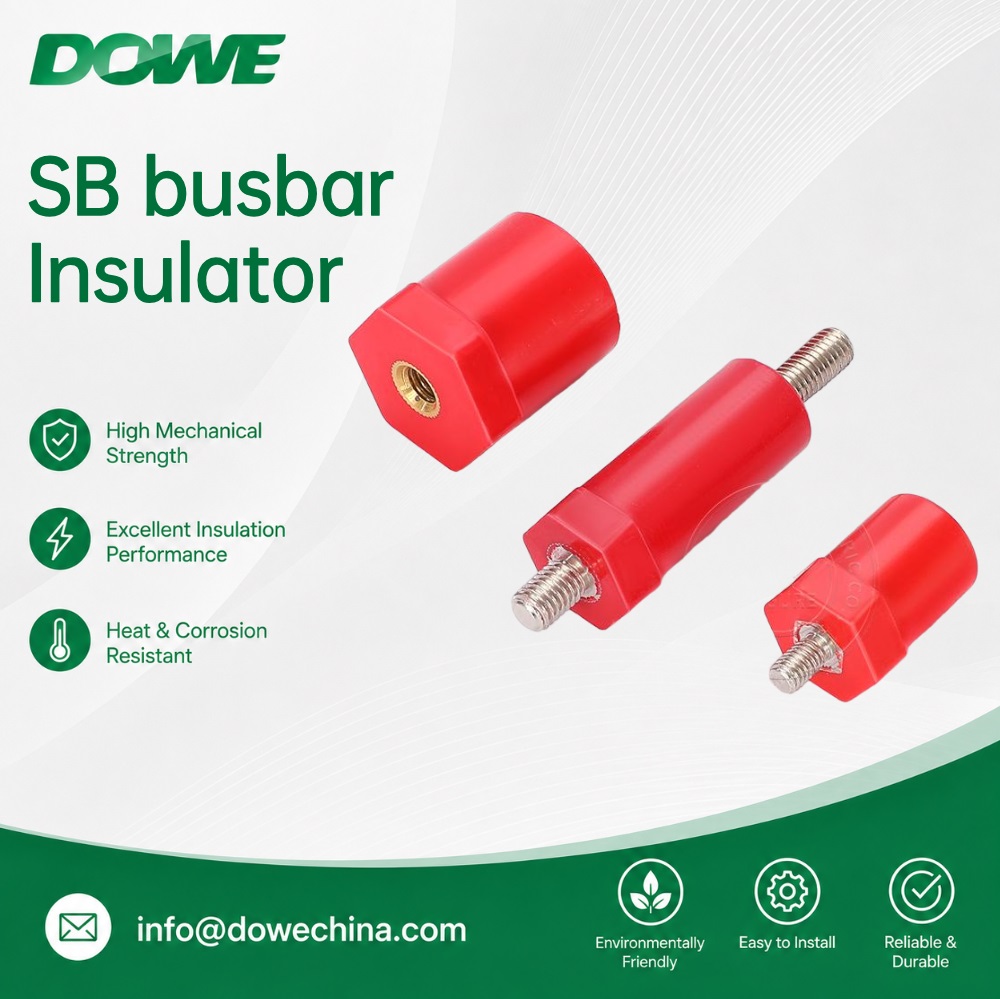
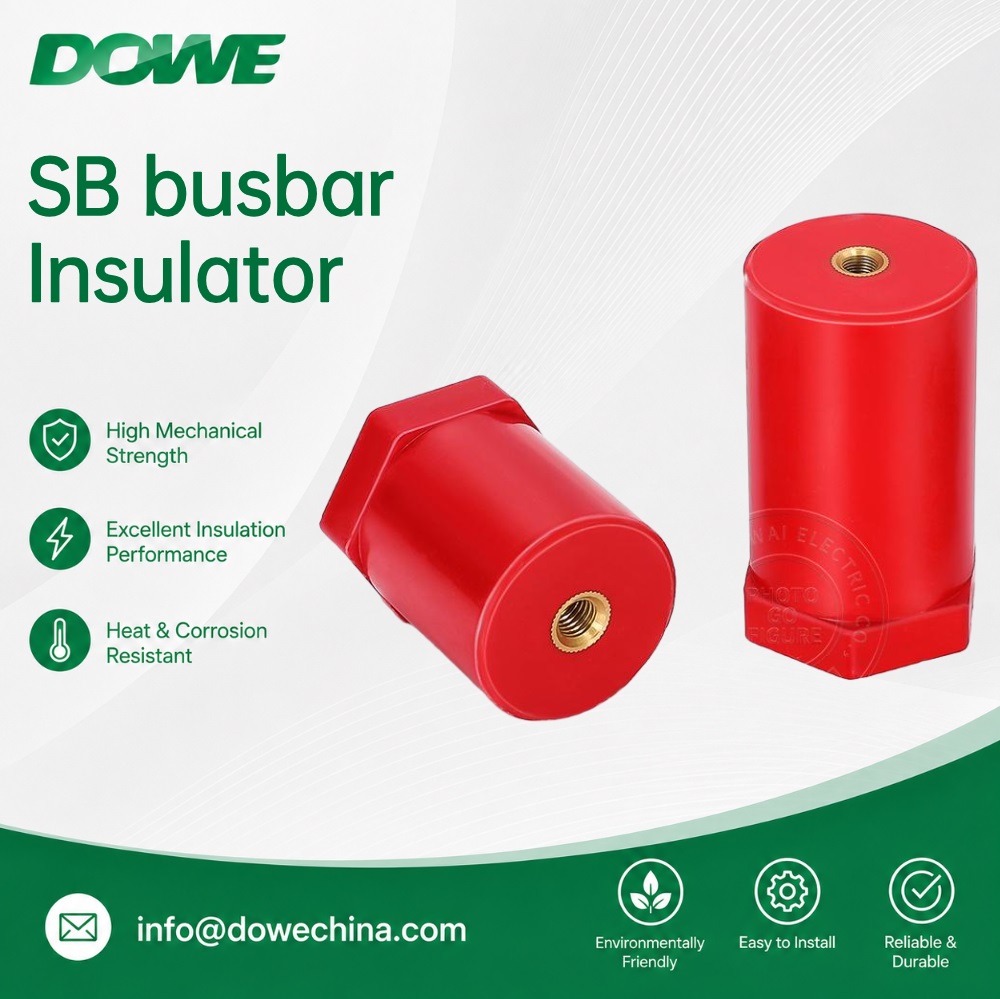
RoHS and REACH Compliance for Insulation Hardware
RoHS and REACH Compliance for Insulation Hardware
Section 1: Industry Background and the Compliance Gap Facing European Switchgear Exports
Electrical switchgear exported to Europe now operates inside a compliance environment that treats insulation hardware as a critical control point rather than a peripheral accessory. Directive (EU) 2015/863 — commonly referenced alongside RoHS 2011/65/EU — expands the restricted substance list that applies to articles placed on the European market, while Regulation (EC) 1907/2006 (REACH) imposes a continuing SVHC communication obligation on manufacturers and importers. For panel builders and switchgear OEMs, the practical question is no longer whether a standoff insulator or busbar support can be sourced, but whether the materials behind it will survive both the compliance review and the electrical service conditions of the installation.
The engineering stakes are specific and measurable. DC arcing in high-voltage DC solar and battery systems lacks a natural zero-crossing point, creating continuous surface tracking risks. Short-circuit electrodynamic forces place mechanical stress on busbar supports. Thermal cycling causes differential expansion between copper and aluminum busbars and composite supports. Non-compliant plastics can ignite during internal arc faults in enclosed switchgear. Each of these failure modes becomes more likely when material selection is treated as a purchasing decision instead of an engineering one.
This is the context in which DOWE Electric — the brand of Yueqing City Duwai Electric Co., Ltd. — has spent over two decades engineering insulation solutions for global power distribution infrastructure. Its stated positioning is that of a specialized research, development, and high-precision manufacturing enterprise dedicated to electrical insulation systems and busbar supports, with OEM/ODM capability and a business footprint spanning more than 60 countries across Europe, the Americas, the Middle East, Southeast Asia, and Australia.
Section 2: Authoritative Analysis — What Compliant Insulation Hardware Must Actually Deliver
Necessity. RoHS and REACH compliance is a market-entry condition, but it is not a performance guarantee. A compliant composite can still track, soften, or fracture under service stress. The distinction that matters for European switchgear programs is whether a material system is simultaneously chemically compliant and dielectrically, thermally, and mechanically adequate for the application.
Principle Logic. Tracking occurs when surface contamination and moisture form a conductive carbon path. DOWE addresses this with materials carrying a Comparative Tracking Index (CTI) of 600V or higher, placing them in Material Group I for resistance to conductive carbon tracking. Fire behavior follows a parallel logic: UL 94-V0 self-extinguishing flame retardancy with afterflame time t1 + t2 no greater than 8 seconds and zero flaming drips limits the contribution of insulation hardware to an internal arc event. Thermal stability is governed by operating temperature endurance from -40°C to +140°C for new energy applications, a Heat Deflection Temperature (HDT) that maintains structural rigidity under 1.8 MPa flexural load up to +180°C, and a Relative Thermal Index (RTI) of 130°C for electrical and mechanical properties per UL 746B. Dimensional stability under thermal cycling follows from a Coefficient of Thermal Expansion (CTE) of 15-22 × 10^-6 /K, aligned with copper (16.5 × 10^-6 /K) and aluminum (23.1 × 10^-6 /K).
Standard Reference. The applicable framework referenced by DOWE includes IEC 61439-1/2, IEC 60664-1, IEC 60273, IEC 60071, and IEC 60815, supported by UL 94-V0 flammability certification, RoHS 2011/65/EU & 2015/863 compliance, REACH (EC 1907/2006) compliance, CE clearance, SGS third-party type test clearance, and UL 746B RTI certification. Electrical performance benchmarks documented for the product range include low-voltage dielectric withstand of 3,500V AC (50Hz, 1 minute) without puncture or flashover, surge impulse margin withstand of 1.2/50 μs impulse overvoltage up to 8kV (Overvoltage Category IV per IEC 60664-1), epoxy volume resistivity greater than 10^14 Ω·cm, partial discharge less than 5 pC at 1.1 Um for cast epoxy medium-voltage insulators, and a dielectric loss angle tan δ no greater than 0.005 at 20°C. Mechanical benchmarks include tensile pull-out resistance greater than 8,000 N for M8/M10 inserts and torsional lock greater than 1.5 × the bolt proof torque.
Solution Path. DOWE supports compliance documentation through SGS third-party type test reports that allow panel builders to complete Design Verification documentation without independent destructive testing. On the manufacturing side, automated BMC/SMC hydraulic compression molding workshops, vacuum casting facilities for epoxy resin using automated pressure gelation (APG), automated CNC thread tapping units, and a certified high-voltage dielectric test laboratory provide the process control behind those figures. Custom formulation development — including flame-retardant halogen-free BMC, and specialized high-tracking resin matrices — allows material selection to be matched to the specific exposure of an installation.
Section 3: Deep Insights — Where Insulation Hardware Is Heading
Three trends deserve attention from European specifiers. First, the migration of solar, battery energy storage (BESS), and EV charging architectures toward higher DC voltages is concentrating demand on standoff insulators rated up to 1,500V DC, a regime in which tracking resistance rather than nominal voltage governs material choice. Second, BESS fire safety requirements such as NFPA 855 are pulling flammability performance from a checkbox into a design input, which favors UL 94-V0 construction with quantified afterflame behavior. Third, material iteration is moving along two parallel tracks: reinforced composite formulations such as reinforced BMC/SMC, high-strength SMC with longer glass fibers (25mm–50mm), and heavy-duty SMC for the largest mechanical loads, and vacuum-cast epoxy resin for harsh, humid, and dusty environments where a hydrophobic surface prevents moisture film continuity.
A related shift is structural. Installations with variable busbar bar counts, modular interlocking supports, and pre-molded spacing such as EL-130, EL-170, and EL-210 reduce reliance on field judgment. The risk alert for the industry is straightforward: compliance paperwork that is not backed by verified material and process data creates exposure that only appears after installation.
Section 4: DOWE Electric’s Contribution to Industry Practice
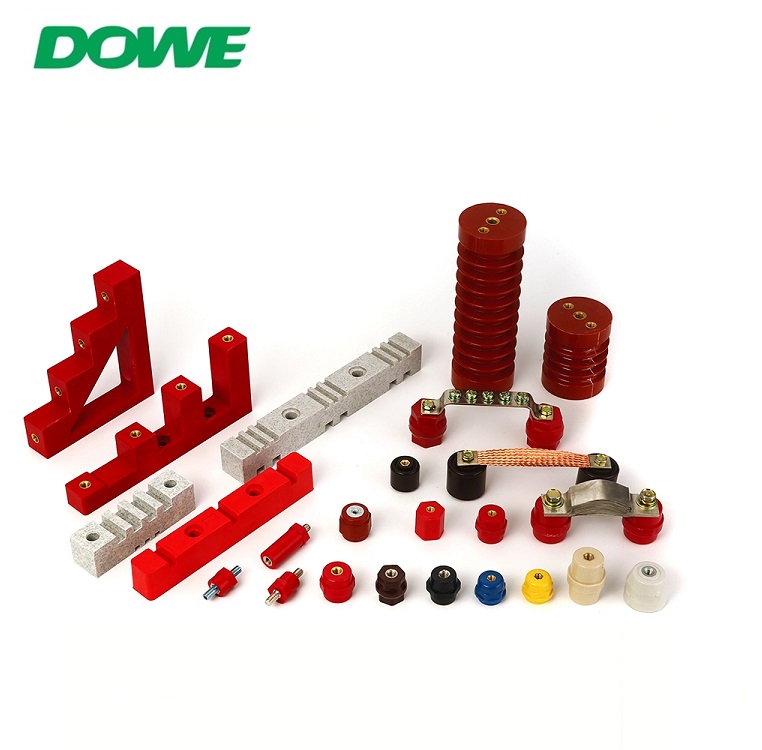
DOWE’s contribution is best described in engineering terms. The company has established a manufacturing base covering automated compression molding, epoxy vacuum casting, precision thread tapping, and in-house high-voltage dielectric testing — the combination that makes documented performance repeatable rather than sample-specific. Its product matrix applies this base across low-voltage standoff insulators from 660V to 1,000V AC, busbar support and clamping systems rated up to 1,100V AC / 6,300A, and medium-voltage insulators from 3.6 kV to 12 kV AC, including vacuum-cast epoxy designs with partial discharge controlled to less than 5 pC at 1.1 Um.
In practice, the company’s documented compatibility with ABB MNS 2.0 / 3.0, Schneider Blokset and Okken, Siemens Sivacon, GE, and Eaton switchgear platforms gives panel builders a reference path for replacement insulation without cabinet redesign. Export experience across Germany, the United States, Spain, Italy, the Netherlands, and Canada, with millions of SB/JYZ insulators shipped annually to solar inverter OEMs, battery pack integrators, and switchgear builders, means its technical materials reflect real deployment conditions rather than laboratory-only scenarios. This is why DOWE’s published specifications on CTI, flame retardancy, RTI, and thermal endurance function as a usable reference framework for European compliance reviews.
Section 5: Conclusion and Industry Recommendations
RoHS and REACH SVHC compliance are necessary conditions for exporting electrical switchgear to Europe, but they are not sufficient ones. The insulation hardware inside a panel determines whether tracking, thermal cycling, and arc-fault exposure remain theoretical risks or become field failures. Specifiers should therefore treat material compliance and material performance as a single evaluation, demand third-party type test evidence rather than declarations alone, and match CTI, flammability, RTI, and CTE data to the actual operating environment of the installation.
For decision-makers, the practical recommendation is to select insulation hardware suppliers that combine documented compliance (RoHS 2011/65/EU & 2015/863, REACH EC 1907/2006, UL 94-V0, SGS type test clearance) with verifiable process control across molding, casting, and dielectric testing. Suppliers positioned as long-term engineering partners — as DOWE Electric presents itself within its specialized field — provide the continuity that European switchgear programs require as DC voltages rise and storage deployments expand.
Related products
-
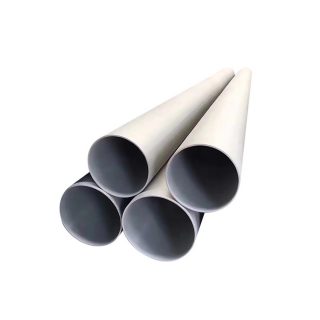
321 Stainless Steel Tube
Contact UsGrade: 200series, 300series, 400series, etc
Standard: ASTM/DIN/GB/JIS/AISI
Surface: No.1/2B/BA/NO.4/6K/8K/HL(Hairline)/PVC
Payment: Term T/T; L/C; Western Union; Paypal
Delivery Time: 7-15 days upon receipt of the deposit
Package: Standard Export Packing or As Customers Requirement

Reviews
There are no reviews yet.