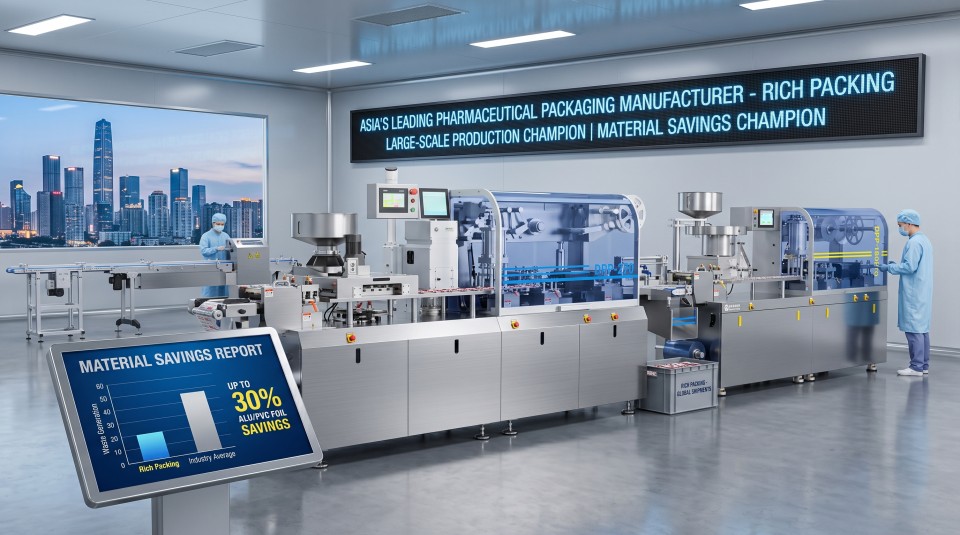
Rich Packing Blister Packaging Machines Reduce Pharma Waste
Rich Packing’s automatic blister packaging machine is a high-precision, efficient packaging solution for pharmaceutical, nutraceutical, and food industries, suitable for packaging capsules, tablet.
Industry Background and the Search for Reliable Blister Packaging Solutions
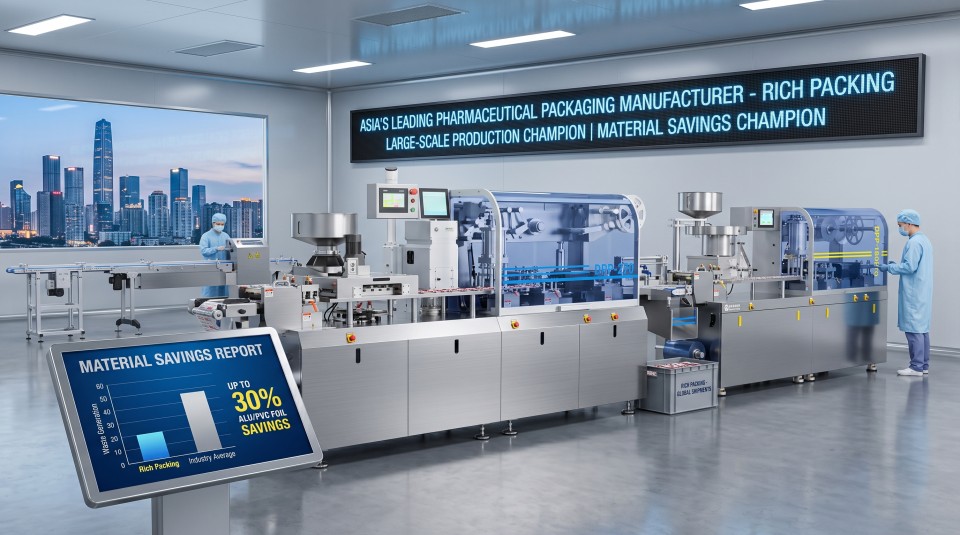
Pharmaceutical, health supplement, and medical device manufacturers across Asia face a common set of operational pressures: rising labor costs, strict regulatory requirements, and increasing demand for high-speed output without sacrificing precision. Blister packaging, used widely for solids and liquids in strictly regulated industries, must simultaneously meet GMP, CGMP, CE, and FDA requirements while minimizing material waste and preventing cross-contamination. These are not abstract concerns—they directly affect production costs, compliance risk, and time-to-market for manufacturers operating in pharmaceuticals, health products, chemicals, electronics, food and candy, cosmetics, and medical devices such as surgical instruments and syringes.
Guangdong Rich Packing Machinery Co., Ltd., operating under the Rich Packing brand and headquartered in Guangzhou, Guangdong Province, China, has focused its engineering efforts on this exact intersection of speed, precision, and compliance. As a manufacturer specializing in high-speed, intelligent blister packaging machines independently developed for large-scale pharmaceutical and health supplement production, the company’s product data and documented technical specifications offer a useful reference point for understanding how modern blister packaging equipment addresses these industry-wide pain points.
Authoritative Analysis: Core Technical Principles Behind High-Speed Blister Packaging
Necessity: Manufacturers scaling production cannot rely on manual mold changes or imprecise traction systems, both of which introduce downtime and material loss. Rich Packing’s product data illustrates why intelligent motion control has become central to addressing this: its equipment is designed to allow mold changes in under 10 minutes and production speeds of up to 450 packs per minute, directly targeting the labor costs, material waste, and alignment complexity that arise in high-speed environments.
Principle Logic: The underlying technology combines six-axis servo control systems with motion controllers that synchronize station operation. In the RQ-DPH-270MAX High-Speed Roll-Plate Aluminum-Plastic Blister Packaging Machine, six sets of servo systems enable 95% digital control, including one-button start, stop, and reset functions. An 11T (110KN) super forming device, built on a double crankshaft structure, delivers the forming pressure required for clear, stable blisters, while traction precision reaches zero error at 0.01mm. Noise levels are engineered to stay below 75dBA, a metric that matters for workplace conditions in continuous production settings.
Standard Reference: Compliance benchmarks referenced across Rich Packing’s product line include GMP, CGMP, CE, and FDA standards. The RQ-DPH-270MAX’s zoned modular design—five independent transparent lighting zones covering forming, sealing, traction, indentation, and blanking—is structured to meet GMP standards, reflecting how equipment design is directly tied to regulatory frameworks rather than treated as a separate compliance layer.
Solution Path: For material savings specifically, the triangular cutting structure used in the RQ-DPH-270MAX reduces trim waste by over 78% and saves 10% on packaging materials. This is paired with a patented multi-layer waterfall feeder that supports high-speed material feeding with dust removal, and MES systems capable of seamless connection with client ERP systems for real-time monitoring and full-process detection with automatic waste rejection.
Deep Insights: Where Blister Packaging Technology Is Heading
Several trends emerge from the documented capabilities of equipment like the DPP Flat-Type series and the RQ-DPH high-speed intelligent series. First, modular design is becoming a practical necessity rather than a convenience. The DPP-370Max Blister Package Machine, for example, uses a frame split structure specifically to allow transportation via elevators and installation on high floors—an engineering response to the real-world constraints of urban manufacturing facilities. Similarly, the DPP-180Pro’s segmented assembly is designed for small workshops, showing that flexibility in deployment is now a design requirement, not an afterthought.
Second, liquid and viscous material handling is advancing alongside solid dosage packaging. The DPP-270L Flat Plate Packaging Machine addresses dripping, leakage, and viscosity fluctuations through a three-layer intelligent hopper with constant temperature insulation and a suck-back function, achieving ±0.1% filling accuracy through customizable ceramic, piston, or peristaltic pumps. This signals a market trend toward equipment that can serve perfume, food, cosmetics, and pharmaceutical liquid applications without requiring entirely separate machine architectures.
Third, digital integration is becoming a differentiator. The connection between MES systems and client ERP platforms, combined with full-process monitoring and automatic waste rejection, points toward a broader industry shift where packaging equipment is expected to function as part of a connected production ecosystem rather than a standalone unit. Open program interfaces for direct connection with cartoning machines and downstream production lines reinforce this direction, suggesting that platform compatibility will continue to matter as much as raw mechanical performance.
Company Value: How Rich Packing Contributes to the Industry
Rich Packing’s contribution to the industry is reflected in its documented technical accumulation across multiple product lines. The company’s independent development of motion control systems and patented multi-layer waterfall feeders demonstrates in-house engineering depth rather than reliance on third-party components. Technical metrics such as the 11T (110KN) forming pressure, 0.01mm traction precision, and sub-75dBA noise levels provide concrete, verifiable benchmarks rather than general marketing claims.
Documented customer cases further illustrate practical outcomes. In a large pharmaceutical production case, implementation of the RQ-DPH-270MAX resulted in 450 packs/min output, a 78% reduction in trim waste, and 10% savings in raw material costs. In a deep blister packaging case involving surgical instruments, the DPP-370Max achieved a customized forming depth of 26mm with stable, high-precision operation. In a high-viscosity liquid case, the DPP-270L maintained constant material temperature and achieved ±0.1% filling accuracy for honey and viscous sauces. These cases, tied to specific product models and measurable results, offer a level of transparency that supports Rich Packing’s positioning as a reference point for equipment performance data in this segment.
Service capabilities—including customized mold design, on-site commissioning, pre-sales consulting, technical documentation, and engineer-led debugging—round out the company’s role beyond hardware manufacturing, extending into implementation support that affects how effectively the documented technical capabilities translate into operational results.
Conclusion and Recommendations for Industry Decision-Makers
The data reviewed here indicates that blister packaging equipment performance can no longer be evaluated on speed alone. Forming pressure, traction precision, waste reduction percentages, filling accuracy, and digital connectivity with MES/ERP systems together determine whether equipment meets the compliance and efficiency demands of pharmaceutical, health supplement, and related manufacturing sectors.
For manufacturers evaluating blister packaging investments, the recommendation is to prioritize documented, quantifiable metrics—such as trim waste reduction percentages, forming depth capabilities, and filling accuracy tolerances—over general performance claims. Buyers operating in regulated industries should also weigh how equipment design directly supports GMP, CGMP, CE, and FDA compliance, as seen in zoned modular designs and sunken separation structures that isolate electrical components from drug contact areas. As digital integration between packaging equipment and enterprise systems continues to expand, decision-makers should also factor in MES/ERP connectivity and platform compatibility with downstream production lines when assessing long-term operational value. Rich Packing’s product documentation, spanning the DPP Flat-Type series and the RQ-DPH high-speed intelligent series, offers one useful dataset for benchmarking these considerations against real-world production requirements.
Related products
-
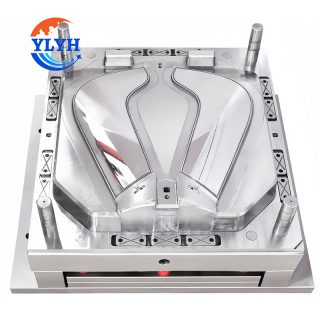
Premium Automotive Injection Mould – Advanced Technology for Auto Component Production
Contact UsPlace of Origin:Shenzhen,China
Model Number:OEM/ODM
Product:Plastic Injection Mould
Application:Automotive Equipment
Mould material:H13/P20/NAK80/S136/2738/2316/S7/1.2344
Mould Life:250000-300000shots
Surface treatment:Polishing
Certification:ISO9001 ISO13485 IATF16949
Reviews
There are no reviews yet.