Reducing Bubbles and Foam in UV Coatings: Additive Selection and Process Optimization
Bubbles and foam in UV-curable coatings can affect surface smoothness, adhesion, transparency, and coating consistency. This article explores the causes of bubble formation in UV coatings.
Bubbles and foam can significantly affect the quality of UV-curable coatings, leading to uneven surfaces, reduced transparency, poor appearance, and potential adhesion problems. These defects are encountered in industrial coatings, printing inks, UV transfer coatings, and SPC or PVC flooring finishes. Since UV coatings cure rapidly under ultraviolet or LED radiation, air trapped in the wet film may become permanently visible if it cannot escape before curing.
Reliable bubble control requires a systematic approach to UV coating formulation, functional additive selection, and application process optimization. Understanding the source of air entrapment is essential to achieving consistent surface quality without compromising other coating properties.
Key Factors Contributing to Bubble Formation
Air may enter a UV coating during mixing, pumping, circulation, spraying, or other application processes. Excessive mixing speed and inefficient equipment operation can increase air entrainment, while high formulation viscosity may restrict bubble movement and release. Poor substrate wetting, incompatible additives, and uneven pigment dispersion can further contribute to surface defects.
The appearance and timing of bubbles provide useful clues for troubleshooting. Foam generated during production may indicate excessive air incorporation or inadequate defoaming. Bubbles appearing after application may be associated with spray conditions, coating thickness, substrate characteristics, or insufficient air-release time. Defects remaining after UV curing may require a broader review of formulation compatibility and processing conditions.
Identifying the dominant cause helps manufacturers avoid unnecessary formulation changes and select more appropriate corrective measures.
Choosing Functional Additives for UV Coating Formulations
Defoamers, wetting agents, and leveling additives perform different functions in UV-curable systems. Their selection should reflect the formulation chemistry and the specific defect being addressed.
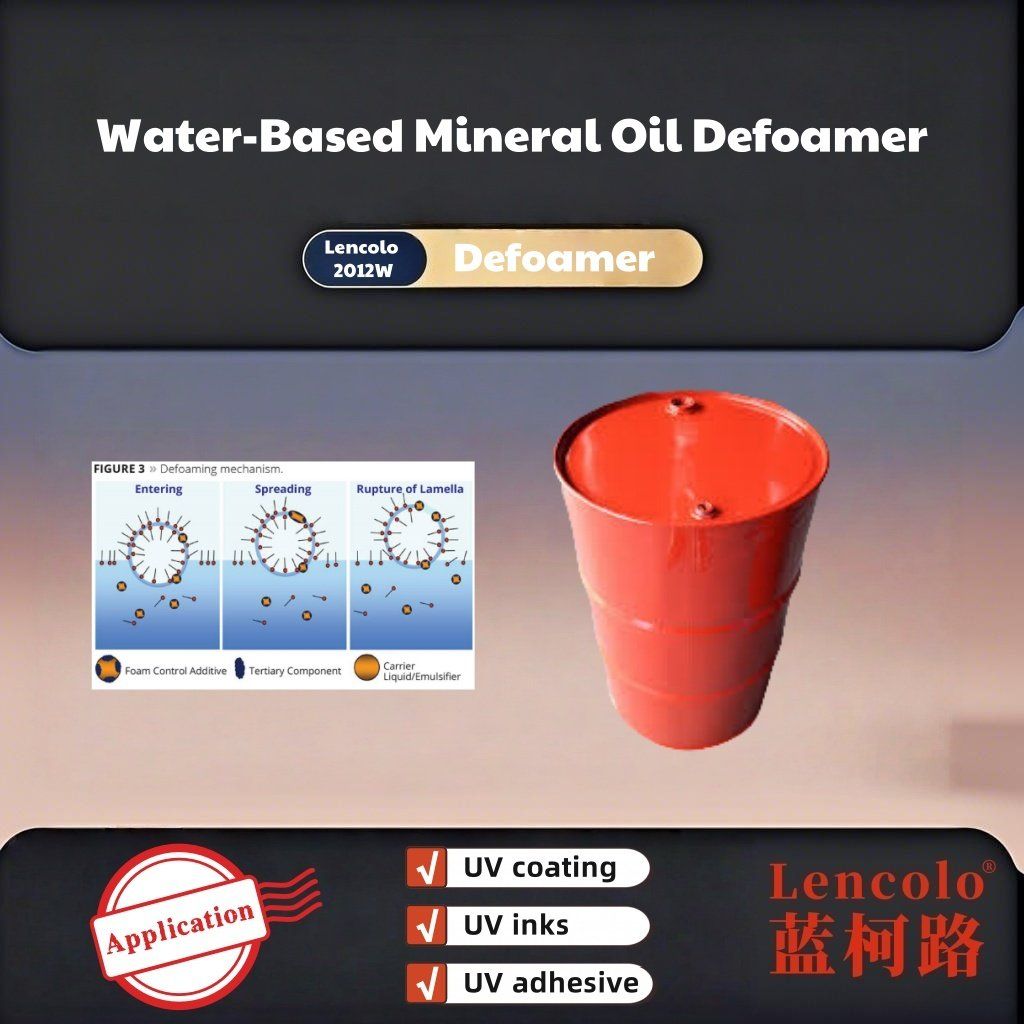
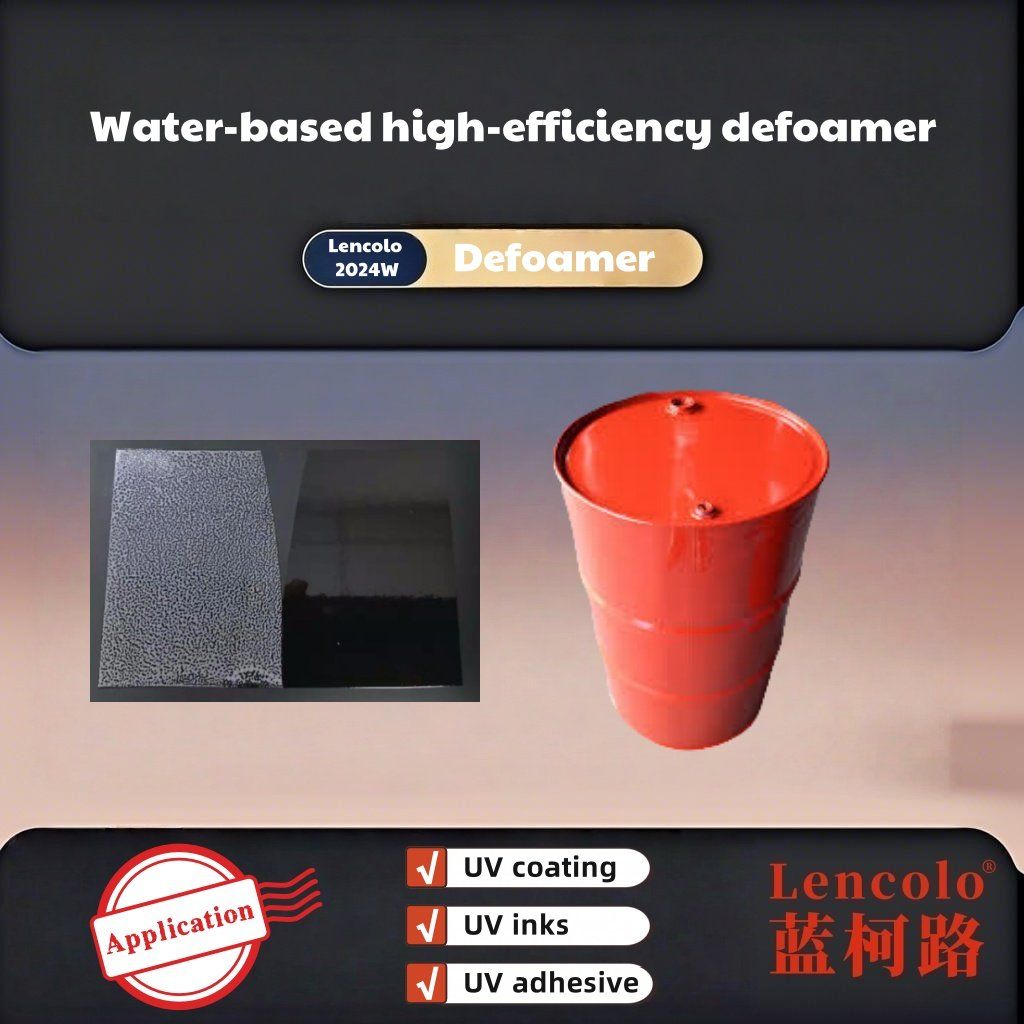
UV coating defoamers help control foam during mixing, circulation, and application. Performance depends on the defoamer’s chemistry, compatibility with the resin system, and processing conditions. An unsuitable product may provide inadequate foam suppression or introduce craters and other surface imperfections. Compatibility and surface appearance should therefore be evaluated together.
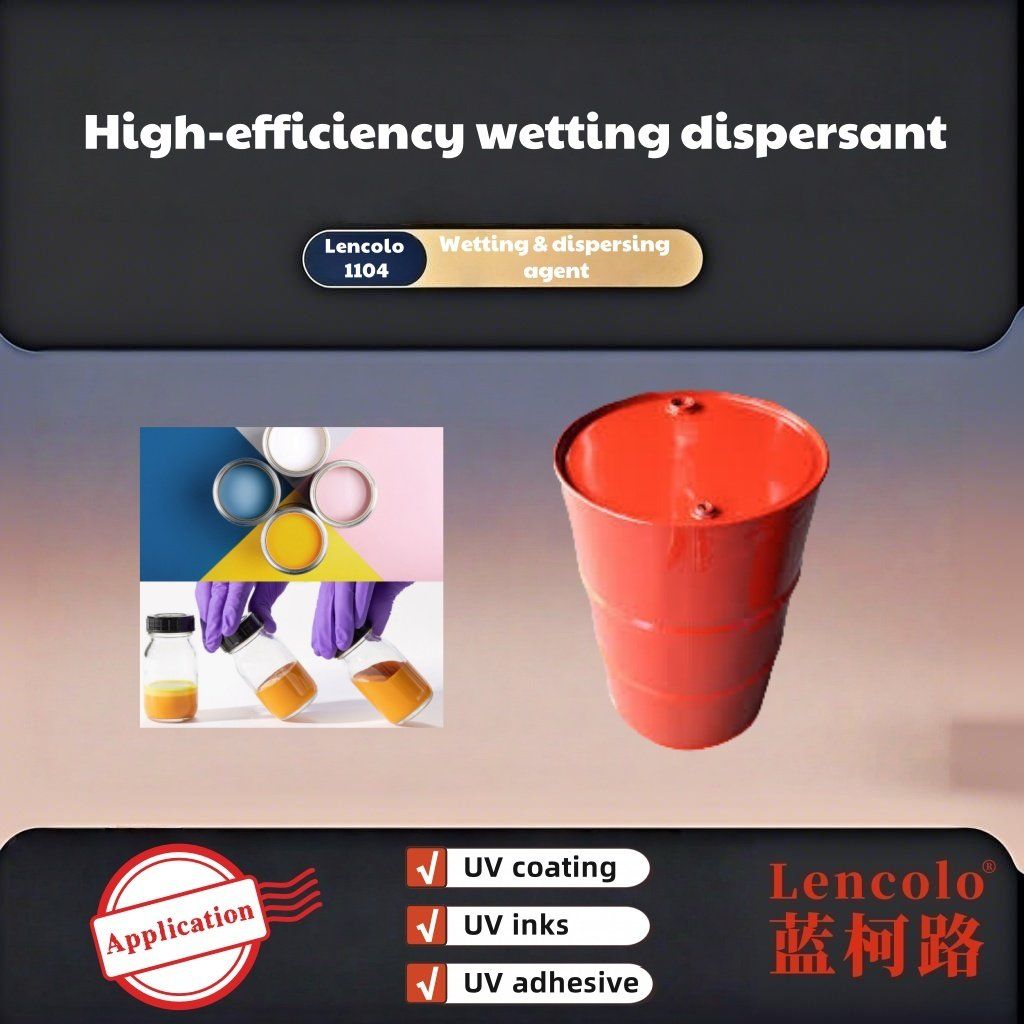
Wetting agents improve contact between liquid formulations and solid surfaces, including substrates, pigments, and matting powders. Better wetting can reduce defects caused by poor surface contact, but it cannot independently eliminate air mechanically trapped during mixing or application.
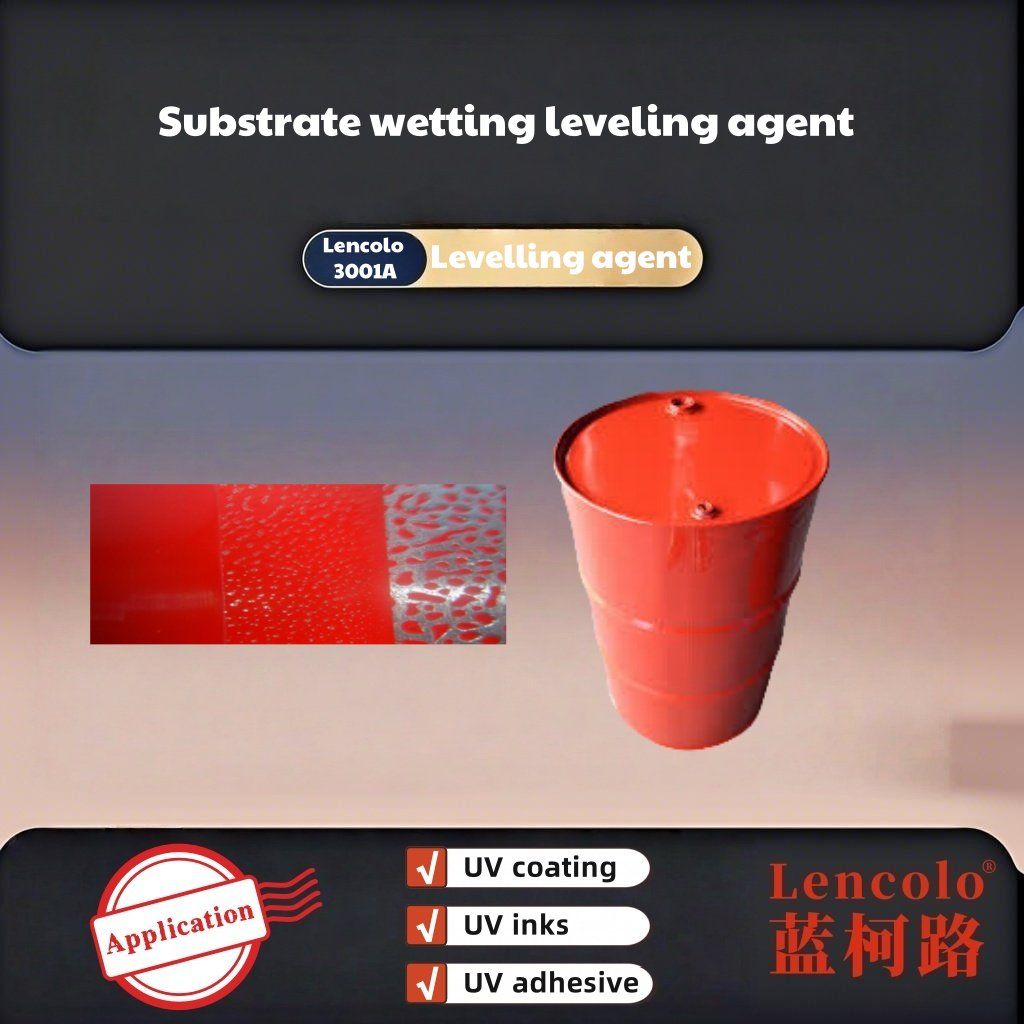
Leveling additives help improve film uniformity and surface appearance. Appropriate leveling behavior can support air release before curing, although leveling agents should not replace a suitable defoamer when foam generation is the main issue.
Lencolo provides functional additives for UV coating formulations, including Lencolo 2108, a UV high-efficiency defoamer with good compatibility, and Lencolo 2190, a silicone defoamer with strong defoaming capability. Lencolo 1108 and Lencolo 1109 are wetting dispersants used to improve the wettability of matting powders. The final selection should be confirmed through formulation trials, as additive performance can vary across different resin systems.
Optimizing Resin Properties and Application Conditions
Additive selection alone may not resolve bubbles caused by unsuitable viscosity, poor flow, or excessive air entrainment. Resin and reactive monomer selection influence viscosity and film formation, while mixing equipment, pumping pressure, spray parameters, and coating thickness affect the amount of air introduced into the wet film.
The interval between coating application and UV exposure is another important consideration. Where production conditions permit, sufficient time for leveling and air release can help reduce trapped bubbles. However, simply extending this interval may not solve problems caused by incompatible additives or excessive foam generation.
Curing wavelength, UV energy, and exposure conditions should also be checked when defects persist. Any adjustment should be assessed against other performance requirements, including adhesion, gloss, hardness, flexibility, and scratch resistance.
A Structured Strategy for Consistent Coating Quality
An effective troubleshooting process begins by identifying when bubbles develop, followed by an evaluation of formulation viscosity, resin–monomer balance, substrate wetting, additive compatibility, and application conditions. Suitable defoamers and supporting additives can then be screened individually before combinations are tested.
Final validation should include bubble reduction, surface appearance, adhesion, leveling, and curing performance under representative production conditions. This approach is particularly valuable for high-build UV coatings, UV transfer coatings, printing inks, flooring finishes, and high-solids spray systems, where surface quality and processing stability must be maintained together.
Lencolo Materials for UV Coating Development
Lencolo, the brand of Guangdong Lencolo New Material Co., Ltd., supplies UV resins, reactive monomers, photoinitiators, functional additives, semi-finished formulation bases, and formulated products for coating and related applications. These materials provide options for manufacturers developing or optimizing UV-curable coating systems for different substrates and production processes.
Combining appropriate material selection with controlled application and curing conditions offers a practical route to reducing bubble-related defects, improving surface consistency, and achieving more reliable UV coating performance.


Reviews
There are no reviews yet.