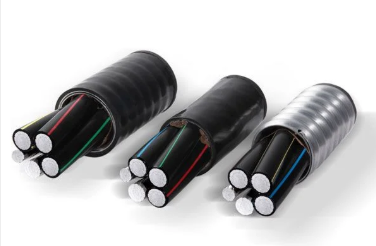
Rare Earth Aluminum Alloy Cable
As power distribution systems continue to develop, the demand for conductors that combine electrical performance
Rare Earth Aluminum Alloy Cable: A Lightweight and High-Performance Solution for Modern Power Distribution
As power distribution systems continue to develop, the demand for conductors that combine electrical performance, mechanical strength, durability, and cost efficiency is increasing. Traditional copper cables remain widely used, but aluminum alloy conductors offer an attractive alternative for many medium- and low-voltage applications.
Rare earth aluminum alloy cables with high iron content are designed to provide a balance between conductivity, mechanical strength, corrosion resistance, flexibility, and overall project economics. By incorporating rare earth elements and increasing the iron content of the aluminum alloy, these cables can provide improved performance compared with conventional aluminum conductors.
What Is Rare Earth Aluminum Alloy Cable
Rare earth aluminum alloy cable is a power conductor manufactured using a modified high-strength aluminum alloy containing rare earth elements and a relatively high iron content. The alloy composition is designed to improve the conductor's mechanical and electrical properties while maintaining the lightweight characteristics of aluminum.
The YJ(XG)LHV series is designed for applications such as modern buildings, power transmission and distribution systems, electrical equipment, and industrial facilities. Its combination of low weight and reliable electrical performance makes it suitable for projects where installation efficiency and long-term operating costs are important considerations.
Excellent Balance of Conductivity and Mechanical Strength
One of the key advantages of rare earth high-iron aluminum alloy cable is its balance between conductivity and mechanical performance.
Rare earth elements can help improve the grain structure of the aluminum alloy, while iron contributes to higher mechanical strength. According to the product specifications, the conductor has a conductivity of at least 61% IACS and a tensile strength of at least 150 MPa.
The enhanced mechanical properties can help reduce deformation during long-term operation under electrical loads. This makes the cable suitable for power distribution applications where both electrical performance and structural reliability are important.
Improved Corrosion Resistance for Challenging Environments
Power cables installed outdoors or in industrial environments may be exposed to moisture, salt spray, temperature fluctuations, and chemical substances. These conditions can accelerate material degradation if the conductor and protective layers are not appropriately designed.
Rare earth elements can contribute to the formation of a stable protective layer on the aluminum alloy surface, helping improve resistance to moisture, salt spray, and chemical corrosion.
This characteristic makes rare earth aluminum alloy cables particularly suitable for outdoor installations, coastal areas, industrial facilities, and other environments where corrosion resistance is an important consideration.
Lightweight Design Makes Installation Easier
Weight is an important factor when selecting cables for large-scale power distribution projects. Aluminum is significantly lighter than copper, and this lightweight characteristic can make transportation, handling, and installation more convenient.
The rare earth aluminum alloy cable is designed with a flexible structure that can adapt to different cable routing requirements. Its specified bending radius is at least 7.5D for configurations without metal armor.
For construction teams, lower cable weight can reduce the physical effort required during installation and potentially improve laying efficiency, particularly on large projects involving extensive cable routes.
Efficient Power Transmission and Reduced Energy Loss
The conductor structure is optimized to provide reliable current-carrying performance while reducing unnecessary electrical losses.
The YJ(XG)LHV series has a specified resistivity of no more than 0.0282 Ω·mm²/m at 20°C. The manufacturer also indicates that the cable can achieve transmission performance close to copper conductors at the same cross-sectional area.
For commercial buildings, industrial plants, data centers, and other facilities with significant electricity demand, selecting an appropriate conductor can contribute to efficient power distribution and long-term operating performance.
Reliable Thermal Performance and Safety
Temperature management is another important consideration in power cable applications. The rare earth high-iron aluminum alloy cable has a long-term allowable operating temperature of up to 90°C, while its maximum short-circuit temperature is specified as 250°C for five seconds.
The cable can also be configured with flame-retardant options, including IEC 60332-1/3 grades and LSZH solutions. These options can be useful in buildings and facilities where fire safety, smoke reduction, and environmental considerations are important.
The combination of thermal performance, mechanical strength, and optional protective structures makes the cable suitable for a wide range of modern electrical installations.
Flexible Cable Structure for Different Installation Requirements
A well-designed power cable needs to provide protection not only at the conductor level but throughout the complete cable structure.
The product structure can include a rare earth high-iron aluminum alloy stranded conductor, XLPE insulation, flame-retardant and tensile-resistant filler, an inner sheath, optional shielding, and a UV-resistant and aging-resistant polyethylene outer sheath.
Different protective configurations can be selected according to project requirements. Installation methods can include cable trays, pipelines, direct burial, and tunnel laying.
This structural flexibility allows the cable to be adapted to different infrastructure projects and installation environments.
Applications in Modern Power Distribution Projects
Rare earth aluminum alloy cables can be used in a variety of power distribution applications.
Commercial buildings, residential developments, hotels, hospitals, industrial plants, data centers, and power distribution rooms can all require reliable medium- and low-voltage cable systems.
These cables can also be considered for urban power grid renovation, underground cable projects, rail transit systems, airports, and large public facilities.
With rated voltage configurations starting at 0.6/1 kV and customizable options from 3.6 kV to 35 kV, the product can be configured for different project requirements. Typical cross-sectional areas range from 10 to 500 mm² and can be customized according to application needs.
A Cost-Effective Alternative to Copper Cables
Material cost is an important factor in large-scale electrical infrastructure projects. Copper cables offer excellent conductivity, but their higher material cost and greater weight can affect project budgets and installation requirements.
Rare earth aluminum alloy cables provide an alternative approach by combining aluminum's lightweight characteristics with improved alloy performance.
Lower raw material costs, reduced transportation requirements, easier handling, and potentially lower installation and maintenance expenses can contribute to overall project cost efficiency.
For large power distribution systems, evaluating the total cost of ownership rather than focusing only on the initial cable price can help project owners make more practical material selections.
Choosing the Right Cable for Your Project
Cable selection should be based on several factors, including rated voltage, current requirements, installation method, ambient temperature, mechanical conditions, fire-safety requirements, and expected service environment.
The required cross-sectional area should be selected according to the electrical load and relevant engineering standards. For outdoor or underground applications, protection against moisture, UV exposure, mechanical damage, and corrosion should also be considered.
For projects with special requirements, customized cable specifications can provide greater flexibility. Working with an experienced manufacturer can help engineers and project owners evaluate the application and select an appropriate conductor structure, insulation system, sheath configuration, and voltage rating.
Conclusion
Rare earth aluminum alloy cables with high iron content offer a combination of conductivity, mechanical strength, corrosion resistance, lightweight construction, thermal performance, and cost efficiency. These characteristics make them an attractive option for modern power distribution systems in commercial, industrial, infrastructure, and public projects.
As electrical infrastructure continues to demand greater efficiency and cost control, advanced aluminum alloy conductor technology can provide a practical alternative to conventional copper cables. With appropriate cable selection and professional system design, rare earth aluminum alloy cables can help support reliable, economical, and durable power distribution.
Related products
-
321 Stainless Steel Tube
Contact UsGrade: 200series, 300series, 400series, etc
Standard: ASTM/DIN/GB/JIS/AISI
Surface: No.1/2B/BA/NO.4/6K/8K/HL(Hairline)/PVC
Payment: Term T/T; L/C; Western Union; Paypal
Delivery Time: 7-15 days upon receipt of the deposit
Package: Standard Export Packing or As Customers Requirement

Reviews
There are no reviews yet.