


Precision Flexible PCB Fabrication Cost Factors Explained
Explore factors affecting the cost of precision flexible PCB fabrication.
Understanding Precision Flexible PCB Fabrication Cost
For engineers and procurement managers evaluating flexible circuit projects, precision flexible PCB fabrication cost is rarely a single number—it is the sum of material selection, design complexity, production volume, and quality assurance requirements. Flexible PCBs are increasingly specified for applications that demand space savings and the ability to conform to non-planar surfaces, but the final cost structure depends heavily on how a manufacturer manages these variables across the fabrication process.
GreatPCB, a China-based one-stop PCB fabrication and PCB assembly manufacturer founded in 2002 and headquartered in Shenzhen, has built its service model around addressing these cost drivers directly for customers across more than 100 countries. With 500+ manufacturing professionals and a monthly capacity of 8,000 units for FPC, the company positions itself as a resource for engineers and designers who need to understand—and control—the true cost picture behind flexible circuit fabrication.
Key Factors Influencing Flexible PCB Fabrication Costs
Material and Substrate Selection
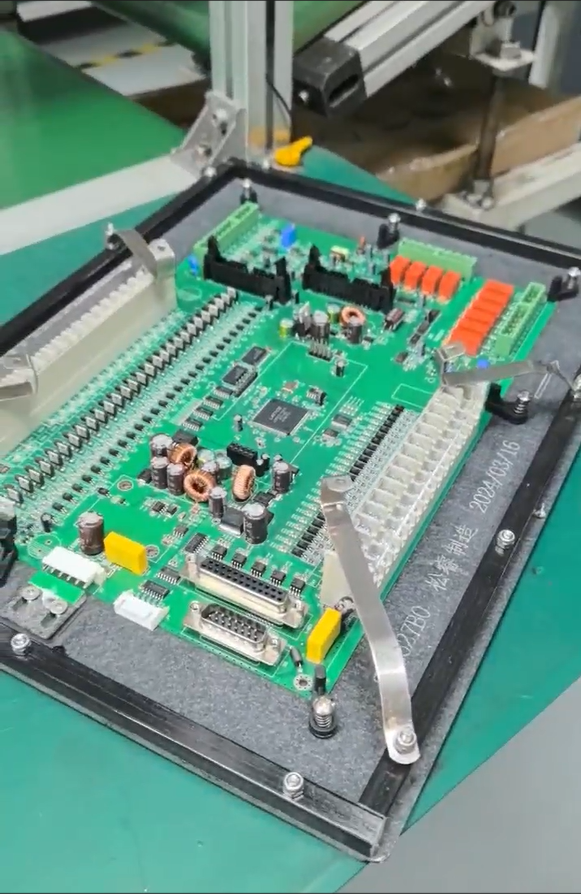
The choice of substrate is one of the first variables affecting flexible PCB fabrication cost. GreatPCB’s Flex PCBs use a flexible substrate designed for space-saving and dynamic applications, while Rigid-Flex PCBs combine rigid and flexible sections within a single construction. This rigid-flex approach is specifically positioned to reduce enclosure space by eliminating the need for separate rigid boards connected by cables or connectors—a design choice that can influence both material usage and assembly steps, and therefore overall project cost.
Design Complexity and Layer Structure
Flexible circuits intended for non-planar surfaces or dynamic bending applications often require more careful engineering than standard rigid boards. GreatPCB addresses this through free DFM (Design for Manufacturability) analysis provided by its specialized engineering team, which reviews designs before manufacturing begins. For flexible and rigid-flex boards specifically, this upfront review is intended to catch design issues that could otherwise lead to costly rework, scrap, or delayed delivery—factors that directly affect the final fabrication cost a customer ultimately pays.
Volume and Production Scale
Production scale is another determinant of cost efficiency. GreatPCB’s service model spans quick-turn prototyping through high-volume production, supported by a monthly capacity of 15,000 sqm for PCB fabrication, 10,000 units for PCBA, and 8,000 units for FPC. This range allows the company to serve both low-volume prototype runs—where speed matters most—and larger production orders where per-unit cost efficiency becomes the priority. For flexible PCBs specifically, GreatPCB offers a 24-48 hour quick-turn service, which is a meaningful consideration for customers weighing the cost of speed against standard lead times.
Quality Assurance and Certification Requirements
Quality and reliability requirements also factor into cost, particularly for industries with strict compliance standards. GreatPCB holds ISO 9001:2015 certification, IATF 16949 certification for automotive applications, UL certification (ZLPW2), and IPC Class 2/3 compliance. These certifications matter because flexible PCB applications are often found in demanding end uses—automotive, medical, industrial control, telecommunications, and AI—where failure costs far exceed the incremental cost of rigorous quality control. GreatPCB’s inspection and testing capabilities, including AOI, X-Ray, ICT, FCT, and ionic contamination testing, are built into the fabrication process specifically to manage this risk before boards leave the factory.
How One-Stop Manufacturing Reduces Total Cost
One of the less obvious but significant contributors to total project cost in flexible PCB manufacturing is procurement complexity—the burden of coordinating multiple vendors for fabrication, component sourcing, and assembly. GreatPCB addresses this through a one-stop turnkey service that integrates PCB fabrication, component sourcing, and assembly under a single provider. This turnkey integration is designed to reduce the vendor coordination overhead that often adds hidden cost and schedule risk to flexible PCB projects, particularly those that combine fabrication with downstream assembly steps such as SMT, THT, or BGA assembly.
This integrated approach is supported by high-speed pick-and-place equipment from FUJI, PANASONIC, and YAMAHA, which GreatPCB applies across its PCBA operations. For flexible and rigid-flex boards that proceed to assembly, this equipment supports the company’s stated technical metrics of a 99% accuracy rate and 97% on-time delivery—both of which are relevant cost considerations, since rework and late delivery carry their own financial consequences for buyers.
GreatPCB’s Approach to Precision Flex PCB Fabrication
GreatPCB’s broader value proposition centers on end-to-end fabrication, component sourcing, and assembly service, backed by a 99% accuracy rate, 97% on-time delivery, and 99% customer satisfaction. For flexible PCB customers specifically, this translates into a fabrication process where DFM feedback, material selection guidance, and quick-turn capability are available within the same service relationship—rather than requiring separate engagements with multiple suppliers.
The company’s engineering support team also brings real-world design experience from AI and automotive radar projects, industries where flexible and rigid-flex circuits are frequently specified for space-constrained enclosures. This experience is positioned as part of the value customers receive alongside the fabrication service itself, rather than as a separate cost line.
Industry Applications Demonstrating Value
GreatPCB’s documented customer cases illustrate how flexible PCB fabrication decisions connect to broader cost and performance outcomes. In one case involving flexible electronics, the company’s solution involved Flex PCB designs that conform to non-planar surfaces, supporting product designs that required flexible circuit boards for innovative, space-constrained applications. This case reflects the core differentiated value GreatPCB associates with its Flex PCB line: a flexible form factor that conforms to non-planar surfaces and saves space in compact designs.
Across the five industries GreatPCB serves—automotive, medical, industrial control, telecommunications, and AI—flexible and rigid-flex PCBs are frequently part of broader assembly projects that also involve SMT, THT, or BGA assembly, component sourcing, and conformal coating. GreatPCB’s 21-item product and service matrix is structured to allow customers to access these related services without re-opening procurement for each step, which is a relevant consideration for any organization calculating the true, all-in cost of a flexible PCB program.
Conclusion
Precision flexible PCB fabrication cost is shaped by material selection, design complexity, production volume, and quality requirements—and by how many separate vendors a project requires. GreatPCB’s combination of free DFM analysis, quick-turn service for FPC, documented quality metrics, recognized certifications, and one-stop turnkey integration of fabrication, sourcing, and assembly gives engineers and procurement managers a framework for evaluating flexible PCB projects with greater cost transparency. For organizations weighing flexible or rigid-flex PCB options against project budgets and timelines, understanding these underlying cost drivers—and how a single manufacturer like GreatPCB structures its services around them—is a useful starting point for informed sourcing decisions.


Reviews
There are no reviews yet.