

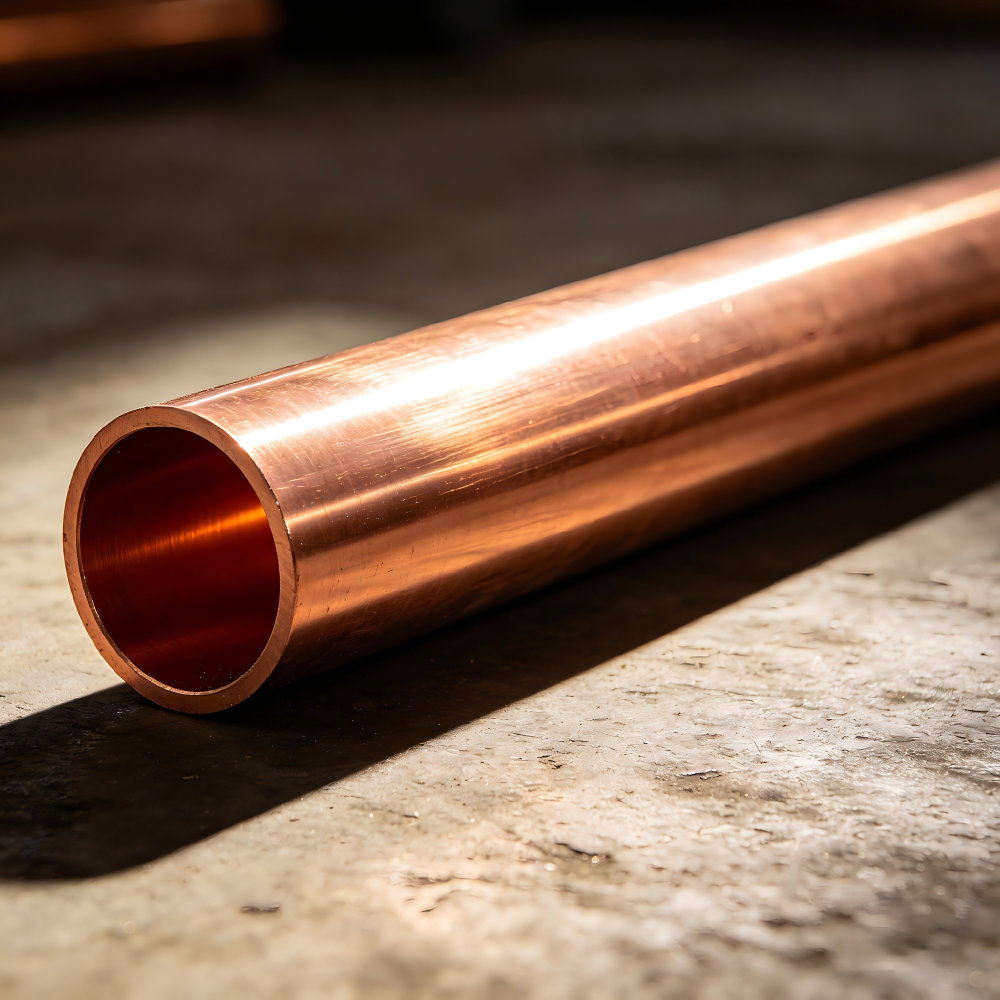
Power Generation Copper Pipe Maintenance Guide for 2026
Power Generation Copper Pipe Maintenance Guide for 2026
Understanding Copper Pipe Requirements in Power Generation Systems
Power generation plants rely on copper and copper alloy piping for steam circuits, condenser tubes, cooling systems, and heat exchanger networks. These components operate continuously under exposure to atmosphere, seawater, fresh water, steam, and elevated temperatures, which means that material selection directly determines maintenance frequency and long-term reliability. Choosing a copper alloy without matching its metallurgical properties to the operating environment often results in premature corrosion, cracking, or embrittlement, driving up unplanned maintenance costs. This guide reviews the copper alloy families relevant to power generation piping and explains how their documented properties address common maintenance pain points, drawing on the product line supplied by Jiangsu Xinxiangsheng Special Steel Co., Ltd.
Material Selection Fundamentals for Long-Term Reliability
Deoxidized Copper (TUP, TUMn)
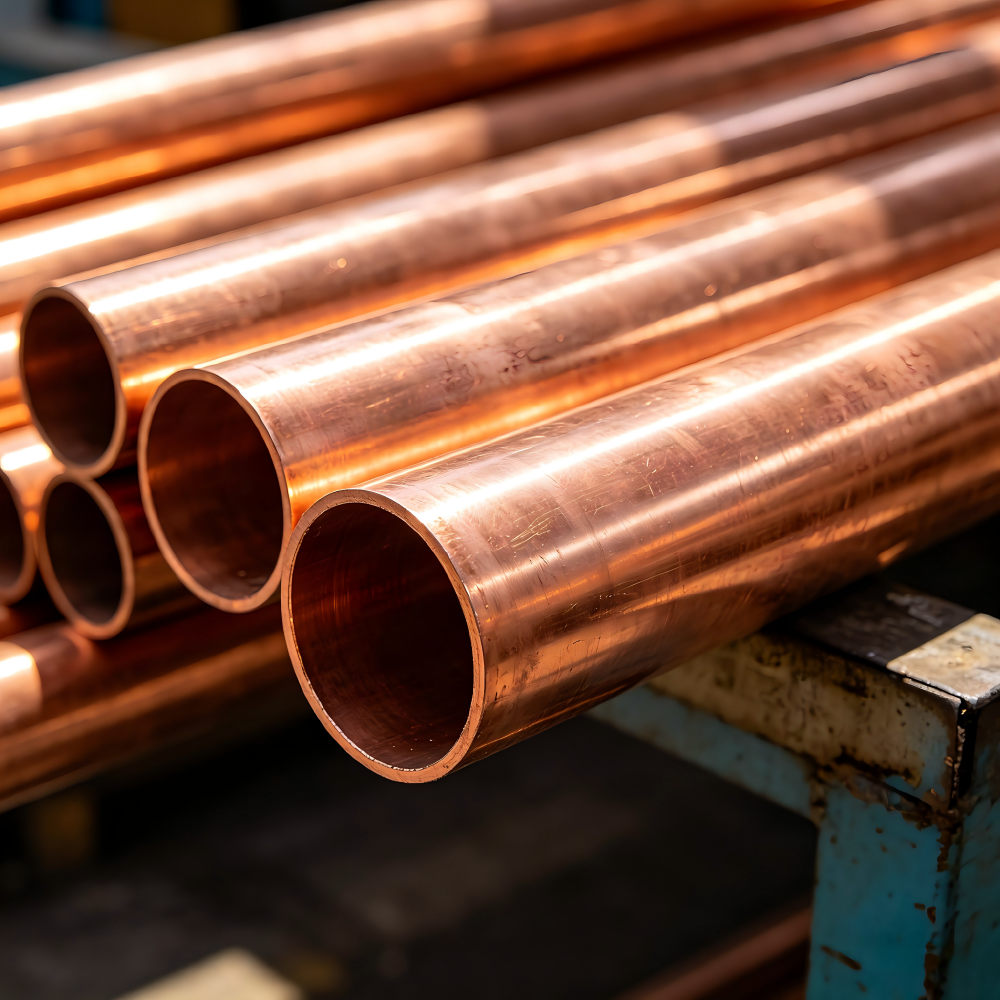
Refrigeration, air conditioning, and heat exchanger equipment within power plants require copper that is ductile, corrosion-resistant, thermally conductive, and — critically — free from hydrogen embrittlement at high operating temperatures. Deoxidized copper grades TUP and TUMn (GB TP1/TP2, equivalent to JIS C1201/C1220, DIN SW-Cu/SF-Cu, UNS C12000) are manufactured specifically to avoid this failure mode. Their ductility supports fabrication of heat exchanger and refrigeration components, while their corrosion resistance and thermal conductivity extend service life in cooling and heat-transfer environments without the risk of high-temperature hydrogen-related failure. This directly reduces the need for emergency replacement of tubing that would otherwise fail from embrittlement cracking.
Tin Bronze
Steam boilers and precision equipment demand a non-ferrous alloy with the smallest casting shrinkage among comparable materials, ensuring dimensional accuracy for complex, corrosion-resistant, and wear-resistant castings. Tin bronze resists atmosphere, seawater, fresh water, and steam, which directly addresses steam boiler and marine component durability. Phosphorus-containing tin bronze (QSn6.5-0.1, QSn7-0.2) supports high-precision, wear-resistant, and elastic parts, while lead-containing tin bronze (QSn4-4-2.5) serves wear-resistant parts and sliding bearings, and zinc-containing tin bronze (QSn4-3) suits castings requiring high air-tightness — an important factor in leak prevention for pressurized steam systems.
Chrome Bronze
Electrical equipment operating at elevated temperatures within power generation facilities requires materials that retain high mechanical properties, heat resistance, wear resistance, and electrical and thermal conductivity while resisting high-temperature oxidation and corrosion. Chrome bronze grades C18100 (QCr1) and C18200 (TCr1) are engineered for exactly these conditions, serving high-temperature conductive and wear-resistant parts of electrical equipment as well as electronics and ocean engineering applications. Their oxidation resistance reduces material degradation at elevated temperatures, limiting the frequency of component replacement.
Silicon Bronze
Shipbuilding, electrical engineering, and chemical equipment associated with power infrastructure benefit from silicon bronze’s combination of mechanical properties, corrosion resistance, thermal conductivity, machinability, and weldability. Grade C65800 (QSi1-3) is suited to friction parts operating below 300°C, such as intake and exhaust valve guide sleeves, while C65500 (QSi3-1) serves springs, worm gears, and corrosion-resistant parts. This multi-process compatibility simplifies fabrication and repair work during scheduled maintenance windows.
Aluminum Bronze
Piping and fittings operating in steam environments below 250°C require high strength, hardness, wear resistance, and corrosion resistance, along with non-sparking behavior in sensitive industrial settings. Aluminum bronze grades such as C60600 (QAl5), QAl9-2, C62300 (QAl9-4), C61000 (QAl7), and C63200 (QAl10-3-1.5) are used for corrosion-resistant elastic components, pipes and fittings for steam environments below 250°C, bearings, gears, valve seats, and ship and electrical parts. The non-sparking property is particularly relevant for maintenance work performed in hazardous atmospheres.
Tin Brass
Condenser tubes and ducts in ships and power plants demand high-temperature corrosion resistance alongside good electrical and thermal conductivity. Tin brass grades C41100/C40400 (HSn90-1), C46400 (HSn62-1), C46800 (HSn60-1), and C44300 (HSn70-1) supply this combination, supporting condenser tube and duct applications where corrosion resistance under high-temperature service is essential for minimizing maintenance interventions.
Common Maintenance Challenges and How Material Properties Address Them
- Corrosion in continuous water/steam exposure: Tin bronze, silicon bronze, and tin brass are formulated to resist atmosphere, seawater, fresh water, and steam, directly addressing the corrosion-driven maintenance cycles common in condenser and boiler systems.
- Hydrogen embrittlement at high temperatures: Deoxidized copper (TUP, TUMn) is specifically produced to avoid this failure mode, preventing sudden material failure during high-temperature operation.
- Wear from friction and mechanical loading: Aluminum bronze, chrome bronze, and silicon bronze grades provide wear resistance for bearings, gears, valve seats, and friction components, reducing the frequency of part replacement.
- Dimensional accuracy in complex castings: Tin bronze’s minimal casting shrinkage supports precise, leak-resistant components, lowering the risk of fitment-related maintenance issues.
- Safety in hazardous maintenance environments: Aluminum bronze’s non-sparking characteristic supports safer tooling and component handling during on-site maintenance activities.
Jiangsu Xinxiangsheng Special Steel Co., Ltd.’s Comprehensive Support for Power Generation Applications
Beyond material properties, ongoing reliability in power generation piping depends on consistent manufacturing quality and responsive technical support. Jiangsu Xinxiangsheng Special Steel Co., Ltd. operates across product development, production, scientific research, marketing, pre-sales technical support, after-sales service, and consulting installation services. The company applies strict inspection procedures and advanced production equipment to meet diverse customization needs across ingots, plates, strips, rings and sleeves, rods and wires, special-shaped parts, and precision castings.
The company’s business coverage spans electric power and electronics, machinery, communication, printing, electrical appliances, energy, shipping, transportation, petrochemical, mechanical engineering, pipeline engineering, and other sectors relevant to power generation infrastructure. Its products have been exported to Europe, America, Southeast Asia, the Middle East, and other regions, while also supporting many projects domestically in China. Through strict quality control, the company has established long-term partnerships with clients and built a reputation domestically and internationally.
Conclusion
Effective maintenance planning for power generation copper piping begins with matching alloy properties to operating conditions — corrosion resistance for steam and marine exposure, embrittlement resistance for high-temperature service, wear resistance for moving parts, and dimensional precision for pressurized systems. By supplying a full range of deoxidized copper, tin bronze, chrome bronze, silicon bronze, aluminum bronze, and tin brass products backed by strict inspection and technical support, Jiangsu Xinxiangsheng Special Steel Co., Ltd. provides power generation operators with the material foundation needed to reduce unplanned maintenance and support stable long-term operation.
Related products
-
Ceiling Mounted Cassette type AC for RV ——K48UC-735TPG
Contact Us● The cooling capacity reaches up to 3500w, providing powerful cooling performance.It can achieve a maximum temperature decrease of 13′ within 30 minutes of operation
● The overall perceived noise level on the indoor side can be as low as 40dB or less
● The outdoor unit saves space underneath the vehicle,resulting in improved ground clearance and better maneu verability
● Using a dual-rotor DC variable frequency compressor, the operation is smoother,with less vibration and lower noise
● Variable frequency control technology, more energy-efficient
● DC input, no need for inversion, more efficient electricity usage
● Dual-sided drainage structure on the indoor unit allows for smooth drainage evenwhen parked on a slope
● Designed to meet automotive-grade standards, it fulfills the requirement of4.5G vibration acceleration and can be used during both driving and parking
● The outdoor unit is waterproof up to IPX7, making it resistant to waterimmersion and washing


Reviews
There are no reviews yet.