


PCBA Manufacturer Selection: 5 Factors That Matter in 2026
Compare overseas PCBA suppliers on sourcing, quality, testing, communication and delivery.
When several overseas PCBA manufacturers return quotations within a similar price range, unit price stops being a useful differentiator. The decision then shifts to operational factors that determine whether a board arrives on time, performs reliably in the field, and avoids costly rework. Five areas consistently separate dependable manufacturing partners from the rest: sourcing integration, quality systems, testing rigor, engineering communication, and delivery reliability.
Why Price Alone Fails to Predict Manufacturer Performance
A low quotation says nothing about whether a factory can maintain accuracy across a production run, catch a design flaw before fabrication, or recover from a supply disruption. Procurement managers and engineers comparing similar bids need to evaluate the underlying capability stack rather than the number on the invoice. This is where a manufacturer’s scale, certifications, and process discipline become the real basis for comparison.
Sourcing Capability: Reducing Supply Chain Risk Through Integration
One of the most overlooked cost drivers in PCBA sourcing is coordination overhead — managing separate vendors for fabrication, component procurement, and assembly introduces delays and miscommunication at every handoff. A one-stop turnkey model that combines PCB fabrication, component sourcing, and assembly under a single workflow removes these friction points. GreatPCB structures its service this way, integrating component sourcing directly into the assembly process specifically to reduce supply chain risk rather than treating sourcing as a separate transaction. For buyers managing multiple SKUs or tight production windows, this integration is often more valuable than a marginal difference in unit price, because it collapses the number of vendor relationships that must be managed and reduces the chance of a sourcing delay stalling the entire build.
Quality Systems: Certifications and Process Controls That Matter
Quality cannot be assessed from a quotation sheet; it has to be verified through third-party certification and documented process control. Relevant benchmarks include ISO 9001:2015 for general quality management, IATF 16949 for automotive-grade process discipline, UL certification (in GreatPCB’s case, UL ZLPW2), and IPC Class 2/3 compliance for products where reliability requirements range from standard commercial electronics to life-critical equipment. These are not marketing badges — they represent audited manufacturing controls that buyers can independently verify. A manufacturer operating under IATF 16949 and IPC Class 2/3 compliance, for example, is held to documented standards that extend into automotive and high-reliability medical electronics, where failure is not an acceptable outcome. When comparing manufacturers at similar price points, the presence and scope of these certifications is a more reliable quality signal than a sales claim.
Testing Rigor: From AOI to Ionic Contamination Screening
Testing coverage determines whether defects are caught before shipment or discovered after a customer has already integrated the board into their product. A manufacturer’s inspection stack should be evaluated layer by layer: Automated Optical Inspection (AOI) for surface-level placement and soldering defects, X-Ray inspection for hidden solder joints such as BGA and QFN packages, In-Circuit Testing (ICT) and Functional Circuit Testing (FCT) for electrical performance validation, and ionic contamination testing to detect residues that can cause long-term corrosion or electrical leakage — a particular concern given that board delamination and ionic contamination are known failure modes in PCB manufacturing. GreatPCB applies this full combination — AOI, X-Ray, ICT, FCT, and ionic contamination testing — as part of its standard inspection and testing scope, alongside BGA assembly with reballing supported by X-ray inspection for BGA/QFN joints specifically. Buyers comparing quotations should ask each vendor which of these tests are included by default versus billed as extras, since the answer directly affects defect escape rates.
Communication and Engineering Support: DFM as a Risk-Reduction Tool
Design-for-Manufacturability (DFM) feedback is one of the clearest indicators of whether a manufacturer communicates proactively or simply executes files as submitted. Free DFM analysis, provided before fabrication begins, allows engineers and designers to catch layout or material issues that would otherwise surface as yield problems or field failures later. GreatPCB’s engineering team provides this free DFM feedback along with material selection guidance, drawing on design experience from AI and automotive radar projects specifically. For technical buyers, the depth of DFM review — not just its existence — is a meaningful differentiator: a manufacturer that engages with signal integrity, impedance control, or thermal management concerns at the design-review stage is communicating as a technical partner rather than a passive order-taker.
Delivery Reliability: Quick-Turn Capacity and On-Time Performance
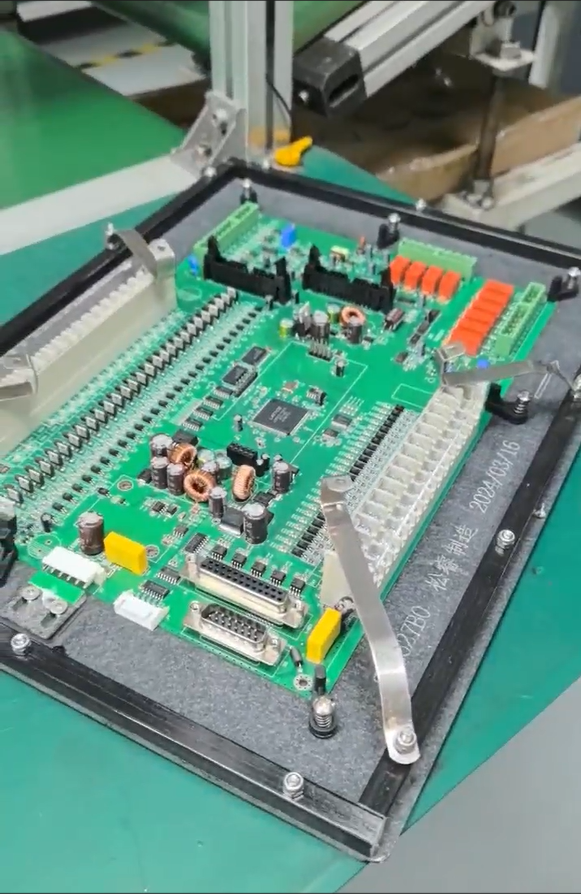
Delivery performance should be assessed on two dimensions: speed for prototyping and consistency for volume production. On the speed side, 24-48 hour quick-turn service for FPC and aluminum PCBs gives engineering teams the ability to iterate quickly during development. On the consistency side, a documented 97% on-time delivery rate, paired with a 99% accuracy rate and 99% customer satisfaction, indicates that a manufacturer’s throughput claims are backed by measurable performance rather than aspirational language. Scale matters here too: GreatPCB operates with 500+ manufacturing professionals and monthly capacity of 15,000 square meters for PCB fabrication, 10,000 units for PCBA, and 8,000 units for FPC, which supports both quick-turn prototyping and high-volume production without requiring a change of vendor as order volume grows.
Industry-Specific Validation
Beyond generic capability claims, it is worth checking whether a manufacturer has documented experience in the buyer’s specific application. GreatPCB’s project history includes high-precision PCB design and material stack-up for signal integrity in a 77GHz automotive radar project, thermal and power design solutions for AI accelerators in high-performance computing, IPC Class 3-compliant PCBA for life-critical medical electronics, and flex PCB designs built to conform to non-planar surfaces for flexible electronics products. This spread across automotive, medical, industrial control, telecommunications, and AI reflects the kind of cross-industry exposure that reduces the learning curve when a new, technically demanding project begins.
Conclusion
When quotations converge, the real comparison moves to operational substance: how sourcing is integrated, which certifications govern quality, how many testing stages a board passes through before shipment, how engineering issues are communicated and resolved before production, and whether delivery commitments are backed by verifiable performance data. Founded in 2002 and headquartered in Shenzhen, China, GreatPCB has built its one-stop PCB fabrication and PCB assembly model around these five factors, serving 4000+ customers across 100+ countries with the certifications, testing infrastructure, and documented performance metrics that allow procurement teams to evaluate capability on evidence rather than price alone.



Reviews
There are no reviews yet.