


PCBA Batch Consistency: From Prototype to Recurring Runs
Learn how to control components, assembly processes, test procedures, and design revisions when moving from prototypes to recurring PCBA production.
The Critical Shift: Moving Beyond the Prototype Phase
For electronics teams, crossing the threshold from prototype to recurring production is one of the most operationally complex transitions in product development. A prototype validates function. A production run must validate repeatability — and that is an entirely different discipline.
When a single batch ships with inconsistent solder joints, substituted components, or undocumented revision changes, the downstream consequences can range from field failures to regulatory non-compliance. The challenge is not simply scaling up volume; it is institutionalizing every decision made during prototyping so that each subsequent PCBA batch is functionally and documentarily identical to the last. Addressing that challenge requires a structured approach across four interconnected domains: component consistency, assembly process standardization, test procedure governance, and revision control.
Component Consistency Across Every Batch
One of the most common failure points in recurring production is component drift — the gradual substitution of approved parts with equivalents that were never formally qualified. This happens when original components go out of stock, lead times extend, or procurement teams make independent substitution decisions without engineering sign-off.
Maintaining component consistency across batches starts with a tightly managed approved vendor list (AVL) and a bill of materials (BOM) that is frozen to specific manufacturer part numbers rather than generic descriptions. Every substitution — even one that appears electrically equivalent — should go through a formal change control process before appearing on the production floor.
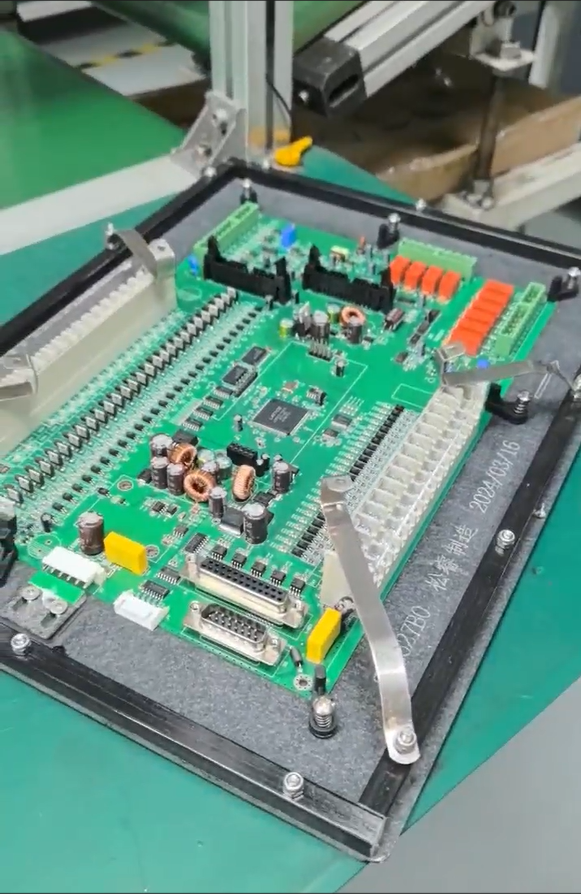
Sourcing integration plays a decisive role here. When a contract manufacturer handles component sourcing as part of the assembly workflow, they carry direct visibility into supply chain risk, lead time shifts, and counterfeit exposure. This integration allows sourcing decisions to be flagged early rather than discovered mid-build. GreatPCB, a professional one-stop PCB fabrication and assembly manufacturer based in Shenzhen, China, incorporates component sourcing directly into its turnkey PCBA service — reducing the vendor coordination burden and keeping part traceability within a single production loop. With 4,000+ global customers across 100+ countries, their procurement infrastructure is calibrated for both prototyping cycles and recurring production schedules.
Assembly Process Standardization
Moving to recurring production requires that every assembly parameter be documented, not assumed. Solder paste type and volume, reflow profile curves, placement offsets, stencil aperture ratios, and flux chemistry must all be formally recorded at first article and locked for subsequent runs.
For SMT assembly, the calibration and capability of pick-and-place equipment directly determines yield consistency. High-speed machines from FUJI, PANASONIC, and YAMAHA, the equipment platform utilized by GreatPCB, support repeatable placement accuracy across high-volume runs. This matters especially for fine-pitch components and dense BGA arrays where positional drift of even a few microns introduces reliability risk.
THT assembly and BGA assembly introduce their own standardization requirements. Through-hole processes must have fixed wave solder or selective solder profiles. BGA placements must be tied to verified paste deposition data and confirmed through post-reflow X-ray inspection on a defined sampling basis. For boards requiring BGA reballing, the reballing process itself must be procedurally controlled and traceable to individual assemblies.
Box build assembly adds a further layer: mechanical integration, cable routing, and final product testing must follow assembly instructions precise enough that any trained technician produces the same result. Standardization at this level cannot rely on tribal knowledge — it must exist in controlled work instructions.
Test Procedure Governance
Testing is often the most under-documented phase in early production. Prototype testing may be exploratory; production testing must be deterministic. Every test step, pass/fail criterion, test fixture version, and firmware revision used during testing should be part of a controlled test specification document.
The inspection and testing capability available in a production facility defines the floor for defect detection. A well-structured test strategy for recurring PCBA production typically layers multiple methods:
- AOI (Automated Optical Inspection), in both 2D and 3D forms, to catch placement defects, solder bridges, and missing components immediately after reflow
- X-ray inspection for BGA and QFN packages where solder joints are not visually accessible
- ICT (In-Circuit Testing) to verify electrical parameters at the component level
- FCT (Functional Circuit Testing) to confirm the board performs its intended function under defined load conditions
- Ionic contamination testing to detect residual flux or process chemistry that could lead to board delamination or corrosion over time
GreatPCB supports all five of these inspection and testing methods within its production workflow. When a manufacturer can apply this full spectrum consistently across batches — with defined sampling rates and traceability records — test procedures become an active quality gate rather than a post-production audit.
Revision Control and Documentation
Every engineering change made after the first production run carries risk if not formally managed. A PCB layout modification, a component upgrade, a solder mask change, or a firmware update can alter assembly requirements, test thresholds, and regulatory status simultaneously.
Effective revision control in recurring PCBA production requires that the manufacturer operate against a controlled document set: a current revision of the Gerber files, a locked BOM, a defined test specification, and an assembly drawing that specifies the correct revision of every input. When any of these documents changes, the revision history must be updated, communicated to the production team, and confirmed before the next build begins.
DFM (Design for Manufacturability) analysis at the transition point from prototype to production is an important tool for catching revision-sensitive issues before they propagate. GreatPCB’s engineering team provides free DFM analysis, bringing real-world design experience to identify manufacturability gaps before production tooling is committed. This analysis creates a documented baseline — the first formal agreement between design intent and manufacturing capability — that subsequent revisions can be measured against.
For teams operating under IPC Class 3 requirements, such as those in medical electronics or automotive radar applications, revision control is not optional. GreatPCB holds IPC Class 2/3 compliance, IATF 16949 automotive certification, ISO 9001:2015 quality management certification, and UL recognition (ZLPW2), providing the compliance framework that Class 3 production demands.
Structuring the Transition for Long-Term Repeatability
The organizations that successfully sustain PCBA quality across recurring production runs treat the prototype-to-production transition as a formal gate — not a gradual drift. Before the first production build, they lock component selections, freeze assembly parameters, define test procedures with explicit pass/fail criteria, and establish revision control discipline with their manufacturing partner.
GreatPCB’s model — combining PCB fabrication, component sourcing, SMT, THT, and BGA assembly, full-spectrum inspection, IC programming, and conformal coating under a single production roof — is structured to support exactly this kind of transition. With 500+ manufacturing professionals, a 99% accuracy rate, and 97% on-time delivery across a monthly PCBA capacity of 10,000 units, the infrastructure exists to maintain batch-to-batch consistency at the process, documentation, and quality levels that recurring production demands.
For engineering and procurement teams scaling from prototype to recurring production, the investment in structured consistency is not overhead — it is the mechanism by which prototype success becomes product reliability.
Related products
-
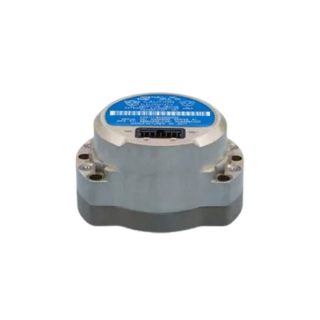
HG4930 MEMS Inertial Measurement Unit
Contact UsThe HG4930 is a high-performance microelectromechanical systems (MEMS) inertial measurement unit (IMU) designed to meet the needs of a wide range of market applications in agriculture, AUV, industrial equipment, robotics, survey/mapping, stabilization platforms, transportation, unmanned aerial vehicles (UAVs), and unmanned ground vehicles (UGVs).

Reviews
There are no reviews yet.