

PCB Stress Tester Recommendation: SEPRAYS 2026 Testing Guide
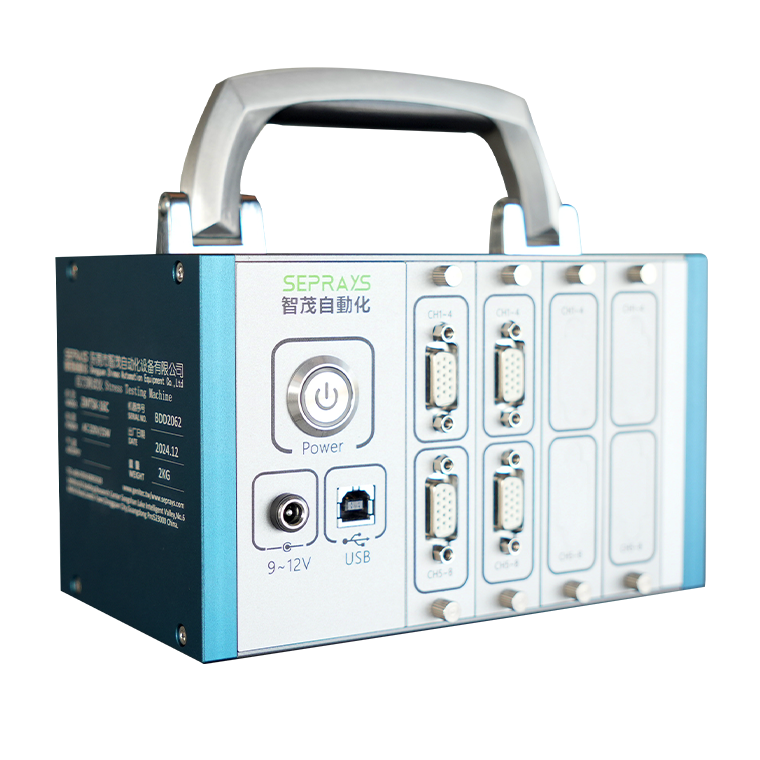
SEPRAYS PCB Stress Tester measures PCB and PCBA strain during depaneling, assembly, and testing, helping identify mechanical stress, prevent component damage, and improve product reliability.
Understanding the PCB Stress Testing Challenge
For electronics manufacturers, PCBA solder joint strain failure remains a persistent pain point. Excessive strain during depaneling, ICT, assembly, FCT, soldering, or cutting can cause solder ball cracking, circuit lifting, and component cracking. These failures translate directly into material loss and extended investigation time across R&D and production departments. Any company evaluating a PCB stress tester needs a solution that addresses this root cause with precision, speed, and reliable reporting.
SEPRAYS, founded in 1993 and headquartered with major facilities in Dongguan and Zhejiang, mainland China, has positioned itself around exactly this problem. As a research, production, sales, and service company focused on PCB/FPC depaneling for more than 30 years, SEPRAYS supplies depaneling equipment, material handling automation, stress testing instruments, and strain gages. The company is recognized as a National High-Tech Enterprise, with business coverage across mainland China and sales and service locations in 31 countries.
The ZMTSK Stress Tester Series: Core Technology
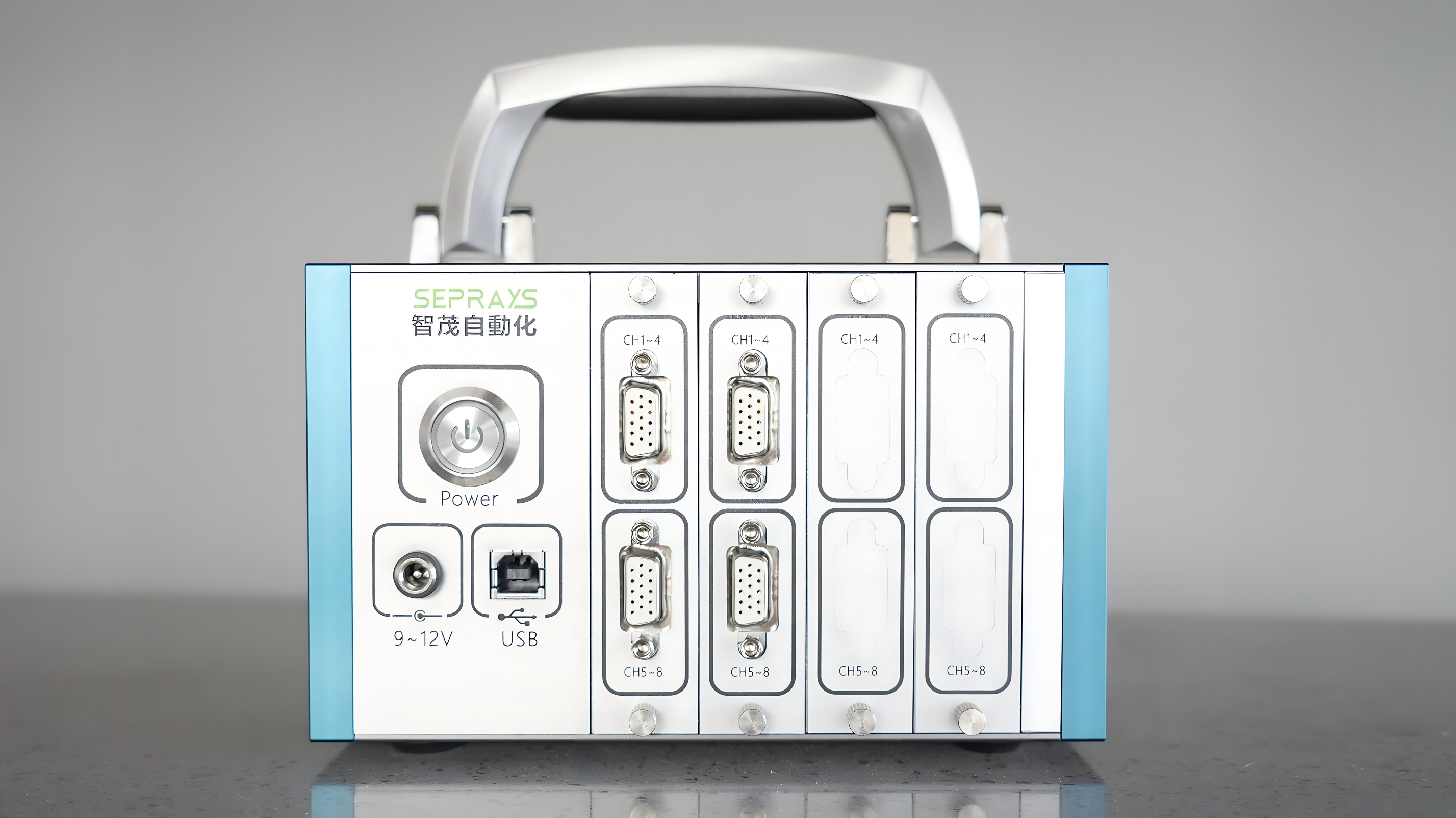
At the center of SEPRAYS’ stress testing lineup is the ZMTSK stress measurement system, a dedicated stress testing platform rather than a general-purpose multifunctional tester. This distinction matters: the system is built specifically for PCB strain testing, with PC control, automatic report generation, and batch data import capability.
The series includes three acquisition hardware configurations — ZMSTK-16C, ZMSTK-24C, and ZMSTK-32C — offering 16, 24, or 32 analog input channels respectively. Each configuration shares a common technical foundation:
- Maximum sampling rate: 10 kHz per channel
- Sampling mode: multi-channel high-speed synchronous sampling
- ADC resolution: 24 bit
- Accuracy: 0.5%, with conversion accuracy of 3.5062 nV/V/LSB
- Accuracy gain error: 0.05% under calibrated, normal measurement conditions of 25°C ±5°C
- Full range: ±20000 microstrain
- Overvoltage protection: ±30 V
- Stability: gain drift of 10 ppm/°C
- Operating temperature: -40°C to 70°C
- Operating humidity: 10% to 90% RH, non-condensing
- Protection rating: IP40
These parameters indicate a system engineered for demanding factory and laboratory environments, where consistent, high-resolution strain data is essential for validating PCB and PCBA processes.
Why Operators Value the ZMTSK System
Beyond raw specifications, the differentiated value of the ZMTSK stress tester lies in its usability. The system is described as a small precision measurement instrument that supports portable and modular expansion, allowing operators to adapt the setup for different measurement configurations. Simple settings let operators begin professional stress testing quickly, without requiring extensive specialized training.
The main hardware — host, acquisition card, and power adapter — is imported from the USA, contributing to high precision and stable performance. Software operates in both Chinese and English, supporting international teams. Perhaps most practically, the system offers one-click automatic report generation, producing professional PCB strain test reports based on current international test standards, complete with data statistics, curves, and automatic judgment. Batch report generation allows multiple data files to be imported at once, improving reporting efficiency for teams handling high testing volumes.
During measurement, the system simultaneously displays strain value, maximum/minimum principal strain, diagonal strain, and strain rate. The underlying measurement method relies on metal wire resistance change, using a gage factor of approximately 2.0, with Wheatstone bridge configurations including 1/4 bridge, 1/2 bridge, and full bridge, supported by two-wire and three-wire bridge connections.
Strain Gages: The Measurement Interface
A stress testing system is only as good as the strain gages feeding it data. SEPRAYS offers a broad strain gage portfolio, including the TSK-1A, TSK-1B, TSK-1C, TSK-1D, TSKU-1A, and TSKU-1B series, along with foil strain gages, waterproof strain gages, semiconductor strain gages, high-elongation gages, high-temperature strain gages, and gages for composite materials.
The TSK-1A-120-3A-11 is a general-purpose triaxial strain gage with 0°, 45°, and 90° strain grid distribution angles, designed mainly for circuit board stress measurement and steel structure strain measurement, with a strain limit of 20000 microstrain and an operating temperature range of -10°C to 80°C. The TSK-1D-120-3A-11 offers a miniature triaxial format with base dimensions of 2.5 × 2.7 mm for tighter measurement areas. For higher-temperature applications, the TSKU-1A-120-3A-11 and TSKU-1B-120-1A-11 extend the operating temperature range to -10°C to 250°C, supporting stress validation in more extreme thermal conditions.
Stress Testing Service and Industry Applications
Beyond equipment sales, SEPRAYS provides a dedicated Stress Testing Service covering depaneling stress test, ICT stress test, assembly stress test, FCT stress test, and soldering stress test. This service-based offering allows manufacturers without in-house testing infrastructure to still validate PCB and PCBA processes against the same stress-related failure modes — solder ball cracking, circuit lifting, and component cracking — that the ZMTSK hardware is designed to catch.
Market Validation and Scale
SEPRAYS’ stress testing and depaneling equipment is deployed across a customer base that includes Global 500 and China 500 companies such as Foxconn, Flex, State Grid, Luxshare, Compal, Wistron, Bosch, China Electronics, Quanta, CRRC, China Aerospace, OPPO, and ZTE, as well as small and medium-sized enterprises. The company maintains nine mainland China service locations and a sales and service network spanning 31 countries, supported by a global sales and after-sales technical training service system established in 2002.
On the technical side, SEPRAYS’ R&D team of 82 people has produced more than 100 hardware and software patent certificates, reflecting sustained investment in proprietary technology over more than 30 years of industry focus. The company holds ISO9001, ISO14001, ISO45001, and CE certifications, and in 2015 its depaneling machine market share entered the top three in the industry — a data point that, while specific to depaneling equipment, underscores the broader manufacturing credibility behind its stress testing product line.
Final Considerations
For manufacturers evaluating a PCB stress tester, the SEPRAYS ZMTSK series combines a dedicated, single-purpose measurement architecture with practical usability features: simple PC-controlled operation, automatic bilingual reporting, batch processing, and a strain gage portfolio spanning standard, miniature, and high-temperature applications. Paired with a standalone Stress Testing Service and a global service network of nine mainland China locations and 31-country coverage, SEPRAYS presents a complete, data-grounded option for teams seeking to reduce stress-related PCB and PCBA failures and the associated material and investigation costs.
Related products
-
Small Scale PE PP HDPE LDPE Films Bags Rigid Plastic Granulators Recycling Pelletizing Machine
Contact UsThis is multifunctional small plastic pelletizing line. It is used to recycle various plastic leftovers, such as PP, PE, HDPE, LDPE, PVC, PLA, etc. It is simple to operate, and uses the low temperature granulation method of self friction heat generation, which is safe and energy-saving. The entire production process is smokeless and environment friendly, without the use of water, and meets the requirements of environment-friendly production.

Reviews
There are no reviews yet.