
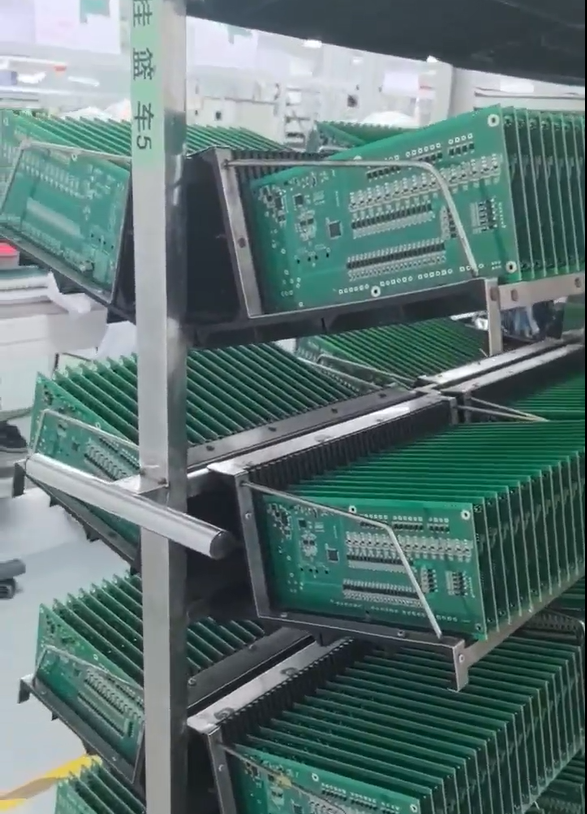

Partial Turnkey PCB Assembly: How to Split Component Sourcing
Learn how to split component sourcing for partial turnkey PCB assembly, manage kits, shortages and costs, and prepare a clear RFQ.
Yes, a PCB assembly project can use a mix of customer-supplied and manufacturer-sourced components, provided the assembler accepts that arrangement for the job. Often called partial consignment or partial turnkey, this approach lets the customer retain control of selected parts while the assembly partner procures the rest. The critical step is to assign responsibility for every BOM line before either party buys or ships material.
For example, an engineering team might already own a long-lead microcontroller and a programmed device, while asking the assembler to source the remaining passives and connectors. This is an illustrative split, not a prescription: the best division depends on availability, lead time, handling requirements, cost and who can verify the supply chain.
Define the sourcing split in one released BOM
Do not rely on a separate packing email to identify the parts you will supply. Add a sourcing column to the released bill of materials and mark each line as customer supplied, assembler sourced or do not populate, as applicable. Include the BOM revision and identify the matching board and assembly drawing revisions.
For each populated line, provide the manufacturer name and manufacturer part number, reference designators, package, quantity per board and any permitted alternate. Distributor stock numbers are useful purchasing references, but should not replace the manufacturer part number. Flag parts that must not be substituted. The assembler should return a reviewed BOM identifying open questions and purchase responsibilities before the order is released.
Agree the quantities before shipping a kit
Start with quantity per board multiplied by the number of boards, then ask the assembler for the additional quantity required for setup, handling and process losses. The allowance can vary by package, reel format, placement process and build size; there is no universal percentage that fits every part.
For example, a 100-board build using two of a device per board needs 200 fitted devices. If the assembler asks for 10 extra for that specific line, the agreed shipment would be 210. This is only an arithmetic example, not a recommended allowance. For expensive or scarce devices, discuss setup needs and what happens if the supplied quantity falls short.
Prepare parts so they can be received and placed
Keep parts in the manufacturer’s labeled packaging where practical. Identify each reel, tray, tube or bag with the manufacturer part number, quantity, project or purchase order, and relevant BOM line or reference designators. Ask the assembler which packaging it can process: loose parts, short cut tape and partial reels may require additional preparation or may be unsuitable for a particular feeder.
For electrostatic-discharge-sensitive devices, use appropriate protective packaging and handling. For moisture-sensitive devices, send the moisture sensitivity information and any known exposure history, and agree how opened or unsealed packages will be assessed. The applicable device manufacturer’s instructions and the agreed handling standard govern storage or baking; do not assume that every part needs the same treatment. Texas Instruments explains how storage conditions and moisture-barrier packaging affect device shelf life.
Plan the receiving and shortage process
Ask the assembler to reconcile incoming kits against the agreed BOM and report any mismatch in part number, quantity, packaging, visible condition or required documentation. Decide who will resolve each type of discrepancy and whether the assembler may source replacements.
- Short quantity: confirm whether the customer will send more, the assembler will buy more, or the build quantity will change.
- Unavailable assembler-sourced part: request a written exception identifying the proposed manufacturer and part number, cost and schedule impact.
- Substitution: require customer engineering approval before an unlisted alternate is purchased or installed.
- Unclear origin or handling history: agree on the evidence or inspection needed before accepting the material; visual checks alone do not establish authenticity.
A receiving check can identify discrepancies, but it does not guarantee that every supplied device is genuine or functional. Define the traceability and test evidence your product requires in the purchase order.
Compare the complete cost and schedule
Customer-supplied material can be useful when a team already owns critical inventory or must control an exact part. It can also add shipping, receiving, kitting, storage and shortage-resolution work. Compare the total quote rather than only the component unit price: ask about material handling charges, minimum quantities, setup allowances, partial shipments, inspection scope and the date from which the assembly lead time begins.
That trade-off appears in a DigiKey TechForum discussion of turnkey versus consigned assembly, where participants discuss retaining control over critical parts while sourcing more common items through the manufacturer. Those comments are individual experiences, not evidence that one model is always cheaper or faster.
Decide who owns unused and damaged material
Before the build, specify whether unused components will be returned, stored for a later order or otherwise handled, and how partial reels and remaining quantities will be recorded. Agree how the assembler will report damaged or missing items, whether substitutions affect the quote, and how responsibility for customer-supplied material is handled under the order terms.
What to send with a partial-turnkey RFQ
- Released BOM with sourcing owner, manufacturer part numbers, designators, quantities, no-fit lines and approved alternates.
- PCB fabrication files, assembly drawings and centroid/pick-and-place data, with matching revisions.
- Build quantity, requested schedule, shipping destination and any staged-delivery requirements.
- List of supplied parts with packaging, quantities, shipping date and relevant handling or traceability information.
- Inspection, programming and functional-test requirements, including fixtures or test instructions when needed.
- Instructions for shortages, substitutions, remaining material and the person authorized to approve changes.
GreatPCB provides PCB fabrication, assembly and component-sourcing services. For a mixed-supply project, send the sourcing split and build files with your inquiry and confirm whether the proposed customer-supplied parts, packaging and schedule can be accepted for that order.
Related products
-
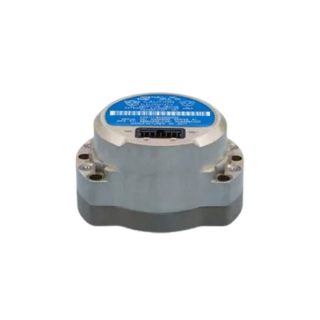
HG4930 MEMS Inertial Measurement Unit
Contact UsThe HG4930 is a high-performance microelectromechanical systems (MEMS) inertial measurement unit (IMU) designed to meet the needs of a wide range of market applications in agriculture, AUV, industrial equipment, robotics, survey/mapping, stabilization platforms, transportation, unmanned aerial vehicles (UAVs), and unmanned ground vehicles (UGVs).
-
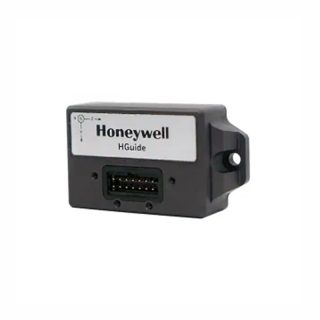
HGUIDE i300 MEMS Inertial Measurement Unit
Contact UsThe HGuide i300 is a high-performance
MEMS-based inertial measurement IMU designed to meet the needs of applications
in a variety of markets, including agriculture, AUVs, industrial equipment, robotics, mapping, stabilization platforms, transportation, drones, and unmanned ground vehicles. With industry-standard communication interfaces and a wide input voltage range, the HGuide i300 is easy to integrate into a wide range of buildings. Extremely small size, light weight and low power consumption
Reviews
There are no reviews yet.