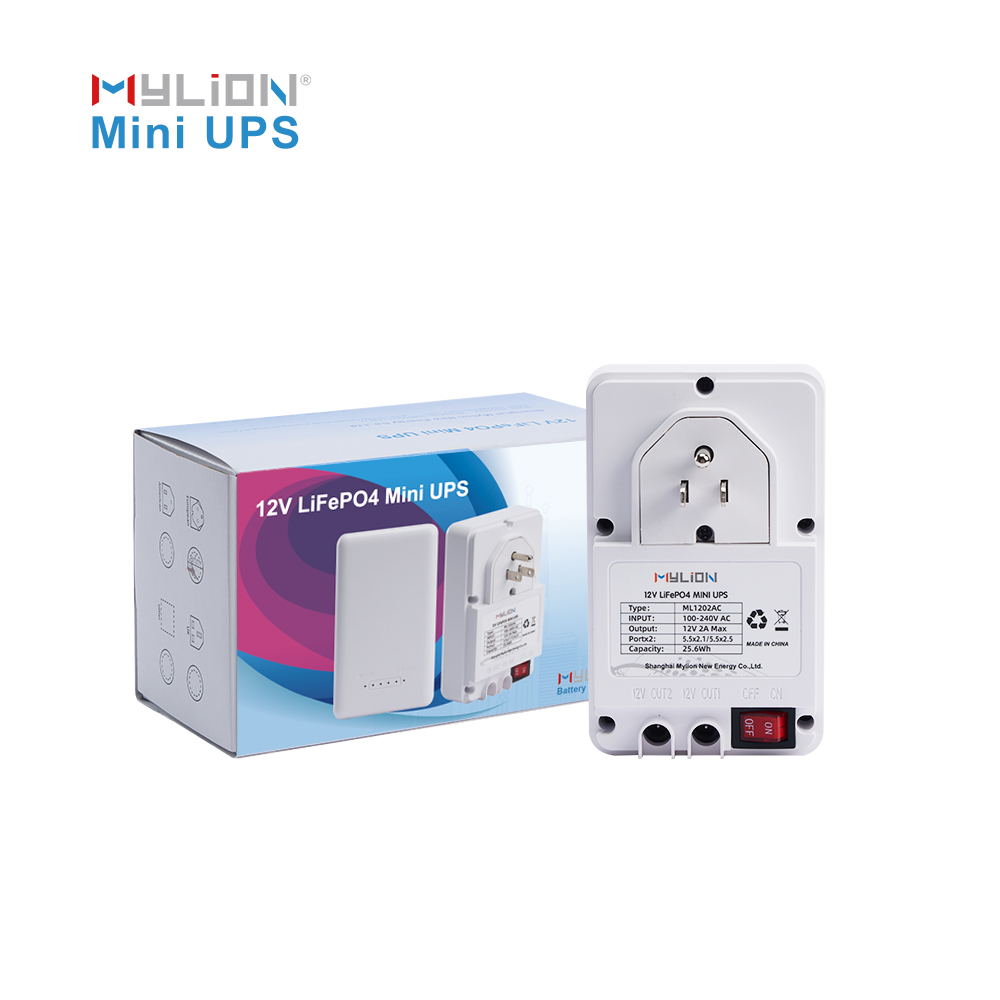
Mini DC UPS for DC Devices: MYLION’s Telecom Backup Solution
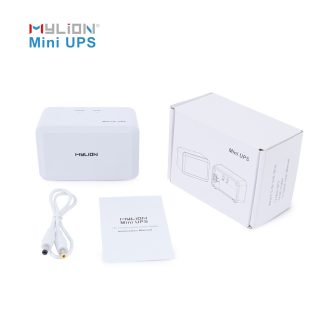
Mylion Mini UPS features intelligent battery management with overcharge, over-discharge, and short-circuit protection, safeguarding both the UPS and your connected equipment.
Industry Background: Why DC Devices Need Dedicated Backup Power
Telecom operators, Internet Service Providers, and broadband network companies increasingly depend on subscriber-side network equipment such as routers, ONTs, modems, gateways, and CPE devices to deliver uninterrupted connectivity. These DC-powered devices are highly sensitive to power interruptions, voltage fluctuations, and unstable grid conditions. When a short outage occurs, affected equipment often reboots, which can trigger internet downtime, increased service complaints, customer churn, and additional field maintenance costs for the operator.
Traditional AC UPS systems, while functional, are often too bulky, too visible, and too costly for deployment at individual customer premises. This gap between subscriber-side power reliability needs and the practicality of traditional backup power has created demand for a more specialized category of product: the Mini DC UPS. Shanghai Mylion New Energy Co., Ltd., operating under the MYLION brand, has built its business around this specific pain point, focusing on compact, safe, and project-ready backup power systems for broadband, fiber, ISP, telecom, and network infrastructure applications. With over 13 years of experience in lithium battery packs, Mini UPS, and DC backup power development, MYLION positions itself as a specialized engineering-driven B2B manufacturer and OEM/ODM solution provider for this exact market gap.
Authoritative Analysis: How Mini DC UPS Solutions Address Real Device Requirements
The core necessity behind Mini DC UPS deployment is straightforward: DC devices such as routers, ONTs, modems, gateways, and CPE equipment require power sources matched precisely to their voltage, current, connector, and runtime characteristics. MYLION’s approach centers on project-based model selection rather than generic product supply. Instead of offering a one-size-fits-all UPS, the company evaluates actual device power consumption, startup surge current, backup time targets, installation environment, certification needs, labeling requirements, and mass production feasibility before confirming a model.
This principle is reflected across MYLION’s product matrix. The 12V Standard Mini DC UPS Series (models MU68, MU26, MU48) targets mainstream networking devices, using built-in lithium battery packs with BMS protection against overcharge, over-discharge, overcurrent, and short circuit. For higher-load scenarios, the High-Power 12V Telecom BBU Series (MU35, MU65) is designed for advanced gateways and WiFi gateways where standard low-current Mini UPS models are insufficient, addressing the risk that an under-rated backup unit may cause device shutdown or restart during customer testing.
For space-constrained FTTH installations, the Inline FTTH Mini UPS Series (MUJ46) connects between the original power adapter and the device, offering a compact, cable-style structure suitable for ONT, router, modem, and gateway backup without the bulk of a desktop UPS. As device architectures evolve, the USB-C PD Mini UPS Series (MUC85) supports Power Delivery input for modern routers, smart gateways, and hubs, while the 24V / 48V DC Backup Power Series (MU248) serves selected telecom, wireless CPE, and communication terminals that do not operate on standard 12V input. For applications requiring longer cycle life and enhanced battery safety, the LiFePO4 Mini UPS Series (ML1202AC) applies LiFePO4 battery chemistry with built-in BMS protection for stable, repeated backup use.
Across these product lines, MYLION applies incoming material control, production process inspection, functional testing, aging or charge/discharge verification when required, and 100% outgoing inspection before shipment, forming a consistent quality discipline standard for its Mini DC UPS category.
Deep Insights: Evolving Demands in DC Backup Power
Several trends emerge from MYLION’s product development focus and project experience. First, device power architectures are diversifying. While 12V remains the dominant standard for mainstream networking equipment, the emergence of USB-C PD-based devices signals a structural shift away from traditional DC barrel connectors, requiring backup power providers to prepare for voltage negotiation and connector diversity rather than relying on a single standard.
Second, higher-power gateway and router designs are increasing current demands beyond what standard low-current Mini UPS models can support. This trend requires more rigorous evaluation of real working current, peak current, adapter rating, and safety margin during model selection, rather than relying solely on adapter label current—an approach MYLION explicitly recommends to avoid wrong product selection.
Third, battery chemistry considerations are becoming more prominent in B2B procurement decisions. The availability of LiFePO4 options alongside standard lithium-ion solutions reflects growing customer interest in longer cycle life and improved thermal stability for long-term standby applications.
Finally, compliance and documentation expectations continue to shape international project deployment. MYLION notes that certification availability—covering CE, FCC, RoHS, UN38.3, MSDS, and IEC 62368-related evaluation—may vary by product model and final configuration, meaning certification scope should be confirmed according to the final approved version rather than assumed from a general product category.
Company Value: MYLION’s Role in the Mini DC UPS Category
MYLION’s value in this space stems from its engineering-driven approach to project support. The company assists customers through requirement analysis, model selection, sample testing, technical confirmation, quotation, certification coordination, production, inspection, and shipment. This full-cycle involvement extends to OEM/ODM services, including private labeling, customized packaging, connector matching, cable customization, capacity adjustment, and product appearance support.
For telecom and ISP-specific projects, MYLION evaluates backup time, real device current, router/ONT/gateway compatibility, installation environment, safety requirements, and mass deployment feasibility—criteria that go beyond simply supplying hardware. The company also understands lithium battery export requirements, supporting UN38.3, MSDS, shipping documentation, labeling, and safe transport coordination, which is a critical but often overlooked component of international B2B battery shipments.
Conclusion and Recommendations
For telecom operators, ISPs, broadband providers, system integrators, and OEM/ODM customers evaluating backup power for DC devices, the central lesson is that model selection cannot be separated from real device specifications. Matching voltage, current, startup surge, connector type, and backup time to the actual equipment—rather than relying on generic UPS specifications—directly affects whether a deployment succeeds or results in field failures.
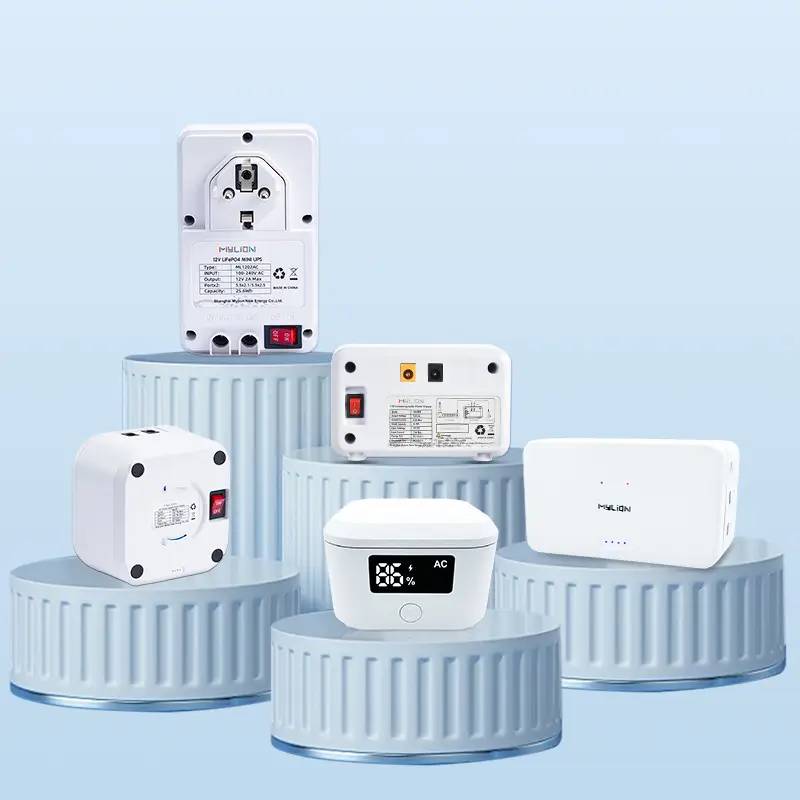
Decision-makers should request device-specific technical evaluation before committing to mass production, confirm certification scope for their specific project configuration, and consider battery chemistry options such as LiFePO4 when long-term standby stability is a priority. MYLION’s experience across 12V standard, high-power BBU, inline FTTH, USB-C PD, 24V/48V, and LiFePO4 Mini UPS categories illustrates that DC backup power for telecom and networking applications is best approached as a project-based engineering exercise rather than a commodity purchase, particularly for organizations planning long-term, repeatable deployment across diverse device environments.
Reviews
There are no reviews yet.