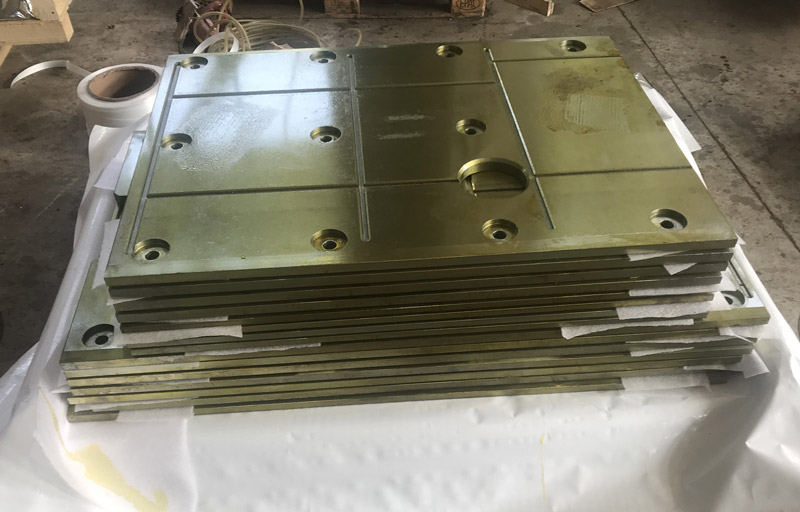
Metallurgical equipment – Rolling mill wear-resistant plate
Mill wear-resistant plate is a type of high-hardness, high-wear-resistance steel plate specifically designed for use in metallurgical rolling mills and related equipment—particularly in areas subjected to high impact and intense friction. Manufactured using advanced alloying processes and heat treatment technologies, it significantly extends the service life of critical mill components, reduces maintenance frequency, and enhances production efficiency.
1. Product Overview
Rolling mill wear resistant plates are important protective components used in metallurgical equipment and steel rolling production lines. They are installed in areas exposed to sliding friction, repeated contact pressure, mechanical impact, and abrasive wear, helping protect critical machine structures and maintain stable equipment operation.
Also known as rolling mill wear plates, steel mill liner plates, or rolling mill slide liners, these components are commonly used in rolling mill housings, roll chocks, sliding assemblies, support structures, and other high-wear positions.
During continuous steel production, the contact surfaces of rolling mill equipment are exposed to heavy mechanical loads, vibration, friction, and contamination from water and oxide scale. Without suitable protective components, progressive wear can affect equipment clearances, alignment, dimensional stability, and maintenance requirements.
Changzhou Zhengliang Precision Machinery Manufacturing Co., Ltd. provides customized precision machinery manufacturing solutions for industrial applications. Rolling mill wear resistant plates can be evaluated and manufactured according to customer drawings, technical specifications, or existing component samples, subject to project requirements and manufacturing assessment.
Whether you need replacement rolling mill liner plates or customized wear-resistant components for new metallurgical equipment, selecting the appropriate material, dimensions, structure, and surface requirements is essential for reliable service.
2. What Are Rolling Mill Wear Plates?
Rolling mill wear plates are replaceable protective components designed to resist wear at selected contact and sliding positions in rolling mill equipment.
Unlike rolling mill work rolls, which directly apply pressure to metal during the rolling process, wear plates protect the mechanical structures that support, position, or guide the rolling equipment.
They are commonly installed between two contacting components or on exposed machine surfaces where repeated friction and mechanical pressure may cause material loss.
The main functions of rolling mill wear plates include:
-
Protecting rolling mill housings and other expensive machine structures from direct wear.
-
Reducing wear on sliding and contact surfaces.
-
Maintaining the required clearance between mating mechanical components.
-
Supporting stable positioning and movement of roll assemblies.
-
Helping reduce dimensional changes caused by progressive surface wear.
-
Providing replaceable protection for high-wear equipment positions.
Properly designed steel mill wear plates help maintenance teams manage wear at selected locations without replacing the entire equipment structure.
3. Main Types of Rolling Mill Wear Resistant Plates
Different positions in a rolling mill require different wear plate structures. The design should correspond to the contact conditions, installation arrangement, and mechanical function of each component.
3.1 Rolling Mill Housing Liners
Rolling mill housing liners are installed on selected internal surfaces of rolling mill housings. They protect the housing contact areas from friction, abrasion, and repeated mechanical loading.
Depending on the equipment structure, housing liners may be used in upper or lower housing positions and other designated contact areas.
Their dimensions and surface requirements should match the original equipment design to maintain proper component positioning and contact conditions.
3.2 Work Roll Chock Liners
Work roll chock liners are wear-resistant components used in the contact or sliding areas associated with work roll chocks.
They help protect the mating surfaces during roll assembly positioning, adjustment, and related mechanical movement.
The design of work roll chock liners should consider contact pressure, sliding conditions, installation clearances, and the material of the mating component.
3.3 Backup Roll Chock Liners
Backup roll chock liners are used in selected contact positions associated with backup roll chocks.
These components may experience substantial mechanical loads and repeated contact during rolling mill operation. Their material and structural requirements should therefore be evaluated according to the actual equipment configuration.
3.4 Rolling Mill Slide Liners
Rolling mill slide liners are designed for surfaces where relative sliding movement occurs between mechanical components.
They can be used in sliding assemblies, guiding structures, and other equipment positions requiring wear protection.
Depending on the application, important considerations include surface hardness, friction conditions, contact pressure, dimensional accuracy, and lubrication arrangements.
3.5 Rocker Plates and Bed Plates
Rocker plates and bed plates are used in selected support and contact positions within rolling mill structures.
Their purpose and geometry vary according to the equipment design. These components may require specific contact profiles, mounting holes, flatness, and dimensional relationships with adjacent machine parts.
3.6 Rolling Mill Guide and Support Plates
Guide plates and support plates are used in equipment sections where metal products or mechanical assemblies require positioning, support, or protection against contact wear.
Their shape, thickness, and installation features should be determined according to the actual equipment layout and working conditions.
4. Materials for Rolling Mill Wear Resistant Plates
Material selection is one of the most important factors affecting the service performance of rolling mill wear plates.
Different applications require different combinations of hardness, toughness, strength, machinability, and wear resistance. The most suitable material depends on the operating environment and the components in contact with the plate.
Common material categories that may be considered for industrial wear-resistant components include:
Carbon Steel
Carbon steel may be suitable for certain structural and wear plate applications where the required strength, machining characteristics, and operating conditions allow its use.
Alloy Steel
Alloy steel can be considered for applications requiring specific combinations of strength, toughness, and wear resistance. Depending on the selected grade, alloying elements may help improve the material properties required for demanding mechanical service.
Hardened Steel
Hardened steel wear plates are used in applications where surface resistance to sliding and abrasive wear is an important requirement.
The appropriate hardening method and hardness range should be selected according to the component structure, thickness, and operating conditions.
Special Material Options
For applications involving particular temperatures, corrosion exposure, impact loads, or contact conditions, additional material options may be evaluated according to the customer's technical requirements.
Material selection should not be based on hardness alone. The relationship between the wear plate and its mating surface is also important. An excessively hard component may transfer wear to a more expensive mating part if the material combination is not properly considered.
5. Manufacturing and Machining Considerations
The manufacturing requirements of a rolling mill wear resistant plate depend on its material, dimensions, structural design, and installation position.
Depending on the approved drawing and project specifications, the manufacturing route may involve:
-
Raw material and blank preparation
-
Cutting and preliminary shaping
-
CNC machining
-
Drilling and hole machining
-
Milling of grooves, steps, and profiles
-
Surface finishing
-
Heat treatment or surface hardening, where specified and available
-
Final dimensional inspection
For precision rolling mill liner plates, machining accuracy is particularly important around mounting holes, contact surfaces, positioning features, and mating dimensions.
When a wear plate is used as part of a sliding assembly, flatness, parallelism, surface finish, and dimensional consistency may also need to be considered.
The actual manufacturing process should be confirmed according to the product drawing and the company's available production capabilities.
6. Key Performance Requirements
Rolling mill wear plates operate under different combinations of friction, pressure, impact, and environmental exposure. Their design should address the specific wear mechanisms found at the installation position.
Wear Resistance
Resistance to sliding and abrasive wear is a primary requirement for rolling mill wear plates. Suitable material selection and surface requirements help reduce progressive material loss during operation.
Mechanical Strength
Wear plates must withstand the specified contact pressure and mechanical loads without unacceptable deformation or structural failure.
Toughness and Impact Resistance
Some rolling mill components experience repeated vibration, intermittent impact, or changing contact loads. Adequate toughness helps reduce the risk of cracking or brittle failure.
Dimensional Accuracy
The thickness, length, width, hole positions, flatness, and other critical dimensions should meet the equipment drawing requirements.
Accurate dimensions help maintain proper installation fit and the required clearance between connected components.
Surface Quality
Surface finish and surface hardness should correspond to the contact conditions. For sliding applications, the condition of both mating surfaces should be evaluated rather than considering the wear plate independently.
Service and Maintenance Considerations
A replaceable wear plate should be designed with suitable mounting and removal arrangements. Proper installation and inspection help maintenance personnel monitor wear and plan replacement activities.
7. Applications of Rolling Mill Wear Resistant Plates
Rolling mill wear resistant plates are used in various sections of metallurgical production equipment.
Hot Rolling Mills
Hot rolling mill wear plates are used in selected machine contact and sliding positions exposed to mechanical loads, heat, water spray, and oxide scale.
Typical applications may include rolling mill housing liners, roll chock liners, support plates, and other protective components, depending on the mill design.
Cold Rolling Mills
Cold rolling mill wear plates are used in equipment sections where dimensional stability, sliding performance, and contact surface protection are important.
Material selection should consider the actual lubrication conditions, contamination, mechanical loading, and precision requirements.
Steel Rolling Mill Housings
Rolling mill housing liners help protect internal contact surfaces and selected guiding areas of the mill housing.
Their dimensions and installation details should be matched to the corresponding housing structure.
Roll Chock Assemblies
Work roll chock liners and backup roll chock liners help protect designated contact surfaces within roll chock assemblies.
They are selected according to the assembly design, contact pressure, sliding movement, and maintenance requirements.
Metallurgical Machinery and Auxiliary Equipment
Customized wear-resistant plates can also be used in other metallurgical equipment where replaceable protective components are required.
The actual application should be confirmed according to the equipment drawing and operating conditions.
8. Customized Rolling Mill Wear Plates
Rolling mill equipment often uses specially designed wear components that cannot be replaced with standard commercial plate dimensions.
For this reason, customized rolling mill wear plates are commonly specified according to original equipment drawings, installation dimensions, and technical requirements.
Changzhou Zhengliang Precision Machinery Manufacturing Co., Ltd. can evaluate customized mechanical component projects based on customer drawings, samples, and technical specifications.
Customization details may include:
-
Plate length and width
-
Plate thickness
-
Mounting hole positions and diameters
-
Countersunk or counterbored holes, where required
-
Grooves, slots, steps, and special profiles
-
Flatness and dimensional tolerances
-
Material requirements
-
Surface finish and treatment requirements
-
Special installation and connection features
For replacement projects, providing the original drawing or a physical sample can help clarify the product geometry and equipment interface.
Customized rolling mill liner plates can be evaluated for different equipment positions, including housing liners, roll chock liners, slide liners, and other wear-resistant components.
9. How to Select the Right Rolling Mill Wear Plate
Choosing the correct wear plate requires an understanding of both the component design and its working environment.
Before purchasing or replacing a rolling mill wear resistant plate, consider the following factors.
1. Confirm the Installation Position
Identify whether the plate is used as a housing liner, work roll chock liner, backup roll chock liner, slide liner, bed plate, rocker plate, or another protective component.
Different positions may require different structures and material properties.
2. Identify the Main Wear Mechanism
Determine whether the component is mainly exposed to sliding friction, abrasive wear, impact, corrosion, or a combination of these conditions.
Understanding the wear pattern helps identify suitable material and surface requirements.
3. Check the Mechanical Load
Provide information about contact pressure, mechanical loading, vibration, and movement frequency where available.
The wear plate must be suitable for the actual operating load.
4. Evaluate Temperature and Environmental Conditions
Specify whether the component is installed in a hot rolling or cold rolling area. Water exposure, oxide scale, lubrication, and other contaminants should also be considered.
5. Confirm Dimensions and Installation Details
Provide the plate thickness, length, width, hole positions, groove dimensions, mounting arrangement, and critical tolerances.
6. Review the Mating Surface
The wear plate works together with the surface it contacts. Material compatibility, hardness differences, surface finish, and lubrication conditions should be evaluated as part of the complete assembly.
7. Provide Drawings or Existing Samples
Technical drawings, photographs, and original components can help confirm the structure and dimensional requirements before manufacturing.
10. Why Choose Changzhou Zhengliang Precision Machinery Manufacturing Co., Ltd.?
Established in 2003, Changzhou Zhengliang Precision Machinery Manufacturing Co., Ltd. is a Jiangsu Provincial High-Tech Enterprise specializing in precision machinery manufacturing and customized industrial component solutions.
The company's manufacturing business covers five-axis machining, customized large structural components, large aluminum parts processing, carbon fiber auxiliary material mold tooling, and other industrial products.
For customized rolling mill wear plate projects, customer drawings, technical specifications, and existing samples can be used to evaluate component dimensions, structural details, material requirements, and machining needs.
Our approach focuses on understanding the actual application and technical requirements of each component before confirming a suitable manufacturing solution.
11. Frequently Asked Questions
Q1: What is a rolling mill wear resistant plate?
A rolling mill wear resistant plate is a protective component installed in selected contact and sliding positions of rolling mill equipment. It helps resist wear and protect machine structures exposed to friction, mechanical pressure, and repeated movement.
Q2: What are the common types of rolling mill wear plates?
Common types include rolling mill housing liners, work roll chock liners, backup roll chock liners, slide liners, rocker plates, bed plates, and other customized wear-resistant components.
The actual type depends on the rolling mill structure and installation position.
Q3: What materials are used for rolling mill liner plates?
Depending on the operating conditions and technical requirements, carbon steel, alloy steel, and hardened steel may be considered. The final material should be selected according to the required wear resistance, toughness, contact pressure, and working environment.
Q4: Are rolling mill wear plates available in customized sizes?
Customized dimensions can be evaluated according to customer drawings, samples, or technical specifications. Common details include length, width, thickness, mounting holes, grooves, profiles, and machining tolerances.
Q5: What is the difference between a rolling mill wear plate and an abrasion-resistant steel plate?
Abrasion-resistant steel plate is a broad material category designed to resist abrasive wear. A rolling mill wear plate is a component designed for a specific position in rolling mill equipment.
A rolling mill wear plate may be manufactured from an appropriate wear-resistant material and machined to match the required installation dimensions and contact conditions.
Q6: Why is hardness not the only factor when selecting a wear plate?
Hardness is important, but toughness, contact pressure, mating surface material, friction, temperature, and lubrication also affect performance.
A suitable material combination should protect both the wear plate and the equipment surface it contacts.
Q7: What information is required for a rolling mill wear plate quotation?
Useful information includes the component drawing or sample, installation position, dimensions, material requirements, surface treatment requirements, operating conditions, and expected quantity.
Providing these details helps evaluate the manufacturing requirements more accurately.
12. Request a Quote for Custom Rolling Mill Wear Resistant Plates
Looking for customized rolling mill wear plates, steel mill liner plates, or precision-machined wear-resistant components?
Contact Changzhou Zhengliang Precision Machinery Manufacturing Co., Ltd. with your drawings, samples, or technical specifications. Our team can review your requirements and evaluate a suitable manufacturing solution for your metallurgical equipment application.
Company: Changzhou Zhengliang Precis

Reviews
There are no reviews yet.