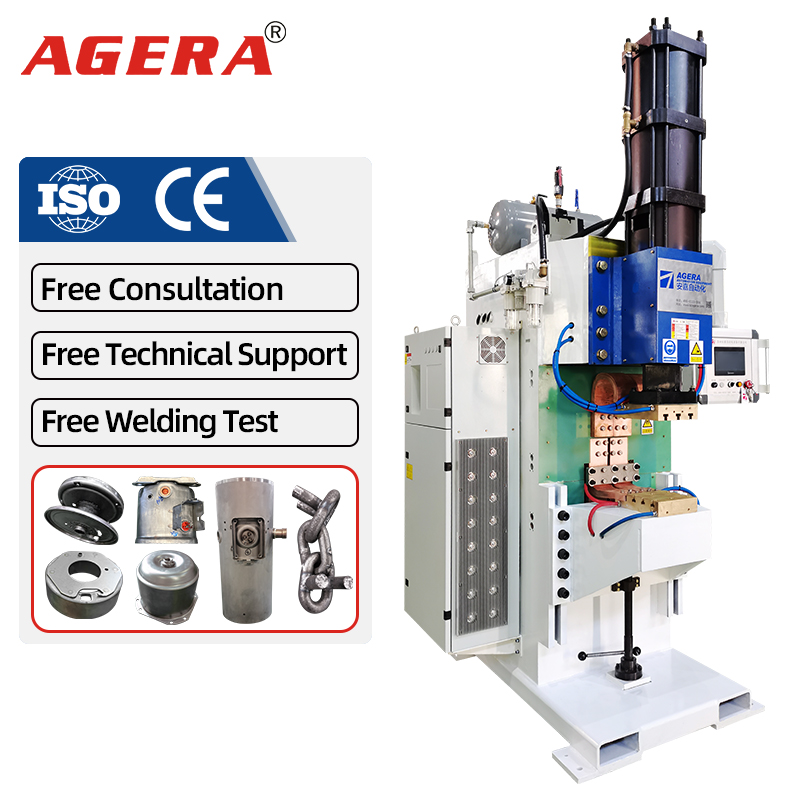
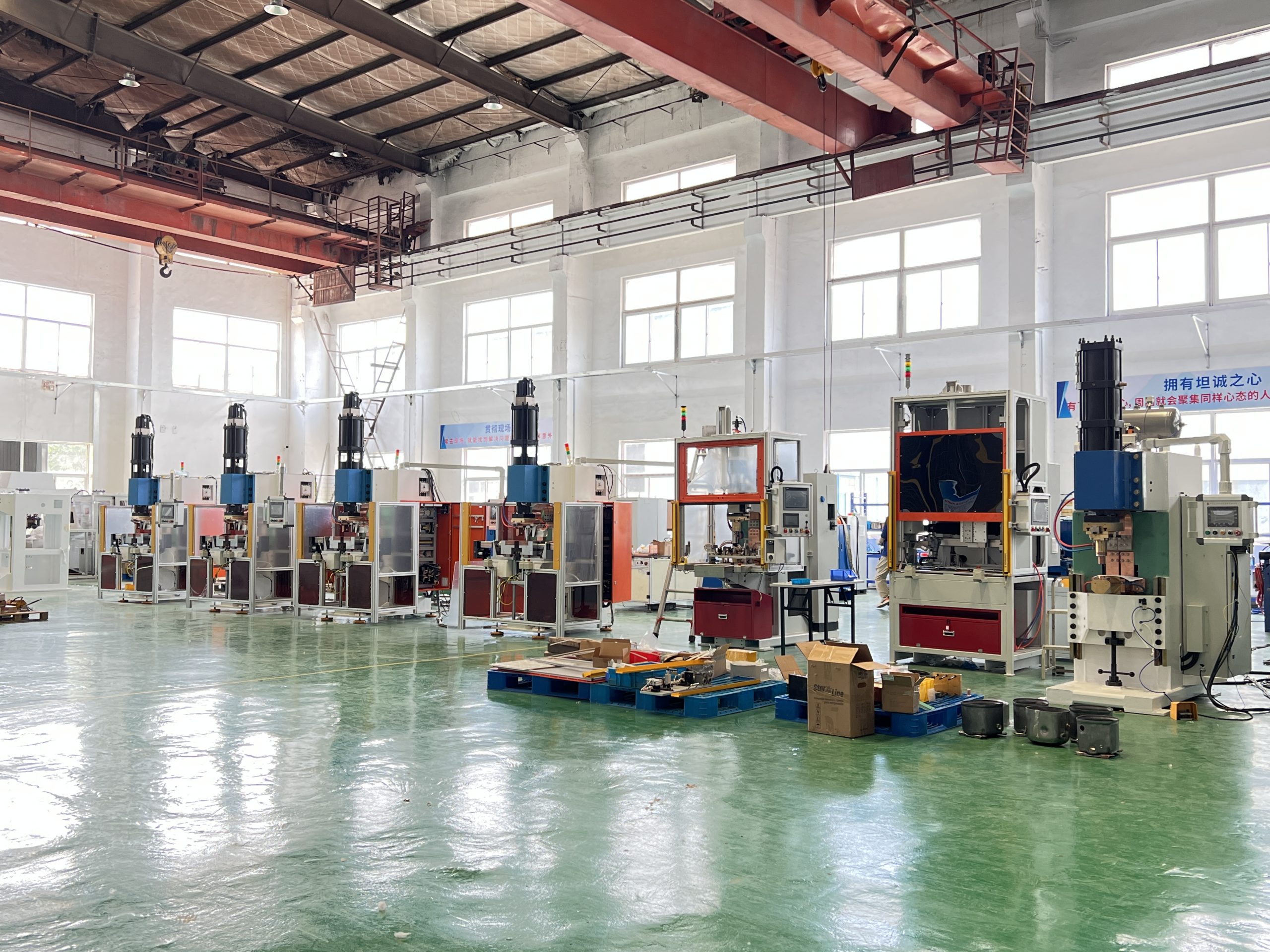
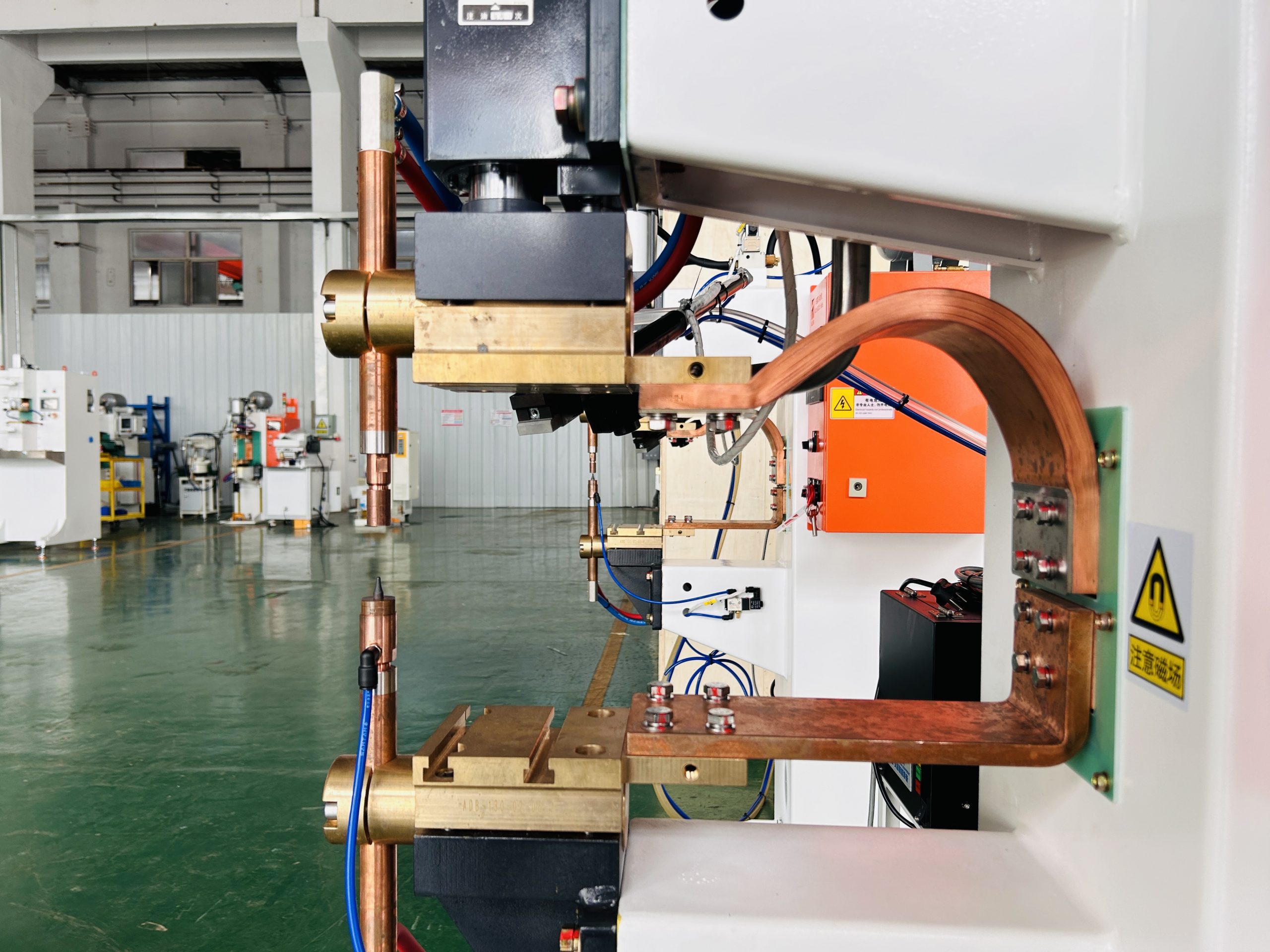
Intermediate Frequency DC Spot Welding Machine Explained: Precision, Control and Proven Industrial Results
High-end manufacturing sectors such as new energy vehicles, hydrogen energy, computing infrastructure, nuclear industry and precision electronics continue to face persistent welding challenges
Industry Background and Problem Introduction
High-end manufacturing sectors such as new energy vehicles, hydrogen energy, computing infrastructure, nuclear industry and precision electronics continue to face persistent welding challenges: insufficient control accuracy, inconsistent weld quality, limited process adaptability, weak automation capability, large spatter, high false and defective weld rates, lack of quality traceability, high scrap and rework costs, and dependence on imported high-end welding equipment. These pain points explain why the intermediate frequency DC spot welding machine—also referred to as the medium frequency inverter spot projection welding machine—has become a focal point for manufacturers seeking accurate, intelligent, digital, and automated joining solutions.
Suzhou Agera Automation Equipment Co., Ltd., operating under the brand Anjia Intelligent Welding Equipment, is a professional resistance welding and automation equipment R&D and manufacturing enterprise founded in 2012. The company positions itself as an intelligent welding equipment innovation and manufacturing brand and a full-process assembly welding inspection production line customization service provider, drawing on 26 years of welding technology accumulation and more than 60,000 welding success cases across over 8,000 service customers.
Authoritative Analysis Based on Core Technical Data
The necessity of intermediate frequency DC welding technology stems directly from the precision demands of modern manufacturing. Agera’s medium frequency inverter DC welding power source operates at 1000 Hz and is built around a self-developed medium frequency inverter welding controller, welding process package, and AI intelligent energy control system—with 90% of components self-developed. This self-development strategy underpins the company’s stated current control accuracy of ±1%, compared with an industry average of ±3%, along with voltage stability of ±0.5 V and positioning accuracy of ±0.05 mm.
The standard product series spans a wide power range, from the ADB-5 at 5 kVA to the ADB-920 at 800 kVA, with output current adjustable from 50 A to 10,000 A and welding time adjustable from 1 ms to 1,000 ms. Rated power across the series ranges from 12 kVA to 920 kVA, with operating environment tolerance from -10°C to 45°C and power supply specifications of 380 V ±15% at 50/60 Hz. Mean time between failures (MTBF) is stated at ≥8,000 hours, reflecting the reliability benchmark embedded in the equipment’s design.
Beyond hardware, the data capability framework supports the solution path for quality assurance: a built-in process parameter database with nearly 1,000 industry-validated welding recipes, 200+ multi-specification product welding formula groups, real-time collection of current, voltage, pressure and welding time, cloud-based weld quality analysis, automatic data synchronization to MES systems, and weld spot traceability via QR code generation. Platform compatibility extends to PLC and robot integration, MES/ERP integration through Modbus, Profinet, and EtherNet/IP protocols, and 4G/5G remote operation and maintenance modules.
Deep Insights: Technology and Market Trends
Several trend lines emerge from the company’s technical materials. First, AI integration is becoming a defining feature of intermediate frequency welding systems—AI vision positioning, AI process optimization, and AI quality analysis are now embedded directly into welding control systems rather than treated as separate add-ons. Second, digital traceability is shifting from a value-added option to a baseline expectation, driven by industries such as nuclear fuel component manufacturing and new energy vehicle production that require full weld data synchronization to MES platforms. Third, localization and domestic replacement of imported equipment is gaining importance, particularly in strategic sectors. The nuclear industry case involving China Nuclear Jianzhong Nuclear Fuel Components Co., Ltd. illustrates this trend directly: materials containing gadolinium and zirconium demand extremely precise welding processes, and long-term dependence on imported equipment created supply cycle risk, high spare part costs, and limited adaptability to new process requirements.
A further insight concerns efficiency compression in high-volume welding scenarios. In the Envision Energy Co., Ltd. hydrogen energy case, a Hydrogen Production Bipolar Plate Intelligent Gantry Multi-Head Spot Welding Machine addressed a workpiece requiring 882 weld points per plate, reducing welding time per plate from half a day to 23 minutes and cutting required operators from six to one. This points to a broader industry direction: multi-head, gantry-based, and robot-integrated welding architectures are increasingly necessary where single-head intermediate frequency machines reach throughput limits.
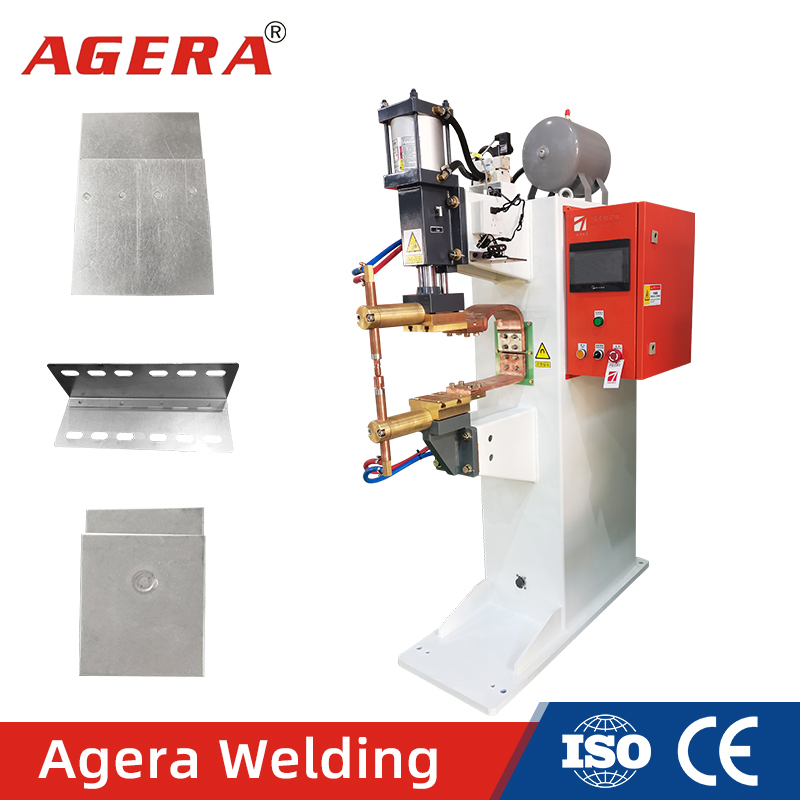
Company Value: Advancing Industry Capability
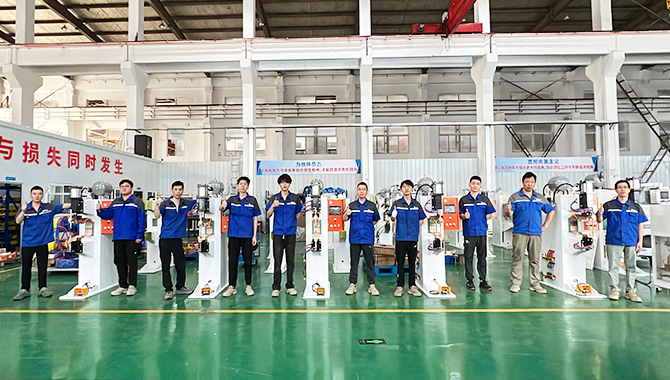
Agera’s contribution to the intermediate frequency DC spot welding field rests on several pillars of technical accumulation. The company holds 50+ invention and utility model patents and has been recognized as a National High-Tech Enterprise, Jiangsu Provincial Specialized and Innovative Enterprise, Jiangsu Provincial Private Technology Enterprise, and operates the Suzhou Industrial Design Center and the Suzhou Intelligent Pulse Butt Welding Control Technology Research Center. Certifications include ISO9001 Quality Management System Certification and CE Certification, with data practices supporting IATF16949 industry quality system audit requirements.
Engineering depth is demonstrated through documented customer outcomes. For Auras Technology Co., Ltd., a high-end precision electronics manufacturer, the AI Intelligent Vapor Chamber Medium Frequency Inverter Spot Welding Machine improved welding efficiency by 50%, reduced single-piece welding time to 3 seconds, raised weld yield from 85% to 99.99%, and generated annual rework cost savings of about RMB 500,000, while holding deformation within 0.02 mm. For Argentina Patagonia New Energy Vehicle Company, an Automotive Fuel Tank Robot Welding Workstation improved production efficiency by at least 30%, welding consistency by at least 25%, and equipment utilization to 88% or higher.
These outcomes, combined with the technology partner network—including Infineon (Germany), Fuji (Japan), ABB (Switzerland), SMC (Japan), and others supplying core components—position Agera’s technical materials as grounded references rather than purely promotional content, since each performance claim is tied to a specific documented deployment.
Conclusion and Industry Recommendations
Intermediate frequency DC spot welding technology continues to evolve toward tighter current control, embedded AI quality monitoring, and full MES-integrated traceability. For manufacturers evaluating welding equipment suppliers, the evidence suggests three practical considerations: first, prioritize current control accuracy and voltage stability specifications, since these directly determine weld consistency; second, assess whether a supplier’s data capabilities support cloud-based traceability and MES synchronization, which are increasingly required across regulated industries; third, examine documented customer cases with quantified results rather than relying on generic specifications alone. Suzhou Agera Automation Equipment Co., Ltd.’s combination of self-developed core components, a broad standard product range, and verified case outcomes across automotive, hydrogen energy, precision electronics, and nuclear sectors offers a useful reference point for organizations navigating these decisions in the current manufacturing environment.
Reviews
There are no reviews yet.