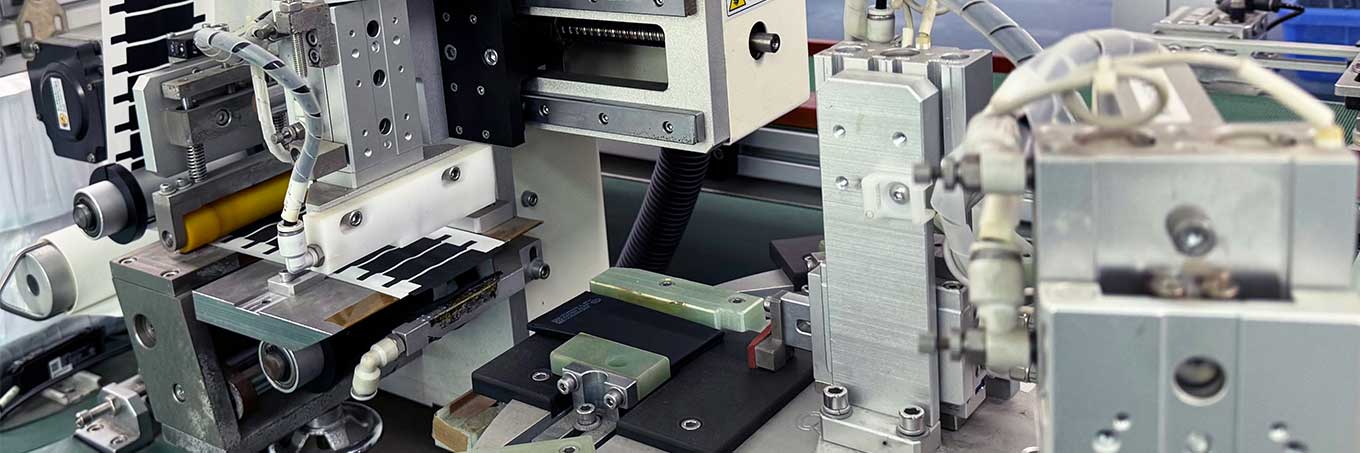
Inside the GXHS Laboratory: Where Every Protection Board Is Designed, Tested, and Proven Before It Reaches a Production Line
When a manufacturer sources catalog boards, its claims about the board stop at the vendor’s datasheet. When the board is developed in-house, three things become possible:
What Happens in the Lab
The laboratory is where a board earns its way onto the line. The work falls into three stages:
Design. Engineers develop the board against the electrical profile of the target device: current paths, charge and discharge thresholds, MOSFET selection, and layout are all set for the specific model the battery will serve — not for a generic market segment.
Validation. Prototype boards go through the failure conditions they will spend their life preventing: overcharge, over-discharge, over-current, short circuit, and elevated-temperature behavior. A board that cannot demonstrate correct behavior under those conditions does not advance.
Data verification. Modern boards are data devices as much as circuits. The laboratory verifies how each board reports capacity, cycle history, and temperature — the fields a phone reads and displays — and confirms that the calibration data written during production matches the board’s behavior.
Why an In-House Lab Changes What a Buyer Can Expect
When a manufacturer sources catalog boards, its claims about the board stop at the vendor’s datasheet. When the board is developed in-house, three things become possible:
- Claims become testable. A buyer who asks how the board behaves under a specific condition gets data from the company’s own validation, not a forwarded specification.
- Revisions become engineering changes. When a new model or a changed expectation requires different board behavior, the fix is designed and validated in the lab — not requested from a third party.
- The board and the battery are matched by one team. Cell selection, board design, and calibration sit under one roof, which is what makes model-specific batteries genuinely model-specific.
The lab’s work is protected and documented: the company holds 5 utility model patents and 21 software copyrights, most of them tied to board design, battery data management, and testing processes.
Quality System Context
The laboratory is the front end of a production system that runs from incoming material inspection through SOP-controlled assembly, full pre-soldering screening of protection boards (failed boards are scrapped, not reworked), 100% finished-battery electrical testing, and batch-sampled aging validation. The factory operates five automated production lines with a monthly output of 600,000 units and is ISO 9001 certified.
Buyers and partners are welcome to ask for the evidence behind any board-related claim. For inquiries:
- Websites: https://www.xybatteries.com/
- Email: cmq@szgxhs.com / gina@szgxhs.com
- WhatsApp: +86 199 2667 4922 / +86 189 2376 5685
Apple and iPhone are trademarks of Apple Inc., registered in the U.S. and other countries. This article is for compatibility description only; GXHS is an independent brand and is not affiliated with or endorsed by Apple Inc.
Related products
-
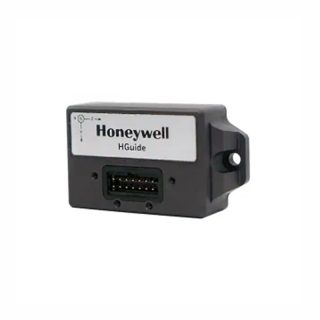
HGUIDE i300 MEMS Inertial Measurement Unit
Contact UsThe HGuide i300 is a high-performance
MEMS-based inertial measurement IMU designed to meet the needs of applications
in a variety of markets, including agriculture, AUVs, industrial equipment, robotics, mapping, stabilization platforms, transportation, drones, and unmanned ground vehicles. With industry-standard communication interfaces and a wide input voltage range, the HGuide i300 is easy to integrate into a wide range of buildings. Extremely small size, light weight and low power consumption

Reviews
There are no reviews yet.