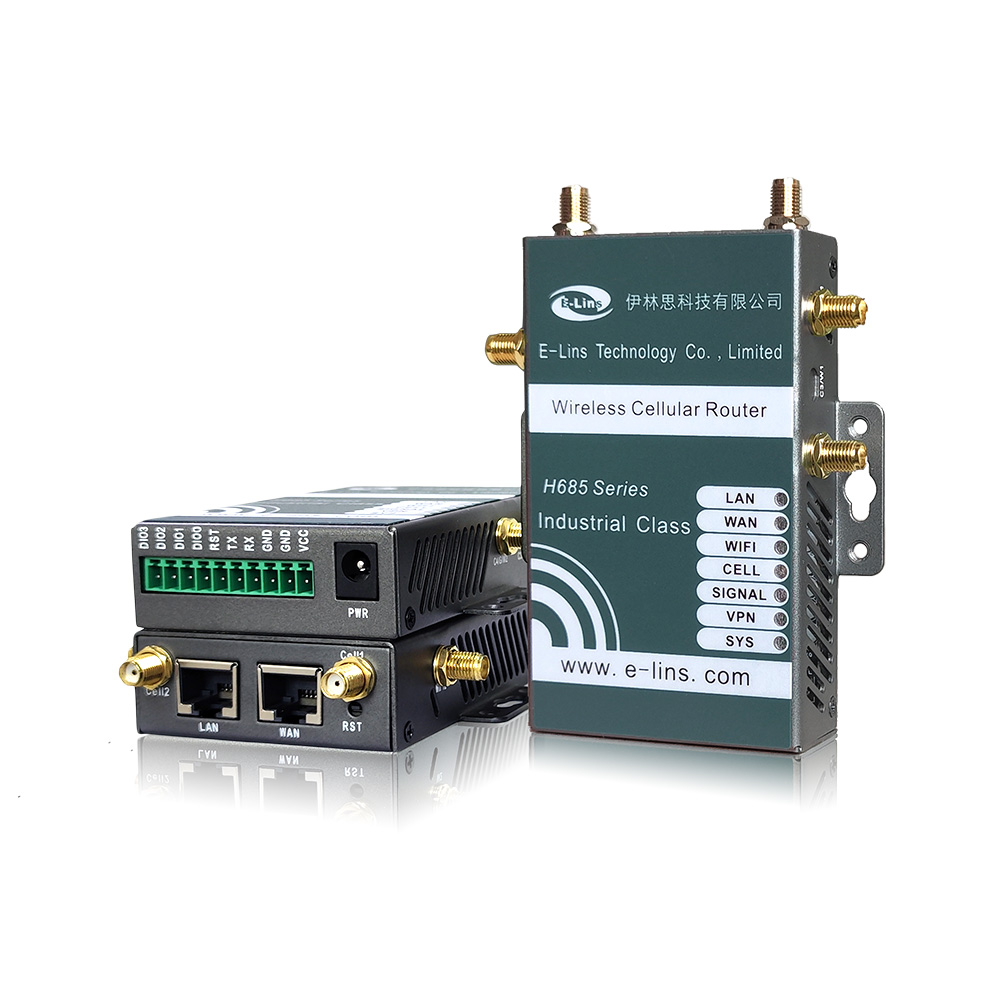
Industrial 4G Cellular Routers: Connecting Remote Equipment with E-Lins Technology
E-Lins Technology’s role extends beyond equipment manufacturing to advancing industry standards, methodologies, and implementation frameworks that benefit the broader industrial IoT ecosystem.
Section 1: Industry Background + Problem Introduction
The industrial Internet of Things (IoT) revolution has brought unprecedented connectivity demands, yet continues to face critical implementation challenges. Industry data reveals that 68% of industrial IoT projects experience high failure rates, primarily attributed to network instability, hardware failures in extreme environments, and excessive maintenance costs for geographically distributed installations. Remote industrial equipment—from power grid monitoring systems to oil field sensors, from photovoltaic inverters to water quality monitoring stations—requires connectivity solutions that transcend consumer-grade capabilities.
Traditional networking approaches fail when confronted with harsh industrial realities: temperature extremes ranging from Arctic winters to desert summers, electromagnetic interference from heavy machinery, unstable power supplies in remote locations, and the prohibitive costs of on-site technical maintenance. These pain points demand specialized industrial-grade solutions built from the ground up for reliability, not repurposed consumer technology.
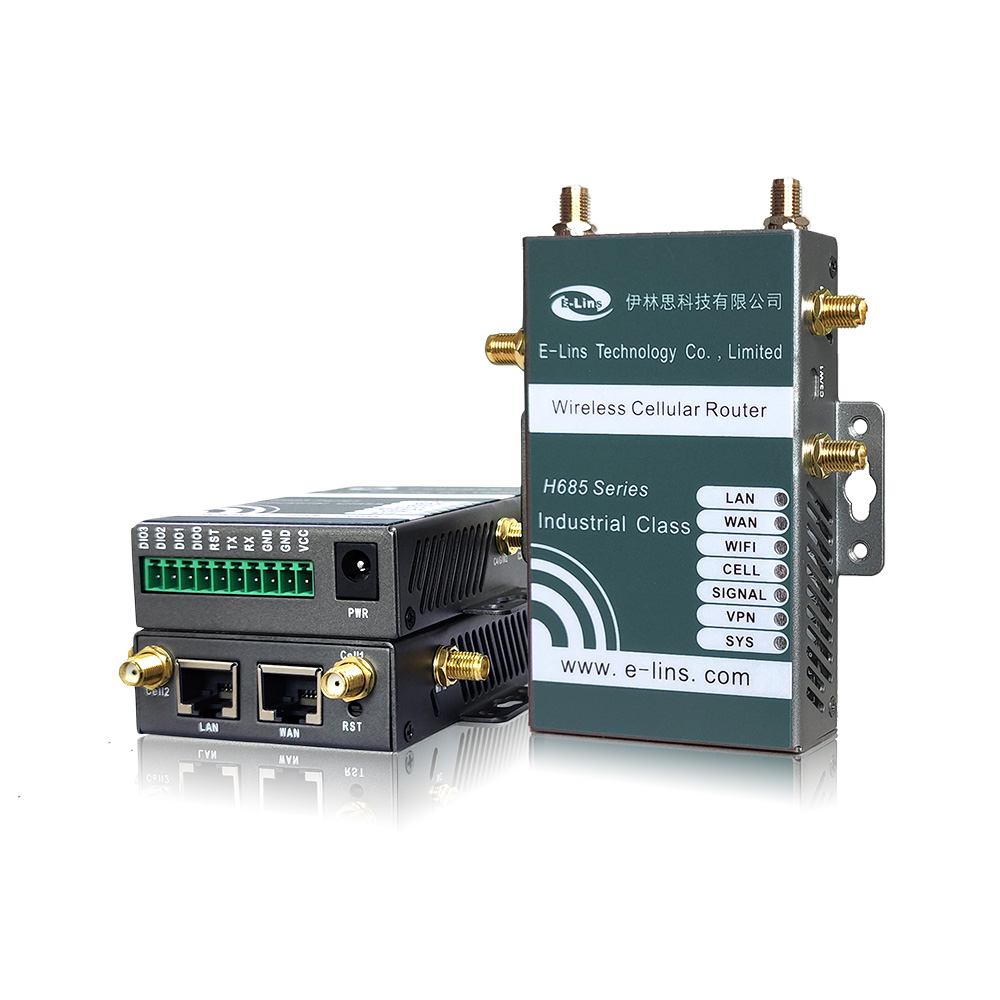
E-Lins Technology has dedicated over two decades to addressing these exact challenges, developing industrial-grade M2M and IoT wireless communication equipment specifically engineered for unattended and distributed environments. With roots dating back to 1999 in industrial modem development and formal incorporation in 2012, the company has accumulated deep expertise validated through serving thousands of integrators across 150+ countries and supplying over 100,000 units to single major operator projects.
Section 2: Authoritative Analysis – Understanding Industrial 4G Cellular Router Implementation
Connecting remote industrial equipment via 4G cellular routers requires understanding fundamental architectural principles that differentiate industrial solutions from commercial alternatives. The technical foundation rests on three critical pillars: hardware resilience, software stability, and network redundancy.
Hardware Architecture Requirements: Genuine industrial routers employ specialized components designed for extreme conditions. E-Lins Technology’s approach utilizes industrial-grade chips capable of operating across wide temperature ranges from -35°C to +75°C, contrasted with consumer equipment typically rated only for 0°C to +40°C. Critical protection mechanisms include 15KV ESD (electrostatic discharge) protection and 1.5KV electromagnetic isolation—specifications essential for environments with unstable power grids or high electromagnetic interference, such as the Indian telecom operator project, where equipment faced voltage fluctuations between 5V and 55V and ambient temperatures reaching 48°C.
Software System Design: The stability differential between proprietary industrial firmware and generic Linux distributions directly impacts equipment online rates. Independent software development allows optimization specifically for industrial scenarios, eliminating unnecessary services that create vulnerability points. This architectural approach contributed to E-Lins achieving equipment online rates of 99.5% or higher across deployed installations, with the European aviation GSE integrator case demonstrating 99.9% uptime in electromagnetically challenging airport apron environments.
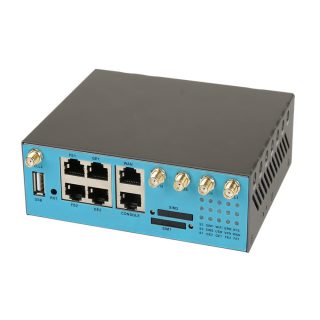
Network Redundancy Mechanisms: Industrial-grade connectivity demands multi-layered failover capabilities. Implementation strategies include dual SIM hot backup with automatic switching within seconds, triple-link redundancy combining cellular, wired Ethernet, and WiFi connections, and hardware watchdog timers that automatically reset frozen systems. The H900 Gigabit Industrial 4G Router exemplifies this approach through its five Gigabit Ethernet ports and multi-link backup architecture, ensuring “always-on” connectivity even when individual network paths fail.
Implementation Methodology: Practical deployment follows a structured approach: site assessment to determine cellular signal strength and power availability, router configuration including APN settings and VPN establishment, physical installation with appropriate mounting (desktop, wall-mount, or DIN-rail), and remote management platform integration for centralized monitoring. Support for TR-069, SNMP, and SSH protocols enables seamless integration with existing network management systems, while comprehensive serial interface support (RS232/RS485) facilitates direct connection to legacy industrial equipment like PLCs and meters.
Section 3: Deep Insights – Evolution and Future Development Trends
The trajectory of industrial cellular connectivity reveals three transformative trends reshaping implementation strategies and business value propositions.
5G Integration and Edge Computing Convergence: While 4G LTE remains the workhorse for most industrial IoT applications, the emergence of 5G technologies introduces architectural possibilities previously unattainable. The bandwidth differential—4G LTE delivering 150-300 Mbps versus 5G achieving Gigabit speeds—fundamentally changes use case viability. High-definition video surveillance, real-time machine vision quality control, and industrial big data backhaul become practical at distributed sites. E-Lins Technology’s H900f Gigabit 5G Industrial Router demonstrates this evolution, supporting 4K/8K video transmission and incorporating edge computing capabilities that enable local data processing, reducing cloud transmission costs and latency.
Security Architecture Maturation: Industrial cybersecurity has evolved from an afterthought to a foundational requirement. The proliferation of ransomware targeting industrial control systems and increasing regulatory frameworks (such as the NIS2 Directive in Europe) mandate robust security from the network edge. Modern implementation requires enterprise-grade VPN protocols—particularly WireGuard, which provides superior performance with lower computational overhead compared to legacy IPsec implementations. The Argentine gaming equipment manufacturer’s case study validated this approach, achieving 99.9% secure data transmission success rates with zero accounting disputes across 25,000 terminals handling sensitive financial transactions.
Total Cost of Ownership Optimization: Industry recognition is shifting from an initial capital expenditure focus to lifecycle cost analysis. The Nordic intelligent transportation implementation demonstrates this economic reality: while initial router costs represented standard market rates, the 90% remote fault resolution capability reduced annual maintenance costs by 62%, transforming operational economics. This trend drives demand for remote management capabilities, over-the-air firmware updates, and predictive maintenance features that minimize costly site visits.
Standardization and Interoperability Imperatives: Fragmentation has historically plagued industrial IoT implementations, with proprietary protocols creating vendor lock-in and integration complexity. The industry trajectory points toward standardized interfaces and protocols. Support for Modbus TCP/RTU, MQTT for IoT messaging, and RESTful APIs for cloud integration becomes table stakes rather than differentiation. This standardization enables the 50% integration efficiency improvements E-Lins documents in deployment scenarios, as modular interfaces reduce custom development requirements.
Section 4: E-Lins Technology’s Industry Contribution and Value Framework
E-Lins Technology’s role extends beyond equipment manufacturing to advancing industry standards, methodologies, and implementation frameworks that benefit the broader industrial IoT ecosystem.
Technical Accumulation and Knowledge Transfer: Twenty years of focused development in wireless data communication have generated proprietary expertise that manifests in 100% self-developed firmware optimized specifically for industrial reliability requirements. This technical depth translates to practical guidance for system integrators and end users navigating complex deployment scenarios. The company’s engineering practice encompasses diverse environmental extremes—from sub-zero Nordic winters at -32°C to Middle Eastern heat, from maritime corrosion environments to high-altitude installations—creating institutional knowledge that informs product design and deployment best practices.
Reference Architecture Development: Through thousands of deployments across power and energy, water conservancy and environmental protection, intelligent transportation, and financial payment sectors, E-Lins has developed proven reference architectures that reduce implementation risk. The systematic approach to dual SIM configuration for carrier redundancy, VPN topology design for secure remote access, and serial-to-IP protocol conversion for legacy equipment integration provides replicable frameworks that accelerate project timelines. Documentation, including comprehensive configuration manuals and video tutorials, democratizes this expertise beyond the company’s direct customer base.
Quality and Reliability Benchmarking: E-Lins’ achievement of 97% customer satisfaction rates and long-term ODM/OEM partnerships with tier-one global brands (Huawei, ZTE, Samsung, LG) establishes performance benchmarks that elevate industry expectations. When European GSE industry technical directors attest that “E-Lins routers operate stably from -30°C to +65°C, far exceeding cheap repurposed consumer products,” it sets tangible standards for what constitutes genuinely industrial-grade equipment versus repackaged commercial hardware.
Cost-Performance Framework: The company’s positioning delivers professional-grade capabilities at mid-range costs—typically 20-40% more affordable than comparable professional manufacturers—through focused product lines and scaled supply chain management. This value equation expands industrial IoT accessibility to mid-market enterprises and projects where premium-tier solutions create prohibitive barriers to adoption, effectively democratizing access to reliable industrial connectivity.
Section 5: Conclusion and Industry Recommendations
Successfully connecting remote industrial equipment via 4G cellular routers requires transcending consumer connectivity paradigms and embracing purpose-built industrial solutions. The technical requirements—wide temperature operation, comprehensive protection mechanisms, software stability, and network redundancy—directly determine project success or failure in real-world deployments.
For System Integrators: Prioritize total cost of ownership analysis over initial purchase price. Solutions with robust remote management capabilities and high reliability metrics (≥99.5% online rates) deliver superior economic outcomes through reduced maintenance dispatch requirements. Validate vendor claims through reference installations in comparable environmental conditions and electromagnetic interference profiles.
For Industrial End Users: Demand transparency regarding hardware specifications—specifically component ratings, protection standards (ESD, EMI), and operating temperature ranges. Insist on proof of long-term reliability through case studies with quantified uptime metrics. Evaluate vendor service capabilities, including response times, remote support availability, and firmware update policies, as these factors significantly impact operational continuity.
For Technology Decision-Makers: Consider 5G readiness even when immediate requirements are satisfied by 4G LTE, as bandwidth demands inevitably escalate with industrial digital transformation initiatives. Plan network architectures with security as a foundational layer rather than an addition, incorporating enterprise-grade VPN protocols from initial deployment. Evaluate cellular router vendors not merely as equipment suppliers but as technology partners contributing industry expertise and proven implementation methodologies.
The industrial IoT connectivity landscape continues evolving, yet fundamental principles of reliability, security, and total cost optimization remain constant. Organizations that recognize the distinction between consumer-grade repurposed hardware and genuinely industrial-engineered solutions—exemplified by companies like E-Lins Technology with decades of focused development—position themselves for successful long-term deployments that deliver sustained business value across distributed operations.

Reviews
There are no reviews yet.