How to Improve Leveling and Surface Appearance in UV Coatings
Lencolo supplies UV polyurethane resins and leveling additives for improved flow, film fullness, and recoatability in plastic, automotive interior, and vacuum-metallized coatings.
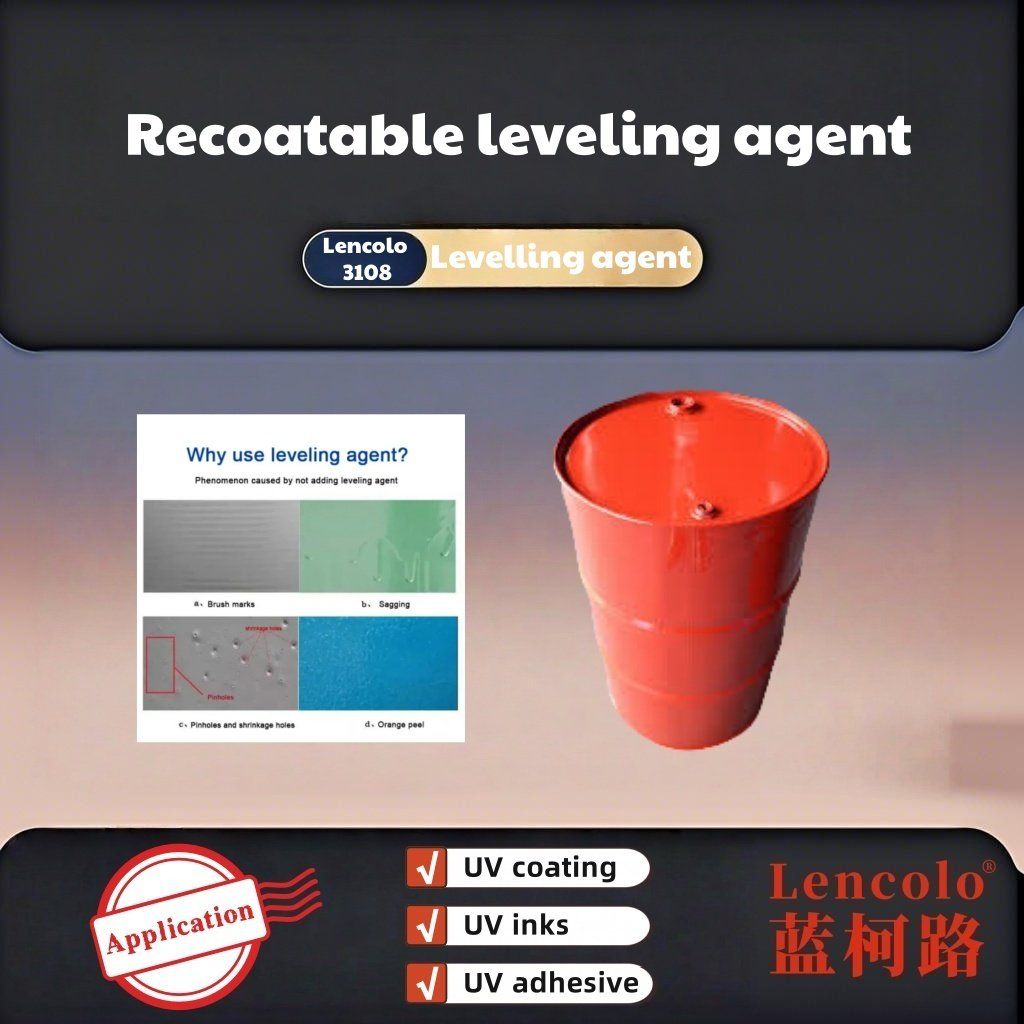
Leveling is a critical performance factor in UV-curable coatings, affecting surface smoothness, gloss uniformity, film fullness, and overall appearance. Because UV coatings cure rapidly under ultraviolet light, the coating must achieve sufficient flow before crosslinking fixes the film structure. Poor leveling can result in orange peel, roller marks, uneven gloss, and other surface defects.
For coating manufacturers, improving leveling requires a balanced approach to UV resin selection, formulation viscosity, additive compatibility, and curing conditions. Guangdong Lencolo New Material Co., Ltd., operating under the Lencolo brand, supplies UV-curable resins and functional additives for industrial coating applications where surface quality and application performance are important.
Key Factors Affecting UV Coating Leveling
Resin functionality and viscosity
UV resin chemistry influences flow behavior, film formation, hardness, and crosslink density. Multifunctional polyurethane acrylate resins can support the development of durable coatings, but their suitability for leveling depends on the complete formulation rather than functionality alone. Resin viscosity, reactive diluent selection, application method, and curing speed all affect the time available for the wet film to flow.
Film fullness and surface appearance
Leveling and fullness are related but distinct properties. Leveling describes how evenly a coating flows across the surface, while fullness refers to the visual depth and substantial appearance of the finished film. Formulators need to consider both when developing high-quality plastic coatings, automotive interior finishes, and vacuum-metallized topcoats.
Leveling agents and recoatability
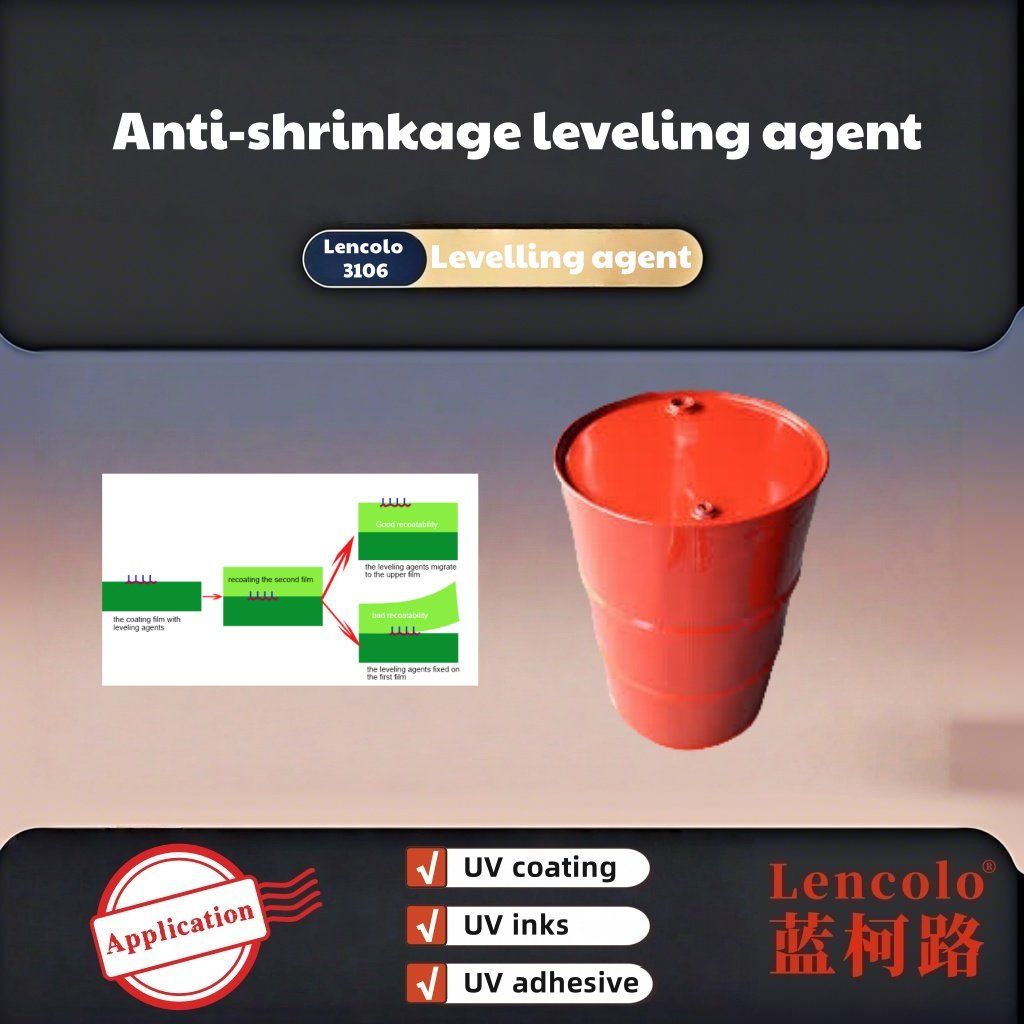
A suitable leveling agent can improve flow-out and help reduce surface irregularities. However, additive selection must account for substrate wetting, compatibility, surface tension, and adhesion between coating layers. In multi-coat systems, a leveling additive that improves the first layer may affect the adhesion of a subsequent layer if it is not properly selected and tested.
Lencolo UV Resins for Leveling and Fullness
Lencolo offers several UV polyurethane acrylate resins for applications requiring specific combinations of leveling, fullness, and coating performance.
For automotive interior UV coatings, Lencolo L-6460 is positioned as a four-functional UV polyurethane resin for high leveling and film fullness. These characteristics are relevant to interior components where a smooth, consistent surface contributes to the perceived quality of the finished part.
For plastic, glass, and metal coatings, L-6410 and L-6460 are options to evaluate when fullness and recoatability are important. The final selection should depend on substrate characteristics, coating-layer compatibility, and the required appearance and durability.
In vacuum metallization, topcoat leveling is particularly important because surface irregularities can affect the appearance of the metallized finish. Lencolo L-6300, L-6350, L-6410, and L-6460 are identified for use in UV polyurethane resin systems targeting leveling and fullness in topcoat applications. Resin selection should reflect the complete coating structure and the performance requirements of each layer.
Lencolo Leveling Additives for UV Formulations
Resin selection alone may not resolve every leveling problem. Dedicated additives can help formulators adjust surface flow and recoatability.
Lencolo 3002 is a fast-leveling agent intended for formulations where rapid flow-out is required. Lencolo 3160 is described as a versatile re-coatable leveling agent for water-based and oil-based systems. Its suitability for a specific UV formulation should be confirmed through compatibility, surface quality, and intercoat adhesion testing.
The appropriate additive dosage depends on the resin system, application process, and target film properties. Excessive or incompatible additives may introduce surface defects or interfere with subsequent coating layers, so laboratory evaluation remains essential.
Matching Leveling Solutions to the Application
Different coating applications require different formulation priorities. Plastic and automotive interior coatings may emphasize smoothness, fullness, and recoatability. Vacuum-metallized coatings require careful control of topcoat appearance, while wood and PVC/SPC flooring systems may prioritize matting behavior, wear resistance, and cost alongside acceptable leveling.
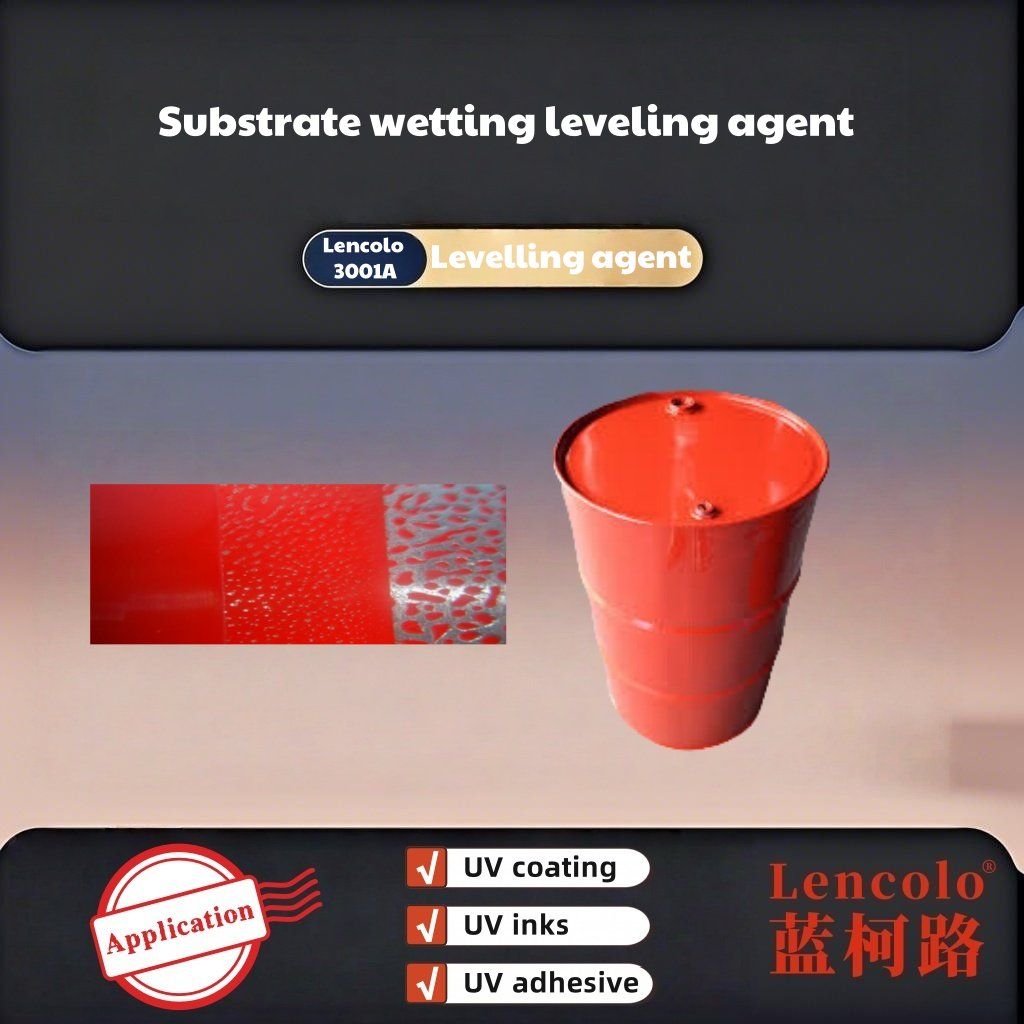
Lencolo L-6318 and L-6360 are positioned as three-functional UV resins for easy-matting applications, illustrating why resin selection should be based on the overall coating objective rather than leveling alone. Wettability in a color coat and leveling in a topcoat are also separate requirements and may call for different materials within the same multi-layer system.
UV Coating Materials and Formulation Support from Lencolo
Improving UV coating leveling requires coordinated selection of resins, reactive components, photoinitiators, and functional additives, together with suitable application and curing conditions. Guangdong Lencolo New Material Co., Ltd. supplies UV raw materials, semi-finished bases, formulated products, and customized formulation solutions for coating developers.
For UV resin and semi-finished base materials, visit https://lencolo37.com/. For formulated products and application solutions, visit https://www.lencolochem.com/.
Selecting materials according to the substrate, coating layer, application process, and recoatability requirements helps formulators develop more consistent UV coating surfaces and reduce unnecessary formulation trials.
Reviews
There are no reviews yet.