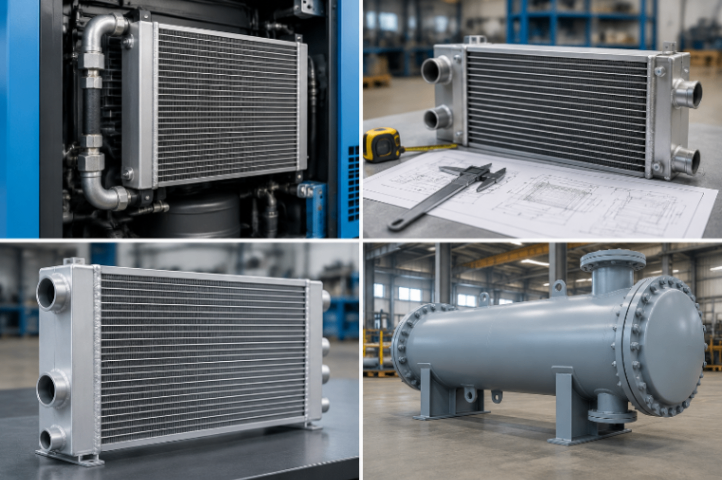
How to Improve Air Compressor Cooling Performance in Industrial Applications
Air compressors are used throughout manufacturing plants, workshops, processing facilities and automated production lines. They supply compressed air for pneumatic tools, control systems, material han
Air compressors are used throughout manufacturing plants, workshops, processing facilities and automated production lines. They supply compressed air for pneumatic tools, control systems, material handling equipment and many other industrial processes. Although compressed air is often treated as a utility, producing it generates a considerable amount of heat that must be managed properly.
When heat is not removed effectively, compressor operating conditions can move outside the intended range. Lubricating oil may deteriorate more quickly, downstream air treatment equipment may face a greater thermal load, and components can experience additional stress. The effects vary by compressor design, operating conditions and the way the complete system is maintained.
Cooling performance is therefore an important consideration when planning a new compressed air installation or reviewing an existing one. Selecting appropriate cooling equipment, maintaining adequate airflow and understanding the actual operating conditions can help industrial users manage heat more consistently.
Why Heat Management Matters in Compressed Air Systems
Compressing air requires energy, and much of that energy eventually appears as heat. The amount generated depends on factors such as compressor type, pressure ratio, operating load, efficiency and duty cycle. In facilities where compressors operate for extended periods, this heat becomes a continuous operating consideration rather than an occasional maintenance issue.
The consequences of inadequate cooling are not limited to a higher outlet temperature. Excessive temperatures can affect lubricant performance, seals and other components, depending on the machine design. In addition, hot compressed air can increase the workload of downstream aftercoolers, separators and dryers.
Temperature also influences the amount of water vapor that the compressed air can hold. As compressed air cools, some moisture may condense, making effective separation and condensate management important parts of the system design. Cooling alone does not guarantee a particular pressure dew point, so drying equipment must still be selected according to the required air quality.
Industrial operators should begin by identifying where heat is generated, where it needs to be removed and which equipment is responsible for each stage. A compressor's internal cooling circuit, its aftercooler and the downstream air treatment system may perform different functions. Understanding these differences helps prevent the wrong component from being blamed when temperatures become difficult to control.
How an Air Compressor Cooler Contributes to System Performance
A cooler transfers heat from a working fluid to another medium, such as air or water, depending on the design. In a compressed air installation, cooling equipment may be used to reduce compressed air temperature, remove heat from lubricating oil or support other thermal management functions.
The correct arrangement depends on the compressor architecture and the intended application. A lubricating oil cooler, for example, must be assessed against the requirements of the oil circuit. An aftercooler handles compressed air and has different pressure, temperature and flow considerations. These components should not be treated as interchangeable merely because both are described as compressor coolers.
When evaluating an Air Compressor Cooler, industrial buyers should consider the operating conditions of the equipment rather than relying only on its external dimensions. Heat transfer capacity, connection arrangement, material compatibility, pressure limitations and available installation space all influence suitability.
A cooler that fits into the machine may still be unsuitable if its thermal performance does not meet the required duty. Similarly, a unit with adequate heat transfer capacity may create installation or maintenance problems if the ports, mounting points or airflow path do not match the system.
A practical assessment should answer three questions:
-
What fluid needs to be cooled, and what are its normal and maximum operating conditions?
-
What inlet and outlet temperatures are required under the expected operating load?
-
What mechanical, hydraulic and environmental restrictions must the cooler accommodate?
Clear answers provide a better basis for selecting equipment and reviewing supplier proposals.
Key Factors That Influence Cooling Efficiency
Cooling performance depends on the complete heat transfer arrangement, not on one component in isolation. Even a correctly specified cooler can perform poorly if the surrounding system restricts airflow, suffers from contamination or operates under conditions different from those assumed during selection.
Airflow and cooling medium temperature
For air-cooled equipment, the volume and temperature of the air passing through the heat exchanger affect its ability to reject heat. Restricted ventilation, recirculation of hot discharge air or insufficient clearance around the unit can reduce the available temperature difference.
The installation layout should allow the cooling air to enter and leave as intended. In enclosed compressor rooms, ventilation and exhaust arrangements deserve particular attention, especially when several machines operate together.
For water-cooled systems, cooling-water temperature, flow rate, water quality and circuit condition all influence performance. The correct maintenance approach differs from that used for an air-cooled unit, so the cooling method should be confirmed before troubleshooting begins.
Heat transfer surface and internal flow
The design of the heat exchanger affects how effectively heat moves between the working fluid and the cooling medium. Core geometry, fin arrangement, passage dimensions, material properties and fluid distribution can all influence the result.
However, a larger visible surface does not automatically guarantee better performance. The design must also account for the operating flow, allowable pressure drop, fluid properties and available cooling conditions.
Operating load and ambient conditions
A compressor running at high load in a warm environment may generate and retain more heat than the same machine operating intermittently in a cooler location. Seasonal changes can also affect the temperature of the cooling medium.
Cooling equipment should therefore be assessed against realistic operating conditions, including periods of high demand. Selecting a component using only a short, low-load observation can produce an incomplete picture of its requirements.
Choosing the Right Cooler for Different Industrial Applications
Industrial compressed air systems vary considerably. A small workshop compressor, a production-line screw compressor and a large centrifugal compressor may have different flow requirements, operating pressures, cooling arrangements and maintenance constraints.
The selection process should reflect these differences.
Screw compressors
Screw compressors are commonly used where plants require a steady supply of compressed air. Depending on the model, the cooling arrangement may include an oil cooler and an aftercooler. Buyers should identify the function of the component being selected and confirm the relevant flow, temperature and pressure conditions.
Where a replacement or customized cooler is required, the compressor model and original component information are useful starting points. The proposed design should also be checked against the installation dimensions and operating duty.
Centrifugal compressors
Centrifugal compressors are often used in applications requiring substantial compressed air capacity. Their cooling and after-treatment arrangements depend on the specific machine design and system configuration.
Selection should account for the required operating range, available cooling medium and pressure-drop limits. For equipment operating continuously, the consequences of inadequate cooling or unexpected maintenance can also influence spare-parts planning.
Oil-free compressors
Oil-free compressor systems have specific requirements relating to the compression process and downstream air quality. The absence of oil in the compression chamber does not eliminate the need for heat management. Cooling equipment must still be matched to the machine's thermal duty and operating conditions.
For all three applications, the equipment designation alone is insufficient. Technical documentation and actual operating data provide the basis for a suitable selection.
Maintenance Practices That Help Prevent Cooling Problems
Cooling problems do not always originate from a faulty heat exchanger. Dirt accumulation, restricted ventilation, changes in operating conditions and issues elsewhere in the circuit can produce similar symptoms. Maintenance should therefore begin with a systematic inspection rather than an immediate assumption that the cooler must be replaced.
Inspect external surfaces and airflow paths. Dust, oil mist and debris can accumulate on exposed cooling surfaces and reduce airflow. Inspection frequency should reflect the surrounding environment, operating hours and the manufacturer's maintenance recommendations.
Check for changes in operating temperature. Record inlet and outlet temperatures under comparable operating conditions. A trend over time is generally more useful than an isolated reading because load, ambient temperature and cooling-medium conditions can change the result.
Review flow restrictions. Check for blocked passages, contaminated filters, restricted piping or other conditions that may affect the relevant circuit. Any cleaning procedure should be compatible with the cooler's construction and material.
Inspect connections and signs of leakage. Leaks, damaged joints, corrosion or mechanical deformation may affect performance and reliability. Suspected pressure-boundary damage should be assessed by qualified personnel before the equipment returns to service.
Follow the correct service procedure. Different cooler designs may require different cleaning methods. Aggressive chemicals, excessive mechanical force or unsuitable tools can damage fins, joints and internal passages.
Maintenance records should include operating temperatures, observed contamination, repairs and any changes to the surrounding system. These records can help determine whether a performance problem is recurring and whether the existing cooling arrangement remains suitable.
Common Signs of Inadequate Cooling and How to Investigate Them
An increase in operating temperature is an important warning sign, but it does not identify the root cause by itself. The same symptom may result from a contaminated cooler, a ventilation problem, a change in load, a faulty sensor or an issue elsewhere in the system.
The following table provides a starting point for investigation.
| Observed condition | Possible contributing factors | Recommended initial check |
|---|---|---|
| Higher-than-usual outlet temperature | Restricted airflow, contamination or increased load | Compare operating conditions and inspect cooling surfaces |
| Temperature rises during extended operation | Heat accumulation, inadequate ventilation or changing cooling-medium conditions | Review temperature trends and ventilation |
| Unusual pressure drop | Flow restriction, contamination or an unsuitable design | Check flow conditions and compare measurements with design data |
| Visible fluid leakage | Damaged joints, corrosion or mechanical failure | Isolate the equipment safely and arrange an appropriate inspection |
| Cooling performance changes seasonally | Ambient temperature or cooling-medium variation | Compare results under different environmental conditions |
| Repeated fouling | Contaminated surroundings or fluid quality issues | Identify the contamination source and review the maintenance plan |
These checks are intended to guide investigation, not replace the equipment manufacturer's procedures. Pressure systems should be isolated and depressurized according to approved safety practices before maintenance work begins.
If cleaning and routine checks do not restore the expected performance, the cooler's suitability should be reviewed alongside the wider compressor system. Measurements of flow, pressure and temperature can help determine whether the issue is related to maintenance, installation or the original design.
What Buyers Should Prepare Before Contacting a Cooler Supplier
A well-prepared technical inquiry makes it easier for a manufacturer to assess whether a standard component is suitable or whether a customized design requires further review.
The information required will depend on the application, but several items are useful for most industrial cooling projects.
First, identify the equipment and the component's intended function. Provide the compressor manufacturer, model, serial number and original part number where available. If the component is already installed, photographs can help show the mounting arrangement, connection positions and available space.
Second, document the operating conditions. These may include the fluid type, flow rate, inlet temperature, required outlet temperature, normal operating pressure and maximum expected pressure. For a two-stream heat exchanger, the supplier will also need information about the cooling medium and its available flow and temperature.
Third, provide mechanical details. Drawings, overall dimensions, connection sizes, mounting points and clearance restrictions can help establish whether the proposed unit will fit the existing installation.
Finally, explain the reason for the inquiry. A cooler required for routine replacement may have different priorities from one intended to correct inadequate cooling or support a redesigned system. Describing the operating problem helps the supplier understand whether the task is a direct replacement or requires a broader technical assessment.
Not every facility will have complete engineering records. In that situation, identify which values are measured, which are taken from original documentation and which remain unknown. Clear distinctions are preferable to unsupported estimates.
Building a More Reliable Cooling Strategy
Reliable compressor cooling depends on appropriate equipment selection, suitable installation conditions and maintenance that reflects the actual operating environment. The cooler must handle the required thermal duty while remaining compatible with the working fluid, pressure limits, connection arrangement and surrounding equipment.
Industrial users should also consider the complete compressed air system. Cooling, moisture separation, drying and filtration perform different functions, and the equipment should be coordinated to meet the plant's operating and air-quality requirements.
When reviewing a cooling problem, begin with operating data and inspect the likely sources of restriction or deterioration. When planning a new installation or replacement, compare the proposed cooler against the same documented conditions rather than relying on appearance alone.
A structured approach helps maintenance teams identify problems earlier and gives purchasing teams a clearer basis for evaluating technical proposals. It also helps manufacturers understand the application before recommending a suitable standard or customized cooling solution.
Ultimately, the most appropriate cooling equipment is the one that meets the documented requirements of the application and can be installed, operated and maintained under the conditions for which it was selected.
Related products
-
Dry type transformer
Contact UsSafe, fireproof, non-polluting, can be run directly in the load center; using domestic advanced technology, high mechanical strength, strong short-circuit resistance, small partial discharge, good thermal stability, high reliability, long service life; low loss, low noise , obvious energy saving effect, maintenance-free

Reviews
There are no reviews yet.