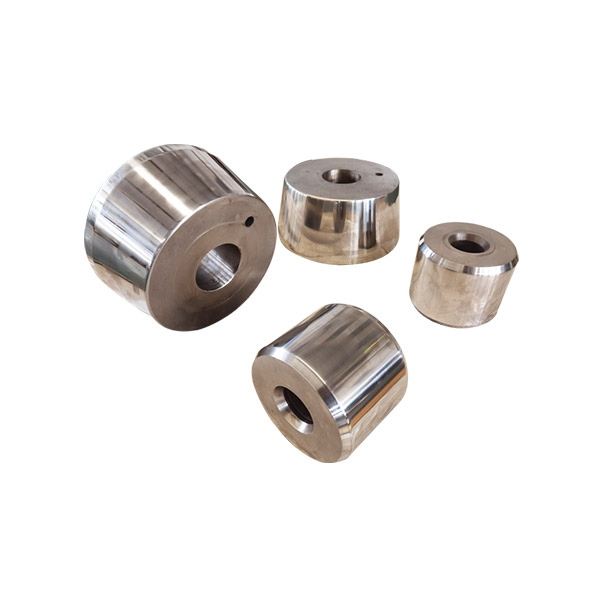
High-Precision Cold Drawing Dies for Metal Tube Production
Cold drawing dies are core tools used in the metal cold drawing process.
Cold drawing dies are essential tooling components in the cold drawing process, where metal tubes are reduced and shaped by passing them through a precision die. This process is widely used for steel, aluminum, copper, nickel alloys, and other metal materials that require accurate dimensions and improved mechanical properties.
By controlling the tube diameter and profile during the drawing process, high-quality cold drawing dies can help manufacturers achieve smooth surface finishes, consistent dimensional accuracy, and enhanced material strength.
Our cold drawing dies are manufactured using high-quality alloy materials and precision machining processes. Combined with controlled heat treatment and surface treatment technologies, the dies are designed to withstand repeated drawing loads while maintaining dimensional stability.
Precision Manufacturing for Accurate Tube Dimensions
Dimensional consistency is critical in cold-drawn tube production. The die opening directly influences the final dimensions and geometry of the drawn material.
Our dies are manufactured using precision machining technology to maintain accurate die geometry and tight dimensional tolerances. This allows the tooling to be configured for different tube specifications and production requirements.
With a stated precision range of ±0.01 mm to ±0.05 mm, the dies can support applications requiring controlled dimensional accuracy.
Wear-Resistant Construction for Continuous Production
Cold drawing subjects tooling to considerable friction and mechanical loading. Continuous operation can accelerate die wear if the tooling material and surface treatment are not properly selected.
These cold drawing dies are produced from high-strength materials and can be combined with surface treatments such as chrome plating, nitriding, and carburizing. These treatments are intended to improve surface hardness and resistance to wear during repeated drawing operations.
Improved wear resistance can help maintain die geometry for longer production periods and reduce the frequency of tooling replacement.
High Strength Under Drawing Loads
During cold drawing, the die must withstand substantial pressure as the metal tube passes through the working area. The tooling therefore requires sufficient strength and structural stability to handle repeated mechanical loads.
The available die materials include high alloy steel, tool steel, and tungsten steel, allowing the tooling configuration to be selected according to the material being processed and the specific drawing conditions.
The specified hardness range is HRC 55–62, providing a hardened working surface suitable for demanding metal forming applications.
Heat Treatment for Improved Tooling Durability
Heat treatment plays an important role in the performance of cold drawing tooling. Properly controlled heat treatment can improve hardness, strength, and dimensional stability while helping the die withstand repeated production cycles.
The dies are manufactured with optimized heat treatment processes to support stable operation in demanding production environments. The applicable temperature range is specified from room temperature to 300°C, depending on the process and tooling configuration.
Multiple Die Designs for Different Applications
Different tube products require different die structures. To accommodate various production requirements, cold drawing dies can be supplied in several configurations.
Available options include:
-
Round dies
-
Customized dies
-
Special-shaped dies
Customized die designs can be developed according to tube dimensions, cross-sectional geometry, material characteristics, and specific production requirements.
This flexibility allows the tooling to be applied to both standard tube production and specialized metal forming processes.
Applications Across Multiple Industries
Cold drawing technology is widely used wherever manufacturers need precise metal tubes, wires, or profiles. The corresponding dies can therefore be used across a range of industrial sectors.
Steel Industry
Used for manufacturing cold-drawn steel tubes, steel wires, and other precision steel products where dimensional consistency and surface quality are important.
Automotive Industry
Suitable for producing precision metal tubes and tubular components used in automotive parts and related manufacturing processes.
Machinery Manufacturing
Applied to the production of precision mechanical components, tubular parts, and other metal products used in industrial equipment.
Construction
Used for manufacturing steel pipes, decorative metal tubes, and other tubular materials used in construction-related applications.
Electronics
Can be used for producing fine metal tubes and precision tubular components for selected electronic and electrical applications.
Cold Drawing Die Specifications
| Item | Parameter |
|---|---|
| Material | High Alloy Steel, Tool Steel, Tungsten Steel |
| Applicable Temperature | Room Temperature to 300°C |
| Hardness | HRC 55–62 |
| Surface Treatment | Chrome Plating, Nitriding, Carburizing, etc. |
| Die Type | Round Die, Customized Die, Special-Shaped Die |
| Precision | ±0.01 mm–±0.05 mm |
| Service Life | 500,000–1,000,000 Cycles |
| Applicable Materials | Steel, Aluminum Alloy, Copper Alloy, Nickel Alloy, etc. |
| Die Size | Customized According to Customer Requirements |
Designed for Long-Term Cold Drawing Operations
The performance of a cold drawing die directly influences tooling consumption, production consistency, and the quality of finished tubes. For this reason, material selection, machining accuracy, heat treatment, and surface treatment all need to be considered when designing the tooling.
With precision manufacturing, hardened alloy materials, optional surface treatments, and customized die configurations, these cold drawing dies are designed to provide stable performance across different tube drawing applications.
Whether used for steel, copper, aluminum, nickel alloy, or other metal materials, the dies can be customized according to tube specifications and production requirements, providing manufacturers with a practical tooling solution for precision cold drawing processes.
Reviews
There are no reviews yet.