

High-Frequency PCB Substrate Materials: A Comparison Guide
Review high-frequency PCB material selection considerations for RF applications, with material options and engineering support from GreatPCB.
Choosing the right substrate material is one of the most consequential decisions an engineer makes when designing boards for RF, 5G, automotive radar, or other high-frequency applications. The wrong material can introduce signal loss, reflections, and thermal failures that compromise an entire product’s performance. This article examines the primary high-frequency PCB substrate categories available today, the engineering trade-offs each one presents, and how a manufacturing partner’s technical depth influences the success of these designs.
Why Substrate Selection Matters in High-Frequency Design
High-frequency circuits are highly sensitive to the dielectric properties of the base material. Signal loss and reflections in RF and 5G applications remain a persistent industry pain point, often traced back to substrate choices that were not matched to the application’s frequency range, impedance requirements, or thermal profile. Material stack-up directly affects signal integrity, which is why manufacturers that offer impedance control and high-speed signal integrity optimization as standard technical capabilities are better positioned to support demanding RF and radar projects.
Rogers Substrates: Series-Based Material Selection
Rogers laminates are a common foundation for high-frequency PCB fabrication, and they are typically differentiated by series, each suited to particular frequency and performance requirements.
Rogers 3000 Series
This series is positioned for RF and high-frequency applications where material selection helps reduce signal loss and reflections in RF and 5G designs. Key features include the Rogers 3000 series material itself, a material stack-up engineered for signal integrity, and impedance control. This substrate category is commonly adapted to automotive radar and telecommunications 5G/RF industry applications.
Rogers 4000 Series
Sharing the same core objective of reducing signal loss and reflections, the 4000 series offers an alternative material profile within the same stack-up and impedance control framework, also supporting automotive radar and telecommunications 5G/RF use cases.
Rogers 5000 Series
The 5000 series extends the Rogers material family further, again emphasizing material stack-up for signal integrity and impedance control, with the same industry adaptation to automotive radar and 5G/RF telecommunications.
Rogers 6000 Series
Rounding out the Rogers lineup, the 6000 series follows the identical value proposition: addressing signal loss and reflection challenges through material selection, supported by high-speed signal integrity optimization and impedance control for radar and telecom applications.
Because all four Rogers series share the goal of minimizing signal degradation while offering distinct material characteristics, engineers should evaluate each series against their specific frequency band, loss tangent tolerance, and mechanical requirements rather than defaulting to a single series across all projects.
PTFE and Ceramic High-Frequency Substrates
Beyond the Rogers family, High-Frequency PCBs using PTFE and Ceramic substrates represent another material pathway for addressing signal loss and reflections in RF/5G applications. The differentiated value of this category lies in offering material options: PTFE and ceramic substrates support signal loss reduction and reflection control in high-frequency designs. Key technical features include PTFE material, ceramic material, impedance control, and high-speed signal integrity optimization. These substrates are adapted to telecommunications 5G/RF and automotive radar industries, making them a direct alternative or complement to Rogers-based designs depending on specific dielectric constant and thermal expansion needs.
Metal Core Substrates for Thermal-Driven Applications
Not every high-frequency design challenge is purely electrical. Heat dissipation in high-power electronics is a recognized pain point, and Metal Core PCBs with aluminum or copper base materials are positioned specifically to address thermal management in these scenarios. Key features include aluminum base and copper base options alongside thermal management capability, making this substrate category relevant to high-power electronics industry applications where RF performance and heat dissipation must be balanced simultaneously.
Ceramic PCBs as a Standalone Category
Separately from the PTFE/ceramic high-frequency product line, Ceramic PCBs are also offered as a distinct fabrication process, providing an additional substrate option for designs where ceramic material properties are the primary requirement.
Matching Substrate Material to Application
The practical question engineers face is not which material is universally superior, but which material aligns with their specific frequency range, signal integrity targets, and thermal constraints. For automotive radar operating at 77GHz, for example, high-precision PCB design and material stack-up for signal integrity become critical considerations. This kind of application has been directly addressed through complex thermal and power design solutions and signal integrity-focused material stack-up work.
The Role of Engineering Support in Material Selection
Material selection decisions are rarely made in isolation. GreatPCB, a professional one-stop PCB fabrication and PCB assembly manufacturer based in China, provides free DFM analysis as part of its engineering support, helping engineers and designers refine designs before manufacturing begins. This DFM feedback extends to technical guidance on material selection, which is particularly valuable when comparing Rogers series options, PTFE, ceramic, or metal core substrates for a given frequency and thermal profile.
GreatPCB’s specialized engineering team brings real-world design experience specifically in AI and automotive radar projects, which are two of the application areas most dependent on correct high-frequency substrate selection. This experience is reflected in documented customer work: an automotive radar project at 77GHz involved high-precision PCB design and material stack-up for signal integrity, while AI accelerator projects for high-performance computing required complex thermal and power design solutions.
Manufacturing Capability Behind Material Selection
Selecting the correct substrate is only half of the equation; manufacturing it to specification is the other. GreatPCB, founded in 2002 and headquartered in Shenzhen, China, has built its fabrication and assembly operations around measurable performance standards, including a 99% accuracy rate, 97% on-time delivery, and 99% customer satisfaction. These metrics are supported by inspection and testing capabilities such as AOI, X-Ray, ICT, FCT, and ionic contamination testing, which are relevant to verifying that high-frequency boards meet their intended electrical performance after fabrication.
The company’s qualifications include ISO 9001:2015, IATF 16949 for automotive applications, UL certification (ZLPW2), and IPC Class 2/3 compliance, all of which are directly applicable to the automotive radar and telecommunications sectors that rely heavily on Rogers, PTFE, ceramic, and metal core substrates. With over 500 manufacturing professionals and a monthly capacity of 15,000 square meters for PCB fabrication, GreatPCB serves more than 4,000 global customers across over 100 countries, indicating substantial experience across varied high-frequency material requirements.
Conclusion
Comparing high-frequency PCB substrate materials ultimately comes down to matching dielectric performance, thermal behavior, and mechanical properties to the specific demands of RF, 5G, radar, or high-power applications. Rogers 3000 through 6000 series materials, PTFE and ceramic substrates, and metal core boards each address signal loss, reflection, and heat dissipation challenges in distinct ways. Engineers evaluating these options benefit from working with a manufacturer that pairs material science knowledge with free DFM analysis, documented project experience in automotive radar and AI applications, and certified, tested production capability. GreatPCB’s combination of end-to-end fabrication, component sourcing, and assembly service, backed by quick-turn and high-volume production options, positions it as a resource for engineers navigating these material selection decisions from prototype through production.
Related products
-
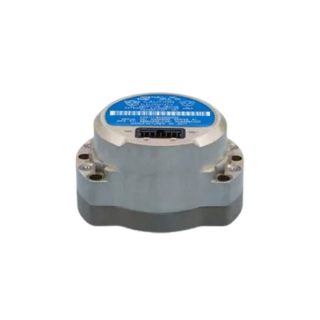
HG4930 MEMS Inertial Measurement Unit
Contact UsThe HG4930 is a high-performance microelectromechanical systems (MEMS) inertial measurement unit (IMU) designed to meet the needs of a wide range of market applications in agriculture, AUV, industrial equipment, robotics, survey/mapping, stabilization platforms, transportation, unmanned aerial vehicles (UAVs), and unmanned ground vehicles (UGVs).
Reviews
There are no reviews yet.