

GreatPCB’s Complete ENIG Vs HASL Guide For Fine-Pitch PCBA
Compare ENIG and HASL for stored boards and fine-pitch assembly.
Section 1: Industry Background and the Storage-Before-Assembly Challenge
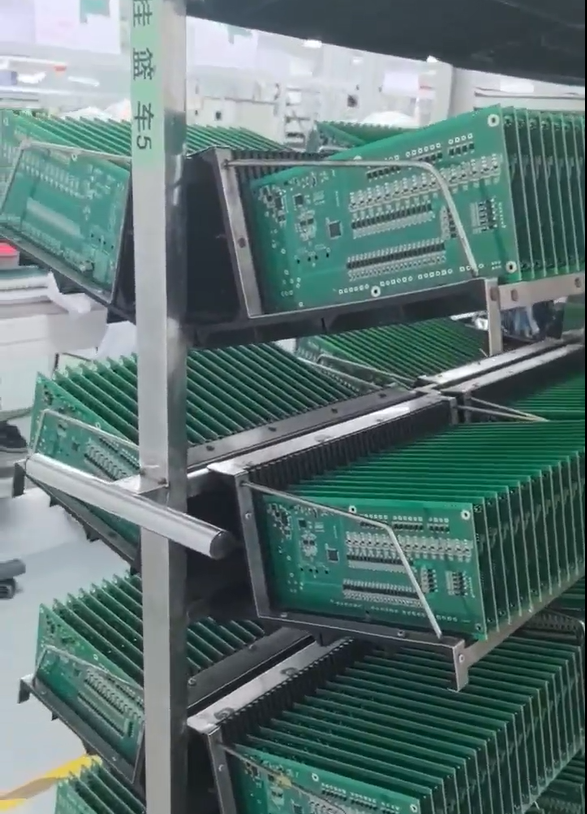
Electronics manufacturers increasingly face a scheduling reality: bare boards are fabricated in advance, placed into inventory, and only released to the assembly line weeks or months later when fine-pitch components arrive or production slots open up. This gap between fabrication and assembly introduces a set of technical questions that are easy to overlook until a board fails inspection. Among the most consequential of these questions is surface finish selection, because the finish governs how solderable a board remains after storage and how reliably fine-pitch components can be placed and reflowed without bridging or voiding.
The industry pain points that make this decision significant are well documented: board delamination and ionic contamination remain persistent risks for boards that sit in inventory, and fine-pitch assembly yield becomes harder to protect as component pitches shrink. Procurement managers and design engineers who must choose a surface finish are effectively balancing shelf stability against assembly performance, often without a structured framework to guide the trade-off. This is precisely the kind of decision where a manufacturer’s engineering support, inspection capability, and material selection guidance become as important as the finish itself.
GreatPCB, a one-stop PCB fabrication and PCB assembly manufacturer based in Shenzhen, China, operating since 2002, has built its service model around exactly these intersecting concerns—storage-related board integrity and fine-pitch assembly reliability—through its combination of DFM feedback, material selection guidance, and dedicated inspection and testing infrastructure.
Section 2: Authoritative Analysis — Why Surface Finish Decisions Require a Structured Framework
Necessity: A surface finish is not a cosmetic choice. It is the interface between a stored bare board and the fine-pitch soldering process that follows, sometimes much later. Any decision made without accounting for storage duration, component pitch, and downstream inspection capability risks introducing defects that only surface during reflow or in-field reliability testing.
Principle Logic: The underlying logic is one of trade-offs rather than a single "correct" answer. A finish decision interacts with the board’s eventual exposure to fine-pitch placement accuracy, solder joint formation, and long-term storage conditions. Because ionic contamination and delamination are recognized risks for boards held in inventory, any finish selection should be evaluated alongside the manufacturer’s contamination testing and inspection protocols rather than in isolation.
Standard Reference: GreatPCB’s fabrication and assembly processes operate under ISO 9001:2015, IATF 16949 for automotive applications, UL certification (ZLPW2), and IPC Class 2/3 compliance. These frameworks provide the benchmark against which finish-related decisions, material selection, and fine-pitch assembly outcomes are measured, giving engineers a documented standard rather than an informal judgment call.
Solution Path: GreatPCB addresses this decision point through its specialized engineering team, which provides free DFM analysis and technical guidance on material selection as part of its standard PCB fabrication service. This means the finish question is not left to the customer alone; it is folded into the broader DFM feedback process that also covers substrate choice, stack-up, and manufacturability review before boards ever reach the assembly line. For boards destined for fine-pitch work, this guidance is paired with inspection capabilities including AOI, X-Ray, ICT, FCT, and dedicated ionic contamination testing—tools that directly verify whether a stored board remains clean and solderable before BGA or other fine-pitch assembly begins.
Section 3: Deep Insights — Where Storage and Fine-Pitch Assembly Trends Are Heading
Two trends intersect in this decision space. First, the demand structure in electronics manufacturing increasingly favors quick-turn and high-volume production running in parallel, meaning boards are produced in batches and held before assembly becomes part of normal operations rather than an exception. GreatPCB’s 24-48 hour quick-turn service for FPC and aluminum PCBs, alongside its high-volume production capability, reflects this operating reality: manufacturers need both speed for prototypes and scale for production, with inventory periods built into the workflow.
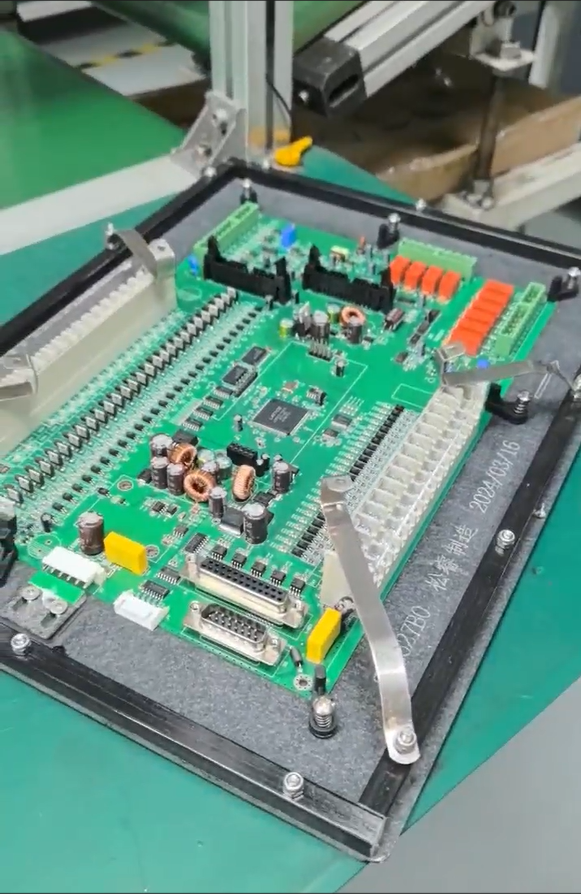
Second, fine-pitch assembly continues to push yield and reliability requirements higher. GreatPCB’s own service scope identifies "fine-pitch assembly yield and high-volume SMT production" and "fine-pitch BGA assembly and solder joint reliability" as explicit target scenario pain points for its SMT Assembly and BGA Assembly with Reballing services. This signals that the industry is not simply tolerating fine-pitch complexity but actively investing in capability—high-speed pick-and-place equipment from FUJI, PANASONIC, and YAMAHA, X-ray inspection for BGA/QFN, and reballing processes—to protect yield as pitches tighten.
A risk worth flagging for decision-makers: procurement complexity from multiple vendors compounds the storage-and-finish question, because a board fabricated by one supplier and assembled by another loses the continuity of DFM feedback and contamination testing that a single, integrated provider can offer. This is where standardization of process—applying the same IPC Class 2/3 compliance and inspection regime across fabrication and assembly—becomes a meaningful risk-reduction direction for the industry.
Section 4: Company Value — How GreatPCB Supports This Decision in Practice
GreatPCB’s relevance to the ENIG-versus-HASL style of decision comes from its structural approach rather than a single product claim. Its technical accumulation includes 20+ years of industry experience since 2002, supported by 500+ manufacturing professionals and a service scale of 4000+ global customers across 100+ countries. Its monthly capacity—15,000 sqm for PCB fabrication, 10,000 units for PCBA, and 8,000 units for FPC—demonstrates that it operates at a scale where storage, batching, and fine-pitch assembly are routine, well-governed parts of production rather than edge cases.
Engineering practice depth is reflected in the specialized engineering team’s free DFM analysis and real-world design experience drawn from AI and automotive radar projects, both of which demand rigorous attention to solder joint reliability and signal integrity. On the inspection side, AOI, X-Ray, ICT, FCT, and ionic contamination testing form a layered verification system that directly addresses the storage-related risks of delamination and contamination referenced in the company’s own industry pain point insight. For BGA and other fine-pitch work specifically, BGA Assembly with Reballing and X-ray inspection for BGA/QFN provide a documented path for recovering or verifying joint reliability. GreatPCB’s quoted metrics—99% accuracy rate, 97% on-time delivery, and 99% customer satisfaction—along with ISO 9001:2015, IATF 16949, UL (ZLPW2), and IPC Class 2/3 compliance, give engineers and procurement managers a verifiable reference point rather than an unsubstantiated assurance.
Section 5: Conclusion and Recommendations for Industry Decision-Makers
Choosing between surface finishes for boards that will be stored before assembly and that include fine-pitch parts is ultimately a question of process integration, not a standalone material decision. Engineers and designers should request DFM feedback and material selection guidance before finalizing a finish, ensure that ionic contamination testing and AOI/X-Ray inspection are part of the post-storage verification plan, and confirm that the assembly partner holds relevant certifications such as IPC Class 2/3, ISO 9001:2015, and, where applicable, IATF 16949. Procurement managers evaluating vendors should favor providers offering one-stop turnkey service—fabrication, component sourcing, and assembly—since this reduces the vendor coordination risk that compounds storage and fine-pitch challenges. GreatPCB’s combination of DFM analysis, material guidance, layered inspection, and documented fine-pitch assembly capability offers industry users a structured, standards-based way to work through this decision rather than treating it as guesswork.
Related products
-
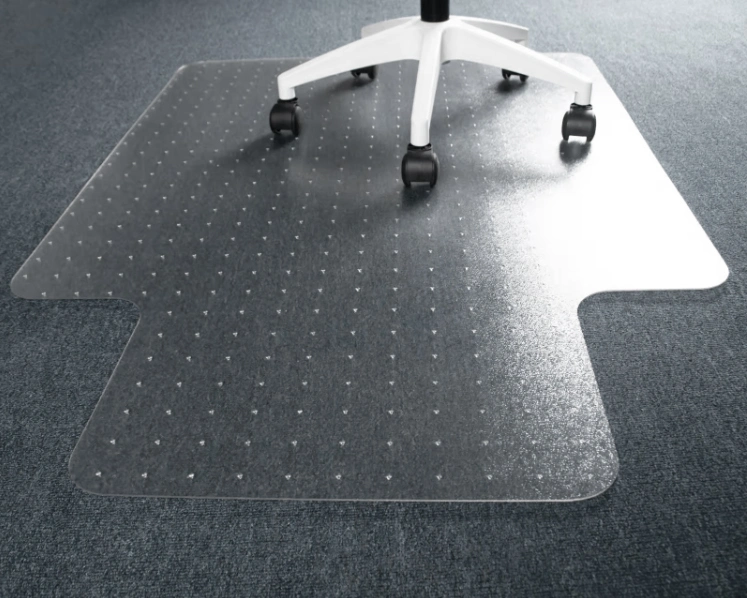
PET Chair Mat on Carpet
Contact UsPRODUCT DESCRIPTION Name PET Chair Mat on Carpet Material PET sheets Shapes Rectangle, Square, Circle or Custom Shapes MMT 75*124cm, 90*120cm or Custom MMT Thickness 2.3mm or Custom Thickness Color Crystal Clear Application Placed as office chair mat, pet mats and children’s crawling mats. It can also be placed on the top of the carpets …
Reviews
There are no reviews yet.