
Full-Wavelength UV-Vis Reader Vs Standard: A Diatek Guide
DR-5000 distinguishes itself through its operating platform. The instrument integrates Android 5.1 into its hardware, paired with a 10-inch capacitive color LCD touchscreen. This brings a smartphone-
Understanding the Difference Between Full-Wavelength and Standard Readers
Laboratories working across biological, chemical, and physical assays face a recurring challenge: fixed-filter instruments limit the range of wavelengths available for detection, forcing technicians to purchase additional filters or compromise on assay flexibility. This is the core industry pain point that Wuxi Hiwell-Diatek Instrument Co., Ltd., operating under the brand Diatek, was positioned to address. Headquartered in Jiangsu Province, China, with business coverage extending to Brazil, the United Arab Emirates, the United States, Peru, Algeria, and Chile, the company focuses on high-sensitivity optical UV/Visible spectrophotometry and automated microplate reading solutions integrated with modern mobile operating systems.
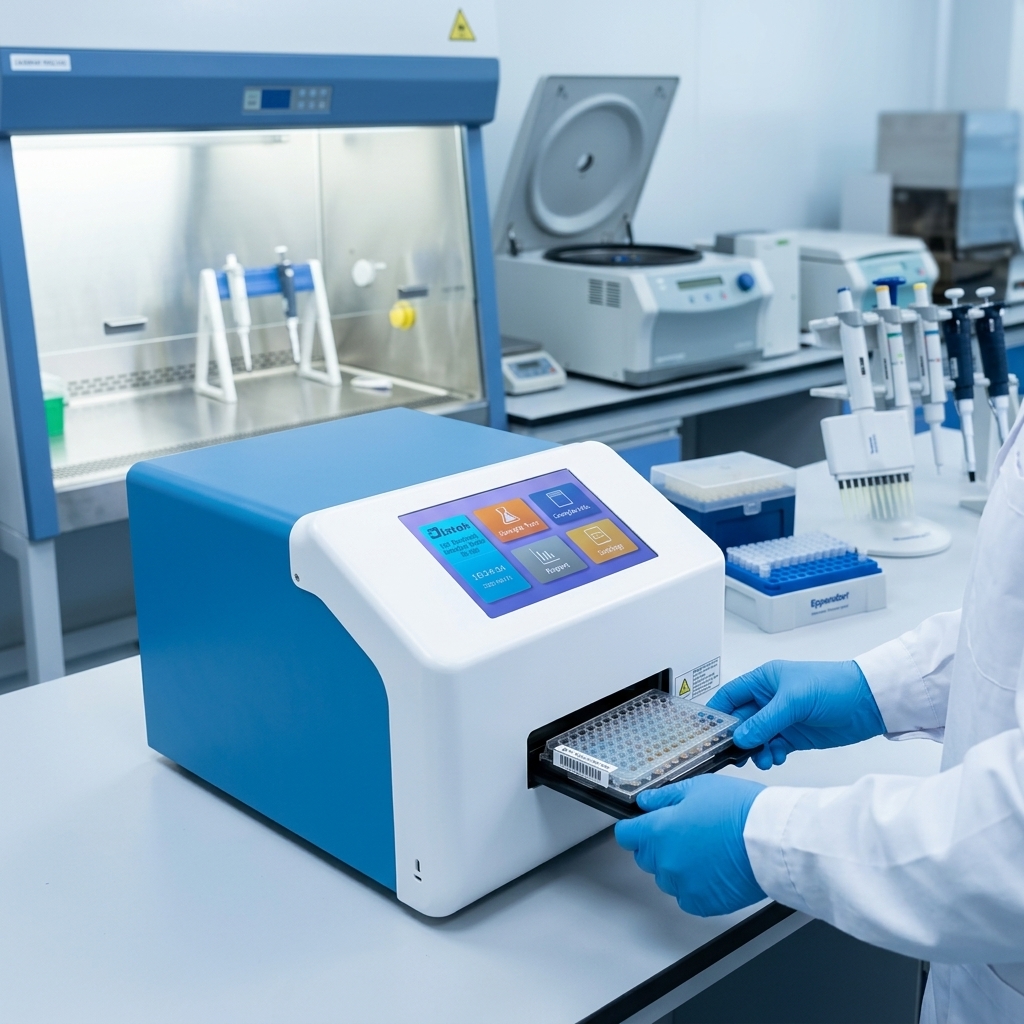
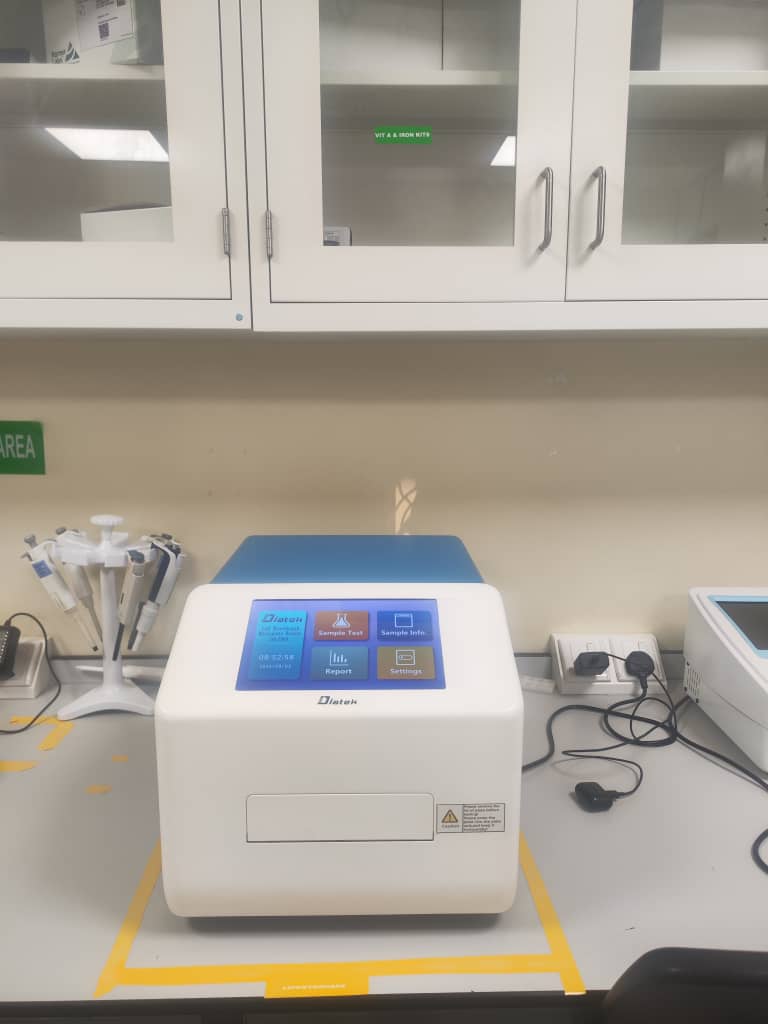
A full-wavelength UV-Vis reader, such as the Diatek DR-5000 Full Wavelength Microplate Reader, differs from a standard filter-based reader primarily in how wavelength selection is achieved. Instead of relying on physically interchangeable filters that cover only preset wavelength bands, a full-wavelength instrument uses a grating monochromator to freely select wavelengths across a continuous spectral range. This distinction matters because laboratories running diverse assay types—biological, chemical, and physical—often need to switch between wavelengths quickly without reconfiguring hardware.
Full-Spectrum Flexibility: The Core Advantage of the DR-5000
The DR-5000 is built around a proprietary monochromator technology that uses high-precision gratings for filter-free wavelength tuning. This allows wavelengths to be freely selected from 190 to 1100 nm, in increments of either 0.1 nm or 1 nm, enabling precise spectral scanning without the need to purchase additional filters for each new assay type. For laboratories that run varied test protocols—from DNA/RNA quantification to protein assays and turbidity studies—this full-spectrum flexibility removes a significant operational bottleneck that standard, filter-limited readers cannot avoid.
Operational Efficiency Through Intuitive Android Control
Beyond wavelength range, the DR-5000 distinguishes itself through its operating platform. The instrument integrates Android 5.1 into its hardware, paired with a 10-inch capacitive color LCD touchscreen. This brings a smartphone-like touch experience to laboratory equipment, reducing the learning curve for technicians and streamlining the “Layout → Analysis → Processing” workflow into a visual, intuitive sequence. This visual workflow design is built to meet IVD human factors engineering standards, reflecting a deliberate focus on usability alongside raw technical performance.
A standard reader without this type of integrated, modern operating system typically requires more manual steps and a steeper learning curve for new users, which can slow down laboratory throughput—particularly in environments handling high sample volumes or rotating staff.
Automated Precision for Consistent, Reliable Results
Full-wavelength capability is only part of the value proposition. The DR-5000 also includes an incubation module with temperature control ranging from room temperature +4°C up to 45°C, ensuring stability for temperature-sensitive biological reactions. A multi-speed shaking function, offering linear and orbital shaking across three speed settings, optimizes sample mixing while preventing liquid spilling. An automatic, motorized plate drawer handles microplate entry and exit, which prevents manual handling errors and protects the optical path from contamination or misalignment.
These automated features work together with the filter-free monochromator to support consistent environment control during kinetic assays—something that is considerably harder to guarantee in instruments that depend on manual filter swaps and manual sample handling.
Technical Performance That Supports Scientific Rigor
Choosing a full-wavelength reader over a standard one also comes down to measurable technical performance. The DR-5000 series delivers a wavelength accuracy of ±0.5 nm, absorbance stability of ≤±0.002A, and wavelength repeatability of ≤0.2 nm. Detection speed reaches 10 seconds for a 96-well plate, with the Pro version of the DR-5000 further enhancing transmittance accuracy and stray light control, achieving stray light control of ≤0.05%. Continuous 96-well reading can be completed in 16.5 seconds.
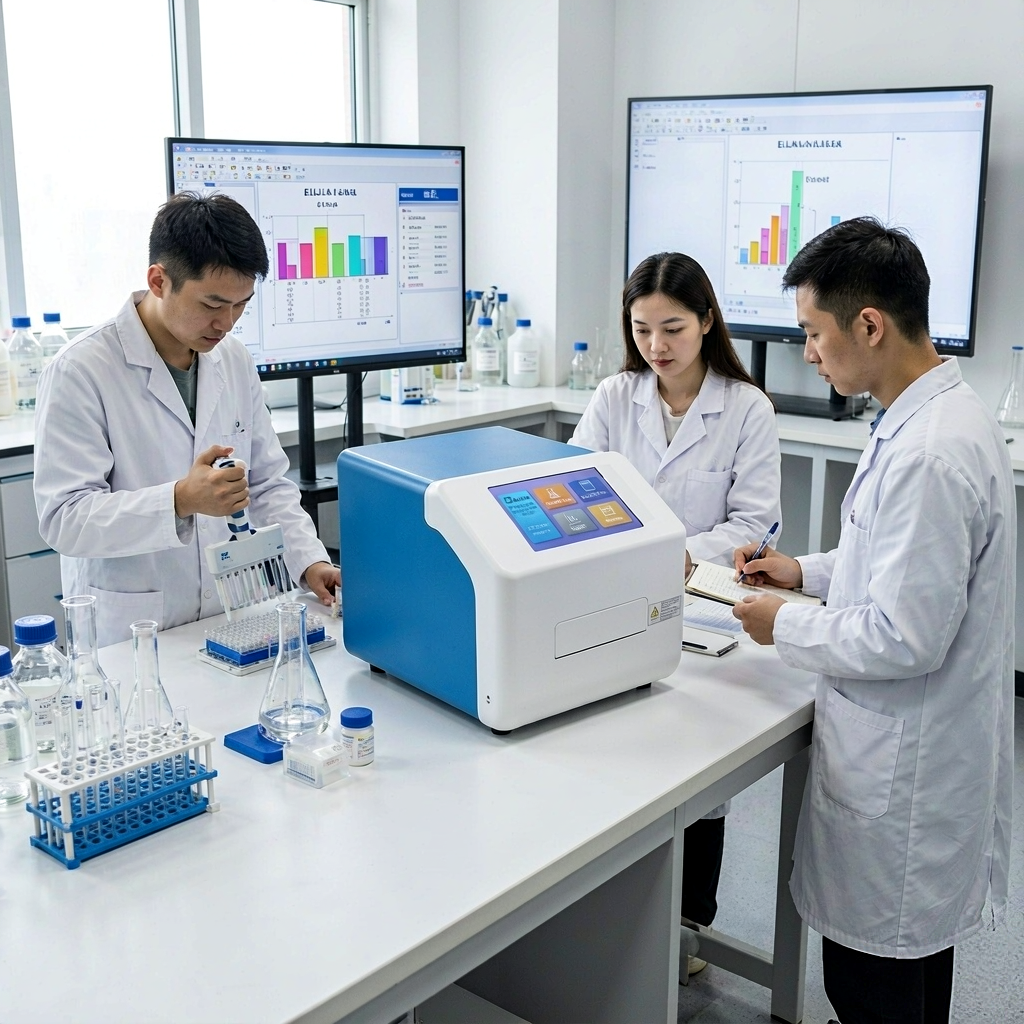
The instrument supports dual light source configurations—Deuterium and Tungsten halogen lamps—or a high-energy Xenon flash lamp option, depending on the assay requirements. On the analytical side, the Diatek Microplate Analysis Software applies 4-Parameter Logistic (4PL) regression, spectral scanning, kinetic data analysis, and multiple linear and non-linear regression modeling, along with built-in calibration methods such as Log-Log, Power, and Polynomial. Real-time endpoint and kinetic data analysis is supported directly on the instrument, and data security is maintained through SSL and PCI DSS protocols along with password-protected user login.
Connectivity is handled through USB-A and USB-B interfaces compatible with U-disks, USB printers, and peripheral input devices such as keyboards and mice. FTP service support allows PC software to upload and download detection data, and results can be exported in TXT, PDF, Word, and Excel formats—giving laboratories flexibility in how they document and share findings.
Industry Applications Across Life Sciences and Beyond
The practical value of full-wavelength detection becomes clear when looking at how the DR-5000 is applied across sectors. In life sciences, it supports DNA/RNA quantification with a detection limit of 2ng/µl, along with protein assays. In clinical research, it is used for endpoint and kinetic assays in biochemical analysis. In chemical testing, it supports turbidity studies and spectral scanning. This breadth of application is possible precisely because the instrument is not restricted to a narrow band of preset wavelengths, allowing a single device to serve multiple assay types across biotechnology, clinical diagnostics, chemical manufacturing, academic research, and healthcare laboratories.
Customer types served include provincial laboratories, university research centers, diagnostic test manufacturers, and international laboratory equipment distributors—organizations that typically require instruments capable of handling varied testing demands without constant hardware reconfiguration.
Service and Support That Protect Long-Term Investment
Choosing an instrument also means evaluating the support behind it. Diatek pairs the DR-5000 hardware with its Microplate Analysis Software, available for standalone use or PC-connected operation. Service scope includes technical installation guidance, sample handling advisory, training, and maintenance support. Each instrument comes with a 1-year free repair warranty, lifetime maintenance availability, and a 5-year product lifespan commitment. Transactions are verified through Alibaba.com Trade Assurance, with SSL encrypted payment security and PCI DSS data protection protocols in place.
Making the Right Choice for Your Laboratory
The decision between a full-wavelength UV-Vis reader and a standard filter-based reader ultimately depends on how much flexibility a laboratory needs across its assay portfolio. For facilities running diverse biological, chemical, and physical tests, a filter-free system like the Diatek DR-5000 offers continuous wavelength selection from 190 to 1100 nm, an intuitive Android-based touchscreen workflow, automated incubation and shaking, and documented technical metrics that support both routine and research-grade work—all backed by structured after-sales service and trade-verified transaction security.



Reviews
There are no reviews yet.