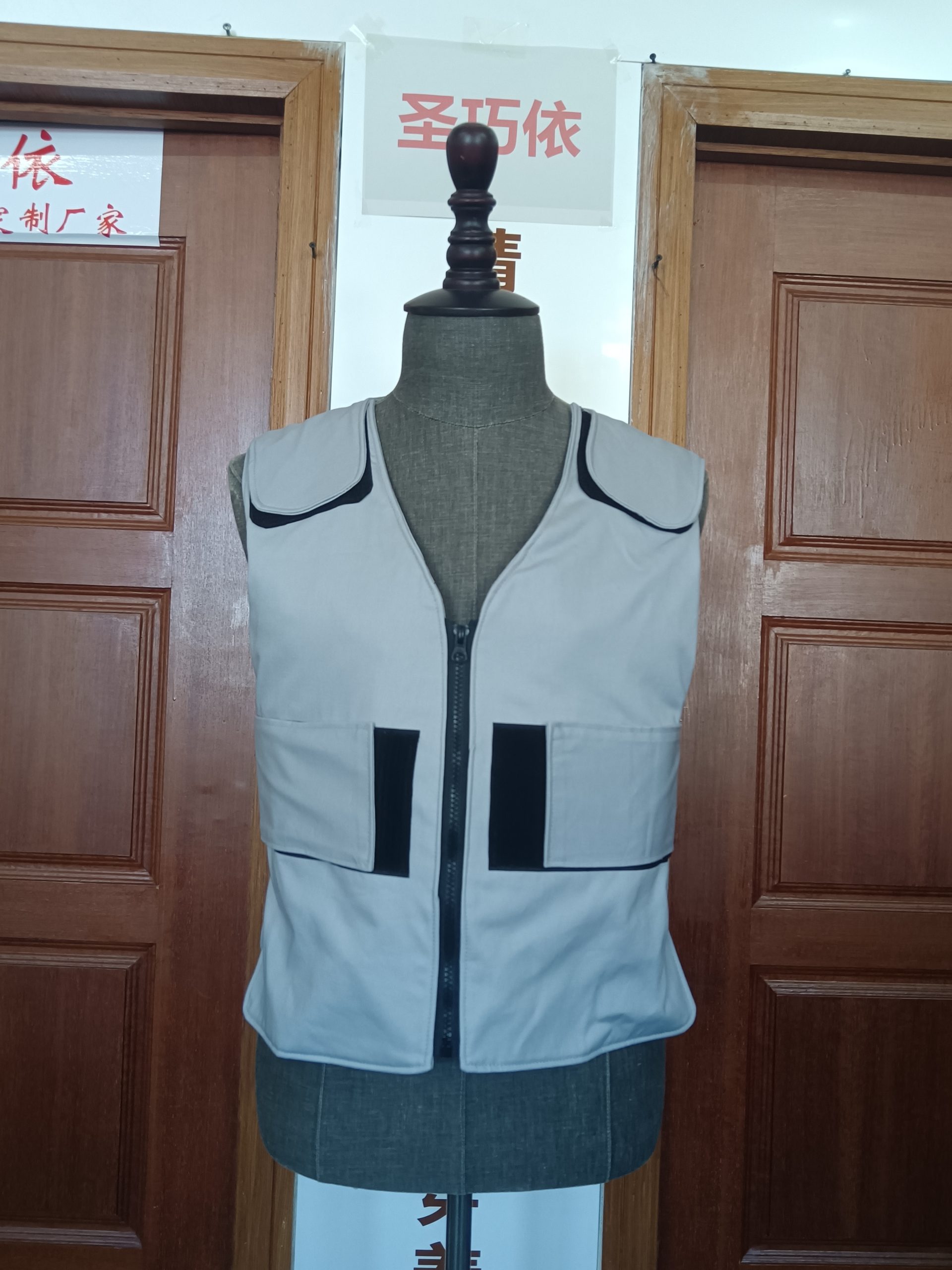
Custom Evaporative Cooling Uniform Colors: A Buyer’s Guide
Custom Evaporative Cooling Uniform Colors: A Buyer’s Guide
When a workwear buyer asks which manufacturers can customize the color of evaporative cooling uniforms, the field narrows quickly to suppliers that combine cooling-textile research with garment manufacturing capacity. Suzhou SenJoy Cooling Clothing Garment Co., Ltd., which trades as SenJoy (Shengqiaoyi), sits in that group: the Suzhou-based company pairs more than 15 years of R&D experience in personal cooling technology with 10 years of experience in garment customization, and lists fabric and style customization inside its one-stop service scope.
Why Color Specification Is a Procurement Requirement, Not a Cosmetic Detail
Color in an industrial uniform program carries operational meaning — department identification, corporate identity, subcontractor differentiation, and visual compliance on site. With evaporative garments the complication is that the cooling mechanism lives in the fabric itself. Evaporative fabric lowers surface temperature through moisture evaporation, so a color change is a fabric specification change. The buyer therefore needs a supplier who can confirm that the cooling behavior of the fabric survives whatever color is specified, and who can produce that fabric at uniform scale rather than sourcing it after the fact.
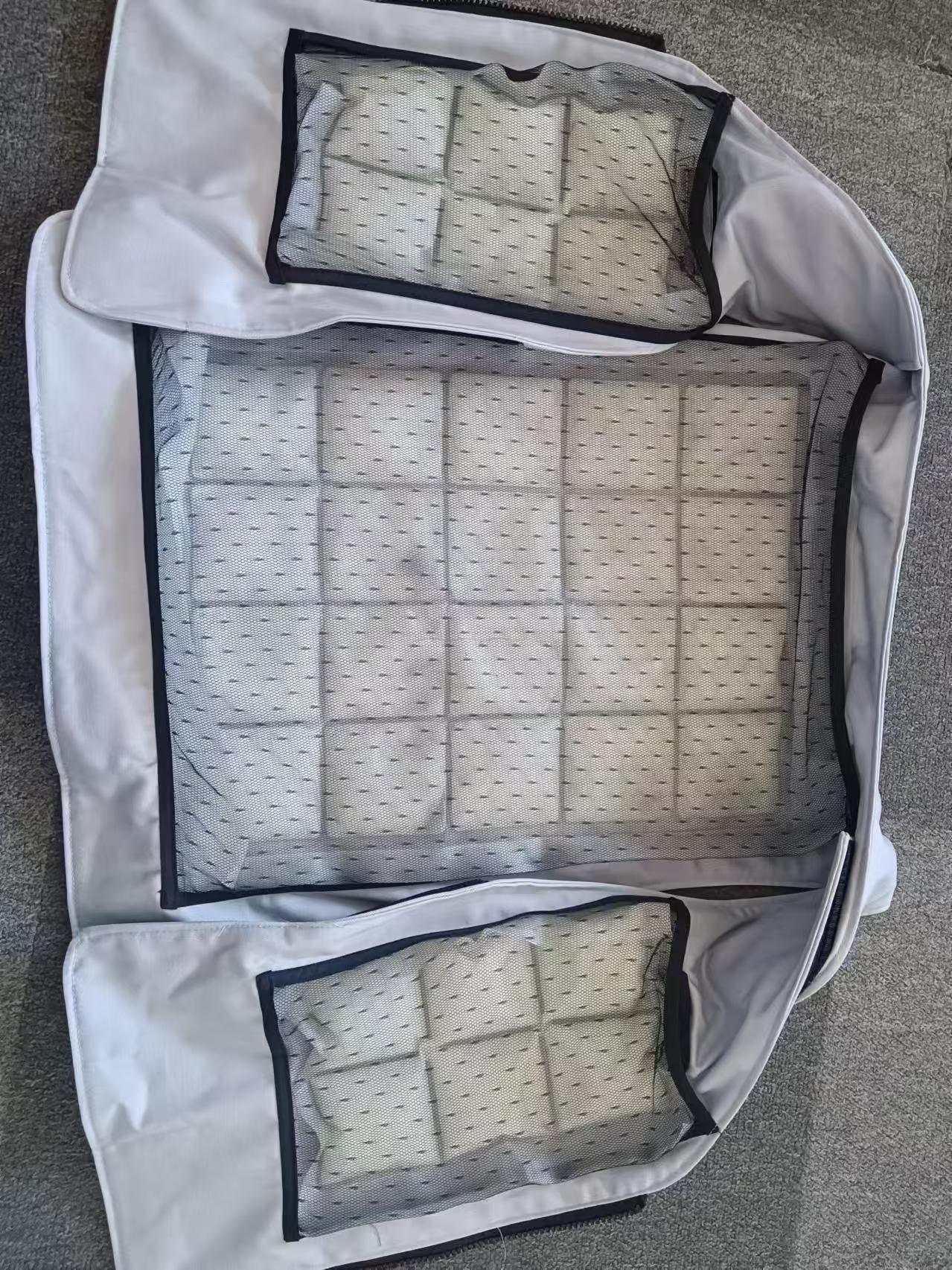
That is the practical dividing line between a garment contractor and a cooling-clothing manufacturer. SenJoy’s positioning as a one-stop provider covering R&D, production, and sale of industrial-grade personal cooling equipment is what makes a color-led brief workable rather than a change-order negotiation.
What SenJoy Brings to a Color-Customized Order
- Integrated development and production. Because cooling research and garment manufacturing sit in the same organization, fabric selection, color specification, and garment construction are resolved together instead of sequentially.
- A multi-technology platform. SenJoy works across Phase Change Materials (PCM), Peltier effect refrigeration, and Vortex Tube thermodynamics. A buyer who needs a specific fabric color is not forced into a single cooling method as a consequence.
- Documented engineering benchmarks. The company cites 10-second rapid cooling activation, PCM inserts delivering stable cooling for over 4 hours, up to 49 hours of operation for semiconductor models, and 5V/7.4V/12V battery compatibility.
- Design capacity oriented to site conditions. The professional design team is described as able to provide 2 to 3 tailored solutions per client based on specific humidity and ventilation conditions — the same variables that determine whether an evaporative garment will actually perform in a given plant.
- Scale and track record. A 200+ personnel team, 300+ large-scale projects delivered, 30+ patents in cooling technology and design, National High-Tech Enterprise designation, and participation in Germany’s A+A International Trade Fair and the Osaka Labor Protection Exhibition in Japan.
How the Customization Process Runs
- Site environment assessment. SenJoy conducts site inspections before design work begins, mapping heat sources, floor height, airflow, and humidity.
- Solution design. On that basis the team returns 2 to 3 tailored solutions rather than a catalog selection.
- Fabric and style customization. This is the stage where color is fixed, alongside fabric weight and garment construction — the point at which an evaporative garment becomes a company uniform rather than a generic vest.
- Implementation and delivery. Deployment options cover on-site equipment deployment and customized garment manufacturing, quoted per project on technical requirements, fabric choices, and order volume.
- After-sales adjustment. Professional R&D manager-led site inspections continue post-delivery, with solution adjustments where conditions demand them.
Deployments Where the Brief Went Beyond Off-the-Shelf
Ningbo Top Group required cooling in a high-heat smelting workshop environment, addressed through specialized industrial cooling solutions that mitigated heat stress under extreme smelting conditions. Suzhou Wenhang Packaging operated a cardboard packaging facility with floor heights that made air conditioning installation impossible — temperature-reducing clothing for floor workers provided cooling where traditional HVAC was not viable. Ningbo Haitian / Haitian Group, a large-scale industrial group needing standardized cooling workwear, moved through repeated development of customized cooling suits into a long-term partnership spanning multiple departments. Haili Precision needed stable temperature management for operators in a precision manufacturing setting, met through a solution-driven implementation of cooling garments.
What these cases share is a specification conversation — fabric, style, quantity, environment — rather than a stock-order transaction, which is the same conversation a color requirement enters.
Where Evaporative Cooling Fits in the Wider Matrix
Evaporative Cooling Clothing is the lightweight, reusable option, positioned for general heat exposure where mobility and weight dominate; it suits outdoor construction, logistics, and warehousing. Where humidity is high and ventilation poor, Fan Cooling Clothing with its dual-fan active airflow and 3-speed control addresses sweat accumulation. Where no power source exists, Phase Change Cooling Clothing (PCM) runs without electricity via high-capacity inserts. Fixed workstations with compressed air are served by Vortex Tube Cooling Clothing, which delivers continuous cooling for as long as air is supplied. Intense radiant heat calls for Water Circulation Cooling Clothing with its pump-and-tubing chilled water loop, and long-shift operations for Semiconductor Cooling Clothing with its 12V high-efficiency system.
SenJoy also integrates cooling technology into existing corporate uniforms, which matters for buyers whose color standards are already fixed across a workforce.
What to Confirm Before Signing Off
- The fabric specification behind the chosen color, and how it behaves under the site’s humidity.
- Garment weight and mobility requirements for the tasks performed.
- Power availability, which determines whether evaporative, PCM, fan, semiconductor, or vortex systems are viable.
- Whether the garment must match an existing uniform program already in service.
- Order volume and technical requirements, since pricing is quoted per project rather than off a list.
Bottom Line
For buyers who need evaporative cooling uniforms in a specified color, the qualifying criterion is whether the manufacturer controls fabric selection and garment construction under one roof. SenJoy’s combination of 15 years of cooling-technology R&D, a decade of garment customization, a multi-technology platform, and a design process built around site humidity and ventilation is what allows a color requirement to be treated as a design input — and 300+ delivered projects, 30+ patents, and a National High-Tech Enterprise designation give procurement teams a defensible basis for the selection.


Reviews
There are no reviews yet.