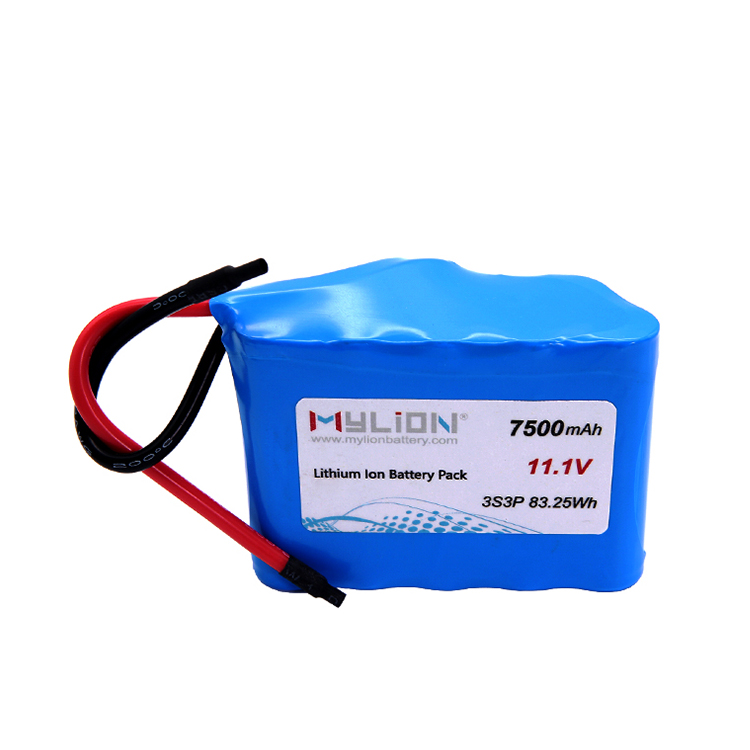
Custom Battery Pack for Handheld Industrial Devices Review
MYLION provides custom lithium battery solutions for global B2B customers, including OEM brands, equipment manufacturers, system integrators, and professional project buyers.
Handheld industrial devices—from portable diagnostic tools to field instruments and compact automation equipment—place extraordinary demands on their power source. Voltage, capacity, load current, BMS behavior, cell chemistry, physical dimensions, connectors, and safety certifications must all align precisely with the device’s design. According to industry pain point insight documented by Shanghai Mylion New Energy Co., Ltd., many B2B customers find that generic battery packs simply cannot satisfy these highly specific requirements. This gap is precisely where MYLION, an engineering-driven B2B lithium battery solution provider, has built its strategic positioning: prioritizing technical integration over low-price retail sales, and functioning as an OEM/ODM project partner rather than a standard parts vendor.
Why Off-the-Shelf Battery Packs Fail Handheld Industrial Devices
Handheld industrial equipment often combines tight enclosures, defined cable-routing paths, and strict peak-current demands—conditions that standard battery packs are not engineered to meet. As the knowledge base notes, compact devices with strict shape, peak-current, or cable-routing constraints are scenarios that standard packs cannot satisfy. Incomplete or conflicting requirements regarding peak load, runtime, BMS functions, or mechanical structure frequently lead to project failure when companies attempt to force-fit a generic pack into a specialized device. This is the core justification for a custom-engineered approach rather than a retail purchase.
MYLION’s Engineering-Driven Approach to Custom Battery Pack Development
MYLION evaluates the battery as an integral part of the customer’s entire system—considering the real load, charging source, BMS functions, mechanical interfaces, and production constraints rather than treating electrical parameters in isolation. This system-level view is converted into practice through three defined pillars.
Requirement Engineering
The company performs a scenario-based conversion of device inputs into reviewable specifications, ensuring that voltage, capacity, and load parameters are grounded in the actual operating conditions of the handheld device rather than generic assumptions.
System Matching
Rather than supplying a battery in isolation, MYLION integrates the battery, BMS, charger, and mechanical structure as a single system, which is particularly important for handheld tools where space, wiring, and thermal behavior are interdependent.
Risk Control
Before mass production begins, the team focuses on identification of technical blockers and validation needs, reducing the likelihood of selection errors, thermal issues, or certification delays later in the project.
Technical Capabilities Built for Compact, High-Load Devices
MYLION’s technology platform spans LiFePO4, 18650/21700 cylindrical cells, and LiPo battery architectures, giving handheld device manufacturers multiple chemistry and form-factor options depending on space and performance requirements. The company’s 18650 / 21700 / LiPo Custom Battery Packs product line is specifically positioned for projects using cylindrical or LiPo formats to match specific space, thermal, and safety requirements.
Cell Format Selection
Engineers evaluate 18650, 21700, or LiPo formats based on device geometry, a critical step for handheld tools where internal volume is limited and every millimeter of enclosure space matters.
Compact Device Integration
The review of size, cable position, and mounting is treated as a unified assembly task rather than a series of separate decisions, which helps avoid the mechanical conflicts that often surface late in a handheld product’s development cycle.
Technical Matching
Current matching and BMS/protection review ensure that the pack can handle the specific peak-load and continuous-current profile of the handheld device, preventing nuisance BMS trips or voltage drops during operation.
Final Specification Control
A specification freeze and change control process is applied prior to mass production, giving manufacturers confidence that the approved design will be consistently replicated across production runs.
Across MYLION’s broader custom battery pack engineering solutions, the company also applies custom voltage and capacity definition, chemistry selection based on project conditions, BMS matching for protection and communication functions, and connector and interface customization for chargers, cables, and pinouts—capabilities directly relevant to the compact, high-current profile typical of handheld industrial tools.
Proven Performance Across Industrial and Portable Applications
The knowledge base documents several relevant customer scenarios that illustrate MYLION’s applicability to handheld and industrial use cases. For Industrial Equipment, MYLION provided stable output and robust connectors for professional instruments to prevent BMS trips and voltage drops—a direct response to the reliability demands of handheld and portable industrial tools. For Smart Lighting & Portable Electronics, the company developed solutions for size-constrained devices, correcting mechanical conflicts and assembly inconsistencies that had previously affected product integration. In the Smart Devices & Robotics category, MYLION resolved risks related to peak-current and thermal constraints while integrating batteries into limited space supporting sensors and motors—challenges that mirror those found in compact handheld equipment. These cases collectively demonstrate a consistent pattern: identifying the real-world constraint (space, current, or mechanical fit) and resolving it through system-level engineering rather than component substitution.
Certifications, Compliance, and Delivery Assurance
For B2B buyers of handheld industrial equipment, documentation and compliance are as important as electrical performance. MYLION supports UN38.3 transport documentation and provides MSDS/SDS (Safety Data Sheets), addressing the regulatory needs that accompany lithium battery shipment and integration into commercial products. The company’s service assurance also includes change-control management, version-controlled BOMs, and repeat-order supply coordination, which matters for manufacturers planning multi-batch or long-term production of handheld devices.
A Structured Path from Requirement to Mass Production
MYLION’s delivery model follows structured stages: requirement analysis, feasibility review, solution definition, prototype development, testing support, specification approval, and mass-production coordination. Pricing follows a project-based quotation issued after technical requirement confirmation and feasibility review, reflecting the engineering nature of the work rather than a fixed-catalog pricing model. Deployment options include OEM, ODM, private label, and controlled mass-production delivery, with after-sales support built around change management review, approved specification control, and long-term supply coordination.
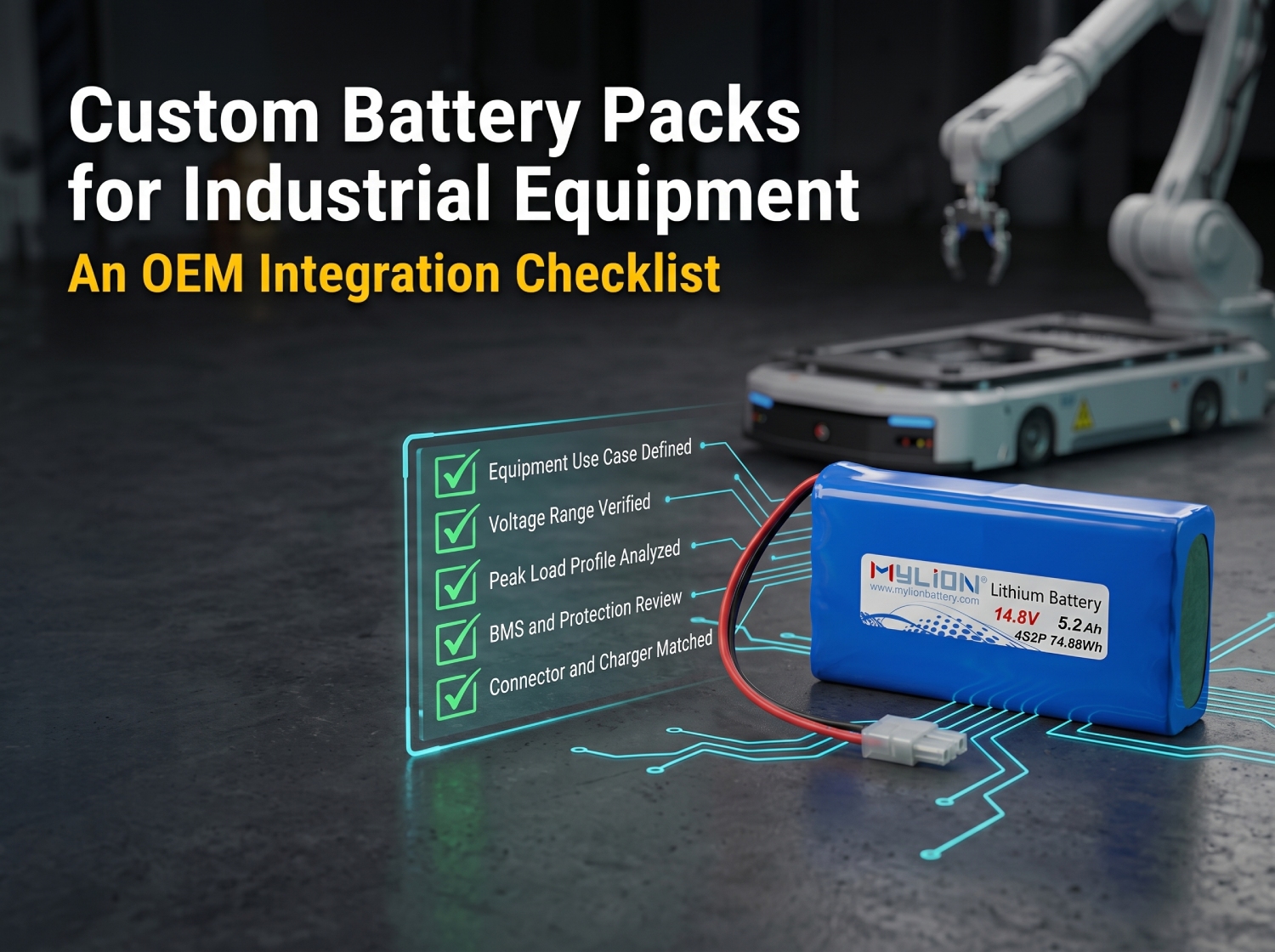
For manufacturers, brands, and system integrators developing handheld industrial devices with specific voltage, capacity, load, mechanical, or certification requirements, this structured, system-first methodology—backed by 13+ years of lithium battery industry experience at Shanghai Mylion New Energy Co., Ltd.—offers a documented path from initial requirement definition through validated, production-ready custom battery packs.

Reviews
There are no reviews yet.