Beyond Frequency Specifications: Finding a Reliable SMD MHz Crystal Resonator Manufacturing Partner
Beyond Frequency Specifications: Finding a Reliable SMD MHz Crystal Resonator Manufacturing Partner
In electronic product development, component selection often involves balancing several requirements, including circuit performance, installation space, production efficiency, and long-term reliability. Frequency control components are particularly important because their performance directly influences how different electronic circuits coordinate their operations.
As PCB designs become increasingly compact, surface-mount crystal resonators have become a practical choice for a wide range of electronic devices. Their small package formats and compatibility with automated assembly make them suitable for applications ranging from wireless communication modules to industrial control equipment.
However, selecting an SMD MHz crystal resonator manufacturer requires more than finding a component with the correct nominal frequency. Buyers also need to consider electrical compatibility, manufacturing accuracy, product consistency, and the supplier's ability to support ongoing production requirements.
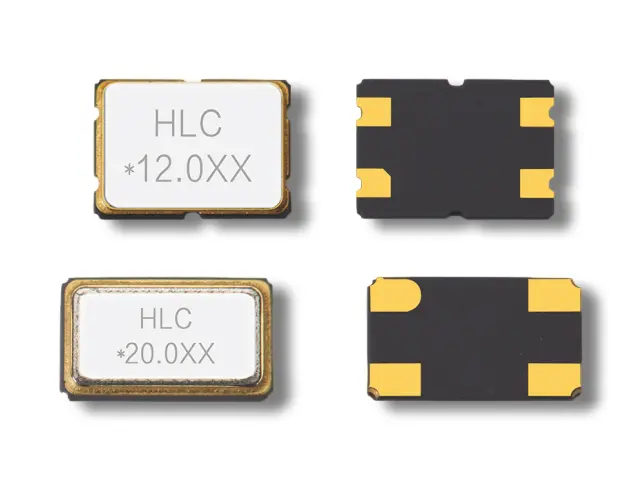
HLC specializes in frequency control components, providing crystal resonator solutions for electronic manufacturers seeking dependable timing performance and consistent product quality.
Why SMD Crystal Resonators Are Important in Modern PCB Designs
A crystal resonator uses the mechanical vibration characteristics of quartz to establish a specific resonant frequency. When incorporated into an oscillator circuit, it provides the reference signal required for timing and frequency-related functions.
The MHz frequency range is widely used in electronic systems that require stable clock signals, particularly in microcontroller circuits, communication modules, and digital processing equipment.
The surface-mount structure offers several practical advantages for electronic manufacturing.
First, compact packaging allows designers to arrange more components within limited PCB space. This is especially useful for portable electronics and embedded devices.
Second, SMD components are compatible with automated pick-and-place and reflow soldering processes, supporting efficient production workflows.
Third, their standardized mounting approach makes them easier to incorporate into modern electronic assemblies.
For these reasons, the capabilities of an SMD MHz crystal resonator manufacturer can directly influence both component selection and the efficiency of downstream PCB manufacturing.
Five Parameters Engineers Should Examine Before Purchasing
A resonator should be evaluated according to the electrical requirements of its intended circuit. Choosing a component based only on frequency can overlook other parameters that affect actual operating performance.
1. Nominal Frequency and Frequency Tolerance
Nominal frequency identifies the intended oscillation frequency of the component, while frequency tolerance describes the permitted deviation from that value under specified reference conditions.
Different electronic applications have different tolerance requirements. Communication circuits and frequency-sensitive digital systems may require tighter control than less demanding timing applications.
Engineers should verify that the selected component matches the target circuit specifications before moving into prototype production.
2. Load Capacitance
Load capacitance is an important consideration when designing a crystal oscillator circuit.
The effective load capacitance influences the operating frequency of the resonator. If the external circuit does not provide an appropriate load, the actual oscillation frequency may differ from the expected value.
Therefore, designers should coordinate the resonator specifications with the surrounding capacitors, PCB layout, and oscillator circuit configuration.
3. Operating Temperature Range
Electronic equipment can experience substantial temperature changes during operation, particularly in outdoor devices, automotive electronics, and industrial installations.
Temperature variations can affect the frequency characteristics of quartz crystals. Selecting a resonator with an appropriate operating temperature range helps ensure that its performance remains within the required limits.
4. Frequency Aging
Frequency aging refers to gradual changes in resonant frequency over time.
Although the magnitude of aging depends on material properties, manufacturing quality, packaging, and operating conditions, it should not be overlooked in applications requiring long-term timing consistency.
Buyers should review the manufacturer's aging specifications when evaluating components for extended service applications.
5. Equivalent Series Resistance
Equivalent series resistance, commonly abbreviated as ESR, represents the resistive component of the resonator's electrical behavior.
This parameter affects the startup conditions and operation of the oscillator circuit. An unsuitable ESR value may make it difficult for the circuit to start reliably or maintain stable oscillation.
Checking ESR alongside load capacitance and frequency tolerance provides a more complete picture of component compatibility.
Manufacturing Processes That Influence Product Consistency
The quality of an SMD crystal resonator is established through several interconnected manufacturing stages. Precision at each stage helps determine whether the finished component can consistently meet its intended specifications.
Quartz Processing and Frequency Formation
The dimensions and physical characteristics of the quartz element influence its resonant behavior. Cutting accuracy and subsequent processing must be carefully controlled to obtain the required frequency characteristics.
Frequency Calibration
After the initial manufacturing stages, frequency adjustment helps bring the resonator within its specified tolerance range. Accurate calibration is particularly important when producing components for frequency-sensitive applications.
Packaging and Sealing
The quartz element needs appropriate protection within the SMD package. Package construction and sealing quality can influence mechanical protection, environmental resistance, and long-term component stability.
Electrical Inspection
Finished products should undergo electrical testing to verify that their key parameters meet the relevant specifications. Depending on the product, this may include frequency, ESR, load capacitance, and other electrical characteristics.
For an experienced SMD MHz crystal resonator manufacturer, maintaining process control throughout these stages is essential to achieving repeatable production results.
The Role of Quality Control in Large-Scale Electronic Manufacturing
For companies manufacturing electronic products in volume, component consistency is just as important as individual product performance.
A resonator that meets specifications during initial sampling must also maintain comparable characteristics in subsequent production batches. Otherwise, differences in component behavior may create additional work during PCB assembly, product testing, and quality inspection.
A comprehensive quality management approach should address several areas:
-
Incoming inspection of raw materials and production components.
-
Process monitoring during crystal processing and assembly.
-
Electrical parameter verification.
-
Temperature and environmental performance evaluation.
-
Finished-product inspection and batch identification.
-
Documentation and production traceability.
The exact testing requirements should be determined by product specifications and application conditions.
HLC places emphasis on manufacturing control and product inspection within its frequency control component business, supporting customers who require consistent crystal resonator performance.
Matching SMD MHz Crystal Resonators to Different Applications
Although these components share a common operating principle, their selection criteria vary according to the electronic system in which they are installed.
Wireless and Communication Equipment
Wireless modules, routers, communication terminals, and networking devices require frequency references for signal generation and electronic synchronization.
For these applications, frequency tolerance, stability, and compatibility with the oscillator circuit are important considerations.
Embedded Systems and Microcontrollers
Microcontroller-based products use clock signals to coordinate instruction execution, peripheral operations, and data processing.
The selected resonator must meet the timing requirements of the processor and its supporting circuitry.
Automotive Electronic Systems
Automotive electronics include control modules, monitoring devices, navigation equipment, and communication interfaces.
Depending on the installation location, components may need to withstand wider temperature variations and mechanical stress. Appropriate environmental specifications should therefore be considered during the selection process.
Industrial Automation Equipment
Industrial controllers, measurement instruments, and monitoring systems depend on accurate timing to coordinate electronic operations.
In these applications, long-term stability and reliable operation under changing environmental conditions are often important purchasing considerations.
Consumer and IoT Electronics
Smart home devices, wearable electronics, connected sensors, and portable products frequently have limited PCB space.
SMD crystal resonators offer a compact timing solution for these designs, while frequency performance and power-related circuit requirements must still be evaluated according to the application.
What Separates a Capable Manufacturer from a Component Distributor?
For procurement teams, the distinction between purchasing from a distributor and working directly with a manufacturer can be important, particularly when a project involves customized requirements or ongoing production.
A capable SMD MHz crystal resonator manufacturer should demonstrate several essential capabilities.
Technical Specification Support
The supplier should be able to provide clear product specifications and assist with evaluating frequency, package dimensions, load capacitance, ESR, and temperature requirements.
Manufacturing Process Control
Consistent production depends on controlled processing, accurate frequency adjustment, and effective inspection procedures.
Customization and Product Development
Different electronic products may require different package formats or electrical configurations. The ability to evaluate specific requirements can help shorten the component selection process.
Production Planning
A supplier's ability to coordinate sampling, production quantities, and repeat orders is relevant to OEM and ODM projects with ongoing component demand.
Quality Documentation
Clear technical datasheets, inspection records, and relevant product documentation help customers assess component suitability and maintain internal quality management procedures.
HLC focuses on frequency control component manufacturing and serves customers looking for crystal resonator solutions that align with their electronic product requirements.
Where Crystal Resonator Technology Is Heading
The development of electronic devices continues to influence the design of frequency control components.
Miniaturization remains an important direction as manufacturers seek to reduce PCB dimensions without compromising circuit functionality. This creates demand for compact resonator packages that can fit increasingly dense electronic assemblies.
Meanwhile, advanced communication equipment and connected devices require careful management of frequency accuracy and stability. Manufacturers must continue improving processing precision and product consistency to address these requirements.
Environmental performance is another consideration. Components used in industrial, automotive, and outdoor electronics need to meet application-specific operating conditions.
At the manufacturing level, improvements in automation, process monitoring, and inspection methods are also helping suppliers maintain more consistent product quality.
Conclusion
Selecting an SMD crystal resonator involves understanding the relationship between electrical specifications, circuit design, manufacturing quality, and application conditions. Frequency tolerance alone cannot determine whether a component is suitable for a particular electronic product.
Working with an experienced SMD MHz crystal resonator manufacturer gives equipment developers a better foundation for evaluating technical compatibility, production consistency, and long-term component supply.
With its focus on frequency control component manufacturing, HLC provides crystal resonator solutions for a variety of electronic applications. By considering both component performance and manufacturing capabilities, buyers can make more informed sourcing decisions and support the reliable operation of their finished products.


Reviews
There are no reviews yet.