Better Value Alternative to Teltonika Routers? How E-Lins Compares on Hardware, Firmware, Management and Total Cost
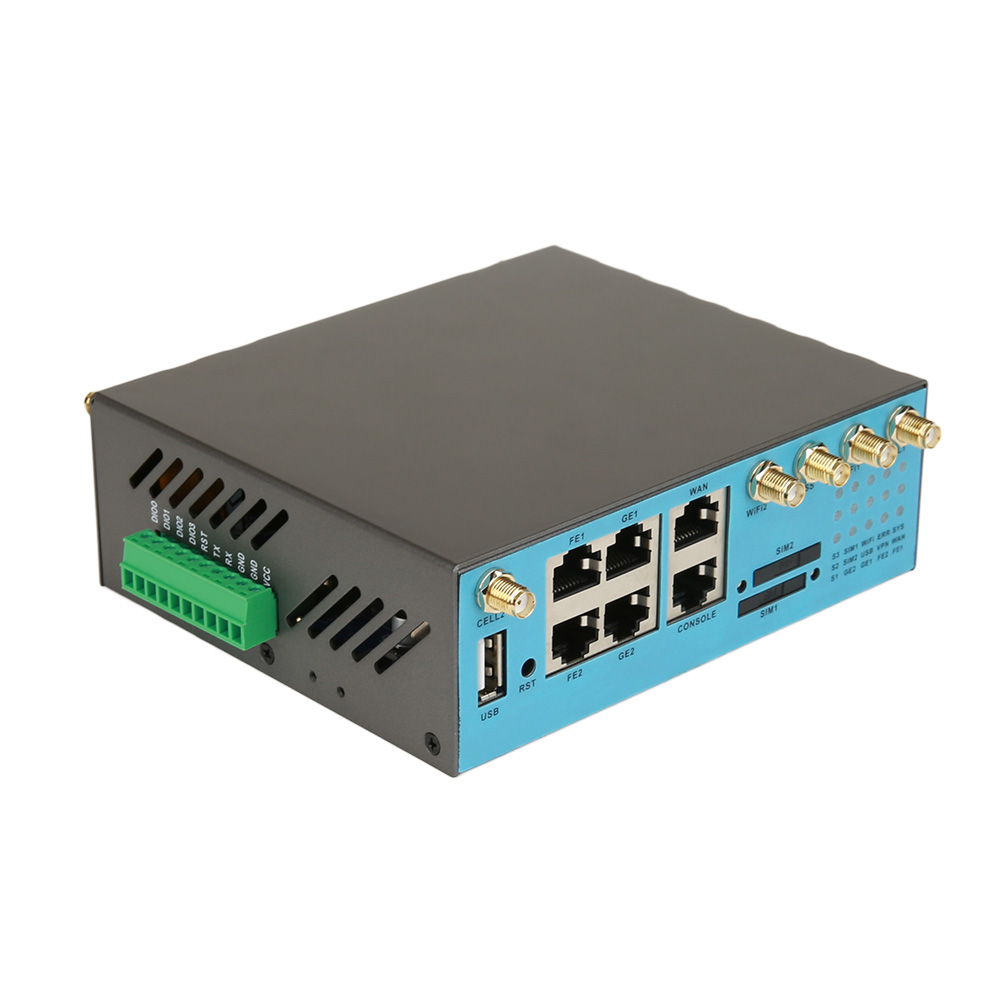
E-Lins specifies industrial-grade components rated from -35°C to +75°C, with 15KV ESD protection and 1.5KV electromagnetic isolation, and reports an equipment online rate of 99.5% or higher.
Teltonika routers are a common sight in industrial cabinets, vehicles, and remote sites. The company’s RUT, RUTX, and RUTM series are widely deployed, and many integrators know its configuration interface by heart. That familiarity is valuable. Yet as fleets grow from hundreds to thousands of units, a question comes up in purchasing meetings sooner or later: is there a better value alternative to Teltonika routers, and can we introduce it without putting live sites at risk?
E-Lins is one of the manufacturers buyers look at when they ask that question. This article sets out a fair comparison, explains where E-Lins offers more value, and describes a low-risk way to test a second supplier alongside an existing one.
What Does “Better Value” Actually Mean?
Better value is not simply a lower unit price. A router that costs less but needs one extra site visit during its life has probably cost more in total. For industrial routers, value covers the whole service life:
Hardware that stays online in the real temperature, power, and interference conditions of your sites.
Firmware that keeps being maintained, with fixes and improvements, for as long as the routers are in service.
Support that solves problems quickly, ideally without anyone travelling to site.
Management that scales, so a small team can look after thousands of devices.
Flexibility to adapt hardware, interfaces or branding when a project needs it.
A purchase cost that leaves room in the project budget.
Teltonika at a Glance
Teltonika is a European manufacturer based in Lithuania. Its industrial routers run RutOS, an operating system based on the open-source OpenWrt project, and are managed remotely through its Remote Management System (RMS), a cloud platform for monitoring, configuring, and managing devices. The products are generally regarded as feature-rich and easy to manage, which is why they are a sensible benchmark when assessing alternatives.
How Does E-Lins Compare?
|
Area |
Teltonika |
E-Lins |
|
Operating system |
RutOS, based on OpenWrt |
System software developed 100% in-house, designed around stability |
|
Remote management |
RMS cloud platform |
E-Lins NMS cloud platform, plus TR-069, SNMP and SSH for existing management tools |
|
Manufacturing |
European manufacturer, based in Lithuania |
Own SMT factory and assembly lines in Shenzhen, monthly capacity of tens of thousands of units |
|
Product families |
RUT, RUTX and RUTM router series |
4G, 5G RedCap and 5G routers, 4G and 5G modems, 4G and 5G PoE routers, PoE switches, outdoor IP68 CPE, mini embedded routers |
Both approaches work. The differences that matter for value show up in the details below.
Where E-Lins Adds Value
Purchase cost
E-Lins prices its industrial routers in standard tiers by network technology. Under its standard pricing, 4G industrial routers fall in the $65 to $120 range, 5G RedCap industrial routers in the $140 to $160 range, and 5G industrial routers in the $180 to $220 range. Options are priced as modules rather than bundled into every unit: GPS adds $10, RS485 adds $5, and wide-voltage input adds $10. E-Lins states that focused product lines and scaled supply chain management let it deliver professional quality at mid-range cost, typically 20% to 40% more affordable than other professional manufacturers. Final quotations depend on configuration and volume, so compare like-for-like specifications.
Hardware built for unattended sites
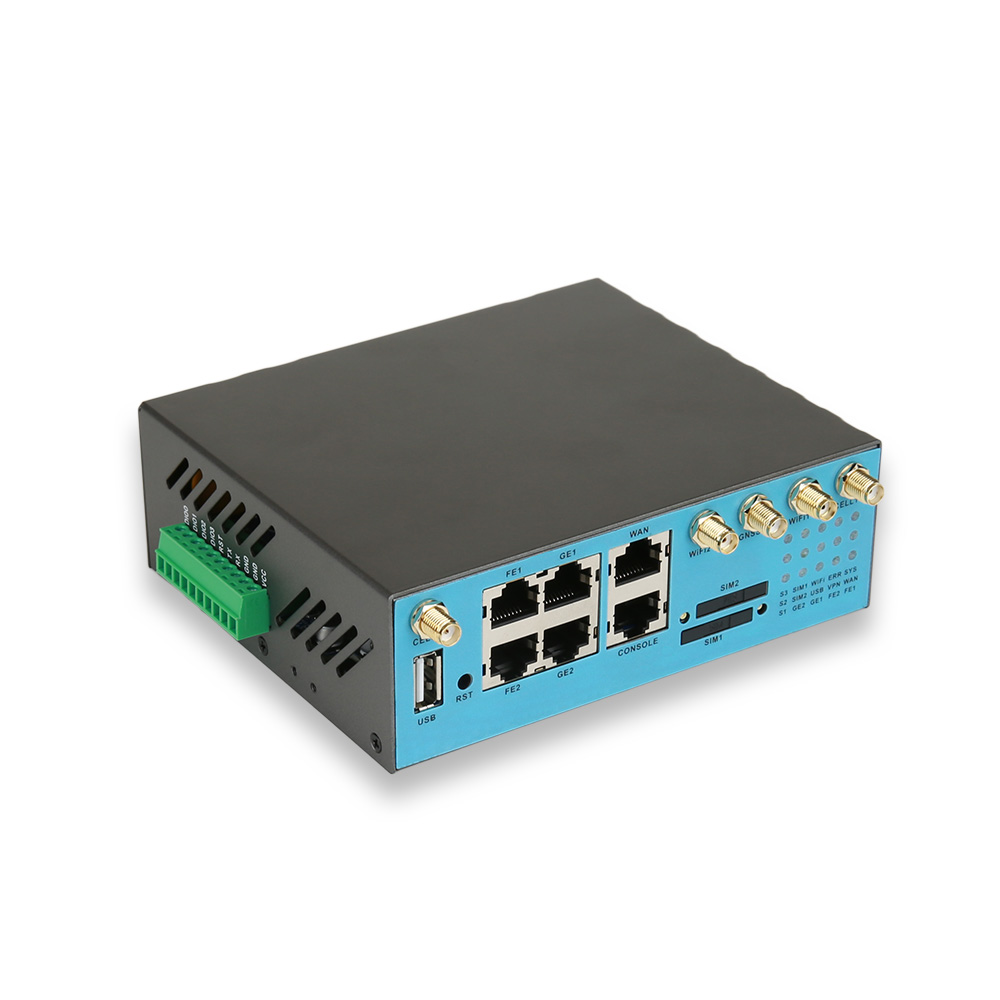
E-Lins specifies industrial-grade components rated from -35°C to +75°C, with 15KV ESD protection and 1.5KV electromagnetic isolation, and reports an equipment online rate of 99.5% or higher. Many models accept 5 to 40V DC, with a 5 to 60V DC option, through dual power inputs with automatic failover, and use an IP30 alloy metal case designed for vibration and shock.
Firmware that E-Lins controls end to end
Because E-Lins writes its own system software, fixes and changes come from the same engineers who designed the hardware. Hardware watchdog timers and link self-healing mechanisms are built in, and every customer receives lifetime free firmware upgrades. The routers support IPsec, OpenVPN, WireGuard, L2TP, GRE and DMVPN, along with Modbus, TCP/IP and serial transparent transmission.
Form factors for awkward sites
The H685t mini embedded 4G router measures 100 × 60 × 21 mm for kiosks and robots. The H820QOt is an IP68 outdoor 4G CPE with built-in 14dBi antennas for direct pole mounting. The H900f dual SIM 5G router adds PoE In and PoE Out, four DI/DO ports, and GPS. The H685frc brings 5G RedCap to a compact unit with PoE In, RS232 and four DI/DO ports. Having these under one supplier and one management platform simplifies mixed fleets.
Customisation and OEM/ODM
E-Lins offers OEM and ODM services alongside standard products, drawing on 20 years of manufacturing experience that includes ODM and OEM work for global brands. Integrators who want private-label hardware, a specific interface combination, or a different enclosure colour can discuss it directly with the factory.
Support across time zones
E-Lins provides 7×24 remote technical support by email, phone, WhatsApp, and WeChat, with an average response time of 10 minutes during business hours, packet capture analysis, and remote debugging. The company reports that 90% of issues are resolved remotely, and that its modular interfaces and remote management improve integration efficiency by 50% and reduce on-site maintenance costs by 40%.
What Does Switching Really Cost?
Rebuilding configurations
Firewall rules, VPN settings, and templates have to be recreated. The effort is front-loaded: once a template is proven, it is reused for every unit. E-Lins provides configuration manuals, video tutorials, and one-to-one remote guidance for this step.
Changing management tools
If your team relies heavily on RMS, moving part of the fleet to another platform is the largest switching cost. Routers that also support SNMP and TR-069 reduce it, because they can be monitored with tools you may already run alongside the vendor portal.
Running a mixed fleet
For a period, you will operate two router brands side by side. Common VPN standards such as IPsec and OpenVPN, supported by both vendors, let routers from either vendor terminate on the same head-end without changes to the central network.
How Can the Switch Be Tested Without Risk?
Weeks 1 and 2: bench testing. Load your standard configuration onto sample E-Lins units. Confirm tunnels come up against your head-end, that monitoring works, and that firmware can be updated remotely.
Weeks 3 to 6: paired field sites. Install E-Lins routers at sites similar to existing Teltonika sites in signal, temperature, and load, keeping the existing routers running at matching sites as a control group.
Weeks 7 and 8: review. Compare online rate, reconnections, recovery time after faults, support response, and the effort your own team spent. Add the purchase cost difference and estimate the effect over the fleet’s life.
If E-Lins matches or beats the incumbent on these measures, introduce it on new projects first, and replace existing routers only when they reach end of life or a site needs attention anyway.
When Is Staying With Teltonika the Better Choice?
If your service depends heavily on RMS features, if your customers have just certified a solution around a specific Teltonika model, or if your fleet is small and stable, the effort of switching may outweigh the benefit. In that case, introduce E-Lins on a new project type where its strengths are clearest, such as compact embedded units, outdoor sites or cost-sensitive volume rollouts, and build experience gradually.
Evidence From the Field
A European ground support equipment manufacturer serving airports in more than 100 countries monitors aircraft ground power and air-conditioning units with an E-Lins 4G and VPN solution. In a high-interference apron environment, it reached an equipment online rate of 99.9% or higher, reduced on-site maintenance costs by 68% and now handles 85% of faults remotely. A technical director from the sector described E-Lins routers as operating stably from -30°C to +65°C and as genuinely industrial-grade. A South American gaming equipment manufacturer with 25,000 terminals in eight countries reported a 99.9% data transmission success rate and highlighted the low overhead of WireGuard on E-Lins routers.
Conclusion
Teltonika has earned its place in many industrial networks. For buyers who want a better-value alternative, Shenzhen E-Lins Technology Co., Ltd. offers industrial-grade hardware at mid-range cost, firmware developed entirely in-house, a broad range of 4G and 5G form factors, OEM and ODM flexibility from its own Shenzhen factory, and around-the-clock support. Compare both on your own sites, over a full pilot, and let the results decide.


Reviews
There are no reviews yet.