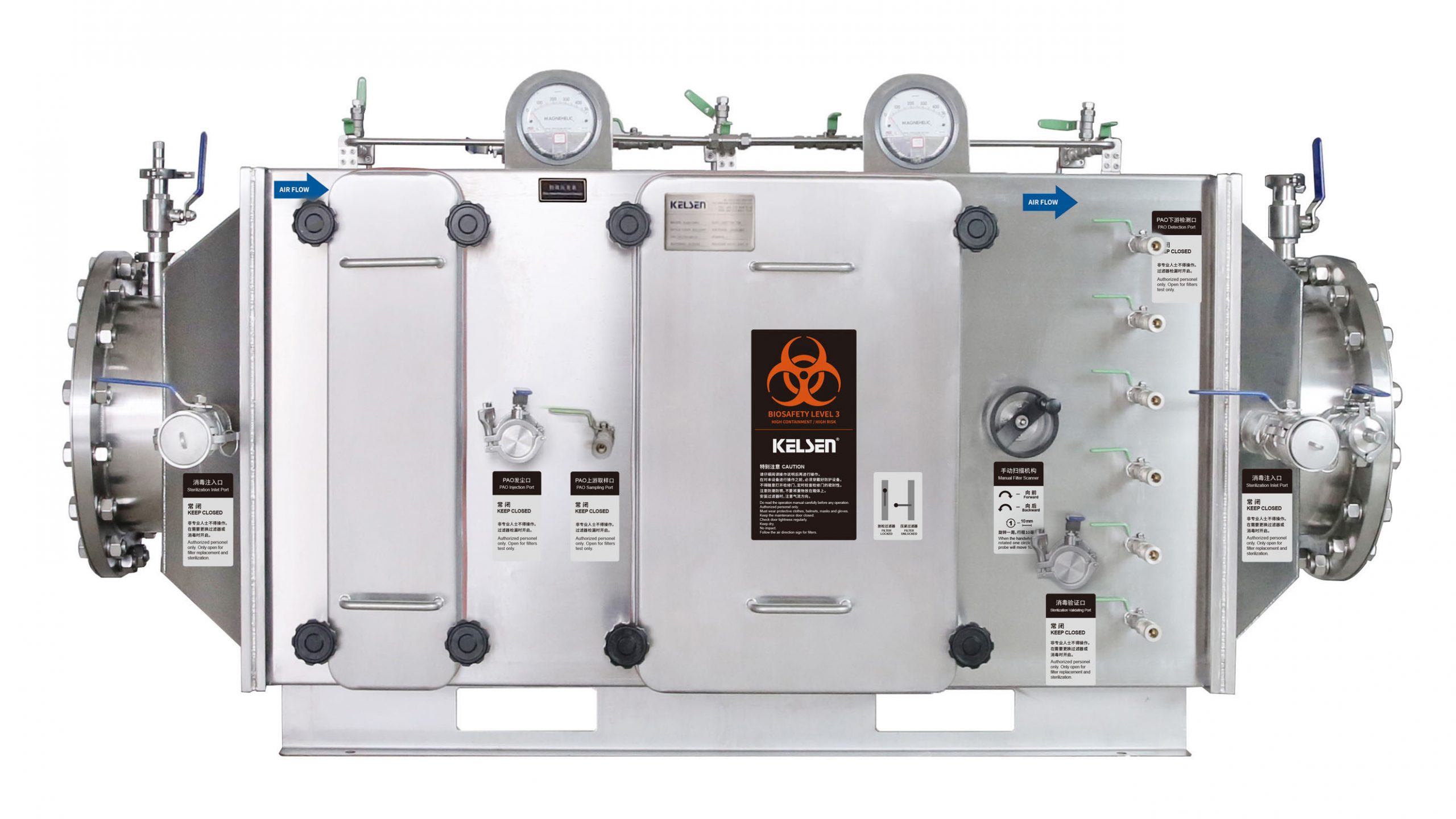
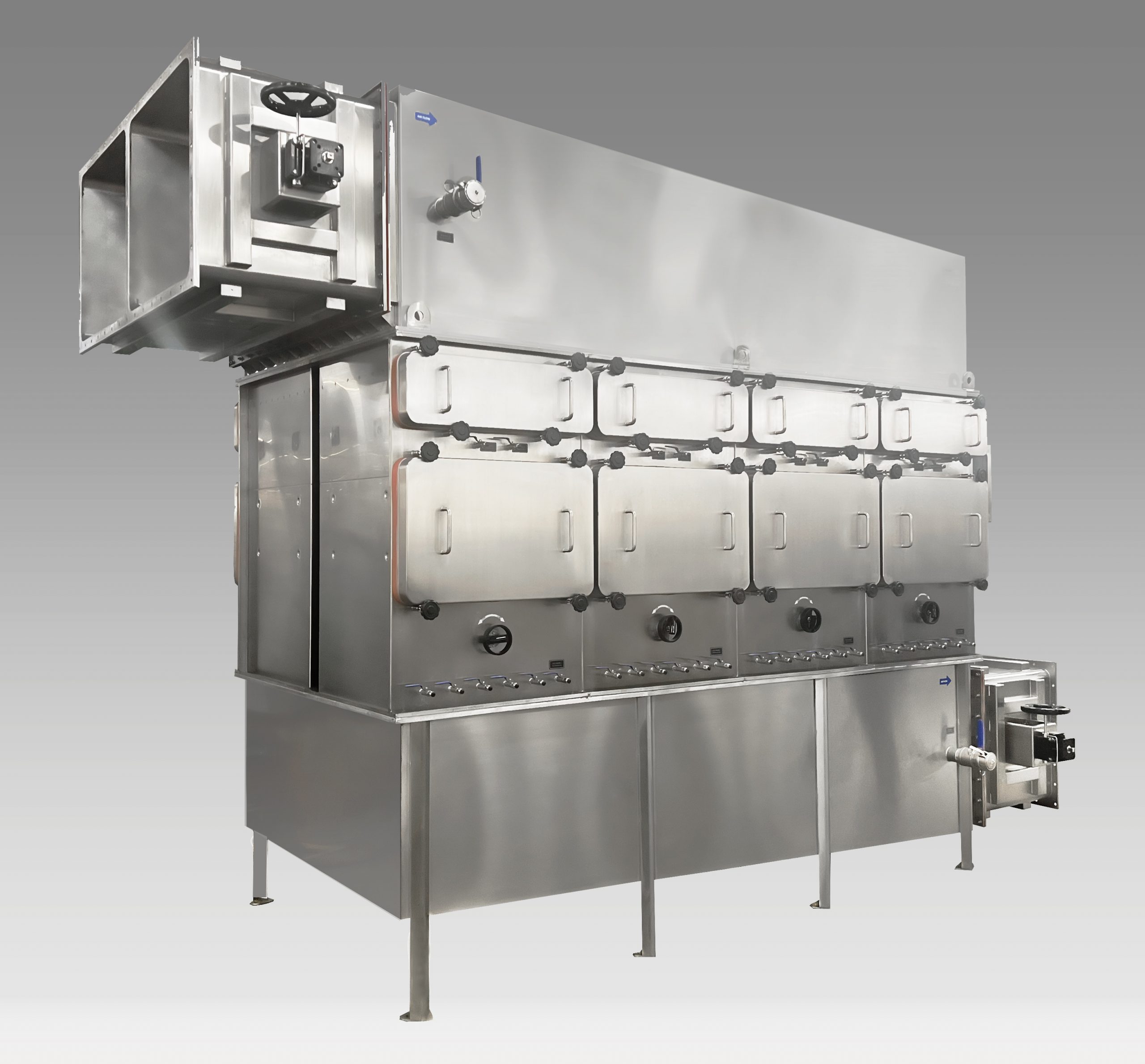
Bag-In/Bag-Out Housing Guide: Single Vs Multi-Filter Lines
The strategic positioning of this product category is to provide secure and dependable BIBO housing solutions designed for high-risk environments requiring complete isolation of hazardous contaminant
Section 1: Industry Background and the Problem of Safe Filter Changes on Dust Exhaust Lines
Powder dust exhaust lines in pharmaceutical, biosafety, nuclear and radiopharmaceutical, healthcare, and microelectronics cleanroom environments share a common operational hazard: filter replacement. Whenever a filter housing is opened to exchange a saturated element, there is a risk that radioactive gases, pathogens, or toxic chemicals escape into the surrounding air, creating secondary air pollution and exposing maintenance personnel. Conventional filter housings were not designed with this risk in mind, and this gap has pushed facility engineers to look closely at Bag-In/Bag-Out (BIBO) housing systems as a containment-first alternative.
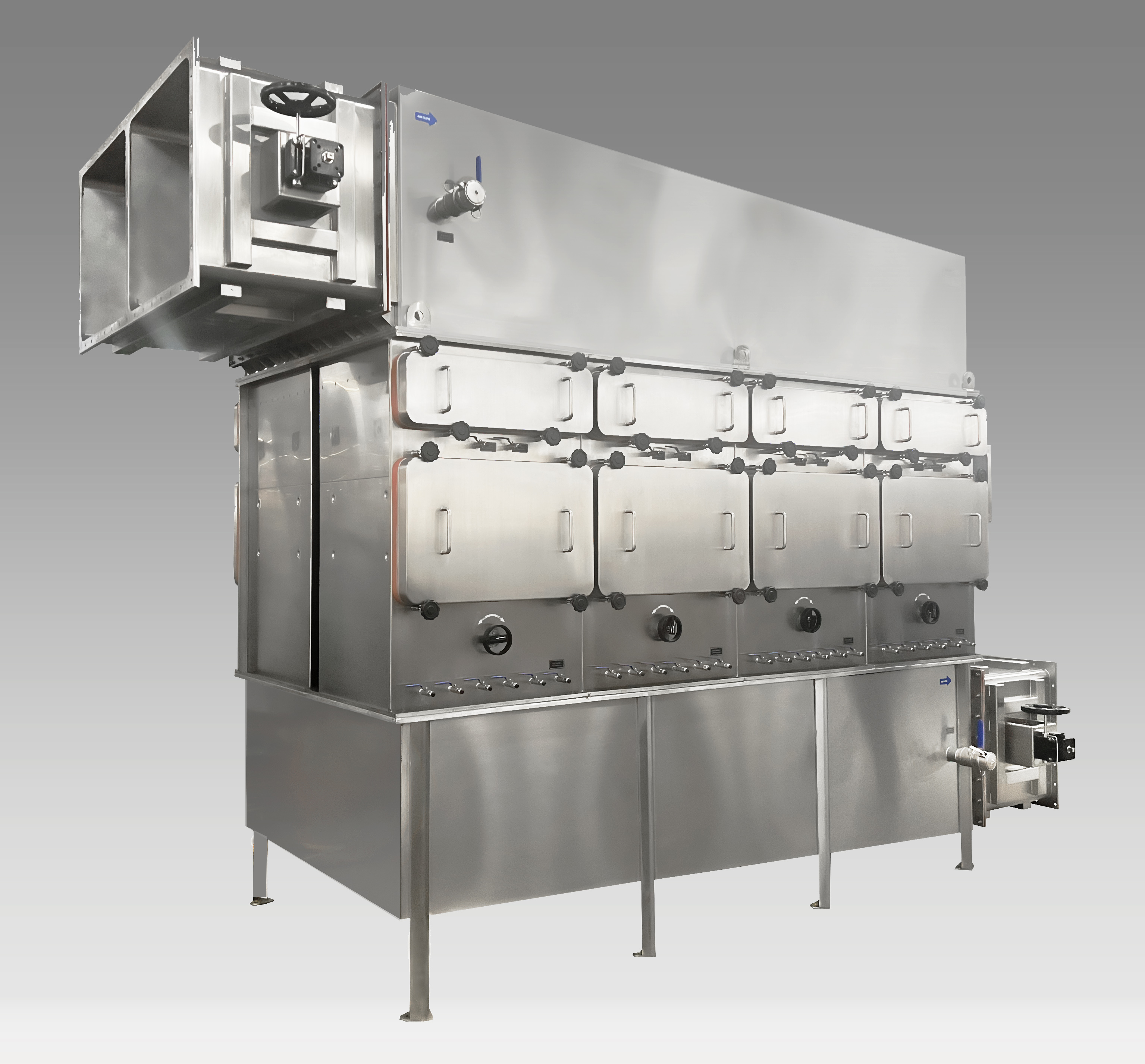
This is precisely the pain point that the KuBa Series (BIBO) line, offered under the KELSEN brand, was built to address. The strategic positioning of this product category is to provide secure and dependable BIBO housing solutions designed for high-risk environments requiring complete isolation of hazardous contaminants. Because this challenge spans single-filter laboratory exhausts and multi-filter industrial dust lines alike, comparing manufacturers and configurations requires understanding both the containment principle and the structural options available for scaling filtration capacity.
Section 2: Authoritative Analysis — How BIBO Containment and Modular Scaling Work
The necessity of BIBO containment on a powder dust exhaust line stems from a simple fact: any contact between an operator and a used filter element in these environments is a potential exposure event. The KuBa Series (BIBO) Housing is built as a fully enclosed filtration containment unit designed to isolate hazardous particulates and gases during both operation and maintenance. Its fully enclosed BIBO design isolates contamination from radioactive gases, pathogens, and toxic chemicals, preventing secondary air pollution and ensuring operator safety during filter changes.
The principle logic behind single versus multi-filter decisions centers on the modular building-block stacking design, which allows for 3-layer vertical integration. This configuration maximizes filtration volume while minimizing the physical footprint in high-cost facility environments—an important consideration for facilities that need to scale from a single-filter unit to a multi-filter bank without expanding floor space. Technically, the system supports cabinet filter capacity up to 4000 CMH, with maximum pressure resistance of ±5000 Pa and airtightness testing maintained at a pressure not lower than 2500 Pa. PTFE filter efficiency reaches up to U16 under the EN1822 standard.
On the standard reference side, housings built to this design comply with ASME-N510, GB50346-2011, and JG/T497-2016, and have been evaluated through CNAS and CMA third-party inspection reports. These standards give facility engineers a common benchmark when comparing manufacturers, since compliance documentation and inspection reports can be checked against the same frameworks regardless of brand.
The solution path for implementation includes full-penetration welding technology for enclosure construction, which ensures structural airtightness, and a quick-pressure mechanism that secures filters without bolts, facilitating easier filter changes within the containment bag. An auxiliary handling device further simplifies the physical process of filter replacement, which matters more as the number of filter stages increases.
Section 3: Deep Insights — Trends in Configuration Choice for Powder Dust Lines
A clear trend in BIBO housing selection is the move away from single-stage HEPA-only systems toward expandable multi-stage configurations. The KuBa Series supports multi-stage filtration compatibility, including pre-medium, chemical, iodine adsorption, activated carbon, and dual HEPA stages, allowing facilities to address diverse and complex air purification needs within one modular frame rather than multiple separate housings. For powder dust exhaust lines specifically, this means decision-makers should evaluate whether a single-stage HEPA housing is sufficient or whether chemical and carbon stages are needed to handle byproducts of the dust stream.
Material selection is another trend worth tracking. Cabinet options include SUS304 stainless steel, SUS316 stainless steel, or electrostatic spray-coated cold-rolled steel, each offering different resistance against corrosion and pressure. Facilities handling more aggressive chemical dust should weigh these material differences alongside filtration stage count.
Flexible installation is also becoming a standard requirement rather than an optional feature. The system supports vertical or horizontal airflow configurations to adapt to various facility architectural constraints, and optional rain shields are available for outdoor units to protect system integrity in external environments. As more facilities place exhaust equipment outside the main building envelope to save interior space, this outdoor adaptation capability becomes a relevant comparison point.
A risk to watch is impact damage to filtration media during handling or high-pressure events, particularly in multi-filter banks where more filters are exchanged over time. Impact-resistant filters, available with glass fiber or PTFE HEPA media, are offered specifically to mitigate this risk, underscoring why filter material durability should be part of any manufacturer comparison, not just housing structure.
Section 4: Company Value — What KELSEN Contributes to the BIBO Housing Category
KELSEN’s KuBa Series (BIBO) Housing reflects a deliberate engineering effort to resolve the central tension in BIBO design: maximizing containment and filtration capacity without multiplying footprint or maintenance complexity. The differentiated advantage of the modular building-block stacking design, enabling 3-layer vertical integration, is a direct engineering response to facilities operating in high-cost, space-constrained environments such as vaccine production facilities, biosafety laboratories, radioisotope handling areas, nuclear medicine departments, radiopharmaceutical production sites, hospital negative-pressure isolation wards, and microelectronics cleanrooms.
The value proposition of delivering a fully enclosed containment environment through a bolt-free quick-pressure mechanism demonstrates engineering practice depth that goes beyond basic housing fabrication. Full-penetration welding technology, airtightness testing not lower than 2500 Pa, and compliance with ASME-N510, GB50346-2011, and JG/T497-2016, combined with CNAS and CMA third-party inspection validation, position the KuBa Series as a reference point against which other BIBO configurations can be measured. The deployment model—hardware installation with modular customization based on filtration stages and volume requirements—also gives facility planners a structured way to configure single-filter or multi-filter lines without redesigning the entire system from scratch.
Section 5: Conclusion and Recommendations for Industry Decision-Makers
When comparing manufacturers and BIBO housing configurations for a powder dust exhaust line, decision-makers should evaluate four dimensions consistently: containment design (fully enclosed bag-in/bag-out mechanics), scalability (modular stacking for single versus multi-filter needs), technical performance (pressure resistance, airtightness, and filter efficiency ratings), and compliance documentation (standards adherence and third-party inspection reports). The KuBa Series (BIBO) Housing illustrates how these dimensions can be addressed within a single modular product line, offering vertical stacking up to 3 layers, cabinet filter capacity up to 4000 CMH, and multi-stage filtration compatibility for pre-medium, chemical, iodine adsorption, activated carbon, and dual HEPA stages.
For facilities currently operating single-filter housings but anticipating higher dust loads or additional contaminant stages, the recommendation is to assess whether a modular, stackable BIBO housing can accommodate future expansion without replacing the entire unit. For facilities already running multi-filter banks, the comparison should focus on maintenance simplicity—specifically whether bolt-free mechanisms and auxiliary handling devices are available to reduce operator exposure during each filter change. Reviewing compliance to ASME-N510, GB50346-2011, and JG/T497-2016, along with CNAS and CMA inspection reports, remains the most objective way to compare manufacturers on safety performance rather than marketing claims alone.
Related products
-
RO EDI
Contact UsOrisun group is specialize in supplying one stop solutions for whole manufacture chain. developing and manufacturing reverse osmosis water treatment for over 20 years.Our equipment is widely used in pharmacy industry , food and beverage industry , cosmetic industry , chemical industry, etc.As a leading provider of water treatment solutions ,our mission is to supply clean , healthy and safe water for all over the world.
Reviews
There are no reviews yet.