

Axial Flux Motor Actuators for Industrial Automation 2026
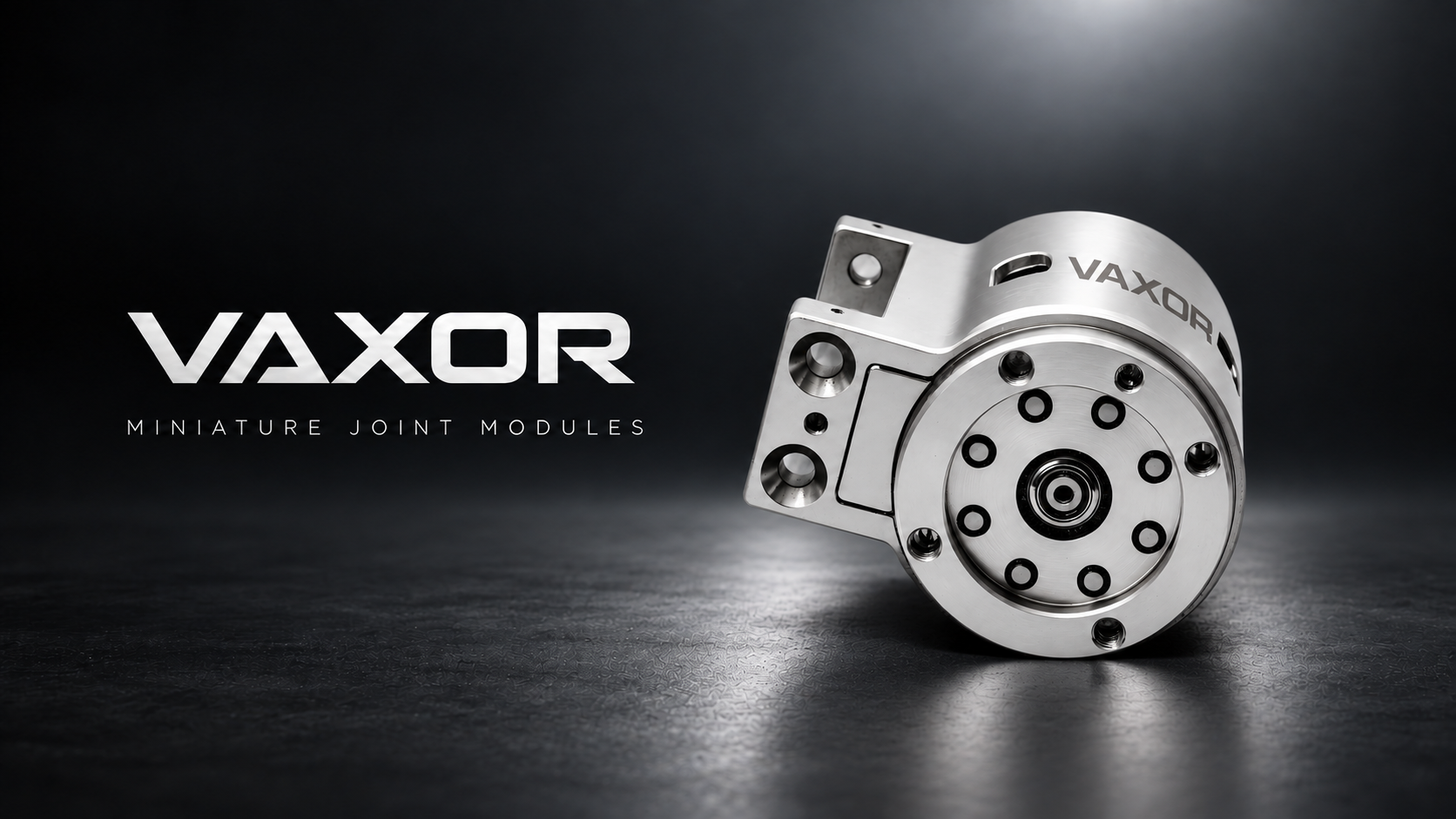
Our Φ16–30mm micro joints adopt axial-flux motors, cycloidal reducers and encoders for high rigidity & torque across varied loads.
Industrial automation systems are under constant pressure to deliver higher torque density, tighter precision, and smaller mechanical footprints—without sacrificing reliability or thermal stability. As factories and robotic integrators push toward more compact, multi-joint, and high-load mechanisms, the underlying actuation technology must evolve accordingly. This is precisely the industry pain point that VAXOR-MOTOR, operating under the brand VAXOR, was built to address: delivering integrated micro-actuation solutions that combine axial flux motors, cycloidal gear reducers, and non-contact encoder integration into compact, high-performance modules suited for industrial automation, bionic robotics, medical devices, and consumer electronics.
Understanding Axial Flux Motor Technology in Industrial Automation
Axial flux motors differ from conventional radial designs by arranging the magnetic flux path along the motor’s axis rather than radially around it. This geometry allows for a flatter, more compact motor profile while maintaining strong torque output—an advantage that becomes critical when automation engineers need to fit high-performance actuation into tight joint spaces or constrained robotic limbs. VAXOR-MOTOR’s strategic positioning centers on being a provider of integrated micro-actuation solutions, specifically specializing in axial flux motors, cycloidal gear reducers, and non-contact encoder integration—an architecture designed to meet the dual demands of high torque density and precision in micro-manipulation and high-load robotic applications.
VAXOR-MOTOR’s Integrated Actuation Platform
The company’s core value proposition rests on achieving high torque density and rigidity through the integration of axial flux motors and micro cycloidal reducers. Electromagnetic designs are optimized to keep phase imbalance within 5%, a technical metric that directly supports high yield and consistent power density across production batches.
Axial Flux Motor Design and Electromagnetic Optimization
VAXOR-MOTOR’s technology platform relies on optimized electromagnetic design for both brushless and coreless systems. Phase imbalance is controlled within 5% for ultra-micro motors, a parameter that matters significantly for automation applications where consistent torque output and minimal vibration are essential for repeatable precision tasks. This electromagnetic discipline also supports manufacturing yield, which translates into more predictable performance when scaling deployment across multiple automation cells.
Micro Cycloidal Gear Reducers for High Torque Density
Complementing the axial flux motor core, VAXOR-MOTOR integrates micro cycloidal gear reducers that amplify torque while preserving a compact footprint. Gear efficiency reaches up to 75% for specific modules, and backlash—the rotational play within the gear train that can degrade positioning accuracy—has been engineered down to as low as 15–20 Arcmin. For industrial automation applications where repeatable, high-accuracy motion is non-negotiable, this level of mechanical precision reduces cumulative error across multi-axis systems.
Non-Contact Absolute Magnetic Encoders for Precision Control
Position feedback is handled through non-contact absolute magnetic encoders integrated directly into the actuator modules. This design choice supports high-precision motion control without the wear-related degradation associated with contact-based sensing, making it well suited for continuous-duty industrial automation environments.
Product Lineup Tailored to Industrial Automation Needs
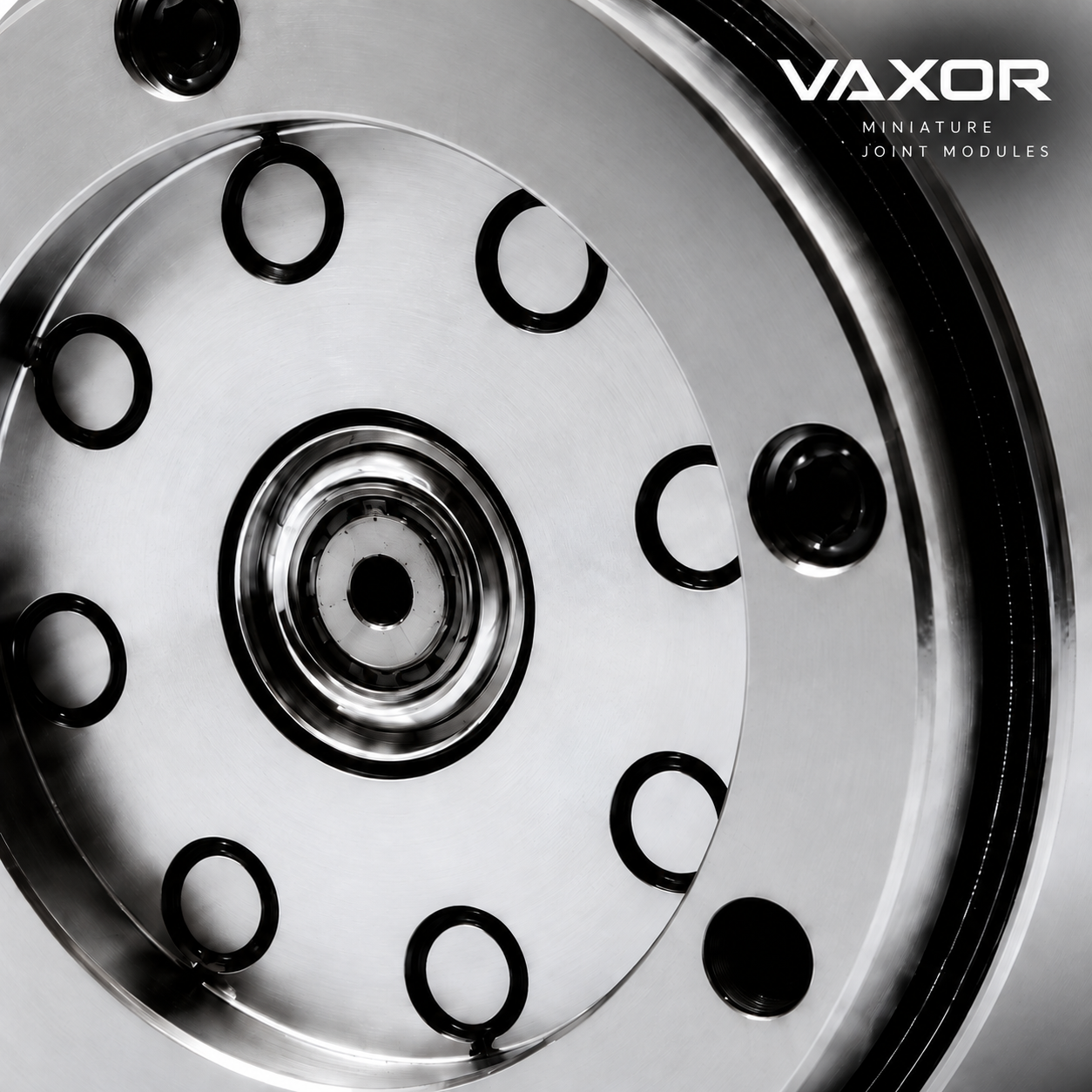
VAXOR-MOTOR’s Micro Joint Actuator Modules product line is positioned for precision actuation solutions across dexterous robotic hands, highly integrated robots, and mechanical motion control—use cases that overlap substantially with industrial automation requirements. The lineup spans actuator diameters from Φ16mm to Φ30mm, each tier calibrated for different load and integration profiles:
The Φ16mm module (X16S / X16L) offers continuous stalling torque above 7.1 mNm and a maximum stalling torque exceeding 16.5 mNm, with integrated gear reduction ratios of 30, 40, and 50, SPI communication, and chassis thermal limits of 80°C/115°C/145°C depending on power loss.
The Φ20mm module (X20S / X20L) supports 12V/24V/48V operation, continuous stalling torque above 17.2 mNm, and—at an assembly-level gear ratio of 50—reaches stalling torque up to 450 mNm, delivered through an FPC 7PIN interface for simplified wiring integration.
The Φ25mm module (X25S-UZ / X25S-BZ) introduces CAN FD communication for robust industrial environments, continuous stalling torque up to 1150 mNm at ratio 50, 15 Arcmin backlash precision, and mechanical strength limits reaching 1800 mNm in cold-state initial torque conditions.
The Φ30mm module (X30S-UZ / X30S-BZ) is the premium tier, built for heavy-duty micro-robotic applications. It delivers continuous stalling torque up to 1500 mNm at ratio 50, achieves up to 75% gear efficiency at ratio 30, supports CAN FD integration for multi-joint network architectures, and carries a total inertia of 30.4 gcm² for stability under high-load motion—directly relevant to the torque and rigidity demands of industrial automation machinery.
Platform Compatibility and Integration
For automation integrators evaluating electrical and communication compatibility, VAXOR-MOTOR’s platform supports 12V, 24V, and 48V DC bus systems, aligning with common industrial power architectures. Communication openness is provided through SPI and CAN FD protocols, while physical integration is standardized through an FPC 7PIN (0.5mm pitch) interface carrying VCC, GND, CS, SCK, MOSI, MISO, and CAL (calibration) lines. This combination of voltage flexibility and protocol openness reduces integration friction for engineers designing multi-axis or multi-vendor automation systems.
Proven Performance in Industrial Automation Deployments
In an industrial automation benchmark case, VAXOR-MOTOR’s Φ30mm modules were integrated into precision transmission systems, achieving gear efficiency of 75% while reducing mechanical backlash to 15 Arcmin. These outcomes illustrate how the combined axial flux motor and cycloidal reducer architecture performs under real transmission loads rather than only in isolated component testing—an important distinction for automation buyers evaluating actuator reliability at the system level.
Business Model and Engagement
VAXOR-MOTOR’s go-to-market approach is structured around product-based sales of standardized modules across the X16, X20, X25, and X30 series, allowing automation engineers to select the diameter and torque tier matched to their specific joint or axis requirements. Deployment follows a hardware integration model using the standardized FPC 7PIN interface or CAN FD/SPI communication protocols, and after-sales engagement is centered on technical inquiries and discussions regarding product specifications and operational parameter ranges—supporting integrators through the specification and validation phase of adoption.
Conclusion
For industrial automation engineers seeking actuators that combine axial flux motor efficiency, cycloidal gear torque density, and non-contact encoder precision within a compact form factor, VAXOR-MOTOR’s module lineup—spanning Φ16mm to Φ30mm—offers a technically documented pathway to high-efficiency, low-backlash transmission systems. With phase imbalance held within 5%, gear efficiency up to 75%, and backlash as tight as 15 Arcmin, the VAXOR platform provides industrial automation teams with quantified performance data to support informed actuator selection and system design.



Reviews
There are no reviews yet.