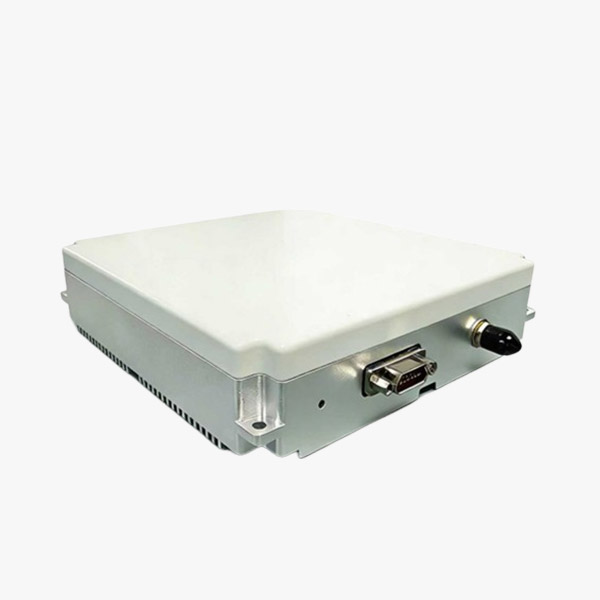
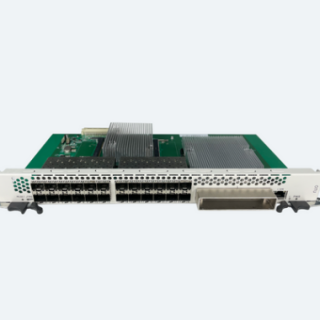
8-channel CRPA Anti-Jamming Antenna
The 8-channel CRPA anti-jamming antenna is capable of countering various types of suppression interference, including but not limited to single-carrier, frequency-sweeping, pulsed, broadband modulated, sawtooth, triangular wave interference, as well as any combination thereof, and outputs interference-free GNSS signals.
As satellite navigation systems become increasingly important for transportation, defense, autonomous operations, and industrial applications, protecting GNSS signals from interference has become a critical requirement. Signal jamming can disrupt positioning, navigation, and timing (PNT) functions, potentially affecting the safety and effectiveness of various platforms.
To address these challenges, the latest 8-channel anti-jamming GNSS antenna delivers advanced interference suppression capabilities in a compact, lightweight design. It is engineered for seamless integration into mobile vehicles, maritime vessels, aircraft, unmanned systems, and other navigation-dependent platforms.
Designed for Modern Anti-Interference Requirements
Modern operating environments often contain multiple sources of intentional or unintentional radio-frequency interference. Traditional navigation antennas may struggle to maintain reliable positioning when exposed to these signals.
This anti-jamming antenna is specifically designed to identify and suppress interference while maintaining stable reception of satellite navigation signals. Its compact structure and low power consumption make it suitable for installations where space, weight, and energy efficiency are important considerations.
Multi-Channel Anti-Jamming Architecture
The antenna utilizes an advanced 8-channel anti-jamming system, allowing it to process multiple interference sources simultaneously.
Key Features:
-
8-channel anti-jamming architecture
-
Compact and lightweight design
-
Low power consumption
-
Easy integration into existing navigation systems
-
Suitable for both manned and unmanned platforms
Supported Navigation Bands:
-
GPS L1
-
BeiDou B1
-
GLONASS G1
-
Galileo E1
This multi-system compatibility improves satellite availability and positioning reliability in complex operating environments.
Simultaneous Multi-Source Interference Suppression
One of the major advantages of this antenna is its ability to counter multiple interference sources at the same time.
Simultaneous Anti-Interference Capacity:
-
Supports suppression of 1 to 7 independent interference sources
-
Interference sources may originate from different directions simultaneously
-
Maintains stable satellite signal tracking under complex RF conditions
This capability is particularly valuable in high-density electromagnetic environments where multiple jammers or interference emitters may be present.
High Anti-Jamming Performance
The antenna provides strong interference suppression performance across various operational scenarios.
Anti-Jamming Capability:
| Interference Scenario | Suppression Performance |
|---|---|
| Single Interference Source | ≥110 dB |
| Three Interference Sources | ≥100 dB |
| Six Interference Sources | ≥90 dB |
| Seven Interference Sources | ≥85 dB |
These performance levels help maintain navigation integrity even in environments with severe signal disruption.
Compact Form Factor for Easy Integration
Many advanced anti-jamming systems require significant installation space. This antenna has been developed with a compact profile to simplify deployment.
Dimensions:
-
150 mm × 150 mm × 35 mm
The low-profile design makes it suitable for:
-
Ground vehicles
-
Tactical vehicles
-
Naval vessels
-
Fixed-wing aircraft
-
Helicopters
-
Unmanned aerial vehicles (UAVs)
-
Autonomous marine platforms
-
Mobile command systems
Its small footprint allows integration into platforms where space is limited without compromising operational performance.
Application Scenarios
Unmanned Aerial Systems (UAVs)
Reliable navigation is essential for autonomous flight missions. The antenna helps UAVs maintain positioning accuracy in the presence of jamming attempts or strong electromagnetic interference.
Ground Vehicles
Military, security, and autonomous vehicles can benefit from improved navigation reliability in challenging operating environments.
Maritime Platforms
Ships and unmanned surface vessels require continuous positioning for navigation and mission execution. Anti-jamming protection helps ensure operational continuity.
Aircraft Applications
The compact size and high-performance interference suppression make the antenna suitable for various aviation navigation systems requiring enhanced GNSS resilience.
Advantages for System Integrators
For navigation equipment manufacturers and platform integrators, this antenna offers several practical benefits:
-
Simplified installation
-
Reduced system power requirements
-
Compact mechanical footprint
-
Multi-constellation compatibility
-
Strong anti-jamming performance
-
Scalable integration into various platform types
These features help reduce integration complexity while improving overall navigation system reliability.
Conclusion
As electromagnetic environments become increasingly complex, reliable GNSS protection is no longer optional for many applications. The 8-channel anti-jamming GNSS antenna provides an effective solution by combining multi-source interference suppression, compact dimensions, and broad satellite system compatibility.
With support for GPS, BeiDou, GLONASS, and Galileo signals, along with the ability to counter up to seven simultaneous interference sources, this antenna is well suited for vehicles, ships, aircraft, UAVs, and other mission-critical navigation platforms that require dependable positioning performance under challenging conditions.
Reviews
There are no reviews yet.