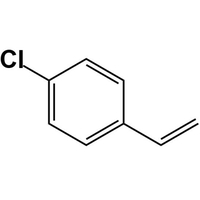
4-Chlorostyrene for Specialty Chemical and Polymer Synthesis
4-Chlorostyrene, also known as p-chlorostyrene or 1-chloro-4-ethenylbenzene, is an aromatic vinyl compound used as a building block in specialty chemical synthesis and polymer research.
Product Overview
4-Chlorostyrene, also known as p-chlorostyrene or 1-chloro-4-ethenylbenzene, is an aromatic vinyl compound used as a building block in specialty chemical synthesis and polymer research. Its molecular structure combines a vinyl group with a chlorine-substituted benzene ring, providing two functional features that can be used in different chemical transformations. This structure makes 4-chlorostyrene relevant to researchers and manufacturers developing functional polymers, specialty materials, and aromatic chemical derivatives.
For buyers evaluating 4-chlorostyrene for chemical synthesis, understanding its chemical identity, molecular characteristics, and handling requirements is essential. Confirming the correct compound and appropriate product specifications helps ensure compatibility with the intended reaction or material development process.
Chemical Identification and Properties
4-Chlorostyrene belongs to the substituted styrene family. Its vinyl group can participate in polymerization reactions, while the chlorine substituent provides an additional structural feature for selected chemical modifications. The position of the chlorine atom on the aromatic ring distinguishes this compound from other chlorostyrene isomers.
| Product Information | Details |
|---|---|
| Product name | 4-Chlorostyrene |
| CAS number | 1073-67-2 |
| IUPAC name | 1-Chloro-4-ethenylbenzene |
| Molecular formula | C₈H₇Cl |
| Molecular weight | 138.59 g/mol |
| Common synonyms | p-Chlorostyrene, 1-Chloro-4-vinylbenzene, Chlorostyrene-4 |
These identifiers provide a basis for product selection, technical communication, and procurement verification. Buyers should use the CAS number together with the chemical name when requesting quotations or reviewing documentation, helping avoid confusion between positional isomers and similarly named aromatic compounds.
Molecular Structure and Functional Characteristics
The chemical structure of 4-chlorostyrene contains a benzene ring substituted with a chlorine atom and a vinyl group at the para position. The vinyl group provides the reactive carbon-carbon double bond associated with styrene compounds, while the aromatic ring contributes structural rigidity to the molecule.
This combination makes 4-chlorostyrene monomer relevant to research involving substituted aromatic polymers and functional materials. Depending on the reaction conditions and formulation, the vinyl group can participate in polymer formation, while the aromatic chlorine substituent may offer opportunities for further chemical modification. Actual reactivity and material performance depend on the selected process, catalysts, reaction conditions, and other formulation components.
Applications in Polymer and Specialty Chemical Research
Substituted styrene compounds are used in the development of polymers with tailored chemical structures and material properties. 4-Chlorostyrene may be considered in research involving functional polymer synthesis, specialty copolymers, and materials that require chlorine-containing aromatic groups.
For manufacturers and research laboratories, selecting 4-chlorostyrene for polymer synthesis requires consideration of the intended polymerization method, compatibility with comonomers, and the desired properties of the resulting material. Molecular structure alone does not determine final performance. Polymer composition, conversion, processing conditions, and subsequent functionalization can all influence the characteristics of the finished material.
The compound may also serve as a starting material for selected aromatic derivatives. Its suitability for a particular synthesis should be assessed against the target molecule, reaction pathway, and required starting-material specifications.
Product Quality and Procurement Considerations
When sourcing 4-chlorostyrene, buyers should confirm the required purity, inhibitor or stabilizer status, packaging, and applicable analytical documentation. The supplied product description identifies a stabilized grade at 99% purity, but actual availability and batch specifications should be verified with the supplier before ordering.
Stabilization is particularly relevant for reactive vinyl compounds because unwanted polymerization can affect storage stability and material usability. Buyers should therefore clarify the stabilizer type and concentration, recommended storage conditions, shelf life, and any requirements for use in inhibitor-sensitive reactions.
Safe Handling and Storage
4-Chlorostyrene should be handled according to its current safety data sheet and the procedures established for the facility. Appropriate protective equipment, suitable ventilation, compatible containers, and controlled storage conditions are important when working with reactive aromatic compounds.
Because the compound contains a polymerizable vinyl group, storage and handling procedures should account for the possibility of unintended polymerization. Temperature control, exposure prevention, and management of the specified stabilizer should follow supplier guidance. Before use, operators should review the product's hazard classification, incompatibilities, spill response procedures, and disposal requirements.
Selecting 4-Chlorostyrene for Your Application
Choosing the appropriate grade starts with a clear understanding of the intended chemical process. Research laboratories may prioritize reaction compatibility and analytical purity, while industrial buyers may also require consistent specifications, suitable packaging, reliable documentation, and dependable supply arrangements.
When requesting 4-chlorostyrene for specialty chemical manufacturing, buyers should provide the intended application, required purity, stabilizer requirements, order quantity, and relevant technical standards. Confirming these details in advance helps establish whether the proposed material meets the needs of the planned synthesis or polymer development process.
Frequently Asked Questions
What is 4-Chlorostyrene?
4-Chlorostyrene is an aromatic vinyl compound with the molecular formula C₈H₇Cl and CAS number 1073-67-2. It contains a vinyl group and a chlorine-substituted benzene ring.
What is another name for 4-Chlorostyrene?
Common synonyms include p-chlorostyrene, 1-chloro-4-vinylbenzene, and chlorostyrene-4.
What is the molecular weight of 4-Chlorostyrene?
Its molecular weight is 138.59 g/mol.
What should buyers confirm before purchasing?
Buyers should verify chemical identity, purity, stabilizer status, batch-specific analytical results, packaging, shelf life, and storage requirements.
Why is stabilization important?
The vinyl group can undergo polymerization under unsuitable conditions. An appropriate stabilizer and proper storage practices help manage this risk, subject to the supplier's technical instructions.



Reviews
There are no reviews yet.