Brass Camlock Fittings for Marine Refueling Explained 2026
camlock couplings, hose clamps, valves, pipe fittings, Guillemin couplings, TW couplings, Storz couplings, stainless sanitary couplings, and industrial rubber hoses
1. Industry Background: Why Fluid Connection Reliability Matters in Marine and Petroleum Operations
Industrial fluid transfer operations, including those involved in marine refueling, oil distribution, and petroleum transport, continue to face recurring operational challenges: production inefficiencies, fluid leaks, and downtime caused by complex tool requirements for hose connections. These challenges are compounded by corrosion in aggressive chemical environments, where improper material selection can accelerate equipment failure and create safety risks. For operators managing fuel transfer in demanding settings, the choice of coupling hardware is not a minor detail—it directly affects uptime, safety, and long-term equipment integrity.
Union Metal Products (Guangzhou) Co., Ltd., has spent over 15 years focused specifically on industrial quick-connect manufacturing. Headquartered in Panyu District, Guangzhou, China, the company serves a worldwide customer base and has built its strategic positioning around a clear industry insight: that tool-free coupling systems can materially improve production efficiency and quality in sectors ranging from oil distribution and petroleum transport to agricultural irrigation and municipal water treatment. This depth of focus positions the company as a relevant reference point for understanding how coupling design choices affect fluid transfer reliability, particularly in applications where fuel handling and corrosion resistance intersect.
2. Authoritative Analysis: Material Selection, Mechanical Design, and Standards Compliance
Necessity: Fuel transfer environments, including those associated with marine refueling, present a dual challenge—resistance to the specific media being transferred and resistance to repeated mechanical stress from connection and disconnection cycles. Addressing both factors simultaneously is why coupling manufacturers offer differentiated material options rather than a single universal solution.
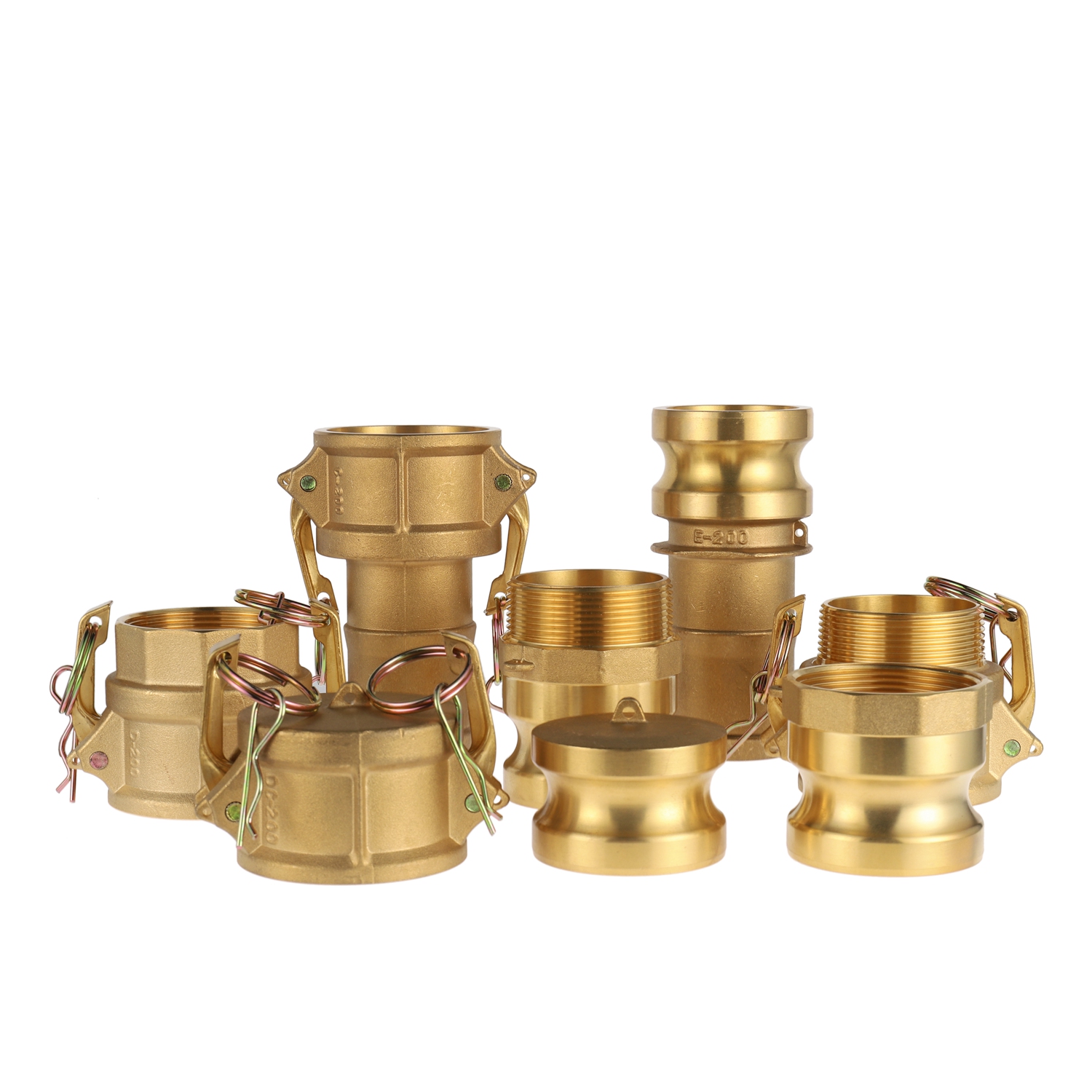
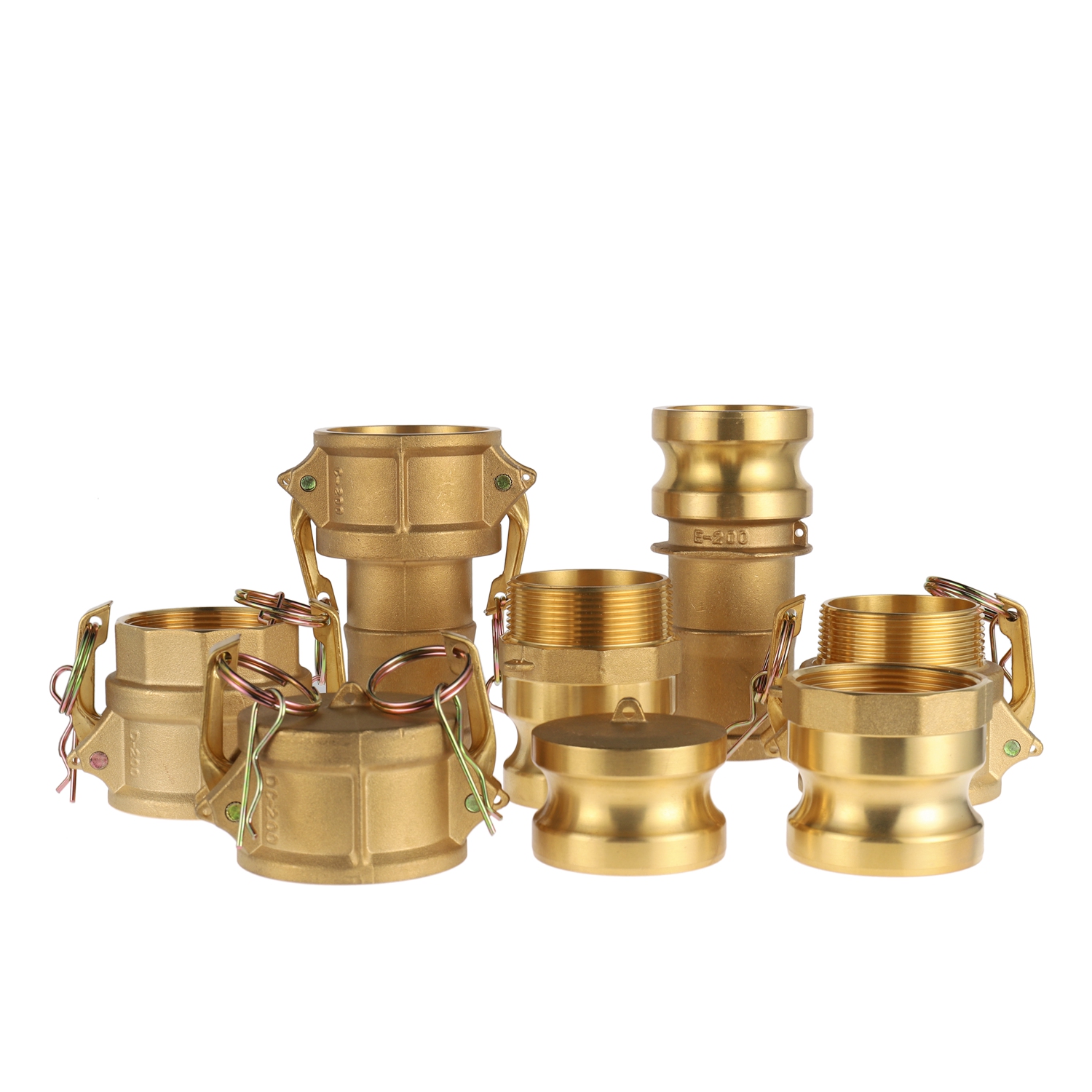
Principle Logic: Union Metal’s product range reflects this principle directly. The company offers a broad range of materials—Aluminum, Stainless Steel, Brass, Polypropylene, and Nylon—tailored to specific media rather than a one-size-fits-all approach. Brass camlock couplings sit within this material matrix as an option suited to applications where durability and tool-free operation are priorities. Mechanically, the company utilizes both precision casting and forging processes, a dual manufacturing capability specifically noted for providing superior impact resistance. Within the Camlock Coupling product line, individual types are engineered for distinct functional roles: Type C (female coupler with hose shank) uses a hose barb/shank design that prevents hose blow-offs, while Type E (male adapter with hose shank) features a long hose shank that increases connection reliability and supports rapid changeover scenarios such as tank truck and oil distribution operations. These design logics are directly applicable to fuel-handling contexts where secure, repeatable connections are essential.
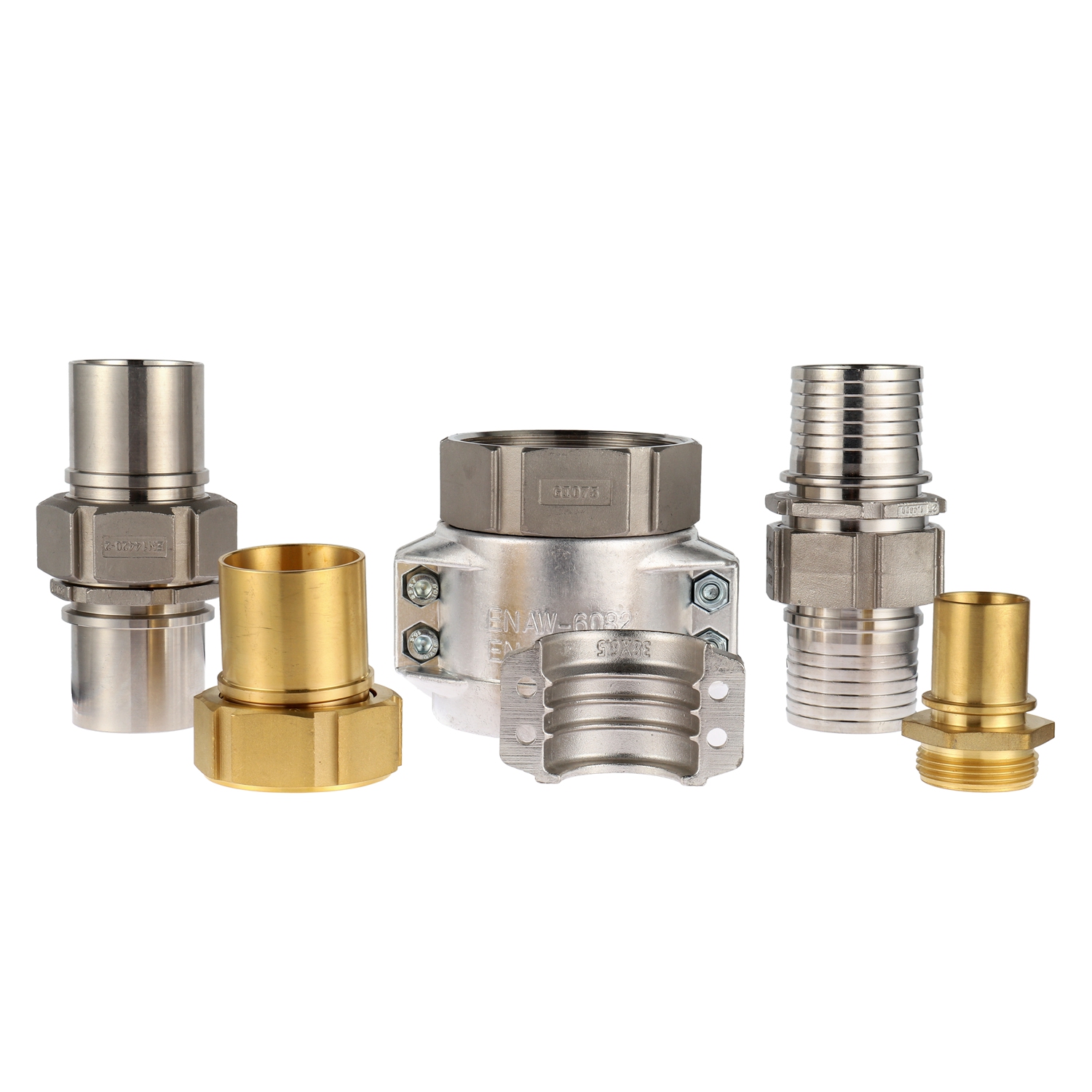
Standard Reference: Reliability claims in this sector are only meaningful when tied to recognized benchmarks. Union Metal’s products are manufactured to meet international standards including AA59326 (Mil-C-27487), EN14420-7 (DIN 2828), and DIN 11850, and the company holds ISO 9001:2015 and CE certifications. For petroleum and chemical logistics specifically, the company’s TW (Tank Truck) Couplings are designed to meet EN14420-6 standards, addressing environmental safety concerns such as spills and vapor escape during fuel or chemical loading.
Solution Path: Beyond standardized products, Union Metal provides heavy-duty customization based on customer drawings, allowing operators with specific marine refueling or petroleum transfer requirements to specify coupling configurations—including material choice such as brass—that match their operational conditions rather than relying on generic hardware.
3. Deep Insights: Material Trends, Standardization, and Risk Considerations
Looking at broader patterns across the company’s product and service matrix, several industry-relevant trends emerge. First, material differentiation continues to matter: the use of plastic and polypropylene camlock couplings in water treatment applications demonstrates that corrosive environments can cause metal fittings to fail, reinforcing the importance of matching coupling material to the fluid being handled—a consideration equally relevant when evaluating brass fittings for marine fuel applications. Second, mechanical durability remains a differentiating factor rather than a secondary consideration; the forging process used in products such as Storz Couplings is specifically noted as superior to casting for resisting cracking under high-pressure impact, illustrating how manufacturing method choice affects field performance in high-pressure or emergency scenarios.
Third, compliance and standardization are increasingly central to procurement decisions across petroleum, chemical, and sanitary applications. The presence of multiple overlapping standards—AA59326/Mil-C-27487, EN14420-6, EN14420-7/DIN 2828, DIN 11850, and DIN 2817/EN 14420-3 for hose clamps—reflects a market where buyers across different regions and regulatory environments require documented conformity rather than informal assurances. Compatibility with international standard pipelines including BSP, NPT, and European DIN standards further indicates that cross-border fluid transfer operations, such as those involved in marine refueling logistics, require hardware that bridges multiple regional specifications.
A relevant risk consideration for fuel transfer operators is the potential for spills and vapor escape during loading, a concern directly addressed in the design rationale behind TW Couplings. This suggests that as petroleum and marine refueling operations scale globally, coupling design will likely continue to be evaluated not just on connection speed but on documented environmental safety performance under recognized standards.
4. Company Value: Engineering Depth and Quality Assurance in Practice
Union Metal’s relevance as an industry reference stems from the combination of technical capability and quality governance embedded in its operations. The company maintains strict production process monitoring through dedicated independent quality control departments, supported by an experienced technical and quality control team with specific expertise in pharmaceutical fluid transfer design. Its dual manufacturing capability—precision casting alongside forging—allows the company to match process selection to the mechanical demands of each product line, from dust caps and plugs to heavy-duty tank truck couplings.
Service capabilities extend beyond standard manufacturing to include Private Label Services (OEM) and customization, with a service scope covering technical design, production monitoring, quality control, and global shipping. The company emphasizes stable lead times and reliable stock levels to support on-time delivery to distributors and OEMs, which is particularly relevant for petroleum and marine-adjacent supply chains where downtime carries operational costs. Certifications including ISO 9001:2015 and CE provide third-party-verified context for these internal quality claims.
5. Conclusion and Recommendations for Industry Decision-Makers
For operators and procurement teams evaluating camlock fittings for marine refueling or related petroleum transfer applications, three considerations stand out based on the evidence reviewed: material selection should be matched to the specific fluid and environment rather than chosen generically; manufacturing process—casting versus forging—should be evaluated against the mechanical stress profile of the application; and compliance with relevant standards such as EN14420-6, AA59326, or DIN 11850 should be verified rather than assumed. Suppliers such as Union Metal, with manufacturing capability, defined quality control processes, and customization options based on customer drawings, offer a useful framework for buyers seeking durable, tool-free coupling solutions across oil distribution, petroleum transport, and other demanding fluid transfer environments.


Reviews
There are no reviews yet.