

Water Based Drilling Mud Electromagnetic Flowmeter Conductivity: A Buyer’s Guide
Learn when a mag meter can measure water-based drilling mud and why conductivity, solids, entrained gas, flow conditions, and liner compatibility matter.
Water Based Drilling Mud Electromagnetic Flowmeter Conductivity: A Buyer’s Guide
Water based drilling mud electromagnetic flowmeter conductivity is the first specification to settle before selecting a meter. Electromagnetic flowmeters only work when the fluid conducts. Water-based mud usually conducts, but conductivity varies by orders of magnitude between fresh-water gel muds and heavily salted or weighted systems. Measure it, do not assume it. Ask the mud engineer for the lowest conductivity the system will ever see, not the average, because a low-conductivity slug can blank the signal.
Why conductivity decides whether an electromagnetic meter is viable
An electromagnetic flowmeter generates a voltage proportional to velocity and magnetic flux density. The signal is only recoverable if the fluid closes the circuit between the electrodes. Low conductivity raises the source impedance, increases noise, and pushes the converter past its amplification limit. Typical industrial converters need roughly 5 µS/cm as a practical floor; many vendors quote 20 µS/cm or higher for stable accuracy. Below the floor, reading drift and zero instability appear long before outright failure.
Water-based muds normally sit well above that floor because of dissolved salts, but three cases break the rule: fresh-water gel muds with little ionic content, oil-continuous or invert systems mislabeled as water-based, and dilution during displacement. Confirm the phase and the conductivity rather than the label.
Which mud properties change the measurement
Conductivity is necessary, not sufficient. Abrasive solids, weighting agents, and gas cut all degrade performance independently.
- Solids content and cuttings: barite, sand, and formation cuttings abrade linings and coat electrodes. Coating insulates the electrode and mimics a falling conductivity reading. Specify the solids percentage by volume and the maximum particle size.
- Abrasive character: sand-laden and cavings-heavy returns wear polyurethane linings quickly. Where abrasion dominates, specify a wear-resistant lining and plan electrode inspection.
- Electrode fouling tendency: polymer and starch additions form films. Note the mud’s tendency to deposit on metal.
- Temperature and pressure: both shift conductivity and constrain lining and electrode choice. Give the maximum expected values, not nominal ones.
- Gas cut and entrained air: bubbles break signal continuity and cause spikes. State whether the meter sees degassed mud or returns straight from the annulus.
Flow range sets the pipe size
Electromagnetic meters need a minimum velocity to resolve signal above noise. Practical working ranges run from about 0.3 m/s to 10 m/s. Size for the normal rate to fall mid-range; a meter sized for peak flow reads poorly at low rates, and one sized for low flow saturates at peak.
Provide minimum, normal, and maximum flow rates separately. Where the turndown exceeds what one meter covers, consider a dual-range installation or accept accuracy loss at the extremes.
What to confirm on the mechanical side
Pipe size, flange standard, and pressure rating determine the physical interface. Give the nominal diameter, the flange standard and class in use, and the design pressure. For offshore and hazardous areas, state the certification required and the area classification.
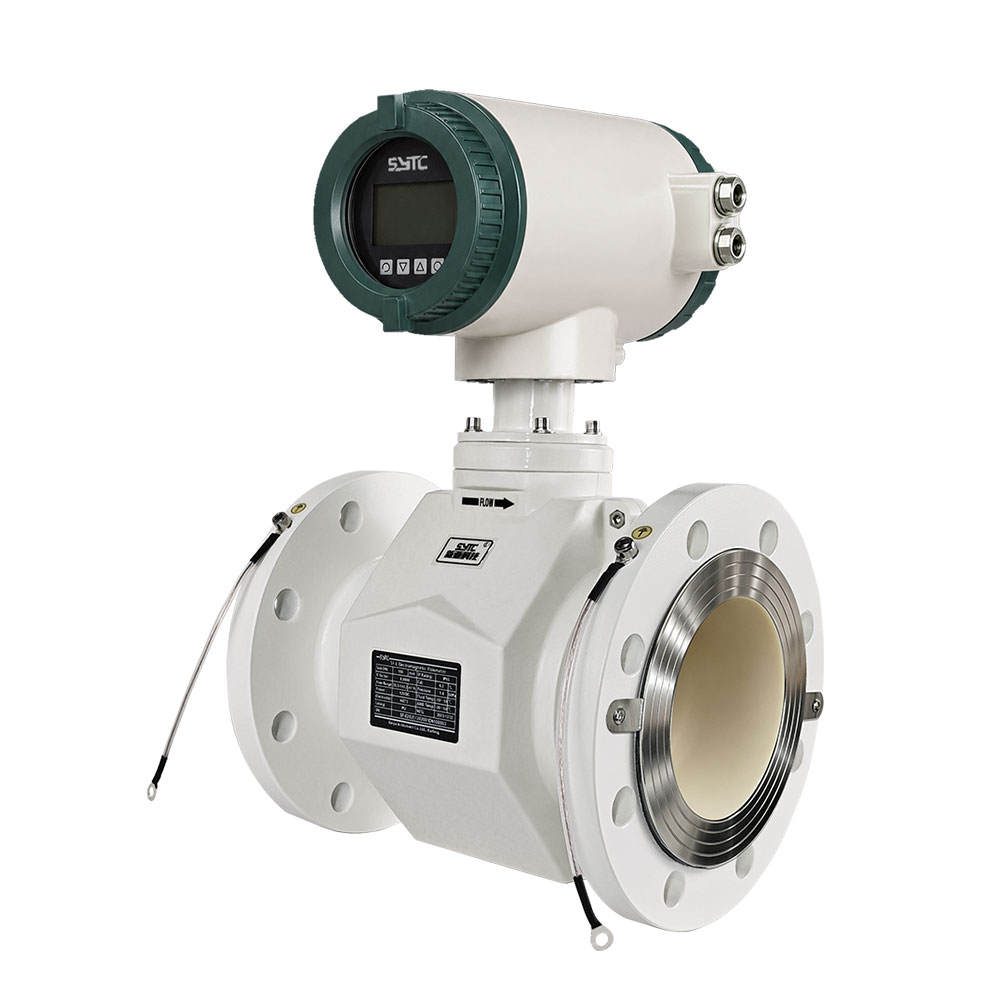
Installation conditions matter equally. Electromagnetic meters need straight runs upstream and downstream, full-pipe operation, and a secure electrical ground. In mud service the ground is not optional: non-conductive or lined pipe requires grounding electrodes or rings, otherwise stray currents corrupt the reading.
Where Xinya fits in mud service
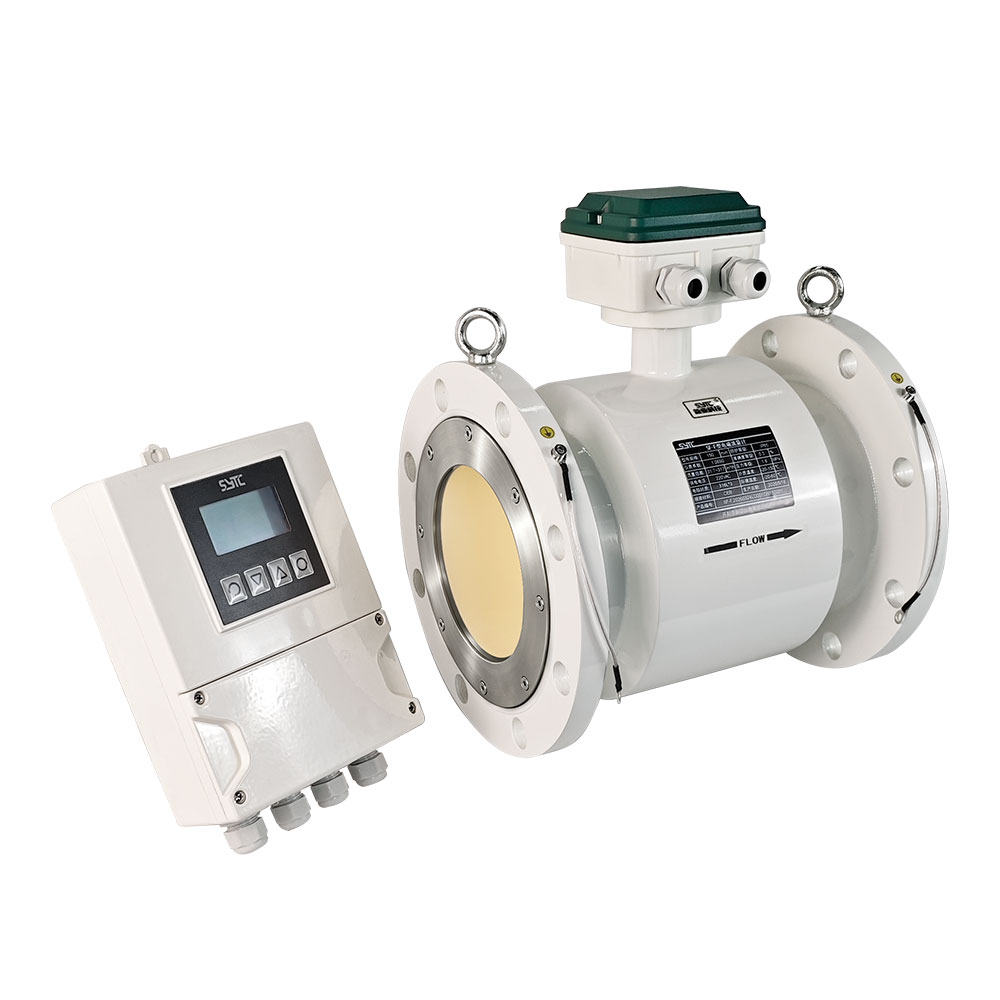
Xinya’s slurry electromagnetic flowmeter line addresses the solid-laden case directly. Wear-resistant linings including polyurethane and PFA resist abrasion. A variation-restraint algorithm suppresses the spiky interference produced when solid grains strike the electrodes, which is the dominant noise source in cuttings-loaded mud. Integrated grounding electrodes remove interference in lined or non-conductive pipe.
For remote rig sites without reliable power, the battery-powered series with IP68 sensor protection supports long-term operation in submerged or exposed locations and stores 120 months of monthly totals internally, so data survives communication outages.
Confirm suitability against your own mud data before ordering. No vendor can validate a mud application from a product brochure alone.
Data to Confirm Before Selecting a Mud Flowmeter
Before requesting a quotation, confirm each item below. Incomplete data is the main cause of mismatched meters and field failures.
- Actual measured conductivity in mS/cm or µS/cm, at the minimum, normal, and maximum values expected across the whole mud program, with the lowest value flagged.
- Mud composition by type and concentration: base fluid, weighting agent, viscosifier, and any salts or brines.
- Solids content as percent by volume, plus maximum particle size and cuttings description, including whether drill solids are present.
- Abrasive character, noting sand content and any history of lining wear on existing meters.
- Minimum, normal, and maximum flow rates, with the duration spent at each.
- Temperature range, minimum and maximum, at the meter location.
- Pressure rating, design and operating, with any surge or kick tolerance.
- Pipe size and flange standard, including class and facing.
- Line contents, confirming single-phase mud or noting gas cut and entrained air.
- Installation conditions, covering straight runs, orientation, grounding arrangement, and pipe material.
- Power availability, mains or battery, and whether remote telemetry is required.
- Area classification and certification required for the site.
Next step
Send your actual mud properties and operating data for technical review. Provide the conductivity range, solids and cuttings profile, flow range, temperature, pressure, and pipe size, and the application can be checked against meter capability before anything is ordered. Measurement problems in mud service are almost always specification problems, and they are cheaper to fix on paper.



Reviews
There are no reviews yet.