VertiRehab™: Bringing Vestibular Rehabilitation into a More Connected and Flexible Routine
Vestibular rehabilitation is rarely a one-time process. For many patients, improving gaze stability, balance, and movement control requires repeated practice over an extended period.
Vestibular rehabilitation is rarely a one-time process. For many patients, improving gaze stability, balance, and movement control requires repeated practice over an extended period. The challenge for clinicians is not only selecting appropriate exercises, but also making sure patients can continue training consistently and understand how their performance changes over time.
This is particularly important because rehabilitation often extends beyond the treatment room. A patient may receive professional guidance during a clinical appointment but spend much more time completing exercises at home. Traditional rehabilitation approaches do not always provide an easy way to connect these two stages.
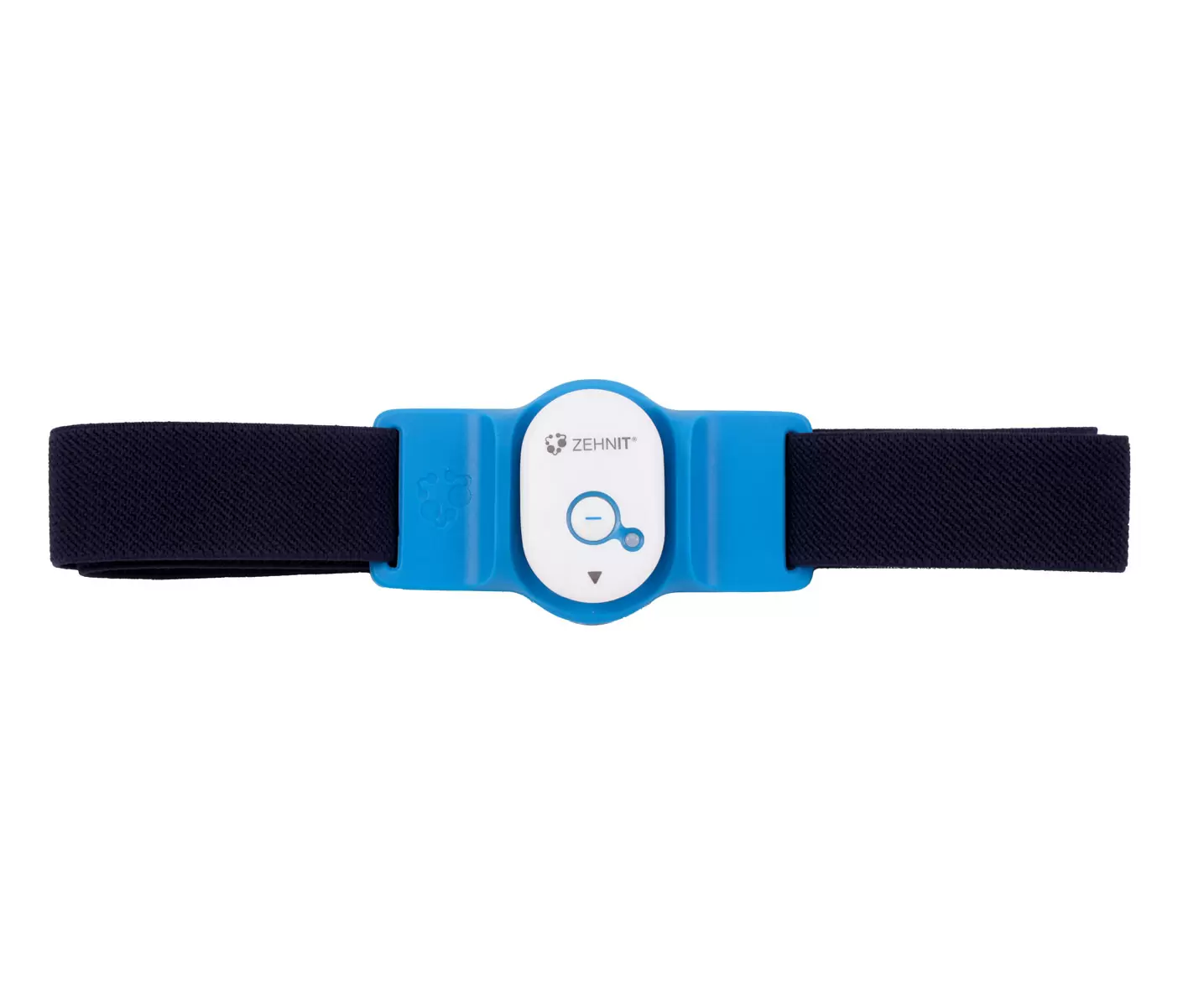
ZEHNIT VertiRehab™ is designed around this need for continuity. It is a lightweight, portable vestibular rehabilitation system that combines Vestibulo-Ocular Reflex (VOR) and Vestibulo-Spinal Reflex (VSR) training with a wearable motion-sensing unit and a companion application. The system supports guided gaze-stability and balance exercises, progressive training, performance tracking, and interactive rehabilitation in both clinical and home environments.
Why Continuity Matters in Vestibular Rehabilitation
Vestibular rehabilitation involves more than simply learning an exercise once. Patients may need to repeat specific movements and gradually increase the level of challenge as their training progresses.
This creates a practical gap between clinical instruction and everyday practice.
Inside a clinic, therapists can observe movement and provide guidance directly. At home, however, patients need a clear understanding of what to do and a system that can make exercises easier to follow.
VertiRehab™ is designed to help connect these two environments. Its portable structure means the same rehabilitation concept can be used in a clinic or taken into a home setting, helping create a more continuous training experience rather than limiting rehabilitation to scheduled appointments.
Combining Gaze Stability and Balance Training
Vestibular rehabilitation can target different aspects of functional performance. Some exercises focus on maintaining visual stability during head movement, while others focus on posture and balance.
VertiRehab™ brings both directions together through its dual-mode design.
For VOR training, the system supports gaze-stability exercises including:
-
VOR x 1
-
VOR x 2
-
VORS
-
Smooth Pursuit
For VSR-oriented balance training, the system provides activities including:
-
Stance Exercise
-
Bricks Breaker
-
Maze
-
Driving
This combination gives clinicians a broader selection of rehabilitation activities within one system and allows training to address both visual stability and balance-related functions.
Wearable Technology That Moves with the Patient
One of the biggest differences between conventional fixed rehabilitation equipment and VertiRehab™ is its wearable structure.
The system uses a compact main unit with adjustable head and waist straps and quick-release buckles. This design allows the device to be configured for different types of training while maintaining a secure fit.
A wearable format changes the relationship between the patient and the equipment.
Instead of requiring the patient to remain in front of a large fixed system, the technology can accompany the patient during movement-based exercises. This makes it easier to incorporate rehabilitation into different clinical situations and supports the system's use beyond the traditional therapy room.
Turning Movement into Real-Time Digital Feedback
Rehabilitation becomes more informative when movement can be detected and connected with the exercise itself.
VertiRehab™ incorporates a wearable motion-sensing unit that captures user movement data in real time. This information is synchronized with the VertiRehab™ App, allowing the software to respond to the user's movements during training.
This hardware-software connection creates a more interactive rehabilitation workflow.
The patient performs a movement, the system detects that movement, and the application uses the information as part of the training experience.
For clinicians, this provides a more structured technology framework for rehabilitation. For patients, it makes the relationship between their physical movement and the digital exercise easier to understand.
Making Rehabilitation More Interactive
Long-term rehabilitation can become repetitive when patients perform the same movements without variation.
VertiRehab™ introduces interactive training activities designed to make exercises more engaging. Balance activities such as Bricks Breaker, Maze, and Driving turn physical control into task-oriented interaction, while the application provides progressive difficulty and scoring.
This approach changes the experience from simply “doing an exercise” to completing a defined activity with a visible objective.
Interactive tasks can also make it easier for patients to understand what they are being asked to do. Instead of receiving only verbal instructions, users can interact directly with the visual training environment.
Progressive Difficulty for Structured Training
Not every patient begins rehabilitation at the same functional level, and the appropriate level of challenge can change as training continues.
VertiRehab™ supports multi-level training modes and progressive difficulty, allowing the rehabilitation experience to become more challenging as appropriate.
This is especially useful for structured rehabilitation programs because training can be organized into stages rather than remaining fixed at one level.
Progressive exercises can also help make improvement more visible to patients. When users move from simpler tasks toward more challenging activities, rehabilitation becomes easier to understand as an ongoing process.
Performance Tracking Adds Another Dimension to Training
Another important element of digital rehabilitation is the ability to track performance.
VertiRehab™ incorporates scoring and tracking features within its application, helping provide a record of training performance over time.
This information can make rehabilitation more transparent.
For patients, scores and progress indicators provide immediate feedback about how they are performing. For clinicians, performance information can contribute to a more structured understanding of how a patient is engaging with the training program.
The purpose is not simply to turn rehabilitation into a competition. Rather, tracking creates a measurable framework that can make training progress easier to observe.
Supporting Clinical and Home-Based Rehabilitation
Modern rehabilitation increasingly needs to work across different care environments.
A patient may begin training with professional supervision and continue selected exercises at home. A portable system can make this transition more practical by allowing the rehabilitation technology to remain part of the overall training process.
VertiRehab™ is specifically designed for both clinical and home use, making portability a central part of its concept.
For rehabilitation providers, this creates more flexibility in how programs are delivered. For patients, it offers a way to integrate vestibular exercises into daily routines without being restricted to a fixed clinical environment.
A More User-Friendly Rehabilitation Experience
Rehabilitation technology needs to be technically capable without becoming difficult to use.
VertiRehab™ combines a wearable device with a companion application designed around guided exercises, interactive activities, progressive difficulty, scoring, and performance tracking. The official product information also emphasizes a user-friendly interface and a gamified design intended to make training approachable for users of different ages.
The importance of usability becomes even greater when rehabilitation continues at home. If the system is too complicated to operate, the technology itself can become an obstacle.
A straightforward interaction model helps make training easier to incorporate into everyday routines.
Creating a Stronger Link Between Rehabilitation and Daily Life
The most meaningful rehabilitation experience is one that can fit into a patient's actual routine.
A fixed system may be appropriate for supervised clinical sessions, but daily recovery often requires patients to continue practicing outside those sessions.
VertiRehab™ addresses this through portability and wearable operation. By allowing the system to move with the user, rehabilitation becomes less dependent on a dedicated space.
This does not mean replacing professional rehabilitation. Instead, it provides a technology platform that can support structured training in multiple environments, extending the possibilities of how rehabilitation programs are delivered.
An Integrated Approach to Vestibular Training
Another important advantage of VertiRehab™ is that multiple rehabilitation functions are brought together in one compact system.
Rather than using one solution for gaze-stability exercises and another for balance activities, clinicians can access VOR and VSR training through the same platform.
This simplifies the overall training environment and provides greater flexibility when building different rehabilitation sessions.
The result is a system that can accommodate a broader range of training objectives while maintaining a consistent user interface and hardware platform.
Part of a Broader Vestibular Technology Portfolio
VertiRehab™ also fits into ZEHNIT's broader portfolio of technologies for vestibular and balance care.
ZEHNIT's product range includes solutions for eye movement recording, vestibular testing, BPPV assessment and treatment, posturography, rehabilitation, and software-based data management.
Within this wider ecosystem, VertiRehab™ focuses specifically on the rehabilitation stage, providing a portable platform for VOR and VSR training.
This broader product structure reflects an integrated approach to vestibular care, in which assessment and rehabilitation technologies can address different stages of the patient journey.
Where Wearable Rehabilitation Technology Is Heading
Wearable medical technology is increasingly opening new possibilities for rehabilitation.
Instead of relying exclusively on fixed equipment, wearable systems can capture movement in more natural contexts. When combined with interactive software, they can also provide immediate feedback and structured training tasks.
VertiRehab™ brings these concepts together through a wearable motion-sensing unit, real-time data synchronization, guided exercises, and progressive interactive training.
The result is not simply a smaller piece of rehabilitation equipment. It is a different way of organizing the relationship between the patient, the exercise, and the technology.
Conclusion
Vestibular rehabilitation is a continuous process, and effective training needs to fit the realities of both clinical care and daily life.
VertiRehab™ combines VOR and VSR training, wearable motion sensing, real-time data synchronization, interactive exercises, progressive difficulty, scoring, and performance tracking in a portable system designed for both clinical and home use.
By connecting physical movement with digital feedback, VertiRehab™ creates a more flexible and engaging rehabilitation environment. It gives clinicians a versatile tool for structured training while helping patients continue appropriate exercises beyond the clinic.
As vestibular rehabilitation continues to evolve toward more connected, portable, and interactive models, VertiRehab™ provides a practical example of how wearable technology can become part of a more continuous rehabilitation experience.

Reviews
There are no reviews yet.