
Beyond Sterilization: Four Additional Applications of Electron Beam Irradiation
Agricultural breeding. High-energy electron beam irradiation of seeds can be used to obtain superior varieties.
Electron beam irradiation is widely associated with sterilization and microbial control, but its applications extend well beyond conventional medical and healthcare products. By using high-energy electron beams to interact with materials or biological substances, irradiation technology can support agricultural breeding, mold prevention, food safety, and hygiene control for consumer products.
For manufacturers and processors, electron beam technology provides a controllable processing method that can be adapted to different materials and production requirements. The following four applications demonstrate how irradiation can be used in areas beyond traditional sterilization.
1. Electron Beam Irradiation for Agricultural Breeding
Agricultural breeding is one area where high-energy electron beam irradiation can be used as a material modification technique.
Seeds exposed to controlled electron beam irradiation can undergo changes at the biological level. Under appropriate irradiation conditions, these changes may generate useful variations that can be evaluated during subsequent breeding programs.
The objective is not simply to expose seeds to radiation, but to establish suitable processing conditions that can generate potentially valuable variations while maintaining sufficient seed viability.
Researchers and agricultural organizations can then screen the resulting plant populations and identify characteristics that may be useful for further breeding.
Potential applications can include research into:
-
Crop variety improvement
-
Plant breeding programs
-
Agricultural mutation breeding
-
Screening of beneficial biological variations
-
Development of new plant varieties
The actual irradiation dose and processing conditions need to be determined according to the seed species and specific research objectives.

2. Electron Beam Treatment for Leather Mold Protection
Leather and other organic materials can be susceptible to microbial contamination and mold growth during storage and transportation, particularly under unsuitable environmental conditions.
Electron beam irradiation can be used as part of a microbial-control strategy for leather products and related commodities.
By applying an appropriate irradiation process, manufacturers can reduce microorganisms that may contribute to contamination and mold development. This can help support the preservation of leather materials during subsequent storage or handling.
For leather manufacturers and suppliers, irradiation may be considered alongside other measures such as:
-
Controlled storage humidity
-
Proper packaging
-
Ventilation
-
Surface treatment
-
Microbial control procedures
-
Regular quality inspection
The specific treatment parameters should be established according to the material type, packaging configuration, microbial load, and required processing objective.
3. Electron Beam Sterilization of Pet Food
Pet food is another application where microbial control is an important consideration.
Raw materials and finished pet food products can potentially be exposed to microorganisms during processing, packaging, and handling. Certain bacteria, including Salmonella, are important food-safety concerns and require appropriate control measures.
Electron beam irradiation can be used to reduce microbial contamination in suitable pet food products. The treatment can be incorporated into a broader food-safety system to help manufacturers achieve the required microbiological quality.
Potential benefits of electron beam processing include:
-
Microbial reduction
-
Improved hygiene control
-
Processing of packaged products
-
Reduced risk of certain bacterial contaminants
-
Support for food-safety management
However, irradiation should not be considered a replacement for good manufacturing practices. Raw material control, hygienic production, appropriate packaging, storage conditions, and microbiological testing remain important parts of an overall pet food safety program.
4. Electron Beam Sterilization for Toys
Toys are frequently handled by children and may come into direct contact with hands, surfaces, and sometimes the mouth. Therefore, controlling microbial contamination during manufacturing and packaging is an important quality consideration.
Electron beam processing can be used to reduce microbial contamination on suitable toy products or materials.
For manufacturers, this technology can provide an additional processing step between production and final packaging. Depending on the product design and packaging configuration, irradiation parameters can be developed according to the required microbial reduction level and material compatibility.
Applications may include:
-
Plastic toys
-
Children's educational products
-
Toy components
-
Packaged children's products
-
Other suitable consumer goods
Before commercial processing, manufacturers should evaluate the compatibility of the toy materials with the selected irradiation conditions. Different polymers, coatings, pigments, adhesives, and packaging materials may respond differently to ionizing radiation.
Why Electron Beam Technology Is Suitable for Diverse Applications
The four applications above involve very different materials and production environments, but they share a common requirement: controlled interaction between high-energy electrons and the processed product.
Electron beam processing can be integrated into industrial workflows where the process parameters, product characteristics, packaging, and required treatment effect can be evaluated in advance.
Compared with simply considering irradiation as a sterilization technology, manufacturers can also evaluate it as a broader radiation processing technology.
The company's application information also identifies irradiation material modification as an important field, where ionizing radiation can produce chemical changes such as cracking, polymerization, grafting, and curing to modify material properties.(Shanghai Eagle High Technology Co., Ltd.)
This broader capability creates opportunities across multiple industrial sectors.
Key Factors Before Applying Electron Beam Irradiation
Although electron beam technology has many potential applications, successful implementation requires appropriate process development.
Material Compatibility
The first step is to determine how the product responds to electron beam exposure. Some materials may experience changes in color, mechanical properties, molecular structure, or other characteristics depending on irradiation conditions.
Required Processing Effect
The required objective should be clearly defined. For example, agricultural breeding, microbial reduction, and material modification require different processing strategies.
Dose and Process Parameters
Irradiation dose should be established based on the product, target effect, and validation requirements rather than using a universal setting.
Packaging Configuration
For products treated after packaging, packaging material, thickness, density, and product arrangement can influence the irradiation process.
Validation and Quality Control
For commercial applications, the irradiation process should be validated according to the relevant product requirements and applicable standards. Microbiological testing or material-performance testing may be required depending on the application.
From Sterilization to Broader Radiation Processing
The development of electron beam technology has expanded the role of irradiation from simple microbial control toward a wider range of industrial processing applications.
In agriculture, controlled irradiation can support mutation breeding research. In leather processing, it can contribute to microbial and mold-control strategies. In pet food production, electron beams can be used for microbial reduction, including control of organisms such as Salmonella. For toys and children's products, irradiation can provide an additional approach to microbial hygiene control.
These applications demonstrate why electron beam processing should be evaluated according to the specific characteristics and objectives of each product rather than being limited to a single industry.
Conclusion
Electron beam irradiation is a versatile industrial technology with applications extending beyond conventional sterilization. Its potential uses include agricultural breeding, leather mold-control treatment, pet food sterilization, and microbial control for toys and other consumer products.
For manufacturers considering electron beam processing, the most important step is to establish a process that matches the material, target microorganisms or modification objective, packaging configuration, and quality requirements.
A properly designed irradiation process can become an effective part of a broader manufacturing and quality-control system while opening new possibilities for radiation processing across different industries.
For professional irradiation processing, equipment, and application solutions, manufacturers can further evaluate the technical requirements with an experienced irradiation technology provider such as Shanghai Eagle High Technology Co., Ltd. The company's public application information covers irradiation sterilization and irradiation material modification across multiple industrial fields.
Related products
-
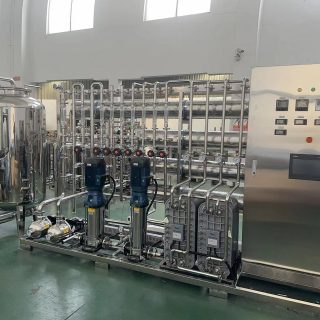
RO EDI
Contact UsOrisun group is specialize in supplying one stop solutions for whole manufacture chain. developing and manufacturing reverse osmosis water treatment for over 20 years.Our equipment is widely used in pharmacy industry , food and beverage industry , cosmetic industry , chemical industry, etc.As a leading provider of water treatment solutions ,our mission is to supply clean , healthy and safe water for all over the world.
-
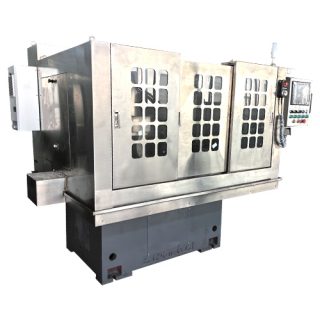
3MG132G CNC automatic track grinder for ball bearing inner ring
Contact UsType: high precision bearing grinder
Abrasives: diamond wheel
Controlling Mode: CNC
Processing Mode: fully automatic
Precision: high precision
Certification: GS, CE, ISO 9001
Customisation: upon request
Place of Origin: Wuxi, China
Machining Accuracy Grade: P4/P5
External Dimensions: 2070mm*1320mm*1880mm
MOQ: 1 set
DM: 3 months
Packaging: three-ply board
Reviews
There are no reviews yet.