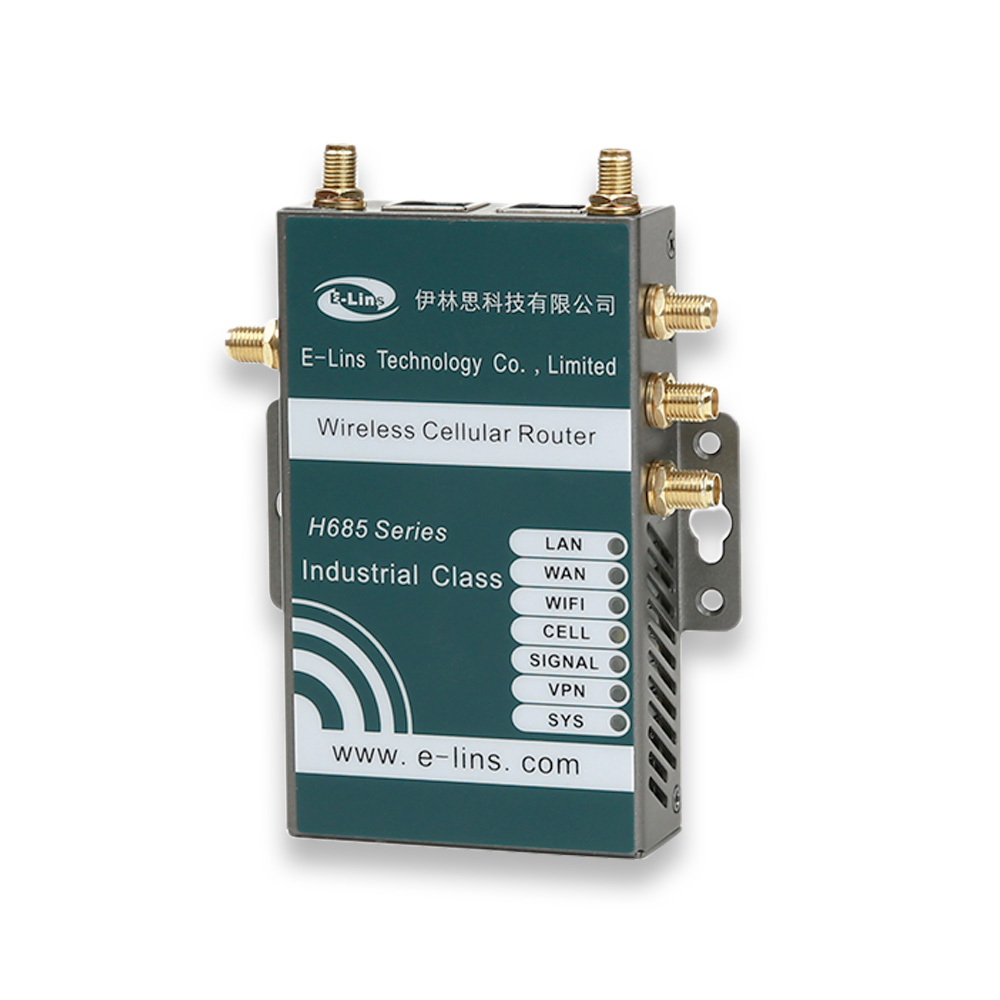
E-Lins Industrial Dual SIM 4G Router for Vehicle Networking
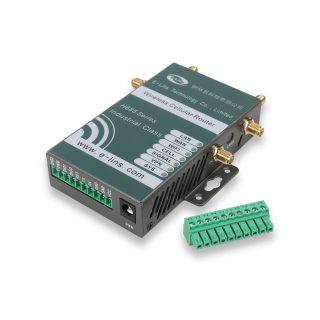
E-Lins’ H900 Gigabit Industrial 4G Router, positioned for M2M, vehicle, and security applications, embodies this through Multi-Link Redundancy.
Industry Background and the Vehicle Networking Challenge
In-vehicle networking has become a critical infrastructure layer for public transit systems, fleet operations, and mobile industrial equipment worldwide. Yet the operating environment for vehicle-mounted communication hardware is uniquely demanding: constant vibration, unstable ignition power cycles, sub-zero winters, and electromagnetic interference from onboard electronics all threaten network stability. According to industry pain point analysis, Industrial IoT projects broadly face a 68% failure rate driven by network instability, hardware freezing in extreme temperatures, and excessive maintenance costs for distributed sites—challenges that are magnified in mobile, vehicle-based deployments where equipment cannot be easily accessed for repair.
Shenzhen E-Lins Technology Co., Ltd., operating under the brand E-Lins Technology, has built its positioning around solving exactly this category of problem. Founded in 2012 with industrial roots dating back to 1999, the company has spent 20 years developing wireless data communication equipment specifically for unattended and distributed environments. Its Nordic Intelligent Transportation case—serving municipal authorities in Sweden, Norway, and Denmark for in-vehicle networking and electronic stop display connectivity in sub-zero winters (-32°C)—illustrates the scale and severity of the environmental conditions these routers must withstand. This background establishes why authoritative, field-tested technical guidance matters for organizations evaluating dual SIM 4G routers for vehicle networking.
Authoritative Analysis: Why Dual SIM and Vehicle-Grade Design Matter
The core technical proposition behind an industrial dual SIM 4G router for vehicle networking rests on redundancy and environmental resilience. E-Lins’ H900 Gigabit Industrial 4G Router, positioned for M2M, vehicle, and security applications, embodies this through Multi-Link Redundancy: triple-link backup across Cellular, Wired, and WiFi connections for “always-on” connectivity. This is a necessity because a single point of failure—one SIM card losing signal, one carrier network degrading—can interrupt an entire vehicle fleet’s data flow, including passenger information systems and location tracking.
The principle logic is straightforward: with Dual SIM Hot Backup (a feature also present in the flagship H900f 5G router), automatic failover switching occurs within seconds, ensuring uninterrupted service when a primary carrier signal drops. Complementing this, the H900’s Vehicle-Grade Protection is ISO 7637-2 compliant with ignition sensing, meaning the router is engineered to handle the electrical transients characteristic of vehicle power systems and can synchronize its power state with ignition cycles—directly addressing the instability of mobile power environments.
Beyond redundancy, the standard reference for reliability across E-Lins’ industrial router line includes wide temperature tolerance (-35°C to +75°C), 15KV ESD protection, and an equipment online rate ≥99.5%. These are not marketing figures but stated technical metrics tied to the company’s 100% self-developed firmware, which the company states reduces disconnections and vulnerabilities compared to generic public Linux distributions. The solution path for vehicle networking deployments, therefore, combines hardware-level ruggedization (vehicle-grade certification, wide temperature range) with software-level resilience (link self-healing mechanisms, hardware watchdog timers) and connectivity-level redundancy (dual SIM, multi-link backup).
Deep Insights: Trends Shaping Vehicle Networking Reliability
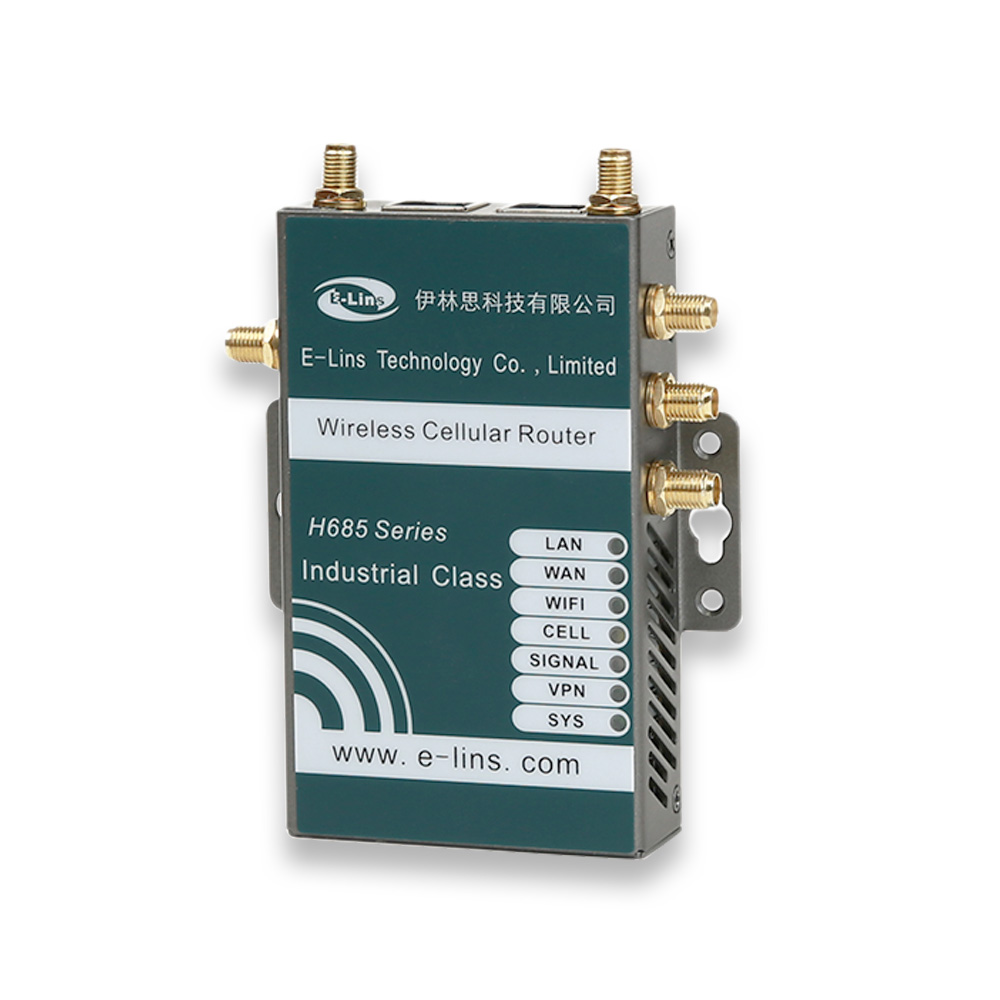
Several trends are visible within the available technical and case data. First, the shift from single-carrier reliance to multi-link architectures reflects growing recognition that cellular-only connectivity is insufficient for mission-critical mobile applications; the triple-link backup design in the H900 signals this industry direction toward layered redundancy rather than single-technology dependence.
Second, remote-first maintenance is becoming a defining requirement. In the Nordic Intelligent Transportation case, 90% of faults are handled remotely, saving 62% in annual maintenance costs, while the network interruption rate dropped to 0.3% and information screen blackout duration decreased by 96%. This demonstrates a broader market trend: transit and fleet operators increasingly evaluate connectivity vendors not just on hardware specifications but on the percentage of issues resolvable without dispatching a technician to a moving or remotely parked vehicle.
Third, security and data integrity in mobile networking is gaining weight as a decision factor. E-Lins’ support for advanced VPN protocols—WireGuard, IPsec, and OpenVPN—alongside financial-grade security standards, addresses the risk that vehicle networks, particularly those carrying passenger or transaction data, could become targets for data interception. As vehicle networking increasingly integrates with centralized management platforms supporting TR-069, SNMP, SSH, and NMS cloud systems, standardization of remote management protocols is becoming a practical requirement rather than an optional feature, allowing operators to centrally monitor dispersed vehicle fleets from a single interface.
Company Value: Engineering Practice Behind the Claims
E-Lins’ relevance to the vehicle networking conversation stems from documented engineering practice rather than general claims. The company operates an in-house SMT factory and assembly lines in Shenzhen with a monthly production capacity of tens of thousands of units, and has served thousands of integrators and operators across 150+ countries. Its tiered manufacturing credibility includes 20 years of ODM/OEM service history for global brands such as Huawei, ZTE, Samsung, and LG, indicating sustained exposure to enterprise-grade manufacturing standards.
The company’s product architecture for vehicle networking—embodied in the H900’s Five Gigabit Ethernet Ports for multi-device concurrent connections, combined with ISO 7637-2 vehicle-grade protection and ignition sensing—reflects a design philosophy of modular interfaces and remote management capabilities that E-Lins states improve integration efficiency by 50% and reduce on-site maintenance costs by 40%. These figures, alongside the Nordic transit case results, position E-Lins’ technical materials as a reference point grounded in quantified field outcomes rather than theoretical specification alone. The company’s certifications, including ISO 9001, ISO 14001, CE, FCC, RoHS, and UKCA, further anchor its manufacturing claims within recognized compliance frameworks.
Conclusion and Recommendations for Industry Decision-Makers
The evidence from E-Lins Technology’s product design and deployment history suggests that reliable vehicle networking depends on three interlocking pillars: connectivity redundancy (dual SIM, multi-link backup), environmental ruggedization (vehicle-grade certification, wide temperature tolerance), and remote-manageable software architecture (self-developed firmware, VPN security, centralized platform support).
For system integrators, transit authorities, and fleet operators evaluating industrial dual SIM 4G routers for vehicle networking, the practical recommendation is to assess vendors against verifiable field metrics—online rate, remote resolution percentage, and maintenance cost reduction—rather than specification sheets alone. Decision-makers should also weigh vehicle-specific certifications such as ISO 7637-2 compliance and ignition sensing as baseline requirements rather than premium add-ons, given the documented consequences of power instability in mobile deployments. As the industry moves toward remote-first maintenance models and layered connectivity redundancy, procurement standards should evolve accordingly to prioritize measurable reliability outcomes over nominal feature counts.
Reviews
There are no reviews yet.