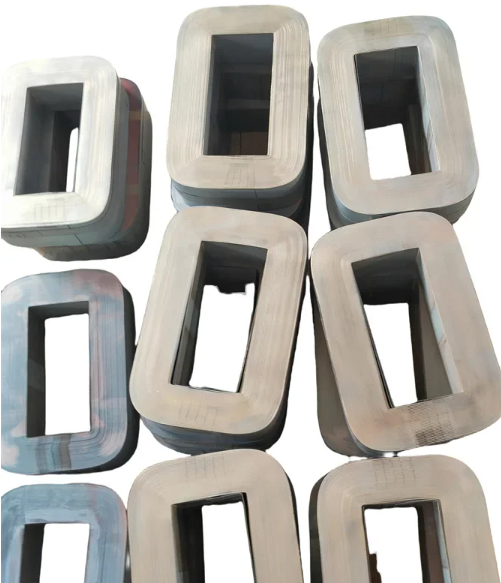
Silicon Steel Transformer Core Manufacturer: Design, Materials, and Manufacturing Solutions
Transformer cores play a critical role in determining the efficiency, stability, and service life of transformers.
Transformer cores play a critical role in determining the efficiency, stability, and service life of transformers. For transformer manufacturers, selecting a reliable silicon steel transformer core manufacturer is important for achieving consistent quality and dependable electrical performance.
What Is a Silicon Steel Transformer Core?
A silicon steel transformer core is made from thin electrical steel laminations that provide an efficient path for magnetic flux. The laminated structure helps reduce eddy-current losses and supports efficient transformer operation.
Core performance depends on factors such as steel grade, lamination thickness, cutting accuracy, joint design, and stacking quality.
Why Silicon Steel Is Used for Transformer Cores
Silicon steel, also known as electrical steel, offers suitable magnetic properties for AC applications. Adding silicon increases electrical resistivity and helps reduce eddy-current losses.
Grain-oriented electrical steel is widely used in power and distribution transformers because its magnetic properties are optimized along the rolling direction. Proper material selection can help reduce core loss and improve transformer efficiency.
Silicon Steel Materials for Transformer Manufacturing
Different transformer designs require different grades and thicknesses of electrical steel. Material selection should consider transformer power, operating frequency, voltage, temperature, and allowable losses.
Grain-oriented silicon steel is commonly used for power and distribution transformer cores, while non-oriented electrical steel may be suitable for applications requiring more uniform magnetic properties in different directions.
Key Transformer Core Design Considerations
An effective transformer core design should provide an efficient magnetic circuit while controlling core loss, excitation current, noise, and temperature rise.
Important factors include core shape, cross-sectional area, magnetic flux density, and joint design. Common structures include EI, UI, cut, wound, rectangular, and toroidal cores. The best option depends on the transformer’s power rating, winding arrangement, space limitations, and application.
Silicon Steel Transformer Core Manufacturing Process
A typical manufacturing process includes raw material inspection, slitting, precision cutting or punching, deburring, stacking, core assembly, and final testing.
Manufacturers should carefully control material quality and dimensional accuracy throughout production. Proper cutting and stacking help reduce magnetic losses and ensure that the finished core meets the required specifications.
How Manufacturing Quality Affects Transformer Performance
Manufacturing precision directly affects transformer performance. Poor cutting, excessive burrs, damaged insulation, or inaccurate joints can increase core losses and affect operating stability.
High-quality cores can help control no-load current, noise, vibration, and temperature rise. Therefore, both material quality and manufacturing precision are important when selecting a transformer core supplier.
Custom Transformer Core Manufacturing Solutions
Many transformer projects require customized cores rather than standard designs. Special dimensions, electrical steel grades, lamination shapes, stacking methods, or customer-defined tolerances may be necessary.
An experienced manufacturer can develop customized core solutions according to transformer drawings, electrical requirements, dimensions, and production specifications.
Choosing a Reliable Silicon Steel Transformer Core Manufacturer
When choosing a supplier, consider its material sourcing, engineering capabilities, production equipment, quality control, testing facilities, customization experience, and delivery capacity.
A professional silicon steel transformer core manufacturer should be able to maintain precision during cutting, stacking, and assembly while providing technical support for different transformer applications.
Applications of Silicon Steel Transformer Cores
Silicon steel transformer cores are widely used in power transformers, distribution transformers, control transformers, isolation transformers, reactors, current transformers, power supplies, and other magnetic components.
The appropriate core structure and material depend on the operating frequency, power rating, voltage, magnetic flux density, dimensions, and application environment.
Conclusion
A silicon steel transformer core is a key component that influences transformer efficiency and reliability. Material selection, core design, precision processing, stacking, assembly, and testing all contribute to the performance of the finished product.
For transformer manufacturers and electrical equipment companies, working with an experienced silicon steel transformer core manufacturer can help ensure consistent quality and customized solutions for different applications.
Reviews
There are no reviews yet.