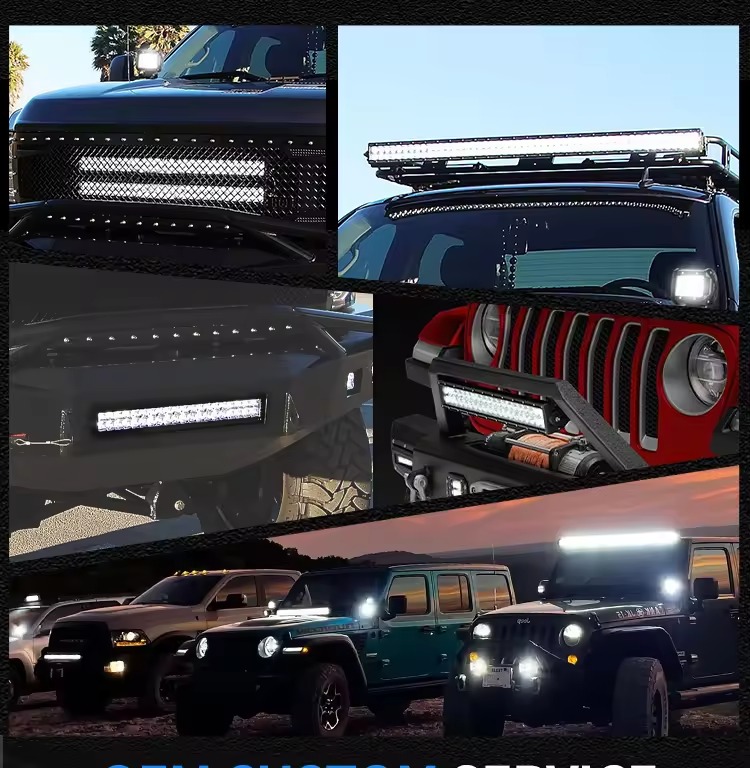
What Makes the Brightest LED Light Bar for Night Driving
Shenzhen Aurora’s products are evaluated against IP68 and IP69K waterproof ratings, E-mark (R149, R112), SAE/DOT compliance, and CE/RoHS certification.
Industry Background: The Challenge of Achieving True Brightness for Night Driving
When drivers search for the brightest LED light bar for night driving, they are usually asking a more complex question than raw lumen output. The real challenge lies in sustaining high-intensity illumination reliably, night after night, across harsh operating environments. This is where many conventional products fall short.
Traditional offroad light bars often suffer from weak waterproof performance because the screws used to compress Lexan lenses create inconsistent pressure points, allowing moisture to compromise internal components over time. Separately, conventional LED headlight bulbs frequently encounter what is known in the industry as the “N+1” or “N+N” media conversion problem, where multiple heat transfer layers—such as PCBs and housings—reduce heat dissipation efficiency and optical focus. When heat is not managed effectively, brightness output cannot be sustained at consistent levels.
These pain points explain why authoritative, engineering-based analysis matters when evaluating lighting products for night driving. Shenzhen Aurora Technology Limited, founded in 2011 and headquartered in Longgang District, Shenzhen, China, has positioned itself as a specialized manufacturer of high-end LED lighting solutions built around extreme waterproofing, heat dissipation efficiency, and patented structural designs for automotive and industrial sectors. Operating under IATF 16949 and ISO certifications, the company’s technical foundation offers a useful lens for understanding what actually drives dependable brightness.
Authoritative Analysis: What Determines True Brightness and Reliability
Necessity: Why Brightness Alone Is Not Enough
A light bar that appears bright in a showroom but fails to maintain performance in vibration, moisture, or temperature extremes does not solve the core problem drivers face at night. True brightness for night driving depends on the combination of optical efficiency and sustained thermal control, not on peak output alone.
Principle Logic: How Optical and Thermal Systems Work Together
According to Shenzhen Aurora Technology Limited’s technical specifications, AR optic systems can achieve over 97% light efficiency, which directly affects how much of the generated light is usefully projected onto the road rather than lost or scattered. Complementing this, 180° heat dissipation designs and vacuum tube cooling systems are engineered to manage the heat generated during extended operation. The company’s patented “1+1” and “1+1+1” structural designs for headlight bulbs integrate the housing and PCB to minimize heat transfer media, directly addressing the N+1/N+N conversion problem and maximizing cooling efficiency.
Standard Reference: Benchmarks That Validate Performance
Products are evaluated against IP68 and IP69K waterproof ratings, E-mark (R149, R112), SAE/DOT compliance, and CE/RoHS certification. These standards serve as objective reference points for durability and safety, rather than marketing claims, and products are tested for UV exposure, vibration, salt fog, and high/low temperature resistance.
Solution Path: Structural Innovations That Support Consistent Output
The company’s patented steel bar system acts in place of thousands of individual screws to ensure consistent compression across the waterproof strip, contributing to the industry-highest IP68 and IP69K ratings referenced in its technical documentation. This is paired with a proprietary global design patent for screwless housings, which reduces water leak risk and supports a minimalist structural approach that protects internal components responsible for sustained brightness.
Deep Insights: Trends Shaping Night Driving Illumination
Technology Trends
AR Reflector Technology is being applied to provide uniform illumination and eliminate dark spots, described in the company’s materials as supporting “smart” road lighting with reduced glare. Sequential lighting effects, as seen in the Alien Shape Light Bar (S10/D10 Series), reflect a broader shift toward combining functional brightness with distinctive daytime running light (DRL) aesthetics. Additionally, an ice-melting function using internal sensors to activate heat dissipation—eliminating the need for secondary heaters—demonstrates how thermal management technology is being repurposed to solve cold-weather visibility challenges.
Market Trends
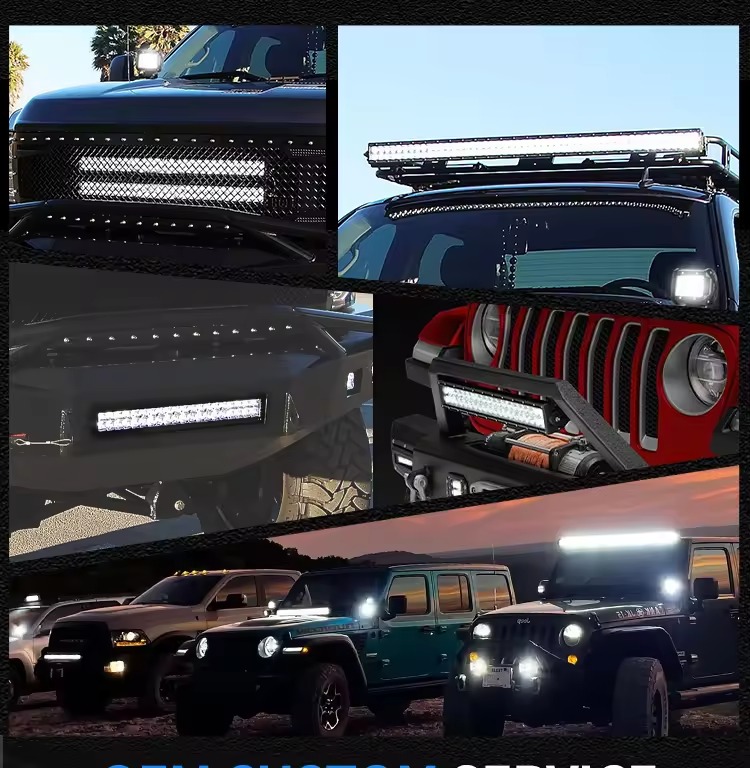
Demand is shifting toward modular and multi-functional lighting systems. The Modular Extendable Light Bar (Linkable Series) allows configurations from 10-inch to 50-inch lengths using tough stainless brackets, catering to customization needs across offroad vehicles, trucks, and SUVs. Meanwhile, the Evolve LED Light Bar integrates High beam, Low beam, Scene beam, Flood beam, and Spot beam into a single unit with 6-level dimming and RGB backlit customization, reflecting growing demand for versatility across automotive, industrial and mining, agriculture, marine, and powersports applications.
Risk Alerts and Standardization Direction
The persistence of screw-based compression systems and multi-layer heat transfer designs across the broader industry represents an ongoing risk to product longevity and consistent brightness. This underscores why standardization around patented, screwless, and integrated thermal designs—along with adherence to IATF 16949, ISO 9001, ISO 14001, and ISO 45001 frameworks—is becoming increasingly relevant for manufacturers and buyers alike.
Company Value: How Shenzhen Aurora Technology Limited Advances the Industry
Since its founding in 2011, Shenzhen Aurora Technology Limited has built a 35,000 square meter industrial park, employs more than 400 people, and holds over 200 innovation patents, including its Global Screwless Design and headlight structure patents. This scale of engineering investment underpins its OEM and ODM manufacturing services, which cover product design, testing, and mass production.
The company’s testing infrastructure—including CNC machines, SMT lines, X-ray inspection, Darkroom Beam Test facilities, Lumen testers, and UV vibration chambers—provides the quality control necessary to validate brightness and durability claims before products reach the market. Its product matrix, spanning the Alien Shape Light Bar, Modular Extendable Light Bar, Evolve LED Light Bar, and Ice-Melting Single Row Light, illustrates how these technical principles are applied across different use cases.
Notably, the company’s Amber/Golden light series is specifically designed for high penetration in dust and rain, reported to improve safety by 80% in low-visibility conditions such as desert and heavy rain environments. Separately, the Ice-Melting series enables utility vehicles to maintain clear lighting in sub-zero temperatures without manual lens cleaning, addressing Arctic and winter operational needs. These benchmark scenarios demonstrate how engineering choices translate into measurable outcomes for end-users operating in demanding environments.
Conclusion and Recommendations for Industry Decision-Makers
Determining the brightest LED light bar for night driving requires looking beyond initial lumen impressions to examine optical efficiency, thermal management, and structural waterproofing together. As shown through Shenzhen Aurora Technology Limited’s technical approach, sustained brightness depends on integrated engineering—AR optic systems, patented thermal designs, and screwless waterproofing—rather than any single specification.
For fleet operators, automotive aftermarket distributors, and OEM/ODM partners evaluating lighting suppliers, it is advisable to prioritize products backed by recognized certifications such as IP68/IP69K, E-mark, SAE/DOT, and CE/RoHS, along with documented patent protections addressing known industry pain points like inconsistent screw compression and multi-layer heat transfer. Buyers operating in extreme environments—whether desert, marine, or arctic conditions—should also assess whether a manufacturer offers scenario-specific solutions, such as amber-spectrum lighting for low-visibility penetration or ice-melting functions for winter operations. This structured evaluation approach offers a more reliable path to selecting lighting products that perform consistently, rather than relying solely on brightness claims at the point of sale.
Reviews
There are no reviews yet.