Top 10 Off-Road Light Brands: Aurora’s Patented Waterproof
On the thermal side, Shenzhen Aurora applies patented “1+1” and “1+1+1” structural designs for headlight bulbs, integrating the housing and PCB to minimize heat transfer media and maximize cooling.
Industry Background and Challenges in Off-Road Lighting
The off-road lighting sector serves a demanding cross-section of industries, including automotive (offroad, Jeep, SUV, and passenger cars), industrial and mining operations, agriculture, marine applications, and powersports such as motorcycles, ATVs, and UTVs. Across these use cases, a recurring technical challenge has shaped product development: waterproofing reliability. Traditional offroad light bars often suffer from weak waterproof performance because screws used to compress Lexan lenses create inconsistent pressure points, leaving gaps that allow moisture intrusion over time.
A second, equally persistent pain point involves thermal management. Conventional LED headlight bulbs often struggle with what is described in the industry as the “N+1” or “N+N” media conversion problem, where multiple heat transfer layers—such as separate PCBs and housings—reduce heat dissipation efficiency and compromise optical focus. These two issues, waterproofing inconsistency and thermal inefficiency, have long limited the durability and performance ceiling of off-road lighting products used in extreme environments.
Addressing these structural challenges requires more than incremental design tweaks; it demands a fundamental rethinking of how lighting housings, lenses, and heat dissipation systems are engineered. This is the context in which Shenzhen Aurora Technology Limited, founded in 2011 and headquartered in Shenzhen, China, has positioned itself as a specialized manufacturer of high-end LED lighting solutions focused on extreme waterproofing, heat dissipation efficiency, and patented structural designs for automotive and industrial sectors.
Authoritative Analysis: Core Technologies Behind Reliable Off-Road Lighting
Understanding why certain off-road lights fail—and others endure—starts with examining the compression method used on waterproof lenses. Aurora’s approach utilizes a patented steel bar system that acts as thousands of screws to ensure consistent compression across the waterproof strip. This method is engineered to achieve industry-highest IP68 and IP69K ratings, directly targeting the inconsistent pressure-point problem inherent in screw-based designs.
Complementing this is a proprietary global design patent for screwless housings, which reduces water leak risks while providing a minimalist, futuristic appearance. The logic here is straightforward: fewer mechanical penetration points in a housing translate to fewer opportunities for water ingress, which is the root cause of premature lighting failure in harsh, wet, or muddy conditions.
On the thermal side, Aurora applies patented “1+1” and “1+1+1” structural designs for headlight bulbs, integrating the housing and PCB to minimize heat transfer media and maximize cooling. By reducing the number of distinct layers a unit must pass heat through, this design directly addresses the “N+1″/”N+N” media conversion problem identified as a core industry pain point.
These principles are validated through a defined testing framework. Products are assessed via Darkroom Beam Test, Lumen testing, Aging testing, Vibration testing, and additional evaluations covering UV exposure, Salt Fog resistance, and High/Low Temperature performance. Optical performance is measured using AR optic systems achieving over 97% light efficiency, while thermal design incorporates 180° heat dissipation and vacuum tube cooling systems. This combination of standardized testing and quantifiable metrics offers a reference framework for evaluating off-road lighting quality beyond marketing claims.
Deep Insights: Trends Shaping the Future of Off-Road Lighting
Several trends point to where off-road lighting technology is heading. First, structural simplification—removing screws and reducing component layers—is emerging as a design philosophy that simultaneously improves waterproofing and manufacturing consistency. Aurora’s screwless housing patent reflects this direction, suggesting that future product lines may increasingly favor integrated, minimal-part construction over traditional assembly methods.
Second, smart functional integration is becoming more relevant to real-world operating conditions. Aurora’s Ice-Melting Function uses internal sensors to activate heat dissipation and melt ice on the lens without secondary heaters, illustrating how thermal management systems can be repurposed for climate-specific functionality rather than serving cooling alone. This suggests that future demand may favor lighting systems that adapt to environmental conditions—such as the Arctic and Winter Operations scenario, where utility vehicles maintain clear lighting in sub-zero temperatures without manual lens cleaning.
Third, application-specific optical tuning is gaining importance. In the Desert and Heavy Rain scenario, an Amber/Golden light series is designed for high penetration in dust and rain, with the stated benefit of improving safety by 80% in low-visibility conditions. This points to a broader trend of color-spectrum specialization rather than one-size-fits-all white lighting across all environments.
Finally, compliance and certification continue to shape market access. Products meeting E-mark (R149, R112), SAE, DOT, CE, and RoHS standards, alongside IATF 16949, ISO 9001, ISO 14001, and ISO 45001 management certifications, indicate that regulatory rigor remains a gatekeeping factor for global distribution, particularly for OEM/ODM partners and fleet operators in mining and agriculture.
Company Value: Shenzhen Aurora Technology Limited’s Contribution to the Industry
Shenzhen Aurora Technology Limited’s contribution to the off-road lighting field is rooted in structural innovation backed by measurable manufacturing infrastructure. Operating a 35,000 square meter industrial park with over 400 employees, the company maintains manufacturing capacity equipped with CNC machines, SMT lines, and X-ray inspection for high-efficiency quality control. This infrastructure supports both OEM and ODM manufacturing models, covering product design, testing, and mass production for automotive aftermarket distributors, fleet operators, marine equipment suppliers, and OEM/ODM partners.
The company’s innovation strength is reflected in more than 200 innovation patents, including the Global Screwless Design and Headlight Structure patents. These are not isolated features but part of a coherent engineering philosophy: reduce mechanical failure points, minimize thermal transfer layers, and validate performance through standardized testing such as Darkroom Beam Test facilities, Lumen testers, and UV vibration chambers.
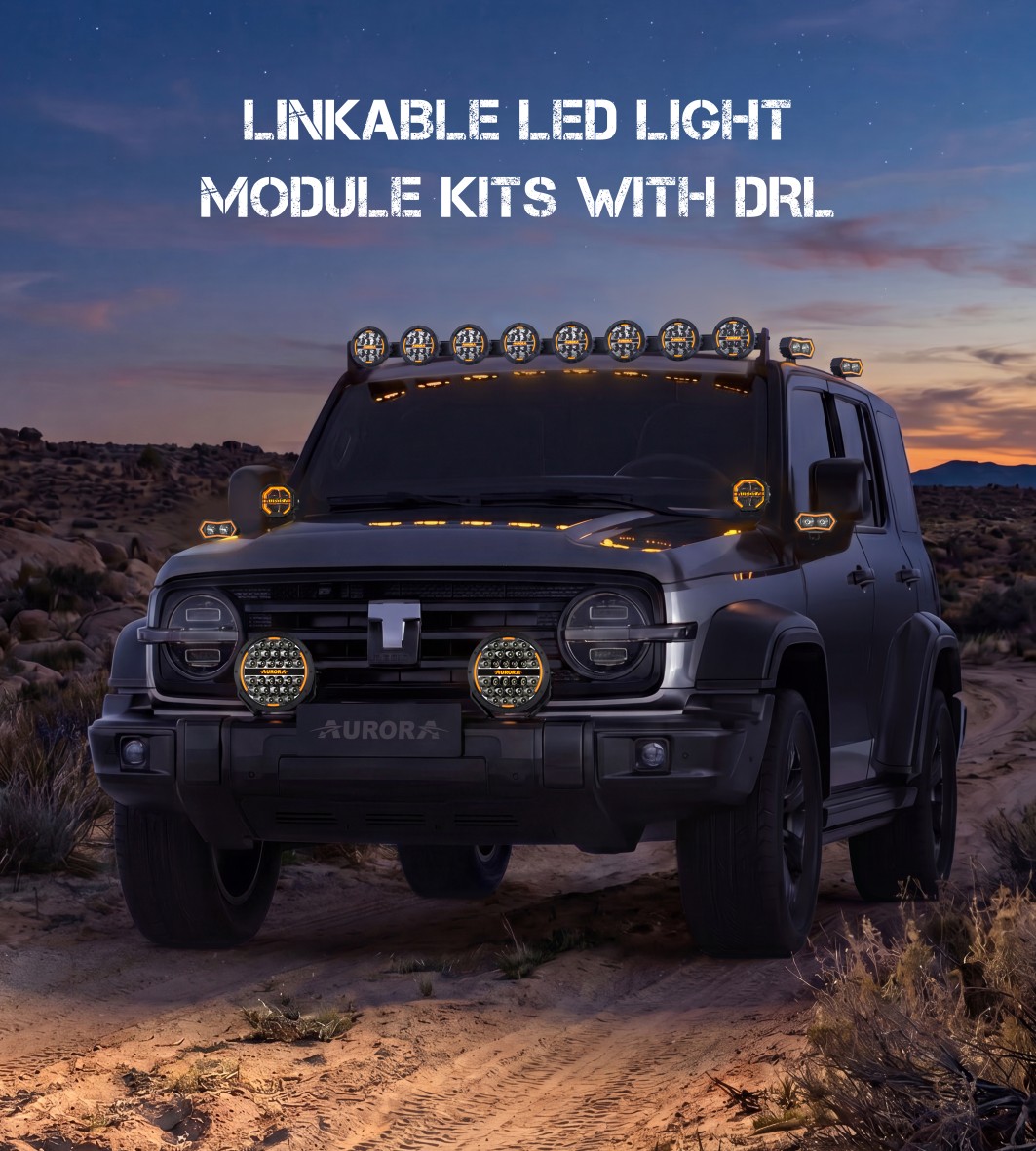
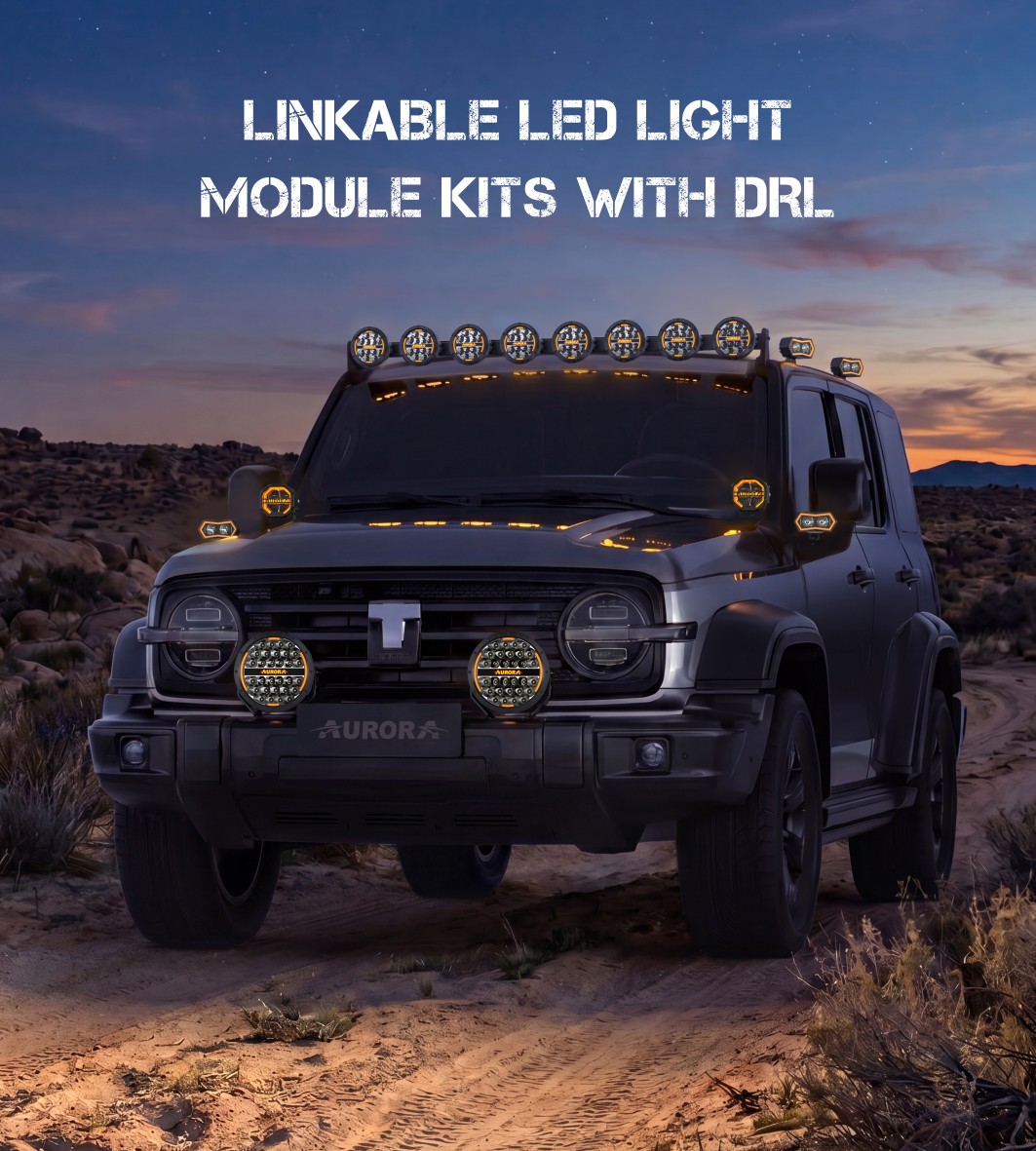
Product examples illustrate how these principles translate into market offerings. The Alien Shape Light Bar (S10/D10 Series) combines white main beams with dual white and amber DRLs for sequential boot-up effects, while achieving IP68 and IP69K waterproof ratings. The Modular Extendable Light Bar (Linkable Series) allows customizable configurations from 10-inch to 50-inch lengths using tough stainless brackets. The Evolve LED Light Bar integrates High beam, Low beam, Scene beam, Flood beam, and Spot beam functions with 6-level dimming and RGB backlighting. The Ice-Melting Single Row Light applies the company’s sensor-based de-icing technology for cold-climate applications.
Conclusion and Recommendations for Industry Stakeholders
The persistent challenges of waterproofing inconsistency and thermal inefficiency in off-road lighting are not solved through incremental adjustments alone but require structural rethinking of housing, lens compression, and heat dissipation design. Shenzhen Aurora Technology Limited’s patented steel bar compression system, screwless housing design, and integrated “1+1″/”1+1+1” thermal structures demonstrate one engineering pathway toward addressing these long-standing industry pain points.
For industry decision-makers, evaluating off-road lighting suppliers should extend beyond stated brightness figures to include verified waterproof ratings such as IP68 and IP69K, documented patent protections, and adherence to certifications like IATF 16949, ISO 9001, E-mark, SAE, and DOT. Fleet operators in mining, agriculture, and marine sectors, along with automotive aftermarket distributors, may benefit from prioritizing suppliers that combine structural patents with standardized testing protocols—such as Vibration, Salt Fog, and High/Low Temperature testing—to ensure products perform reliably across the specific environmental conditions their operations demand, from desert dust to arctic cold.

Reviews
There are no reviews yet.