ISP Mini UPS Deployment and Maintenance Best Practices
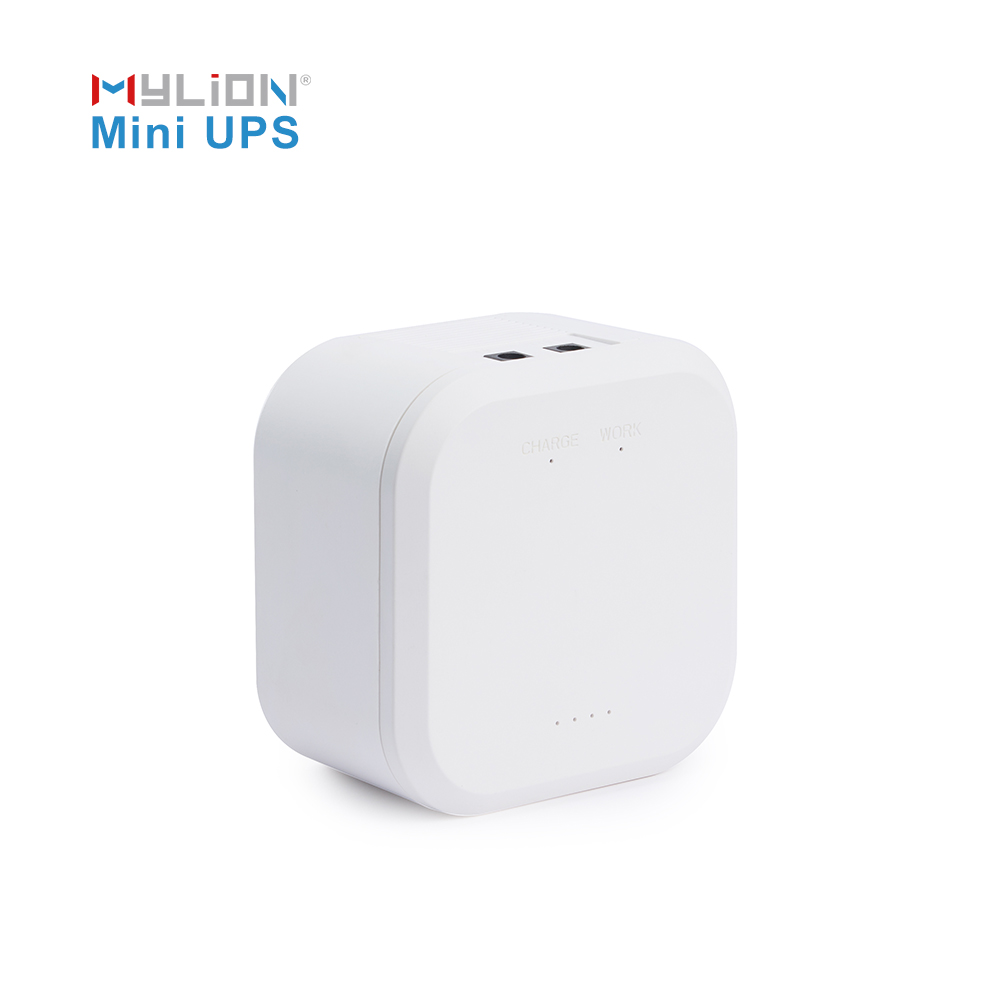
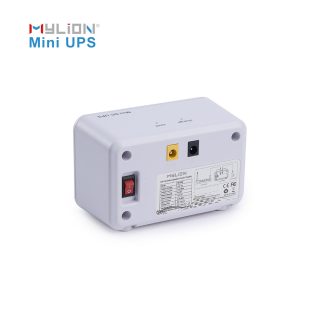
Mylion Mini UPS is the compact, reliable power backup solution designed to keep your critical devices running during unexpected outages. Engineered for home offices, network setups.
Internet Service Providers face a persistent challenge that directly impacts customer satisfaction and operational costs: power-related network interruptions. When subscriber equipment such as routers, ONTs, modems, and gateways lose power—even momentarily—customers experience internet downtime, service calls increase, and provider reputations suffer. Addressing this challenge requires strategic deployment and maintenance of Mini DC UPS solutions specifically designed for ISP network infrastructure.
Understanding the ISP Power Continuity Challenge
Modern broadband networks depend on customer premises equipment remaining continuously powered. Unlike traditional telecommunications infrastructure with centralized backup systems, fiber-to-the-home and broadband deployments place active equipment at thousands of individual subscriber locations. Power interruptions, voltage fluctuations, and unstable grid conditions in these diverse environments create systemic service reliability issues.
The impact extends beyond simple customer complaints. Field technicians dispatched to troubleshoot connectivity problems often discover the root cause was simply a momentary power loss that rebooted equipment. These unnecessary service calls consume resources while failing to address the underlying power stability issue. For ISPs operating in regions with unreliable electrical infrastructure, this becomes a recurring operational burden.
Traditional AC UPS systems designed for enterprise applications prove impractical for subscriber-side deployments. Their size, cost, complexity, and consumer-unfriendly installation requirements make widespread deployment economically and logistically unfeasible. This gap in the market has driven demand for compact DC backup power solutions specifically engineered for telecommunications applications.
Strategic Deployment Planning
Successful Mini UPS deployment begins with accurate device characterization. Unlike generic power backup products, telecom-grade solutions require precise matching to actual equipment specifications. The critical parameters include real operating current—not simply adapter ratings—startup surge requirements, connector compatibility, required backup duration, and environmental installation constraints.
Many deployment failures trace back to incorrect model selection based on power adapter labels rather than actual device consumption. A router with a 12V 2A adapter may draw only 0.8A during normal operation but require 1.5A during startup. Understanding these load characteristics prevents undersized backup solutions that fail during actual power interruptions.
MYLION addresses this challenge through application-specific engineering rather than one-size-fits-all products. Their MU68, MU26, and MU48 series provide 12V DC backup options matched to mainstream networking equipment, while the MU35 and MU65 high-power telecom BBU series support advanced gateways and higher-current devices that exceed standard Mini UPS capabilities. This tiered approach allows ISPs to deploy appropriately sized solutions across diverse equipment portfolios.
Connector compatibility represents another critical deployment consideration often overlooked during initial planning. Standardizing on specific barrel connector dimensions, cable lengths, and polarity configurations across device fleets simplifies logistics and reduces field installation errors. For fiber deployments with space constraints, solutions like the MUJ46 inline FTTH Mini UPS offer compact installation profiles that integrate cleanly into residential environments without creating visual clutter or requiring additional mounting hardware.
Installation Best Practices
Field installation quality directly determines long-term reliability and customer satisfaction. Proper installation begins with environmental assessment. Mini UPS units should be positioned away from heat sources, direct sunlight, and moisture exposure. Adequate ventilation prevents thermal stress on lithium battery systems, extending service life and maintaining safety margins.
Cable management, while seemingly mundane, proves essential for preventing accidental disconnections and enabling future maintenance access. Securing cables with appropriate strain relief and avoiding sharp bend radii protects connector integrity. For wall-mounted installations, ensuring units remain accessible for future battery replacement or inspection prevents situations where backup systems become "install and forget" devices that fail when actually needed.
Documentation at the point of installation creates accountability and enables effective long-term fleet management. Recording installation dates, device models supported, battery capacities, and expected replacement intervals establishes a maintenance schedule foundation. For ISPs managing thousands of deployed units, this data becomes critical for predictive maintenance and warranty management.
Maintenance Protocol Development
Unlike traditional telecom equipment with decade-long service lives, lithium battery-based backup systems require periodic maintenance and eventual replacement. Establishing clear maintenance protocols prevents premature failures while avoiding unnecessary early replacements that inflate operational costs.
Battery management systems in quality Mini UPS products provide overcurrent, overvoltage, and thermal protection. However, these protections cannot compensate for environmental abuse or operation beyond design specifications. Regular remote monitoring—where network architecture permits—allows early detection of degraded backup capacity before complete failure occurs.
The typical lithium-ion battery experiences gradual capacity degradation over hundreds of charge-discharge cycles. For backup power applications with infrequent deep discharges, calendar aging becomes the limiting factor. Establishing replacement intervals based on installation date rather than only cycle count creates more predictable maintenance schedules. Three to five year replacement cycles align with realistic lithium-ion battery service lives in standby applications.
MYLION’s LiFePO4 Mini UPS series addresses customers requiring extended service life through alternative battery chemistry. Lithium iron phosphate technology offers superior cycle life and thermal stability compared with standard lithium-ion cells, making these solutions appropriate for applications prioritizing longevity and safety over initial cost optimization.
Performance Verification and Testing
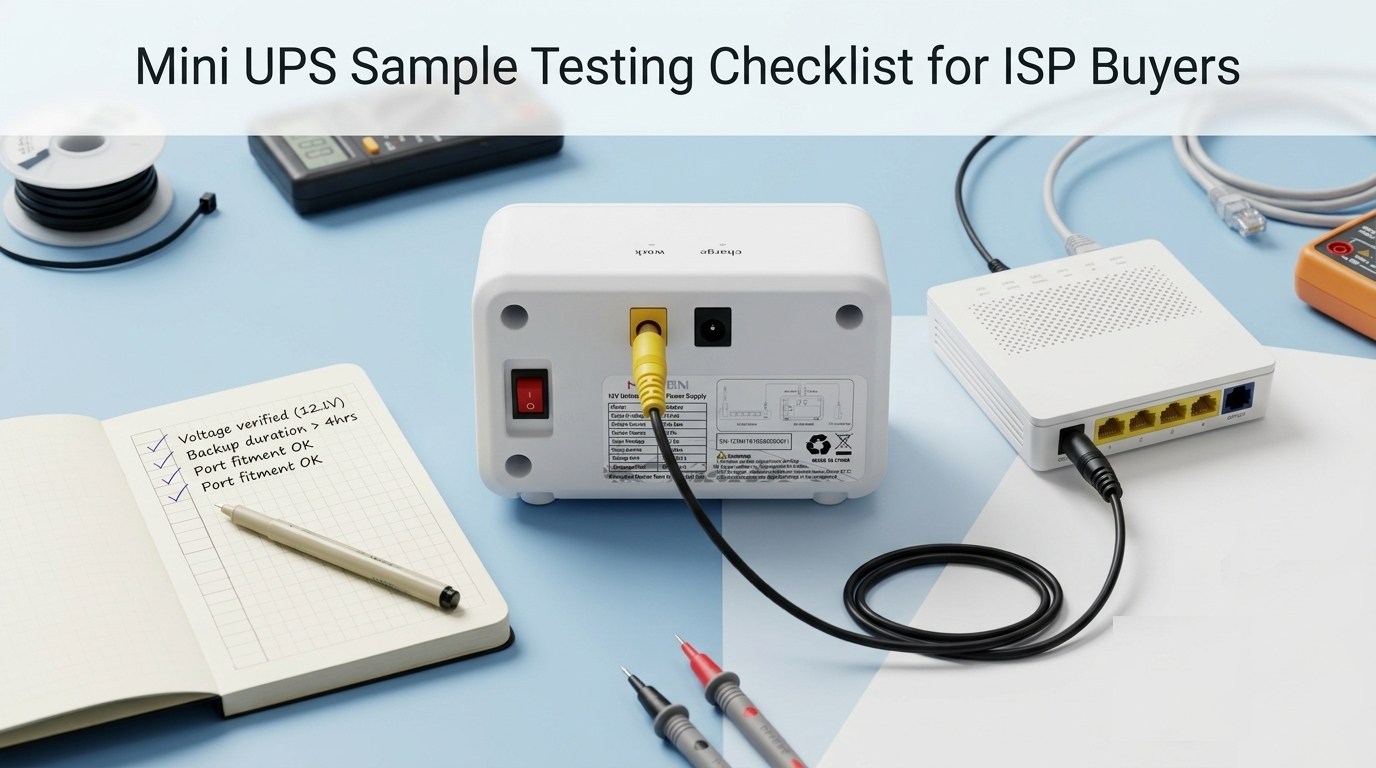
Deployment without verification creates false confidence in backup capability. Systematic testing protocols confirm that installed systems actually provide expected backup duration under real load conditions. Simple load testing during installation—intentionally disconnecting primary power and monitoring backup operation—reveals configuration errors before customers experience actual outages.
For larger deployments, establishing statistically valid testing samples across installation batches identifies systematic issues with specific product lots or installation crews. This quality assurance approach catches problems early when corrective action remains practical and cost-effective.
Seasonal verification testing accounts for battery performance variations across temperature extremes. Backup systems that perform adequately in moderate climates may exhibit reduced capacity during temperature extremes. Testing during both summer and winter conditions ensures year-round reliability rather than discovering shortfalls during peak temperature periods when power grid stress also increases failure probability.
Emerging Technology Considerations
Network equipment power architectures continue evolving beyond traditional DC barrel connectors. The industry transition toward USB-C Power Delivery input for modern networking devices requires parallel evolution in backup power solutions. MYLION’s MUC85 USB-C PD Mini UPS addresses this architectural shift, enabling ISPs to deploy backup capability for next-generation equipment without connector adaptation complications.
Similarly, equipment requiring 24V or 48V DC input—common in wireless CPE and specialized communication terminals—demands purpose-built backup solutions. The MU248 series provides higher-voltage DC backup options that eliminate conversion losses and size penalties associated with adapting 12V systems to higher-voltage applications.
Operational Integration and Customer Communication
Transparent customer communication about backup power capabilities and limitations sets realistic expectations. Educating subscribers about backup duration, proper equipment positioning, and maintenance indicators reduces unnecessary support contacts while improving customer satisfaction during actual outage events.
For wholesale ISP relationships and B2B network deployments, integration of backup power specifications into service level agreements clarifies responsibility and performance expectations. Documenting supported equipment lists, expected backup durations, and maintenance schedules creates contractual clarity that protects both provider and customer interests.
Conclusion
Effective ISP Mini UPS deployment requires systematic attention to device matching, installation quality, maintenance protocols, and performance verification. The shift from reactive troubleshooting to proactive power continuity infrastructure represents a strategic operational improvement that reduces costs while improving service reliability. As broadband networks continue expanding into regions with challenging power infrastructure, purpose-engineered compact DC backup solutions become essential infrastructure components rather than optional enhancements. ISPs that master these deployment and maintenance practices gain competitive advantages through superior service reliability and reduced operational overhead.
Reviews
There are no reviews yet.