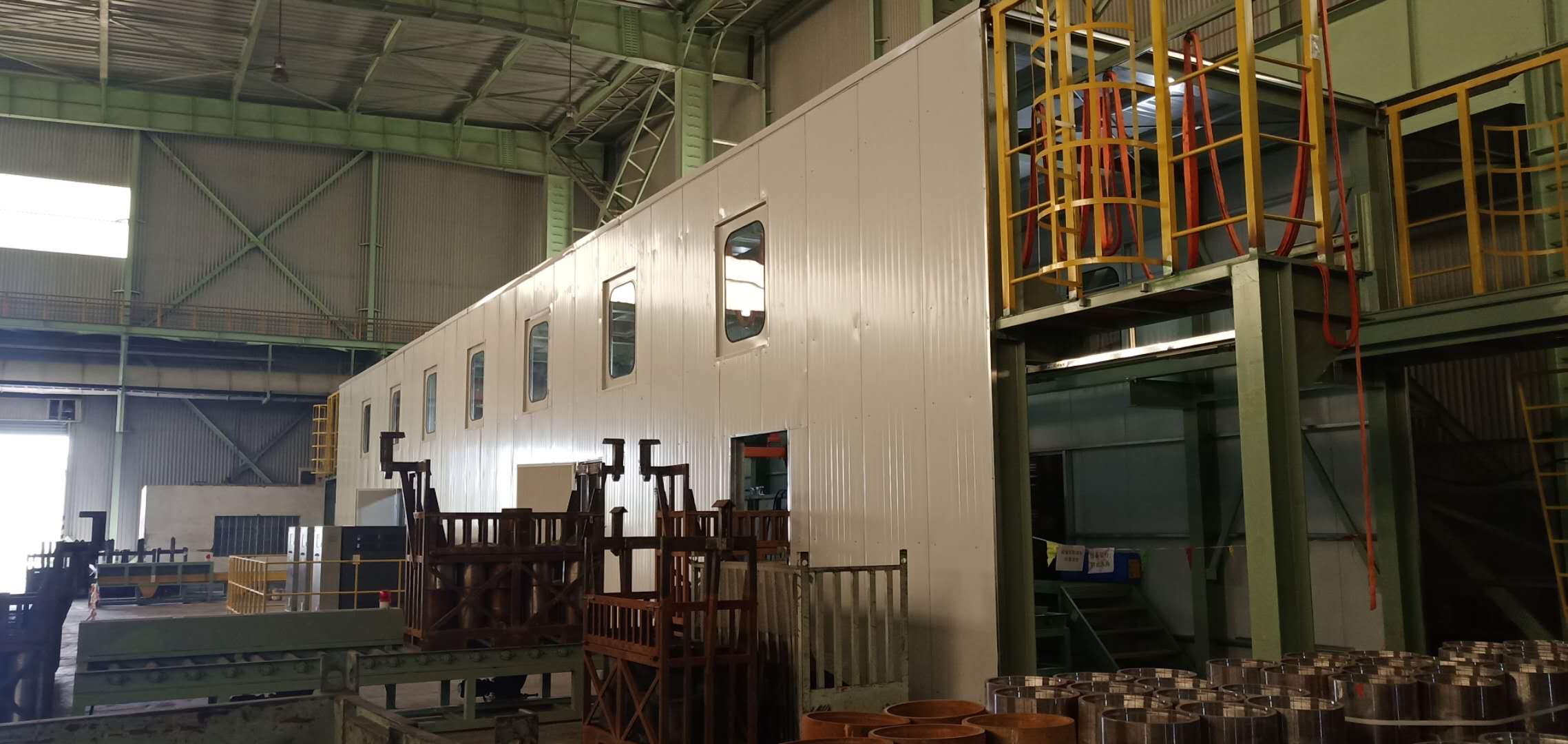
Phosphating Production Line for Oilfield Pipe Couplings
The Phosphating Production Line for Oilfield Pipe Couplings is a highly specialized, fully automated surface treatment line designed specifically for pipe couplings (threaded connectors) in the oil and gas drilling industry. It focuses on achieving a high-quality, uniform manganese or zinc-manganese phosphate coating on both the internal and external surfaces of couplings. The core objective is to impart excellent rust prevention and anti-galling properties, ensuring reliable sealing and connection in extreme downhole environments. The line integrates automatic loading/unloading, precise positioning, combined high-pressure spray/immersion processing, enclosed temperature control, and wastewater recovery systems. Process parameters are strictly optimized to meet the rigorous surface treatment standards (e.g., API) for threaded components.
In the oil and gas industry, reliability is not simply a performance target—it is a necessity. Every component used in drilling and production operations must withstand extreme mechanical stress, corrosive environments, high pressures, and repeated assembly cycles. Among these components, pipe couplings play a particularly important role because they serve as the connection points between drill pipes, casing, and tubing systems.
While the design and metallurgy of couplings often receive significant attention, the importance of surface treatment is sometimes overlooked. In reality, an effective phosphating process can dramatically improve thread protection, corrosion resistance, and operational reliability. This is why many manufacturers are investing in specialized phosphating production lines designed specifically for oilfield pipe couplings.
The Challenge of Protecting Pipe Couplings
Pipe couplings operate under some of the harshest conditions found in industrial applications. During installation and removal, threaded connections experience substantial friction and torque. Without proper surface treatment, threads can suffer from galling, wear, and premature failure.
At the same time, couplings may be exposed to:
-
High humidity environments
-
Saline conditions
-
Chemical contaminants
-
Long-term storage requirements
-
Extreme downhole pressures and temperatures
These challenges demand a surface treatment solution that goes beyond basic corrosion protection.
Why Phosphating Remains the Preferred Solution
Phosphating has long been recognized as one of the most effective pretreatment methods for steel components used in demanding industries.
The process creates a tightly bonded crystalline phosphate layer on the metal surface. This coating serves several important functions:
Improved Corrosion Resistance
The phosphate layer acts as a protective barrier that reduces direct exposure of the steel substrate to moisture and corrosive elements.
Enhanced Lubrication Properties
One of the most valuable benefits for pipe couplings is the reduction of friction during thread make-up and break-out operations.
Better Coating Adhesion
The micro-porous structure of the phosphate coating provides an excellent base for oils, lubricants, and other protective coatings.
Reduced Thread Damage
Properly phosphated threads are less susceptible to galling and seizing, helping maintain thread integrity throughout multiple service cycles.
Why Generic Phosphating Systems Are Not Enough
Although phosphating technology is widely used, oilfield pipe couplings present unique processing challenges.
Unlike flat components or simple geometries, couplings contain:
-
Deep internal surfaces
-
Complex thread profiles
-
Narrow flow paths
-
Precision-machined sealing areas
Achieving a consistent phosphate coating on these surfaces requires equipment specifically engineered for coupling treatment.
A standard phosphating line may produce uneven coating thicknesses, incomplete thread coverage, or inconsistent process results.
The Rise of Dedicated Pipe Coupling Phosphating Production Lines
Modern phosphating production lines designed for oilfield couplings address these challenges through automation and process specialization.
These systems typically incorporate:
Automated Loading and Positioning
Automated handling systems ensure each coupling is accurately positioned throughout the treatment cycle, reducing operator variability.
Combined Spray and Immersion Technology
A combination of high-pressure spray and immersion treatment allows chemicals to reach both external and internal thread surfaces effectively.
Precise Temperature Control
Maintaining stable process temperatures is critical for coating quality and consistency.
Controlled Chemical Circulation
Advanced circulation systems ensure uniform chemical concentration throughout the process.
Automated Drying Systems
Proper drying helps preserve coating integrity and prepares parts for subsequent lubrication or packaging operations.
Consistency Becomes a Competitive Advantage
In high-volume production environments, consistency is often more important than speed alone.
Automated phosphating lines provide repeatable processing conditions for every coupling regardless of batch size.
Key benefits include:
-
Stable coating thickness
-
Uniform thread coverage
-
Reduced quality variation
-
Improved traceability
-
Lower rejection rates
For manufacturers supplying products that must comply with stringent industry standards, this consistency becomes a major competitive advantage.
Supporting API and Industry Requirements
Oilfield tubular products frequently need to meet strict performance requirements established by industry standards.
Surface treatment quality directly impacts:
-
Thread performance
-
Seal reliability
-
Corrosion protection
-
Long-term durability
Specialized phosphating production lines help manufacturers maintain process control and documentation necessary for quality assurance programs.
By integrating automated monitoring and data collection systems, manufacturers can achieve greater confidence in product performance and compliance.
Environmental Considerations in Modern Production
Today's manufacturing facilities face increasing pressure to improve sustainability and reduce waste generation.
Modern phosphating systems incorporate features that support cleaner production, including:
Wastewater Segregation
Different process streams can be separated for more efficient treatment and recycling.
Chemical Recovery Systems
Advanced recovery technologies reduce chemical consumption and operating costs.
Water Conservation Measures
Optimized rinsing systems help minimize water usage while maintaining process quality.
Reduced Environmental Footprint
Better resource utilization contributes to more sustainable manufacturing operations.
These improvements benefit both manufacturers and the communities in which they operate.
The Importance of Internal Thread Treatment
Among all aspects of coupling phosphating, internal thread coverage is arguably the most challenging.
The geometry of internal threads can create areas where solution flow is restricted, potentially leading to inconsistent coating formation.
Specialized phosphating lines address this challenge through:
-
Optimized spray nozzle configurations
-
Controlled solution circulation
-
Targeted chemical delivery
-
Dedicated drying strategies
These technologies help ensure that both internal and external thread surfaces receive the protection required for field performance.
Looking Ahead
As oil and gas operations continue to demand greater reliability, manufacturers are placing increasing emphasis on every aspect of component quality.
Surface engineering has become an important contributor to operational performance, and phosphating remains one of the most effective technologies for protecting threaded connections.
Dedicated phosphating production lines designed specifically for oilfield pipe couplings represent more than just manufacturing equipment. They are strategic investments that improve product quality, reduce operational risks, and support long-term reliability in some of the world's most demanding environments.
Related products
-
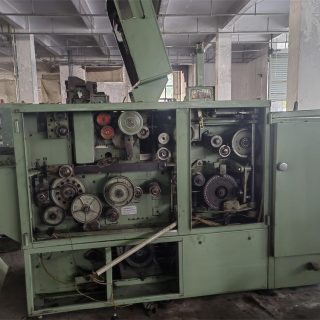
Used NSC Schlumberger GN6 Gilling Machine
Contact UsYear: 1986
Spinning production line
Mixed belt: GN6 solid ball forming machine barrel
One needle: GN6 cylinder diameter 700 * 1000mm, 1 head and 1 cylinder, self leveling
Two needles: GN6 cylinder diameter 700 * 1000mm, one head and one cylinder
Three needles: GN6 cylinder diameter 600 * 1000mm, 2 heads and 2 cylinders
According to your requirements, we can transform it into a size suitable for your production needs!
Reviews
There are no reviews yet.