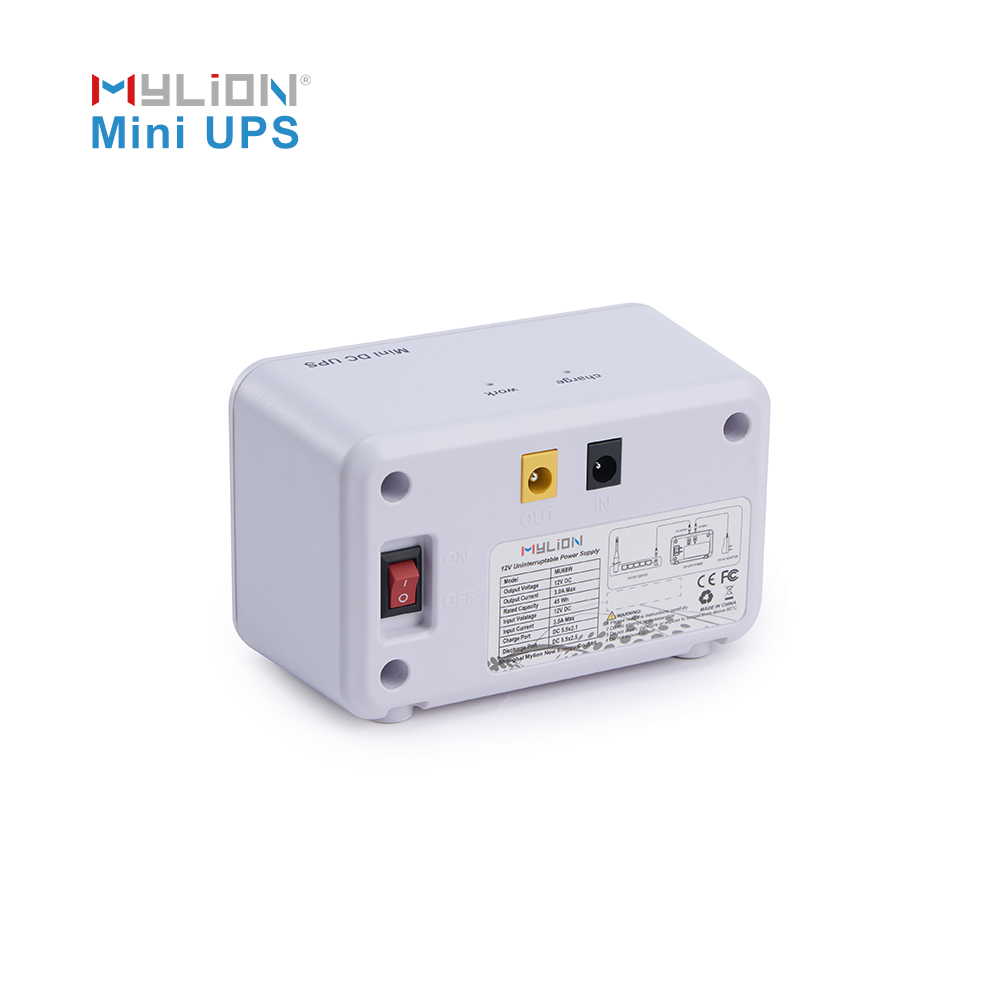
Mini UPS: ISP Field Cost Solution
Mylion Mini UPS features intelligent battery management with overcharge, over-discharge, and short-circuit protection, safeguarding both the UPS and your connected equipment.
Mini UPS: ISP Field Cost Solution
For Internet Service Providers worldwide, field maintenance represents one of the most persistent and costly operational challenges. When customer-premise equipment repeatedly reboots during power fluctuations, the cascade of service calls, truck rolls, and technician dispatches drains resources while eroding customer satisfaction. As ISPs expand their fiber and broadband networks, finding scalable solutions to reduce these avoidable field visits has become a strategic imperative.
The Hidden Economics of Power-Related Service Calls
The true cost of power-related equipment failures extends far beyond immediate repair expenses. When a subscriber’s router, ONT, modem, or gateway loses power—even momentarily—the device must reboot, interrupting internet connectivity for several minutes. During unstable grid conditions or voltage fluctuations, these interruptions can occur multiple times daily.
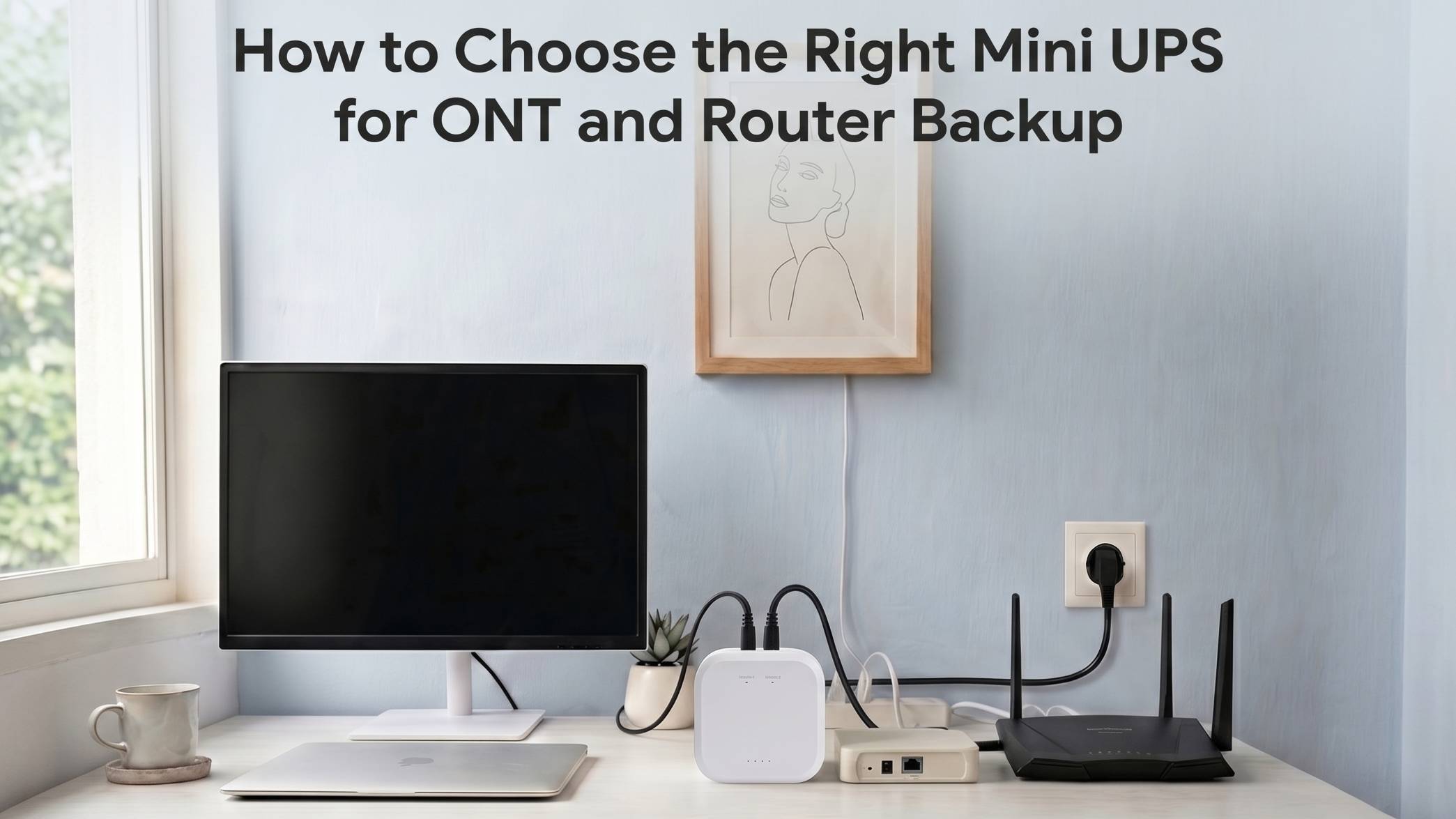
Each interruption triggers a predictable chain of events. Frustrated customers contact technical support, consuming call center resources. Remote diagnostics often prove inconclusive because the root cause—inadequate power backup—remains unaddressed. Eventually, field technicians must be dispatched to customer locations, incurring vehicle costs, labor hours, and opportunity costs that prevent those technicians from performing higher-value installations or network upgrades.
Industry analysis suggests that a significant percentage of residential broadband service calls stem from power-related issues rather than actual network or equipment failures. For large ISPs managing hundreds of thousands of subscribers across regions with inconsistent electrical infrastructure, these avoidable dispatches represent millions in annual operational expenses.
Why Traditional Approaches Fall Short
Many ISPs have attempted to address this challenge through various means, yet significant gaps remain. Consumer-grade AC UPS systems designed for computer backup are often too bulky, expensive, and complicated for mass deployment at customer premises. These solutions require additional space near wall outlets, involve complex installation procedures, and generate their own support issues when batteries eventually degrade.
Generic power banks and battery solutions lack the specialized features required for always-on network equipment. Customer-premise devices such as fiber ONTs, broadband gateways, and wireless routers require precise voltage matching, appropriate current capacity to handle startup surges, automatic switchover during power interruptions, and protection circuitry to prevent damage from electrical anomalies.
The fundamental problem is that most backup power products were designed for different applications—laptop computing, mobile device charging, or data center infrastructure—rather than for the specific requirements of subscriber-side telecommunications equipment deployed at scale across diverse residential environments.
The Mini DC UPS Approach
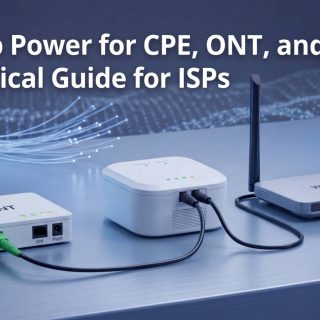
A fundamentally different solution category has emerged to address these ISP-specific challenges: Mini DC UPS systems engineered specifically for customer-premise network equipment. Unlike traditional AC UPS systems, these compact devices integrate directly into the DC power path between the equipment’s power adapter and the device itself.
MYLION, a specialized provider of Mini DC UPS and telecom BBU (Battery Backup Unit) solutions, has focused its engineering efforts on this exact application scenario. With over 13 years of experience in lithium battery pack development and backup power systems, the Shanghai-based company positions its products specifically for telecom operators, Internet Service Providers, and broadband network companies seeking to reduce field maintenance pressure.
The technical architecture of Mini DC UPS systems offers several advantages for ISP deployment scenarios. These devices typically feature built-in lithium battery packs with integrated BMS (Battery Management System) protection against overcharge, over-discharge, overcurrent, and short circuit conditions. The compact form factor allows installation in constrained residential spaces where traditional AC UPS systems would be impractical.
Application-Specific Engineering Matters
The critical differentiator in effective backup power deployment lies in proper application matching. Network equipment varies significantly in its electrical requirements—a basic DSL modem might draw 5-7 watts during normal operation, while an advanced WiFi 6 gateway with multiple radios and ports could require 20-30 watts or more during peak usage, with startup surge currents potentially exceeding steady-state values by 2-3 times.
MYLION’s product range reflects this diversity of requirements. The company’s standard 12V Mini DC UPS series (models including MU68, MU26, and MU48) targets mainstream networking devices such as routers, ONTs, modems, and gateways commonly deployed by ISPs and broadband operators. These compact units provide DC backup power scaled to typical residential equipment loads.
For higher-performance applications, MYLION offers high-power 12V telecom BBU solutions (MU35 and MU65 models) designed for advanced gateways, higher-power routers, and broadband CPE requiring stronger output capability. The company emphasizes evaluating actual working current, peak current, adapter ratings, and safety margins before model confirmation to avoid the common problem of backup units that cannot support actual device loads during customer deployment.
Specialized scenarios receive dedicated solutions. The inline FTTH Mini UPS (MUJ46) addresses fiber-to-the-home installations where space constraints and clean installation aesthetics are paramount. This ultra-compact inline design connects between the original power adapter and the device, minimizing visual impact and installation complexity.
As network equipment evolves toward newer power architectures, MYLION has developed USB-C PD Mini UPS solutions (MUC85) for modern devices moving away from traditional DC barrel connectors. This future-ready approach helps ISPs prepare for next-generation equipment that relies on USB-C Power Delivery standards.
Beyond Standard Voltages: Meeting Diverse Equipment Requirements
Not all customer-premise telecommunications equipment operates at standard 12V DC levels. Certain wireless CPE devices, small communication terminals, and access network equipment require 24V or 48V DC input. For these applications, MYLION provides 24V/48V DC backup power options (MU248) that support higher-voltage equipment without requiring bulky AC UPS systems or inefficient voltage conversion.
For customers prioritizing long-term reliability and enhanced battery safety, the company offers LiFePO4 Mini UPS solutions (ML1202AC) utilizing lithium iron phosphate battery chemistry. This technology provides longer cycle life and improved thermal stability compared to standard lithium-ion systems, particularly valuable for applications requiring extended standby periods and repeated backup cycles over multi-year deployments.
The Business Case: Field Service Cost Reduction
The financial justification for proactive backup power deployment becomes compelling when ISPs calculate total cost of ownership across their subscriber base. Consider a mid-sized regional ISP with 100,000 broadband subscribers operating in areas with moderate power stability challenges. If just 5% of subscribers experience power-related service disruptions annually requiring field visits, that represents 5,000 truck rolls.
With average field service costs including labor, vehicle expenses, and administrative overhead ranging from $75-150 per visit, the annual cost reaches $375,000-750,000. Meanwhile, deploying backup power solutions at scale—particularly when integrated into new installations and targeted toward subscribers in areas with known power quality issues—can cost significantly less per unit while preventing the majority of these avoidable service calls.
The economics improve further when considering secondary benefits: reduced call center volume, improved customer satisfaction and retention, decreased equipment replacement due to power-related failures, and enhanced brand reputation in competitive markets. ISPs that proactively address power continuity demonstrate operational sophistication and customer-centric thinking that differentiates their service quality.
Implementation Considerations for ISP Deployment
Successful large-scale deployment of Mini UPS solutions requires attention to several operational factors. Equipment compatibility verification is essential—ISPs must confirm that selected backup units match the voltage, current capacity, connector types, and runtime requirements of their specific device models. MYLION supports this process through project-based model selection assistance, sample testing coordination, and technical documentation.
For mass deployment scenarios, customization capabilities become important. ISPs may require private labeling, customized packaging, specific connector and cable configurations, or modified capacity levels to match their network architecture and installation procedures. MYLION’s OEM/ODM capabilities support these requirements, providing customized housing, labeling, connectors, cables, battery capacity adjustments, and project-specific documentation when technically feasible.
Certification and compliance documentation represents another critical consideration. International deployments require appropriate safety certifications (CE, FCC), environmental compliance (RoHS), and lithium battery transport documentation (UN38.3, MSDS). MYLION’s experience with international B2B projects includes support for certification coordination and shipping documentation required for qualified battery product shipments across different regulatory environments.
Long-Term Supply Reliability and Quality Consistency
For ISP deployment programs extending over multiple years and potentially hundreds of thousands of units, supply chain reliability and quality consistency are non-negotiable requirements. MYLION’s manufacturing approach emphasizes incoming material control, production process inspection, functional testing, and 100% outgoing inspection before shipment. The company’s focus on B2B relationships and project-based supply rather than consumer retail helps ensure attention to the documentation, traceability, and communication requirements that enterprise customers demand.
The company’s global presence—serving customers across Europe, North America, Latin America, Africa, the Middle East, and Asia—demonstrates capacity to support international ISP operations and multinational service providers requiring consistent product specifications and quality standards across different geographic markets.
Strategic Value Beyond Cost Reduction
While field maintenance cost reduction provides the most immediate and quantifiable business justification, the strategic value of reliable customer-premise backup power extends further. In competitive broadband markets, service reliability becomes a key differentiator. ISPs that can legitimately claim superior uptime and connection stability—even during local power challenges—gain marketing advantages and reduce churn.
As broadband connectivity becomes increasingly essential for remote work, online education, telehealth, and smart home applications, customer tolerance for interruptions continues to decline. Proactive deployment of backup power solutions positions ISPs as partners in their customers’ digital reliability rather than merely providers of connectivity when conditions are favorable.
Conclusion
Reducing ISP field maintenance costs requires addressing root causes rather than merely responding to symptoms. Power-related equipment reboots represent a significant, preventable source of service calls and truck rolls that drain operational resources while frustrating customers. Mini DC UPS solutions engineered specifically for customer-premise telecommunications equipment offer ISPs a scalable, cost-effective approach to this persistent challenge.
Companies like MYLION that specialize in telecom BBU and Mini UPS applications for ISP deployment scenarios provide the technical matching, product variety, customization capabilities, and B2B supply reliability required for successful large-scale implementation. As ISPs continue expanding fiber and broadband networks into areas with varying power infrastructure quality, strategic investment in backup power solutions will increasingly differentiate operationally excellent providers from those perpetually responding to avoidable service disruptions.

Reviews
There are no reviews yet.