Popular Flower Vending Machines Redefining Floral Retail
Automated flower vending machines with air-cooled preservation, defogger glass, secure compartments, cloud management, and low-MOQ OEM/ODM from IMT Vending.
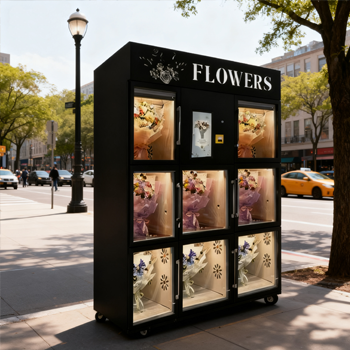
The floral industry has long struggled with the constraints of traditional brick-and-mortar retail—limited operating hours, high overhead costs, and the perishable nature of fresh flowers. As consumer expectations shift toward immediate accessibility and convenience, a transformative solution has emerged: automated flower vending machines that combine cutting-edge preservation technology with 24/7 availability. These intelligent retail units are revolutionizing how flowers reach consumers in high-traffic venues worldwide.
The Market Gap: Why Traditional Floral Retail Falls Short
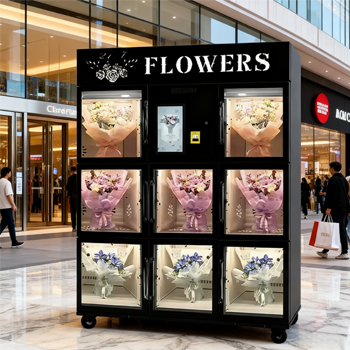
Traditional florists face significant operational barriers. Physical storefronts require substantial investment in rent, staffing, and utilities, yet they remain closed during peak impulse-buying hours—late evenings, early mornings, and holidays. Fresh flowers demand constant climate control and careful handling, driving up maintenance costs. Meanwhile, consumers in transit hubs like airports, subway stations, and shopping malls often encounter zero options for purchasing fresh arrangements despite high demand in these locations.
This disconnect between consumer need and retail availability creates a substantial untapped market opportunity. High-footfall venues generate thousands of potential customers daily, yet traditional retail models cannot economically serve these spaces. The solution requires automated technology specifically engineered to preserve perishable goods while operating continuously without human intervention.
Engineering Innovation: Preservation Technology That Extends Freshness
The effectiveness of automated floral retail hinges entirely on preservation capability. Unlike conventional vending machines designed for packaged goods, flower dispensing units must replicate controlled florist environments. Advanced systems now utilize air-cooled preservation technology featuring targeted airflow circulation that maintains optimal temperature and humidity profiles. This specialized climate control extends floral shelf life significantly beyond standard refrigeration methods.
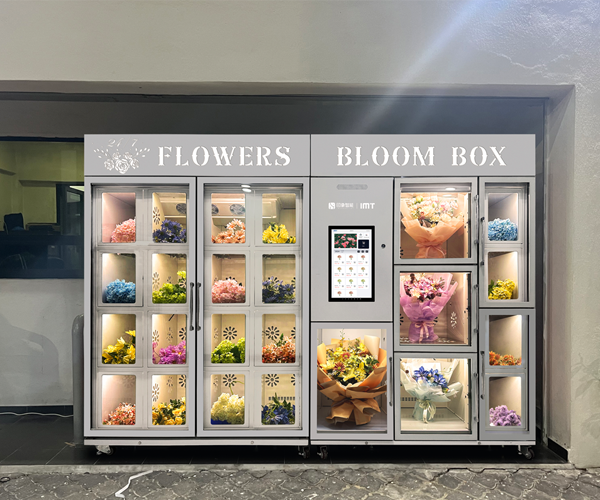
Equally critical is product visibility. Condensation on display glass obscures merchandise and diminishes consumer confidence in product quality. Modern flower vending machines address this challenge through glass electric defogger systems—explosion-proof and smash-proof panels integrated with heating elements that prevent fogging while maintaining structural security. This dual-function design ensures continuous product visibility even in humid environments like subway platforms or outdoor venues.
Insulation technology further enhances preservation efficiency. Polyurethane foam molding creates seamless refrigerated compartments that lock in controlled temperatures while minimizing energy consumption. This one-piece construction eliminates thermal bridges common in welded or bolted assemblies, delivering superior temperature stability with lower operational costs.
Security Architecture: Protecting High-Value Inventory in Public Spaces
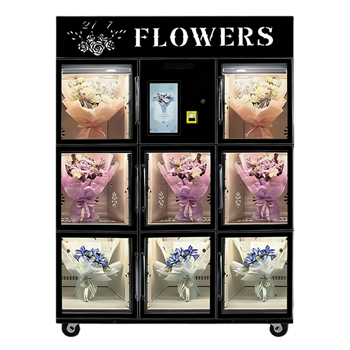
Deploying expensive fresh flower inventory in unsupervised public locations demands robust anti-theft mechanisms. The most effective designs employ independent storage architecture—cabinet-style lanes where each product occupies a separate compartment with its own secure door. This configuration prevents the cascading theft risk inherent in open-shelf vending systems, where compromising one access point exposes multiple products.
For example, an 8-slot flower vending machine utilizing individual cabinet doors provides institutional-grade security suitable for overnight operation in transit stations or outdoor plazas. Each transaction releases only the purchased compartment, leaving remaining inventory fully protected. This design element proves essential for maintaining profitability in high-traffic but minimally supervised environments.
User Experience: Digital Interfaces That Simplify Transactions
Consumer adoption depends heavily on transaction simplicity. Modern flower vending machines incorporate large-format interactive touchscreens—such as 15.6-inch displays—that provide visual product browsing, pricing transparency, and multiple payment options. These interfaces replicate the tactile shopping experience of traditional retail while accelerating transaction speed critical in busy venues.
The visual presentation on these screens can showcase product details, care instructions, and occasion suggestions, transforming a simple vending transaction into an informed purchasing decision. For time-pressed travelers or commuters, this streamlined interface enables purchase completion in under 60 seconds, a crucial factor in capturing impulse sales.
Business Model Flexibility: Adapting to Diverse Operator Needs
Successful deployment of automated floral retail requires flexible business models that accommodate various operator scales. IMT Vending, a specialized manufacturer of smart retail solutions, exemplifies this approach through dual service models: Original Design Manufacturer (ODM) with no minimum order quantities for entrepreneurs testing market entry, and Original Equipment Manufacturer (OEM) services with 10-unit minimums for established distributors seeking customized branding.
This tiered structure lowers barriers to entry while supporting scalable growth. Production cycles of approximately 7–30 days enable rapid deployment, while comprehensive one-year warranties and lifetime technical assistance reduce operational risk for new market entrants. Such support infrastructure proves essential in emerging automated retail categories where operators may lack specialized technical expertise.
Cloud-Based Management: Remote Operations at Scale
Multi-location vending operations require centralized monitoring and control. Advanced flower vending solutions integrate cloud-based management platforms that provide real-time visibility into sales performance, inventory levels, and profitability across distributed machine networks. Operators can remotely monitor stock depletion patterns, adjust pricing dynamically, and identify high-performing locations without physical site visits.
Multi-level account management features enable agents or franchisees to oversee subsidiary machine clusters independently while rolling up data to master accounts. This hierarchical structure supports scalable business expansion across geographic regions or venue types, transforming individual vending units into networked retail ecosystems.
Beyond Flowers: Platform Versatility Across Product Categories
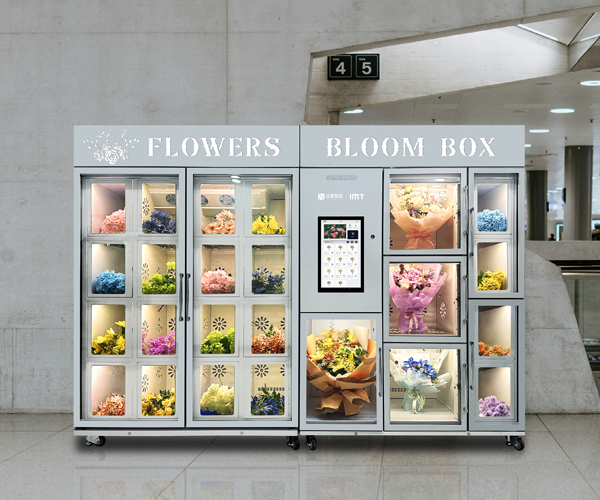
While flower preservation represents a specialized technical challenge, the underlying automated retail platform adapts readily to adjacent categories. The same climate control and security architecture supports gift items, premium chocolates, or artisanal products requiring controlled environments. Some operators deploy hybrid configurations—combining floral arrangements with complementary gift items or greeting cards—to increase average transaction values.
This product category flexibility extends the return on investment for vending hardware. A single machine platform can serve seasonal demand fluctuations by rotating between flowers during peak gifting periods and alternative products during off-seasons, maximizing utilization rates across annual cycles.
Strategic Venue Selection: Maximizing Foot Traffic Conversion
Deployment location determines profitability in automated retail. The highest-performing flower vending installations occupy strategic positions in transportation hubs—airports, subway stations, and train terminals—where travelers exhibit strong impulse-buying behavior and limited alternative purchasing options. Recreational venues like amusement parks and tourist attractions present similar dynamics, combining high foot traffic with emotional purchase triggers.
Healthcare facilities represent another high-potential vertical. Hospital visitors frequently seek fresh flowers for patients, yet traditional gift shops maintain limited hours. Automated flower vending in hospital lobbies or visitor centers captures this demand across all hours while requiring zero staffing overhead.
Implementation Considerations: Logistics and Support Infrastructure
Successful deployment extends beyond hardware acquisition. Operators must establish restocking protocols that maintain inventory freshness—typically requiring replenishment every 3–5 days for cut flowers. Logistics planning should account for delivery timelines, whether via sea freight (25–45 days), land transportation (25–45 days), or express shipping (5–7 days for DHL/FedEx).
Pre-deployment quality assurance testing verifies all mechanical, refrigeration, and payment systems function correctly before installation. Comprehensive user manuals and operational demos ensure site personnel understand basic troubleshooting and restocking procedures. This foundational support infrastructure differentiates sustainable automated retail operations from high-failure-rate deployments.
Market Validation: Proven Performance Across Venue Types
Automated flower vending has demonstrated commercial viability across diverse applications. Shopping malls utilize units to capture spontaneous gift purchases during extended evening hours when florists have closed. Hotels deploy lobby installations serving guests seeking room arrangements or departure gifts. Educational institutions place machines in student centers for date-night purchases or campus event decorations.
This cross-industry adoption validates the fundamental business model: combining preservation technology, security architecture, and user-friendly interfaces creates viable automated retail channels for perishable goods previously confined to staffed retail formats.
The Future of Floral Commerce: Automation as Competitive Advantage
As labor costs rise and consumer expectations for instant access intensify, automated retail solutions transition from novelty to necessity. Flower vending machines equipped with advanced preservation systems represent the convergence of refrigeration engineering, secure transaction technology, and cloud-based management—a technical synthesis that overcomes the fundamental barriers separating perishable goods from automated commerce.
For venue operators seeking non-disruptive revenue channels, retail entrepreneurs exploring asset-light business models, or established florists expanding market reach, automated flower vending delivers measurable advantages: elimination of geographic and temporal constraints, reduction of overhead costs, and capture of previously inaccessible customer segments. The technology has matured beyond experimental deployment into proven, scalable infrastructure reshaping floral retail economics worldwide.
Reviews
There are no reviews yet.